All Questions
What Are The Key Properties Of Ptfe That Make It Suitable For Seals? Unlock Reliability In Extreme Conditions
Discover the 4 key PTFE properties—chemical resistance, low friction, thermal stability, and non-stick—that make it the ideal sealing material for demanding applications.
What Secondary Manufacturing Processes Might Ptfe Parts Require? Achieve Precise Specifications With Expert Machining
Learn about CNC machining, laser cutting, and die cutting for PTFE parts. Optimize your design for performance and cost with KINTEK's expertise.
What Is One Weakness Of Ptfe Gaskets And Sheets? Understanding Creep And Cold Flow
Learn about PTFE's key weakness: cold flow or creep deformation under pressure, and how to mitigate it for a reliable seal.
How Can Users Obtain Customized Ptfe Gaskets And Sheets? Get Precision Parts For Your Industry
Learn how to specify and order custom PTFE gaskets, sheets, and components with fillers, adhesives, and special forms for your application.
Why Is Ptfe Used For Thermal And Electrical Insulation? Unmatched Stability In Extreme Conditions
Discover why PTFE's molecular structure makes it a premier insulator for high-voltage, high-frequency, and extreme-temperature applications.
What Makes Ptfe Gaskets And Sheets Ideal For Chemical And Pharmaceutical Industries? Achieve Uncompromising Purity And Safety
Discover why PTFE's chemical inertness, non-toxicity, and durability make it the top choice for sealing in demanding chemical and pharmaceutical applications.
How Does The Versatility Of Ptfe Gaskets And Sheets Benefit Users? Achieve A Perfect Seal For Any Application
Discover how PTFE's chemical inertness, thermal stability, and customizability provide reliable sealing solutions for demanding industries.
What Temperature Range Can Ptfe Gaskets And Sheets Withstand? A Guide From -200°C To +260°C
Learn the full PTFE temperature range (-200°C to +260°C), its limits under pressure, and how to select the right gasket for your application.
Why Is Chemical Resistance Important For Ptfe Gaskets And Sheets? Ensure Unmatched Safety And Reliability
Learn why PTFE's chemical inertness is critical for sealing against aggressive acids, bases, and solvents, preventing leaks and ensuring process purity.
What Are The Key Advantages Of Using Ptfe Gaskets And Sheets? Superior Sealing For Harsh Environments
Discover the key advantages of PTFE gaskets & sheets: extreme chemical resistance, wide temperature range, non-stick surface & electrical insulation.
What Are The Physical Properties Of Ptfe O-Rings? A Guide To Their Unique Strengths And Limitations
Explore the key physical properties of PTFE O-rings, including hardness, tensile strength, and their critical role in chemical and thermal sealing applications.
In Which Applications Are Ptfe O-Rings Commonly Used? Critical Seals For Extreme Environments
Discover the key applications for PTFE O-rings in chemical processing, aerospace, and semiconductor manufacturing where chemical resistance and high temperatures are critical.
What Are Ptfe O-Rings And What Are Their Primary Characteristics? High-Performance Seals For Extreme Conditions
Discover PTFE O-rings: chemically inert seals for extreme temperatures and low friction. Learn their properties vs. rubber seals for your application.
What Industries Commonly Use Teflon Encapsulated O-Rings For Chemical Resistance? Protect Critical Processes From Corrosion
Learn how Teflon encapsulated O-rings provide superior chemical resistance and purity for chemical, pharmaceutical, semiconductor, and oil & gas industries.
What Temperature Limits Should Be Considered For Teflon Fep And Pfa Encapsulated O-Rings? Ensure Seal Integrity In High-Temp Applications
Learn the critical temperature limits for FEP (200°C/392°F) and PFA (260°C/500°F) encapsulated O-rings to prevent seal failure in harsh environments.
What Are The Limitations Of Teflon Encapsulated O-Rings In Terms Of Chemical Resistance? Key Weaknesses To Avoid Seal Failure
Learn the specific chemical weaknesses of Teflon O-rings, including HF, molten alkali metals, and fluorinating agents, to ensure application safety.
Which Solvents Are Highly Resistant To Teflon Encapsulated O-Rings? Discover Their Superior Chemical Resistance
Learn which solvents Teflon encapsulated O-rings resist, including water, ethanol, acetone, and aggressive acids, and understand their critical limitations.
How Do Teflon Fep And Pfa Perform Against Bases? Superior Resistance For Alkaline Environments
Discover why Teflon FEP and PFA offer exceptional, nearly identical resistance to bases like sodium hydroxide and ammonia, thanks to their strong C-F bonds.
Which Acid Is Not Resistant To Teflon Encapsulated O-Rings? Avoid Hf For Seal Integrity
Hydrofluoric acid (HF) attacks Teflon O-rings. Learn which acids are safe and ensure chemical compatibility for your application.
What Makes Ptfe Washers Suitable For The Food Industry? Ensure Safety, Hygiene & Durability
Learn why FDA-approved PTFE washers are ideal for food processing, offering chemical inertness, non-stick surfaces, and resistance to heat and cleaning agents.
Which Acids Show High Resistance With Teflon Fep And Pfa Encapsulated O-Rings? Ensure Leak-Free Performance In Aggressive Chemical Environments
Discover the high-resistance acids for Teflon FEP/PFA O-rings, including HCl, H₂SO₄, H₃PO₄, and CH₃COOH, and critical incompatibilities like HF.
Why Are Ptfe Washers Advantageous In Mechanical Assemblies? Enhance Performance & Durability
Discover how PTFE washers reduce friction, distribute loads evenly, and resist chemicals & extreme heat to protect your mechanical assemblies.
How Is Chemical Resistance For Teflon Encapsulated O-Rings Measured? Use The 1-10 Scale For Reliable Sealing
Learn how the 1-10 chemical resistance scale works for Teflon O-rings, including key vulnerabilities, temperature limits, and selection criteria.
What Shapes And Forms Are Ptfe Washers Available In? From Standard Circles To Custom Profiles
PTFE washers are available in square, hexagonal, rectangular, and custom 2D profiles. Learn how to choose the right shape for sealing, spacing, or cost-efficiency.
What Materials Are Used In Teflon Encapsulation For O-Rings? A Guide To Fep & Pfa Jackets
Learn about Teflon encapsulated O-ring materials: FEP & PFA jackets with silicone or FKM cores for superior chemical and temperature resistance.
What Are Some Common Applications Of Ptfe Washers? Ideal For Sealing, Insulation, And Low-Friction Needs
Explore common PTFE washer applications in plumbing, electronics, aerospace, and food industries. Learn how their chemical inertness, heat resistance, and low friction provide reliable performance.
What Are The Key Features Of Encapsulated O-Rings Designed For Chemical Resistance? Achieve Superior Sealing In Harsh Environments
Discover how encapsulated O-rings combine a flexible elastomer core with a chemically inert Teflon sheath for superior resistance to acids, solvents, and bases.
How Does The Low Friction Property Of Ptfe Benefit Sealing Applications? Achieve Reliable, Low-Stress Seals
Learn how PTFE's low friction ensures efficient force conversion for reliable seals in static and dynamic applications, preventing damage and wear.
Why Is Ptfe Considered The Best Material For Heavy-Duty Cable Liners? Achieve Superior Reliability & Efficiency
Discover why PTFE outperforms metal for cable liners with low friction, high abrasion resistance, and chemical inertness for longer system life.
What Thermal And Chemical Properties Make Ptfe Liner Suitable For Challenging Environments? Unmatched Heat & Chemical Resistance
Explore PTFE Liner's extreme thermal stability (up to 260°C) and universal chemical inertness for demanding applications in harsh environments.
How Does Ptfe Liner Perform Under Heavy Loads? Superior Durability For Demanding Applications
Discover how PTFE liners maintain 90% efficiency after 1M cycles under heavy loads, with high temperature tolerance and chemical resistance.
What Are The Advantages Of Ptfe Liner In Terms Of Weight And Noise Reduction? Achieve Quieter, Lighter Systems
Discover how PTFE liners reduce weight and noise via low friction and lightweight properties, enhancing efficiency in demanding applications.
How Does Ptfe Liner Help In Eliminating Stick-Slip In Cable Applications? Achieve Smooth, Reliable Motion
Discover how PTFE liners eliminate stick-slip in cables with ultra-low friction, ensuring smooth motion, precision control, and extended lifespan.
What Are Some Alternative Names For Ptfe O-Rings? Teflon®, Tfe, And Polytetrafluoroethylene Explained
Learn the alternative names for PTFE O-rings, including Teflon® and TFE, and understand their unique properties for demanding applications.
What Is The Shelf Life Of Ptfe O-Rings? Unlock The Secret To Indefinite Storage Stability
Discover why solid PTFE O-rings have a virtually unlimited shelf life, unlike PTFE-coated versions, and learn how to choose the right type for your application.
What Are The Tensile Strength And Elongation Properties Of Ptfe O-Rings? Key Metrics For Demanding Seals
Learn the tensile strength (25-31 MPa) and elongation (300-400%) of PTFE O-rings and how they impact performance in chemical, medical, and industrial applications.
What Are The Physical Characteristics Of Ptfe O-Rings? The Ultimate Guide To Ptfe Seal Properties
Explore the key physical properties of PTFE O-rings: hardness, tensile strength, chemical inertness, and extreme temperature tolerance for demanding applications.
In Which Industries Or Applications Are Ptfe O-Rings Typically Used? Solve Extreme Sealing Challenges
Discover how PTFE O-rings provide unmatched chemical resistance and thermal stability in semiconductor, medical, aerospace, and chemical processing.
What Are The Key Properties Of Ptfe O-Rings? Unlock Superior Chemical & Thermal Resistance
Explore the key properties of PTFE O-rings: extreme chemical inertness, wide temperature range, low friction, and critical design considerations for sealing.
What Are Ptfe O-Rings And What Are They Commonly Used For? Solve Sealing Challenges In Harsh Environments
Learn about PTFE O-rings' chemical resistance, temperature stability, and low friction for use in chemical, medical, and industrial applications.
What Are The Benefits Of Ptfe's Flexibility Compared To Rigid Plastics? Superior Sealing In Dynamic Applications
Discover how PTFE's flexibility enables superior dynamic sealing, shock absorption, and resilience across extreme temperatures compared to rigid plastics.
How Can The Hardness Of Ptfe Be Increased? Reinforce With Fillers For Demanding Applications
Learn how adding fillers like glass, carbon, or bronze increases PTFE hardness, wear resistance, and strength for high-stress environments.
What Are The Advantages Of Teflon In Industrial Applications? Boost Durability And Efficiency
Discover how Teflon's chemical inertness, heat resistance, and low friction enhance industrial component lifespan and performance.
How Can Ptfe Be Customized For Specific Applications? Tailor Performance With Fillers & Fabrication
Learn how to customize PTFE with fillers like glass or carbon and precision fabrication methods to enhance wear resistance, strength, and fit for your application.
How Does Teflon's Softness Benefit The Medical And Food Industries? Enhance Hygiene And Efficiency
Discover how Teflon's softness creates hygienic seals and enables smooth motion in medical devices and food processing, boosting safety and efficiency.
What Are Some Common Applications For Hard Ptfe Grades? Solve High-Load, High-Wear Engineering Challenges
Discover the key applications for hard PTFE grades, including high-load bearings, dynamic seals, valve seats, and gears, for superior wear resistance and dimensional stability.
What Are Other Names For Teflon Encapsulated Silicone O-Rings? Find The Right High-Performance Seal
Discover the alternative names for Teflon encapsulated o-rings, including PTFE, FEP, and PFA encapsulated seals, and their key benefits.
What Grades Are These O-Rings Compliant With? Certified For Fda & Usp Class Vi Applications
Learn about O-rings compliant with FDA and USP Class VI standards for food, pharmaceutical, and medical device safety.
What Is The Shelf Life Of Teflon Encapsulated Silicone O-Rings? Discover Their Indefinite Durability
Teflon FEP encapsulated silicone o-rings have an unlimited shelf life due to their inert, protective construction. Learn why physical handling matters more than age.
What Is The Water Absorption Rate Of These O-Rings? Ensure Unmatched Seal Integrity In Wet Environments
Discover the critical importance of a <0.01% water absorption rate for o-rings, ensuring dimensional stability and long-term reliability in demanding applications.
What Is The Coefficient Of Friction For These O-Rings? Don't Be Misled By A Single Number
Learn why O-ring friction is a system-dependent variable and how to control it through lubrication, material choice, and design for your application.
What Is The Durometer (Hardness) Of These O-Rings? The 70A Standard Explained
Learn why 70A durometer is the industry standard for o-rings and how the ±5 tolerance impacts sealing performance in various applications.
What Is The Temperature Range For Teflon Encapsulated Silicone O-Rings? A Guide To Optimal Sealing Performance
Learn the effective temperature range of Teflon encapsulated silicone o-rings (-75°F to 400°F) and how their dual-material design impacts sealing performance.
Where Are Teflon Encapsulated Silicone O-Rings Commonly Used? For Superior Sealing In Harsh Environments
Discover the critical applications of Teflon encapsulated o-rings in chemical processing, pharmaceuticals, aerospace, and semiconductor manufacturing.
What Are The Benefits Of Using Teflon Encapsulated Silicone O-Rings? Achieve Unmatched Sealing In Harsh Environments
Discover the key benefits of Teflon encapsulated o-rings, combining PTFE's chemical resistance with silicone's flexibility for demanding applications.
What Are Teflon Encapsulated Silicone O-Rings Made Of? A Hybrid Seal For Extreme Conditions
Learn how Teflon encapsulated silicone o-rings combine silicone elasticity with Teflon's chemical resistance for superior sealing performance.
Can Ptfe Washers Be Customized? Get A Perfect Fit For Your Specific Application
Learn how PTFE washers can be customized in dimensions, tolerances, colors, and with functional enhancements like adhesive backing.
What Are The Size And Thickness Ranges Available For Ptfe Washers? Find The Perfect Fit For Your Application
Discover PTFE washer sizes (OD: 0.093" to 16") & thicknesses (0.0002" to 0.125") for electronics, chemical, and industrial sealing needs.
What Are The Common Plumbing Applications Of Ptfe? Ensure Leak-Proof, Durable Seals
Explore PTFE's key plumbing uses: thread seal tape, washers, gaskets, and high-temperature components for reliable, long-lasting performance.
Why Is Ptfe Considered Cost-Effective For Plumbing Applications? Maximize Long-Term Value & Reliability
PTFE's chemical inertness, temperature resistance, and durability reduce maintenance costs and prevent failures in plumbing systems.
What Is The Coefficient Of Friction For Ptfe? Mastering Low-Friction Material Selection
Learn the typical PTFE friction coefficient range (0.05-0.1), key influencing factors, and trade-offs for engineering applications.
What Makes Ptfe Suitable For Food Processing Equipment? Ensuring Safety, Efficiency, And Durability
Discover how PTFE's non-stick, inert, and temperature-resistant properties enhance food safety, reduce downtime, and extend equipment lifespan in processing.
Why Is Ptfe Used In Electrical Components? Unmatched Insulation For Extreme Environments
Discover why PTFE is the top choice for electrical insulation, offering superior dielectric strength, high-temperature stability, and chemical resistance.
What Are The Material Properties Of Ptfe Relevant To Cnc Machining? Mastering Softness & Heat For Precision
Learn the key PTFE properties for CNC machining: low strength, low friction, and high thermal expansion. Discover strategies to prevent deformation and ensure accuracy.
What Are Some Common Applications Of Ptfe In Cnc Machining? Achieve Superior Performance In Demanding Industries
Explore key PTFE CNC applications: low-friction bearings, chemical seals, electrical insulators, and medical components for superior performance.
What Are The Key Benefits Of Using Ptfe In Cnc Machining? Achieve Unmatched Performance In Harsh Environments
Discover how PTFE's low friction, chemical resistance, and electrical insulation make it ideal for CNC machined seals, bearings, and insulators.
What Is Ptfe And Why Is It Desirable For Cnc Machining? Unlock Superior Performance For Demanding Applications
Discover why PTFE (Teflon) is ideal for CNC machining: exceptional chemical resistance, low friction, and high-temperature stability for critical components.
What Regulatory Compliance Do Teflon Coatings Meet For Food Contact? Ensure Safety & Efficiency In Food Processing
Learn how FDA-compliant Teflon coatings for direct food contact enhance production efficiency, product quality, and sanitation in food processing.
What Are Some Specific Applications Of Teflon Coatings In The Food Industry? Solve Sticking, Buildup, And Efficiency Problems
Discover how Teflon (PTFE) coatings prevent sticking, reduce residue buildup, and speed up cleaning in food processing for molds, blades, and conveyors.
How Does Teflon Coating Improve Efficiency In Food Production? Reduce Downtime And Boost Yields
Discover how Teflon coating's non-stick, heat-resistant surface cuts cleaning time, reduces waste, and protects equipment in food processing.
What Are The Advantages Of Using Teflon Coatings Over Liquid Lubricants In Food Processing? Boost Safety & Efficiency
Discover why Teflon coatings offer superior food safety, FDA compliance, and operational efficiency over liquid lubricants in food processing.
Why Is Teflon Coating Popular In The Food Processing Industry? Boost Efficiency & Product Quality
Discover how Teflon (PTFE) coatings enhance food safety, reduce waste, and maximize uptime in industrial food processing operations.
Why Might An Engineer Choose To Stick With Standard O-Rings For Long-Running Applications? Maximize Reliability & Minimize Risk
Explore the strategic benefits of standard O-rings for long-term applications, including proven reliability, global availability, and predictable performance.
What Factors Should Be Considered When Choosing Between O-Rings, Square Rings, Quad Rings, Or Flat Gaskets? Optimize Your Seal Selection
Learn the key factors for choosing between O-rings, square rings, quad rings, and flat gaskets for static vs. dynamic applications, pressure, and groove design.
Are There Reasons To Still Use Traditional O-Rings? Yes, For Proven Reliability And Global Availability.
Discover why traditional O-rings and gaskets remain the optimal choice for many applications due to standardization, reliability, and supply chain security.
How Do O-Rings And Square Rings Compare To Flat Gaskets In Terms Of Pressure Requirements? Achieve Superior Sealing With Lower Clamping Force
Discover why O-rings and square rings are self-energizing seals requiring less initial force than flat gaskets for superior high-pressure performance.
Why Are Quad Rings Preferred Over O-Rings In Dynamic Applications? Prevent Spiral Failure & Reduce Friction
Quad rings prevent spiral failure and reduce friction in dynamic sealing applications. Learn how their X-shaped profile outperforms O-rings.
What Are The Advantages Of Square Rings Over O-Rings In Static Applications? Achieve Superior High-Pressure Sealing
Discover why square rings offer superior high-pressure sealing and stability over O-rings in static applications, preventing extrusion and failure.
What Are The Standard Temperature Limits For Ptfe Teflon O-Rings? Master The -200°C To 250°C Range
Learn the standard PTFE O-ring temperature range (-200°C to 250°C) and the critical differences between virgin and filled grades for your application.
At What Low Temperature Does Ptfe Teflon O-Ring Still Maintain Compressive Plasticity? Achieve Reliable Sealing To Near Absolute Zero
PTFE O-rings uniquely maintain compressive plasticity down to cryogenic temperatures near 0 K. Learn how to design for thermal contraction and stiffness.
What Is The Continuous Operating Temperature Range For Ptfe Teflon O-Rings? Guide To -200°C To 260°C Performance
Learn the key factors defining PTFE O-ring temperature limits from -200°C to 260°C. Understand trade-offs like creep & rigidity for your application.
How Does The Working Process Affect Ptfe Teflon O-Rings? It Dictates Sealing Performance & Lifespan
Learn how PTFE O-ring manufacturing (molding, sintering, machining) critically affects density, strength, and sealing ability for your application.
What Are The Key Properties Of Ptfe Teflon O-Rings? Unmatched Chemical & Thermal Resistance
Discover the key properties of PTFE Teflon O-rings: extreme chemical inertness, a wide temperature range from -200°C to +260°C, and the lowest friction.
What Benefits Do Ptfe Spacer Rings Offer To Customers? Achieve Unmatched Reliability And Lower Costs
Discover how PTFE spacer rings extend equipment lifespan, reduce downtime, and cut maintenance costs in harsh chemical and high-temperature environments.
What Are The Key Properties Of Ptfe Spacer Rings? Unlock Superior Performance In Demanding Environments
Explore the key properties of PTFE spacer rings: unmatched chemical resistance, extreme temperature stability, low friction, and excellent electrical insulation.
What Industries Commonly Use Ptfe Spacer Rings? Solve Critical Sealing Challenges
Discover why PTFE spacer rings are vital in chemical, aerospace, food, and pharmaceutical industries for their chemical inertness, low friction, and temperature stability.
What Is The Temperature Range For Ptfe Spacer Rings? A Guide To Extreme Thermal Stability
PTFE spacer rings operate from -328°F (-200°C) to 500°F (260°C). Learn the nuances for pure vs. filled PTFE to ensure reliability in your application.
What Are The Primary Applications Of Ptfe Spacer Rings? Solve Critical Sealing & Wear Problems
Discover how PTFE spacer rings provide chemical resistance, low friction, and thermal stability for demanding applications in chemical, aerospace, and industrial equipment.
What Standards Are Referenced For Ptfe O-Rings? Ensure Interchangeability & Superior Performance
Learn about key PTFE O-ring standards (BS1806, ISO 3601, DIN 3771, JIS B2401) for dimensional fit and PTFE's unique chemical resistance.
What Precautions Should Be Taken When Installing Ptfe O-Rings? Avoid Permanent Damage And Seal Failure
Learn the critical steps for correctly installing PTFE O-rings to prevent stretching, nicking, and ensure a reliable, leak-free seal in demanding applications.
How Do Ptfe O-Rings Differ From Rubber O-Rings In Terms Of Compliance? Understanding Rigidity Vs. Elasticity
Learn the key differences in compliance between PTFE and rubber O-rings, including stiffness, creep, and design implications for sealing.
Why Is Ptfe Considered A Safe Choice For O-Ring Seals? Ensure Reliability In Extreme Conditions
Discover why PTFE O-ring seals are the safe choice for harsh chemicals, extreme temperatures, and high-pressure applications, ensuring system integrity.
What Materials Can Ptfe O-Rings Be Produced With? From Virgin Ptfe To Enhanced Compounds
Learn about PTFE O-ring materials: virgin PTFE for chemical resistance, or filled variants (glass, bronze, graphite) for enhanced wear and strength.
What Are The Unique Properties Of Ptfe O-Rings In Sealing Systems? Unlock Chemical & Thermal Resilience
Explore PTFE O-ring properties: extreme chemical inertness, a wide temperature range (-200°C to +260°C), and low friction for demanding sealing applications.
What Are Some Unique Features Of Expanded Ptfe Gaskets? Superior Conformability & Creep Resistance
Discover the unique advantages of expanded PTFE (ePTFE) gaskets: superior chemical resistance, conformability, and creep resistance for demanding seals.
What Are The Thermal And Electrical Properties Of Expanded Ptfe Gaskets? Superior Insulation For Extreme Conditions
Explore the thermal and electrical properties of ePTFE gaskets, including their wide temperature range, dielectric strength, and sealing capabilities.
What Is The Composition Of Expanded Ptfe Gaskets? Discover The Science Behind Superior Sealing
Learn how expanded PTFE gaskets are made from pure carbon and fluorine for maximum chemical resistance and flexibility in demanding applications.
How Does Expanded Ptfe Compare To Regular Ptfe Gaskets? Unlock Superior Flexibility And Sealing
Discover why expanded PTFE gaskets offer superior flexibility, surface conformity, and creep resistance compared to rigid standard PTFE for challenging seals.
What Are The Chemical Resistance Properties Of Expanded Ptfe Gaskets? A Guide To Universal Sealing Performance
Learn why expanded PTFE gaskets offer near-universal chemical resistance to acids, alkalis, and solvents across the 0-14 pH scale.
What Is Expanded Ptfe Gasket Material And How Is It Produced? A Guide To Superior Sealing Performance
Learn about expanded PTFE (ePTFE) gaskets: their unique microporous structure, manufacturing process, and superior sealing benefits for demanding applications.
Related Products
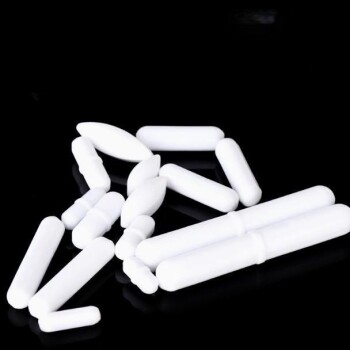
Custom PTFE Teflon Parts Manufacturer PTFE Magnetic Stirring Bar
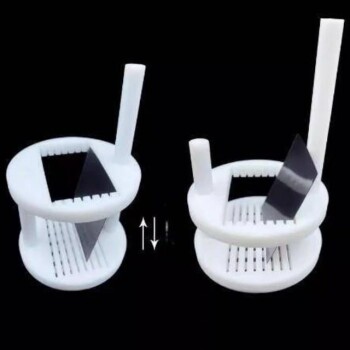
Custom PTFE Teflon Parts Manufacturer Adjustable Height Flower Basket
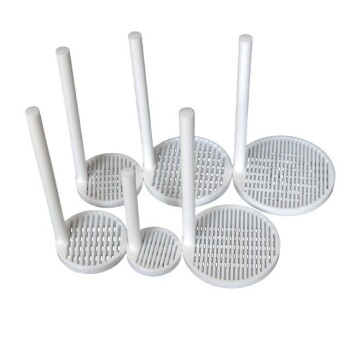
Custom PTFE Teflon Parts Manufacturer PTFE Cleaning Rack
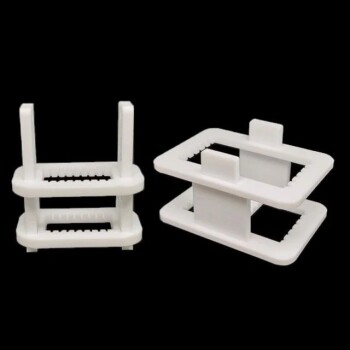
Custom PTFE Teflon Parts Manufacturer Conductive Glass Substrate Cleaning Rack
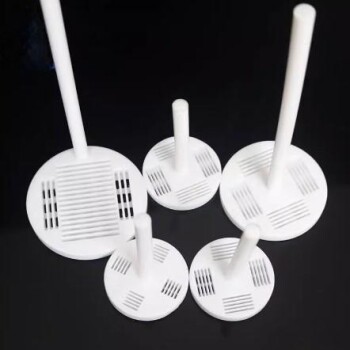
Custom Machined Molded PTFE Teflon Parts Manufacturer for Laboratory ITO FTO Conductive Glass Cleaning Flower Basket
