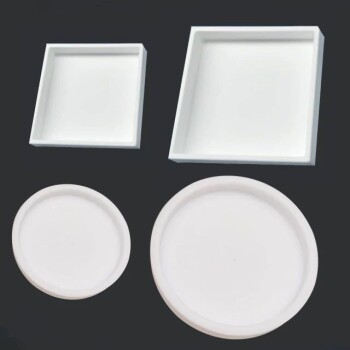
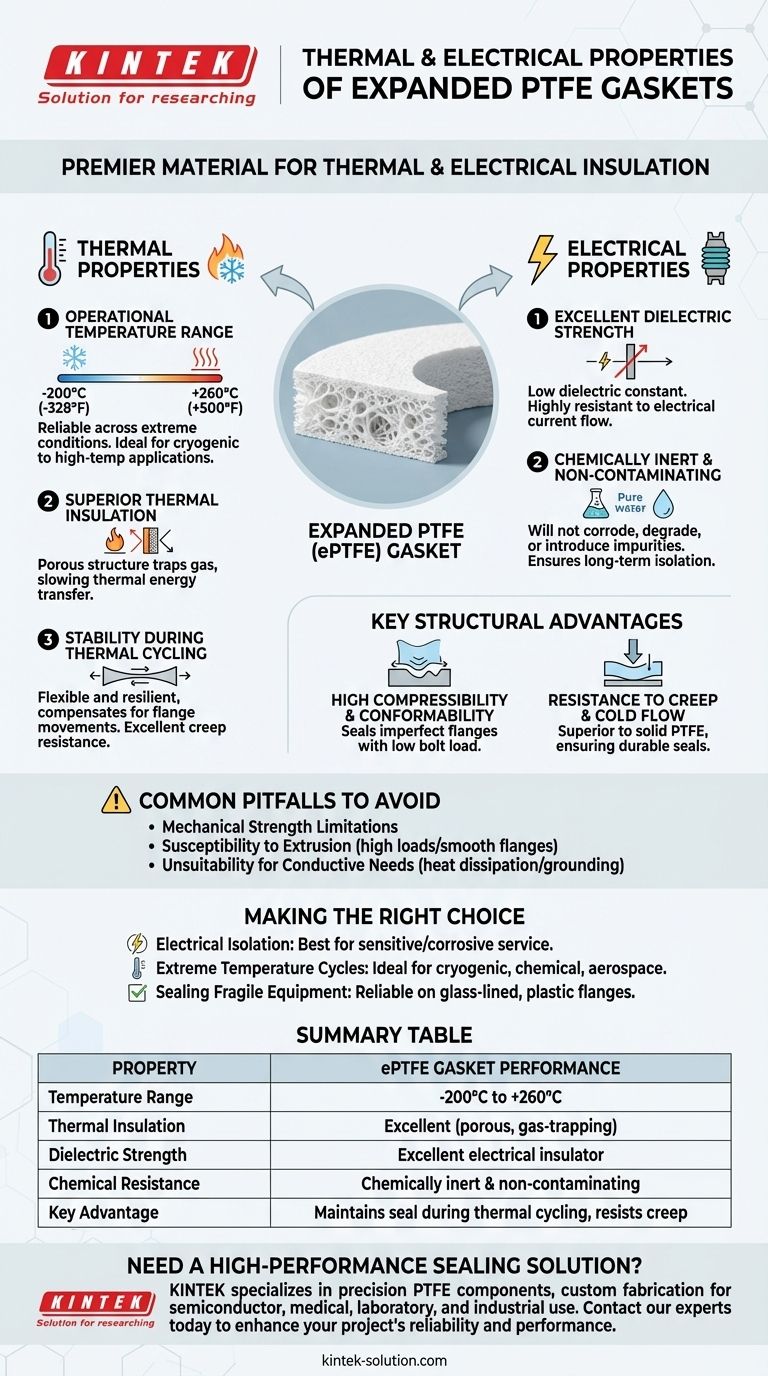
In short, expanded PTFE (ePTFE) is a premier material for both thermal and electrical insulation. It functions reliably across an extremely wide temperature range, from cryogenic conditions up to +260°C (-328°F to +500°F). Its unique porous structure and the inherent chemical inertness of PTFE also make it an outstanding electrical insulator with a low dielectric constant.
The core reason for ePTFE's exceptional performance is its manufacturing process, which transforms solid PTFE into a soft, porous, and flexible structure. This structure excels at trapping gas, which dramatically reduces thermal transfer and provides the compliance needed to maintain a seal during thermal cycling.
Analyzing the Thermal Properties
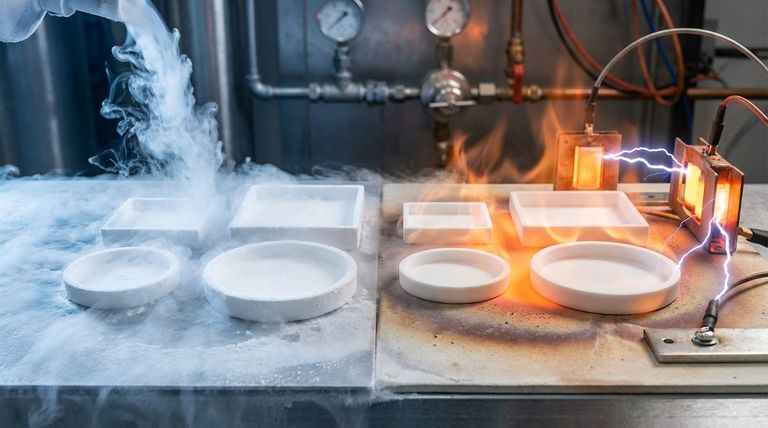
The thermal characteristics of ePTFE gaskets make them suitable for some of the most demanding industrial applications, from chemical processing to aerospace.
The Operational Temperature Range
Expanded PTFE gaskets maintain their integrity and sealing capability in continuous service from -200°C to +260°C. This vast range means they are equally effective in cryogenic applications as they are in high-temperature chemical reactors.
Superior Thermal Insulation
The material's porous, expanded structure is key to its insulating power. The microscopic voids within the ePTFE trap gas, which is a poor conductor of heat. This significantly slows the transfer of thermal energy across the gasket, helping to maintain temperature differentials.
Stability During Thermal Cycling
Because ePTFE is highly flexible and resilient, it effectively compensates for the expansion and contraction of flange surfaces during temperature fluctuations. This, combined with its excellent creep resistance, ensures a long-term, reliable seal where other materials might fail.
Understanding the Electrical Properties
Virgin PTFE is one of the best electrical insulators known, and the expanded form retains these elite properties.
Excellent Dielectric Strength
Expanded PTFE has excellent dielectric properties and a low dielectric constant. This means it is highly resistant to conducting electricity and is effective at preventing the flow of current between flange faces.
Chemically Inert and Non-Contaminating
The material is chemically inert and non-contaminating. In electrical applications, this is critical because it ensures the gasket will not corrode, degrade, or introduce impurities that could compromise electrical isolation over the product's service life.
Key Structural Advantages
The physical form of ePTFE is inseparable from its thermal and electrical performance. It is this structure that allows it to outperform standard, solid PTFE in many sealing applications.
High Compressibility and Conformability
Unlike solid PTFE, ePTFE is very soft and compressible. This allows it to easily conform to and seal imperfect or irregular flange surfaces, which are common in real-world industrial equipment.
Resistance to Creep and Cold Flow
A known weakness of solid PTFE is its tendency to "flow" or "creep" away from a compressive load over time, leading to a loss of bolt torque and potential leaks. The expanded, multi-directional fibrous structure of ePTFE provides superior resistance to creep and cold flow, ensuring a more stable and durable seal.
Common Pitfalls to Avoid
While ePTFE is a high-performance material, its unique properties introduce specific trade-offs that are critical to understand for correct application.
Mechanical Strength Limitations
Expanded PTFE is a soft material by design. It does not have the high compressive strength or rigidity of filled PTFE or metallic gaskets. It should not be used in applications where the gasket itself is required to provide significant structural support.
Susceptibility to Extrusion
Because it is so soft, ePTFE can be squeezed out, or "extruded," from between flanges if the bolt load is excessively high or the flange surfaces are too smooth and narrow. Proper bolt torque procedures and flange design are essential.
Unsuitability for Conductive Needs
This is an obvious but crucial point. If your application requires the dissipation of heat or the grounding of static electricity through the gasket, ePTFE is fundamentally the wrong choice.
Making the Right Choice for Your Application
Selecting the right gasket material requires matching its properties to your primary engineering goal.
- If your primary focus is electrical isolation: The high dielectric strength and chemical inertness of ePTFE make it a first-class choice for insulating flanges in sensitive or corrosive service.
- If your primary focus is sealing across extreme temperature cycles: The material's vast operational temperature range and excellent flexibility make it ideal for cryogenic, chemical, and aerospace applications.
- If your primary focus is sealing fragile or damaged equipment: ePTFE's softness allows it to create a reliable seal on glass-lined, plastic, or slightly damaged metal flanges with minimal bolt force.
By understanding these core thermal and electrical properties, you can confidently specify ePTFE for applications where insulation and sealability are paramount.
Summary Table:
| Property | ePTFE Gasket Performance |
|---|---|
| Temperature Range | -200°C to +260°C (-328°F to +500°F) |
| Thermal Insulation | Excellent (due to porous, gas-trapping structure) |
| Dielectric Strength | Excellent electrical insulator |
| Chemical Resistance | Chemically inert and non-contaminating |
| Key Advantage | Maintains seal during thermal cycling and resists creep |
Need a high-performance sealing solution?
KINTEK specializes in manufacturing precision PTFE components, including expanded PTFE gaskets, seals, liners, and labware. Our expertise in custom fabrication—from prototypes to high-volume orders—ensures you get the exact insulation and sealing properties your application demands, whether for semiconductor, medical, laboratory, or industrial use.
Contact our experts today to discuss how our PTFE solutions can enhance your project's reliability and performance.
Visual Guide
Related Products
- Customizable High Temperature Resistant Anti Static PTFE Insulating Gaskets Flame Retardant Corrosion Proof Industrial Seals
- Custom PTFE Insulating Gaskets and Corrosion Resistant Fluoropolymer Seals for Industrial Electrical Applications
- Custom PTFE Insulating Gaskets Corrosion Resistant Teflon Seals Tailored Engineering Plastic Components
- Custom PTFE Acid Resistant Support Rack Multi Hole PFA Hydrogen Absorption System Bracket
- High Corrosion Resistant PTFE Faucet Polytetrafluoroethylene Valve for Chemical Storage Drums and Fluid Transfer Systems Customizable Industrial Grade
People Also Ask
- Why is PTFE an ideal material choice for sealing gaskets, valves, and fluid transfer tubing exposed to extremely aggressive chemicals? Discover Its Superior Chemical Resistance and Reliability
- How is PTFE utilized in seals and gaskets? Leverage Its Chemical & Temperature Resistance
- What are the key properties of PTFE that make it suitable for seals and gaskets? Unlock Superior Sealing Performance
- What industries benefit from PTFE gaskets due to their FDA compliance? Ensure Product Purity and Safety
- What are the different types of PTFE gaskets? A Guide to Choosing the Right Seal