All Questions
How Does The Incorporation Of Comonomers Such As Perfluoropropyl Vinyl Ether (Ppve) Alter The Molecular Structure And Processing Characteristics Of Tfe-Based Fluoropolymers Like Pfa Compared To Standard Ptfe?
Learn how PPVE reduces crystallinity in PFA, enabling melt processing while retaining PTFE's chemical resistance and thermal stability.
How Do The Thermal And Processing Characteristics Of Ptfe And Pfa Compare When Selecting Materials For Custom-Machined Or Molded Laboratory Apparatus? Key Differences In Fabrication And Performance
Compare PTFE vs PFA for custom lab apparatus: thermal limits, processing methods, and selection guide for machined vs molded parts.
What Safety And Operational Factors Should Be Considered Regarding The Thermal Decomposition Of Fluoropolymer Products In High-Temperature Applications? Key Strategies To Ensure Safe Operation And Prevent Hazardous Gas Release.
Learn key safety factors, temperature limits, ventilation controls, and chemical interactions to prevent hazardous fluoropolymer decomposition.
Why Is Fluorination Via Ptfe Degradation Thermally Different From Oxide Formation When Processing Reactive Metal Formulations In Custom Ptfe Vessels? Key Safety Insights For High-Risk Reactions
Discover why PTFE fluorination reactions can exceed 3000°C, unlike passivating oxide formation, and why vessel ratings may not predict this hazard.
What Raw Material Supply Chain Factors Impact The Cost And Availability Of Ptfe And Melt-Processible Fluoropolymer Products? Unlock Key Insights For Better Sourcing
Explore fluorspar, HF, TFE, and capacity constraints impacting PTFE and PFA costs. Essential for lab equipment buyers and distributors.
Etfe Vs Ptfe: What Are The Key Mechanical Trade-Offs For Wear-Resistant Lab Components?
Compare ETFE and PTFE for lab components: strength, friction, temperature, and chemical resistance trade-offs explained.
What Role Do Chromic And Phosphoric Acid Primers Play In Securing Fluoropolymer Surface Finishes To Metal Components In Liquid Processing Environments? Secure Durable Coating Adhesion
Discover how acid primers ensure robust bonding for fluoropolymer coatings on metal in liquid processing.
How Do Hybrid Sol-Gel Coatings Compare To Solid Ptfe/Pfa? Discover The Trade-Offs For High-Temperature Lab Equipment.
Compare hybrid sol-gel coatings vs solid PTFE/PFA for high-temperature lab equipment. Learn key differences in thermal limits, chemical resistance, and more.
How Does Incorporating Ptfe Into Electroless Nickel Composite Coatings Improve Wear Resistance And Friction Properties? Achieve Superior Durability And Self-Lubrication For Precision Lab Hardware.
Learn how PTFE-filled electroless nickel coatings reduce friction, resist wear, and protect against corrosion for longer-lasting lab and fluid-handling components.
How Can Fluorinated Amphiphilic Copolymers Create Superhydrophobic Anti-Biofouling Surfaces? Achieve 160° Water Contact Angles With Durable Coatings.
Learn how fluorinated amphiphilic copolymers combine low surface energy, roughness, and anchoring for superhydrophobic, anti-biofouling surfaces.
How Can Antimicrobial Silver Or Copper Nanoparticles Be Homogeneously Incorporated Into Perfluorinated Polymer Matrices Such As Ptfe Without Severe Particle Aggregation? Use A Fluorinated Terpolymer Coating
Discover how to disperse antimicrobial nanoparticles in PTFE using amphiphilic terpolymer coatings to prevent aggregation.
What Fundamental Properties Of Fluoropolymers Make Them Ideal For Lining Chemical Processing Equipment, Fittings, And Laboratory Reaction Vessels? Discover Key Benefits For Superior Chemical Resistance And Purity.
Learn how PTFE and PFA's chemical inertness, thermal stability, and nonstick properties protect equipment and ensure high purity.
Why Do Conventional Cu-Atrp Systems Fail In Fluoropolymer Synthesis? Discover The Key System Requirements For Controlled Photopolymerization.
Learn why Cu-ATRP fails with fluoropolymers and what's needed for controlled visible-light photopolymerization.
What Are The Primary Operational Challenges With Gaseous Fluorinated Monomers Like Vdf? Discover How Specialized Ptfe/Pfa Apparatus Enables Safe, Low-Pressure Photopolymerization.
Learn how PTFE/PFA lab apparatus overcomes VDF, TFE, and HFP gas handling, enabling safe low-pressure photopolymerization for efficient screening.
What Performance Advantages Does Increasing The Fluorine Content Offer For Chemical Digestion Vessels And High-Purity Laboratory Labware? Achieve Superior Purity And Chemical Resistance With High-Fluorine Materials
Discover how higher fluorine content enhances chemical inertness, thermal stability, and permeation resistance in labware, ensuring cleaner results.
How Does Ptfe's Molecular Bond Structure Provide Extreme Chemical Inertness For Lab Components?
Learn how PTFE's strong carbon-fluorine bonds create chemical inertness, protecting lab fluid transfer and reaction vessels.
What Role Do Low-Surface-Energy Fluoropolymer Reaction Vessels Play In Preventing Fouling During Particle Synthesis And Emulsion Polymerization?
Discover how PTFE and PFA vessels reduce fouling, improve particle uniformity, and simplify cleaning in polymerization processes.
Why Are Fluoropolymers Like Ptfe And Pfa Uniquely Suited For Laboratory Apparatus Exposed To Highly Surface-Active And Fluorinated Chemical Systems? Discover Inertness, Low Surface Energy, And More.
Explore why PTFE and PFA are ideal for aggressive fluorinated systems: chemical inertness, thermal stability, low adhesion, and minimal contamination.
How Do Perfluorinated Solvent Environments Influence The Selection Of Reaction Vessels And Fluid Handling Components In Nonaqueous Emulsion Polymerizations? Choose Fluoropolymer Materials.
Learn why PTFE/PFA are essential for reaction vessels and fluid handling in perfluorinated solvents. Optimize purity and performance.
What Corrosive Chemical Species Are Generated During Tfe Synthesis, And Why Do They Dictate High-Purity Fluoropolymer Equipment Selection?
Learn about HF, HCl, and halogenated species in TFE production, and why PTFE/PFA equipment ensures purity and corrosion resistance.
What Role Does Steam Addition Play As A Diluent During The Pyrolysis Synthesis Of Tetrafluoroethylene (Tfe) For Fluoropolymer Manufacturing? Optimize Tfe Yield With Controlled Steam Ratios
Learn how steam dilution enhances TFE yield in chlorodifluoromethane pyrolysis, with optimal ratios and conditions for high conversion.
How Do Dispersion And Suspension Polymerization Methods Differ In Tfe Fluoropolymer Production, And What Resin Forms Do They Provide For Laboratory Product Manufacturing?
Discover the key differences between dispersion and suspension polymerization of TFE, and how they yield different PTFE resin forms for lab products.
What Molecular Mechanism Gives Ethylene-Tetrafluoroethylene (Etfe) High Tensile Strength And Resistance To Cold Flow? Discover How Chain Interlocking Boosts Labware Durability.
Learn how ETFE's chain interlocking enhances tensile strength and creep resistance. Ideal for durable lab components.
How Do Structural Differences Between Pvdf And Etfe Affect Their Chemical Suitability For Handling Strong Bases And Polar Solvents?
Learn why ETFE outperforms PVDF in strong bases and polar solvents due to molecular structure. Choose the right fluoropolymer for your lab.
Why Is Pure Ptfe Non-Melt-Processible? Learn How Its Viscosity Impacts Fabrication Of High-Performance Lab Equipment.
Understand why PTFE's high melt viscosity prevents traditional processing, influencing lab equipment manufacturing through sintering and CNC machining.
What Key Material Properties Make Fluoropolymers Suitable For High-Reliability Electrical Insulation And Fluid Transfer Lines Operating In Demanding Environments? Achieve Superior Performance With Ptfe And Pfa.
Discover the material properties of fluoropolymers that ensure reliable electrical insulation and fluid handling in harsh conditions.
How Do Fluoropolymer Surfaces Prevent Chemical Adhesion And Withstand Exposure To Aggressive Cleaning Agents And Disinfectants?
Fluoropolymers resist adhesion and chemical attack, ensuring easy cleaning and long-lasting lab equipment.
Why Is Ptfe Chemically Inert And Thermally Stable? Key Benefits For Lab Equipment
Discover how PTFE's fluorine sheath provides exceptional chemical resistance and heat stability for lab equipment.
What Is The Operational Difference Between Melt-Processible Fluoropolymers Like Pfa/Fep And Non-Melt-Processible Ptfe When Manufacturing Custom Labware And Fittings? Master The Key To Choosing The Right Material
Discover how PFA/FEP melt processing differs from PTFE machining, affecting part design, cost, and performance.
Why Are Low Dielectric Constants And High Thermal Resistance Important Factors When Choosing Fluoropolymer Materials For Custom-Machined Electrical And Analytical Apparatus?
Discover why low dielectric constant and high thermal resistance are crucial for fluoropolymers in electrical and analytical devices, ensuring signal integrity and dimensional stability.
What Are The Performance Trade-Offs When Choosing Etfe Over Ptfe Or Pfa? Balance Strength Vs. Chemical Resistance
Compare ETFE vs PTFE/PFA: mechanical durability vs. chemical and thermal resistance. Choose wisely for custom components.
What Material Handling And Process Control Precautions Are Required When Synthesizing Moisture-Sensitive Fluoropolymer Intermediates? Essential Guidelines For Safe And Efficient Synthesis
Learn key precautions for handling moisture-sensitive fluoropolymer intermediates, including sealed systems, purification, and safety controls.
How Does Extrusion Pressure During Paste Processing Influence The Mechanical Hardness And Machinability Of Ptfe Rod Stock Used For Custom Laboratory Components? Optimize Ptfe Rod Hardness And Machinability By Understanding Extrusion Pressure Effects For Cnc Components.
Learn how extrusion pressure affects PTFE rod hardness and machinability for custom lab components. Get insights to optimize CNC machining.
Why Does Ptfe Require Specialized Fabrication And Cnc Machining Techniques Rather Than Standard Thermoplastic Melt-Injection Molding For Custom Labware?
Discover why PTFE can't be injection molded due to its high melt viscosity, and how specialized CNC machining creates precise custom labware.
What Key Performance Characteristics Make Fluorinated Phosphazene-Based Polymers Suitable For Extreme Chemical, Separation, And Biomedical Applications? Discover The Essential Properties For Demanding Environments.
Explore the key performance characteristics of fluorinated phosphazene polymers: chemical resistance, thermal stability, low permeability, and more.
What Is The Macromolecular Substitution Synthetic Route For Tailored Fluoropolymers, And Why Is It Advantageous For Custom Fluid Handling And Laboratory Equipment?
Discover how macromolecular substitution enables tailored fluoropolymers for superior chemical resistance and custom lab equipment.
How Does The Incorporation Of Mixed Fluorinated Side Chains Convert Rigid Crystalline Fluoropolymers Into High-Performance Elastomeric Materials Suitable For Chemical Seals And O-Rings? Discover The Key To Flexible Fluoropolymer Seals.
Learn how mixed fluorinated side chains create elastomeric fluoropolymers for superior chemical seals and O-rings with low-temperature flexibility and chemical resistance.
How Do Physical Surface Patterning And Chemical Modifications Alter The Surface Hydrophobicity Of Fluoropolymer Materials? Discover Key Mechanisms And Trade-Offs.
Learn how surface patterning and chemical modifications change fluoropolymer hydrophobicity, from superhydrophobic to selective wetting.
How Do Fluorinated Side Groups Influence Solvent Solubility And Chemical Resistance? Optimize Fluoropolymer Performance For Fuel Contact.
Discover the impact of fluorinated side groups on solvent solubility and chemical resistance, crucial for fuel and aggressive fluid applications.
How Do Heterocyclic Rings (Pyridine, Thiophene) Affect Tg & Thermo-Oxidative Stability Of Fluorinated Aromatic Polymers?
Learn how pyridine and thiophene alter glass transition temperature and stability in fluorinated polymers, with trade-offs for processability.
What Structural Factors Govern The Organic Solvent Solubility And Chemical Resistance Of Trifluoromethyl (-Cf3) Functionalized Fluorinated Polymers?
Learn how backbone geometry, rigidity, and crosslinking affect solubility and chemical resistance of -CF3 fluoropolymers. Optimize your material selection.
How Does Incorporating Bulky Fluorene Units Versus Flexible Isopropylidene Linkages Impact The Thermal Stability And Mechanical Behavior Of High-Performance Fluorinated Polymers?
Discover how fluorene units boost thermal stability but reduce ductility, while isopropylidene links enhance flexibility but lower heat resistance.
How Does Side-Group Fluorination Improve Polyphosphazene Properties, And Why Are Fluoropolymer Components Required?
Discover how fluorination boosts stability and why PTFE/PFA gear is crucial for handling reactive reagents.
Why Is Strict Environmental Sealing Necessary For Open-Cage Fluorinated Silanols With Dichlorosilanes? Discover Custom Ptfe/Pfa Vessel Solutions
Learn why airtight sealing is critical for moisture-sensitive silanols and HCl management, and how custom PTFE/PFA vessels enhance safety and yield.
How Does Chemical Etching With Alkali Metals Modify Ptfe Laboratory Components To Allow Adhesive Bonding? Unlock Strong, Reliable Ptfe Joints
Learn how alkali-metal etching transforms PTFE surfaces for adhesive bonding, boosting strength while preserving chemical resistance.
Why Is Ambient Temperature Control Critical When Machining Or Measuring High-Precision Custom Ptfe Laboratory Components? Learn The Key To Accurate Dimensions.
Discover how ambient temperature affects PTFE dimensions during machining and inspection, ensuring precision in custom lab components.
What Temperature Profile And Drying Controls Are Required During Ptfe Thermal Processing To Prevent Product Cracking And Degradation? Master Ptfe Processing With Key Controls.
Learn the essential PTFE thermal profile: drying, sintering, and cooling controls to prevent cracking and degradation. Optimize your process.
By What Chemical Mechanism Can Inert Ptfe Fluoropolymer Components Be Surface-Modified Or Etched For Adhesive Bonding? Sodium Etching And More
Learn about sodium etching for PTFE bonding: reductive defluorination mechanism, surface activation, and why it improves adhesion.
How Do Fep And Ptfe Compare For Custom Components? Choose The Right Fluoropolymer For Your Manufacturing Needs
Compare FEP vs PTFE: melt processing, mechanical strength, and thermal limits for custom components.
What Thermal Limits, Exhaust Safety Requirements, And Cooling Controls Must Be Observed When Sintering Ptfe Products To Optimize Crystallinity And Dielectric Properties? Key Guidelines For Ptfe Sintering Success.
Learn critical thermal limits, exhaust safety, and cooling controls for PTFE sintering to optimize crystallinity and dielectric properties.
Why Is Controlling The Cooling Rate During Thermal Processing Critical When Manufacturing High-Density Fluoropolymer Laboratory Apparatus? Optimize Strength, Clarity, And Durability
Learn how cooling rates affect fluoropolymer crystallinity, strength, transparency, and dimensional stability in lab apparatus.
How Do Room-Temperature Ptfe Phase Transitions Affect Precision Machining? Control Thermal State At 19 °C And 30 °C For Accuracy.
Learn how PTFE's 19 °C and 30 °C transitions impact dimensional stability, and get tips for machining and inspecting precision components.
How Can The Chemical Structure Of Fluoropolymer Elastomers Be Tailored To Maintain Flexibility At Extreme Low Temperatures While Resisting Oils And Solvents? Achieve Low-Temp Sealing With Tailored Fluoroelastomers
Learn how flexible fluoroalkoxy side groups lower Tg to -60°C while maintaining oil and solvent resistance. Explore key design strategies.
How Does The Presence Of Carbon-Fluorine (C-F) Bonds And Trifluoromethyl Groups Enhance The Thermal Stability And Chemical Resistance Of High-Performance Fluoropolymers?
Learn how C-F bonds and trifluoromethyl groups improve fluoropolymers' thermal stability and chemical resistance, ensuring durability in harsh environments.
Why Is Strict Temperature Control Critical During The Storage And Transport Of Raw Ptfe Fine Powder Used In Producing Ptfe Components? Preserve Resin Integrity And Prevent Defects.
Learn how the 19°C phase transition affects PTFE fine powder. Discover storage tips to prevent premature fibrillation and ensure high-quality components.
How Do Low Surface Energy And Interfacial Behavior Of Fluorinated Polymer Structures Impact Ptfe And Pfa Fluid Handling? Maximize Recovery & Purity.
Low surface energy of PTFE/PFA reduces wetting, adhesion, and residue buildup, enhancing sample recovery, cleaning, and trace analysis in labware.
What Fundamental Material Properties Distinguish Fully Fluorinated Polymers—Such As Ptfe And Pfa Used In High-Performance Laboratory Equipment—From Partially Fluorinated Polymers Regarding Chemical Resistance And Solvent Interaction?
Discover how fully fluorinated polymers (PTFE, PFA) outperform partially fluorinated ones in chemical resistance and solvent interaction for lab equipment.
What Impact Do Terminal Perfluoroalkyl End Groups (Such As C8F17) Have On Physical Gelation And Phase Behavior In Polymer Solutions? Discover How They Create Reversible Networks And Enhance Fluoropolymer Applications.
Learn how C8F17 terminal groups induce physical gelation and alter phase behavior in polymers, benefiting fluoropolymer applications.
How Does The Degree Of Fluorination In Fluorinated Polymers Affect Their Chemical Compatibility And Solubility Across Non-Fluorinated Organic Solvents Versus Perfluorinated Media? Key Insights And Practical Guidance
Learn how increasing fluorination reduces solubility in organic solvents but enhances compatibility with fluorinated media, guiding polymer selection.
How Does Structural Branching Into A Star Architecture Alter The Crystallization And Melting Behavior Of Fluorinated Polymers Compared To Their Linear Counterparts, And Why Is This Relevant When Selecting Fluoropolymer Materials For Thermal Applications?
Star polymers show lower crystallinity and melting points than linear ones, affecting thermal performance. Learn key differences for material selection.
Which Astm Test Methods Are Used To Evaluate The Physical And Thermal Properties Of Ptfe And Fluoropolymer Micropowders? Discover Key Testing Standards
Learn about ASTM D4464, D895, D4567, D4591, and D1238 for testing PTFE micropowders. Ensure quality with proper methods.
What Regulatory Requirements And Safety Standards Govern The Use Of Irradiated Ptfe Fluoroadditives In Food-Contact And Laboratory Components? Ensure Food-Contact & Lab Safety With Ptfe
Learn FDA 21 CFR 177.1550, EU 1935/2004, USP Class VI & more for irradiated PTFE in food-contact and lab use. Ensure compliance.
What Are The Primary Advantages Of Directly Polymerized Low-Molecular-Weight Ptfe Compared To Electron-Beam Irradiated Ptfe In Chemical And Analytical Applications? Lower Hf Off-Gassing And Cleaner Purity For Demanding Environments.
Discover how directly polymerized PTFE minimizes HF emissions, ensuring cleaner processing and higher purity for chemical and analytical applications.
How Does Electron Beam Irradiation Dosage Affect The Average Particle Size Of Processed Ptfe Micropowders, And Why Is Heat Management Critical During This Process?
Learn how higher irradiation dosage reduces PTFE particle size via chain scission and why heat control is crucial to prevent agglomeration.
How Does The High Thermal Stability Of Perfluoropolymers Like Ptfe Define Their Operational Limits Compared To High-Temperature Pyrolysis Conditions?
Discover the operational limits of PTFE and PFA fluoropolymers in high-temperature applications, including continuous service temperatures and pyrolysis conditions.
What Physical Constraints And Process Parameters Must Be Managed During Electron Beam Irradiation Of Ptfe Fluoropolymer Resins? Key Factors Include Beam Penetration, Heat Control, Oxygen, And Dose Management.
Learn the critical physical constraints and process parameters for electron beam irradiation of PTFE resins, including penetration limits, temperature control, and atmosphere influence.
What Chemical Endgroups And Off-Gases Are Produced During The Molecular Weight Reduction Of Ptfe Fluoropolymers, And What Safety Measures Are Required?
Learn about PTFE degradation byproducts like acyl fluorides and HF, plus essential safety protocols for handling.
How Does Atmospheric Environment Affect The Thermal Degradation Temperature And Performance Limits Of Ptfe Fluoropolymer Components? Understand Thermal Oxidation Vs Pyrolysis For Safe Lab Use
Discover how air, inert gas, or vacuum impact PTFE's degradation and performance limits, and why 260°C continuous-use remains key.
How Do Structural Modifications And Polymerization Conditions Influence The Physical Behavior And Utility Of Fluoropolymer Components? Optimize Performance With Tailored Polymer Design
Learn how chain architecture, fluorine content, and processing conditions impact fluoropolymer properties for labware, tubing, and more.
How Are Waste Streams From The Cnc Machining And Molding Of Filled Versus Unfilled Ptfe Laboratory Components Recycled? Unlock Sustainable Ptfe Waste Solutions
Discover recycling methods for PTFE waste: mechanical reprocessing for unfilled, HTC pyrolysis for filled. Learn key differences and best practices.
Why Is Precision Cnc Machining Necessary For Producing Non-Standard Ptfe Laboratory Components And Custom Reaction Setups? Discover The Key Benefits Of Tailored Ptfe Parts.
Learn why CNC machining is essential for custom PTFE labware, enabling precise, chemically resistant components for your unique experiments.
What Surface Treatment Techniques Are Available To Enable Adhesive Bonding Of Fluoropolymer Components In Custom Laboratory Assemblies?
Discover key surface treatments like chemical etching, plasma, and corona to enable reliable adhesive bonding of PTFE/PFA parts.
How Do The Melt Characteristics Of Ptfe Influence Manufacturing And Custom Machining? Learn How Sintering And Cnc Create Precise Lab Parts.
PTFE's high melt viscosity prevents injection molding, so sintering and CNC machining are key. Discover how this affects your custom lab components.
What Surface Treatment Methods Are Used To Prepare Fluoropolymers For Adhesive Bonding, And How Do Plasma Techniques Compare To Traditional Chemical Etching? Optimize Your Bonding Process With The Right Choice.
Compare chemical etching vs. plasma for fluoropolymer bonding. Learn which method suits PTFE, PFA, FEP, and ETFE for optimal adhesion.
How Are Fine Powder Ptfe Resins Categorized Under Astm D4895 Specifications, And What Physical Parameters Determine Their Suitability For Extruded Components?
Learn how ASTM D4895 classifies fine powder PTFE by type, grade, and class, and which physical parameters ensure optimal extrusion performance.
Why Is Ssg Used For Ptfe Molecular Weight? Unlock Quality Control With Standardized Density Testing
Discover why Standard Specific Gravity (SSG) is essential for evaluating PTFE resin quality, ensuring consistency and performance in fluoropolymer products.
How Does The Drying Temperature And Handling Of Fine Powder Ptfe Resins Affect Paste Extrusion And Material Properties During Fluoropolymer Component Manufacturing?
Learn how drying temperature and powder handling impact PTFE paste extrusion and final material properties for consistent, high-quality components.
What Are The Maximum Operating Temperatures And Processing Differences Between Ptfe And Pfa, And How Do They Guide Material Selection For High-Temperature Laboratory Apparatus?
PTFE and PFA both handle 260°C continuous, but differ in processing: PTFE for machined parts, PFA for complex molded designs.
How Does Core-Shell Polymerization Technology Enhance The Mechanical Performance Of Modified Ptfe Components? Discover The Key Benefits For Lab And Fluid Handling.
Learn how core-shell polymerization improves creep resistance, sealing, and surface quality in modified PTFE lab components.
What Key Test Standards And Material Parameters Are Used To Assess The Thermal Stability And Quality Of Fine Powder Ptfe Resins? Understanding Ssg, Tii, And Dsc For Reliable Performance
Learn the essential standards and parameters—SSG, TII, DSC, and bulk density—for evaluating fine powder PTFE thermal stability and quality.
Why Is Temperature-Controlled Storage Below 19°C Recommended For Fine Powder Ptfe Raw Materials Prior To Component Fabrication? Preserve Resin Integrity & Prevent Fibrillation
Discover why storing fine powder PTFE below 19°C prevents premature fibrillation, ensuring consistent extrusion and high-performance components.
How Does The Drying Temperature During Fine Powder Ptfe Resin Processing Impact The Paste Extrusion And Quality Of Ptfe Components? Optimize Your Process For Superior Results
Discover how drying temperature affects PTFE paste extrusion, pressure, and quality. Learn to control fibrillation for consistent components.
How Does Molecular Weight Reduction Via Thermal Or Radiation Degradation Facilitate The Grinding Of Ptfe Into Sub-Micron Micropowders For High-Performance Labware Applications? Achieve Superior Ptfe Micropowder Dispersion And Wear Resistance.
Learn how thermal or radiation degradation reduces PTFE molecular weight for efficient sub-micron grinding, enhancing labware performance.
How Do The High Melting Point And Non-Flowing Melt Characteristics Of Ptfe Influence Custom Machining? Discover Key Fabrication Insights And Design Tips For Lab Fluid Components.
Learn how PTFE's high melting point and non-flowing melt affect custom machining and fabrication of lab fluid components, and get design tips for precision.
What Inherent Material Characteristics Of Non-Melt-Processable Ptfe Make It Suitable For Manufacturing High-Purity Laboratory Containers And Custom-Machined Apparatus?
Discover why PTFE's chemical inertness, thermal stability, and purity make it ideal for lab containers and custom CNC-machined apparatus.
What Is The Ideal Primary Particle Size Of Ptfe Fine Powder For Paste Extrusion? Optimize Extrudate Strength And Processing Performance.
Learn how PTFE primary particle size affects paste extrusion pressure and extrudate strength. Ideal range: 0.15–0.3 µm.
How Do Fluorinated Co-Oligomeric Surfactants Function To Lower Static And Dynamic Surface Tension In Liquid Processing Equipment? Optimize Wetting And Transfer Efficiency
Discover the mechanism of fluorinated co-oligomeric surfactants in reducing static and dynamic surface tension, improving wetting and fluid processing.
How Are The Stretch Ratio, Ultimate Stretch Ratio, And Tensile Break Strength Tested? Verify Ptfe Extrudate Integrity With Proven Methods.
Learn how to test PTFE fine powder extrudates for mechanical integrity via stretch ratio, ultimate stretch ratio, and tensile break strength.
What Is The Kinetics Mechanism Of Uv-Irradiated Vdf And Vdf-Hfp Copolymerization Using Peroxide Initiators, And How Do Fluoropolymer Reaction Components Facilitate Photo-Initiated Fluoropolymer Synthesis?
Discover how UV light controls peroxide radical generation, initiator functionality affects rate, and fluoropolymer components enable reproducible synthesis.
How Do Choice Of Solvent And Chain Transfer Activity Affect Molecular Weight During Vinylidene Fluoride (Vdf) Radical Polymerization? Learn Key Factors For High-Mw Pvdf
Discover how solvent and chain transfer control PVDF molecular weight in VDF polymerization, and why PTFE/PFA vessels are essential for inert handling.
What Fundamental Bond Characteristics Give Fluoropolymer Materials Their Superior Thermal Resistance, Low Flammability, And Chemical Inertness In Laboratory Apparatus? Discover The Science Behind Ptfe And Pfa
Learn how strong C-F bonds and fluorine shielding give fluoropolymers their heat resistance, low flammability, and chemical inertness in lab equipment.
What Are The Structural And Processing Differences Between Granular, Fine Powder, And Dispersion Ptfe Resins, And How Do They Impact Laboratory Product Selection? Choose The Right Ptfe For Your Lab
Learn how granular, fine powder, and dispersion PTFE differ in structure and processing, and how to select the right resin for your lab products.
How Does Void Formation In Pure Ptfe Homopolymer Affect The Performance Of Machined Fluoropolymer Laboratory Components? Discover The Key Manufacturing Solution
Learn how void formation impacts PTFE lab components and how modified PTFE resins overcome this for superior performance.
What Microstructural Mechanism Prevents Rapid Crack Propagation In Ptfe Fluid Fittings And Reaction Vessels Under Strain? Fibril Bridging Explained
Learn how fibril bridging in PTFE prevents rapid crack growth, enhancing durability of fittings and vessels. Essential for engineers.
Why Is Compaction Direction Critical In Custom Cnc Ptfe Parts? Optimize Orientation To Prevent Fracture.
Learn how PTFE billet compaction direction affects fracture stability. Align stress vectors parallel to the axis for reliable CNC machined components.
How Does Operating Temperature Influence The Fracture Toughness And Mechanical Reliability Of Ptfe Laboratory Components? Understand The Critical Temperature-Dependent Behavior To Ensure Safe And Long-Lasting Performance.
Learn how temperature affects PTFE's fracture toughness, stiffness, and creep, impacting lab component reliability. Essential for design and safe use.
How Does Modified Ptfe Differ From Conventional Granular Ptfe? And Why It's The Superior Choice For Custom-Machined Lab Seals & Valves
Discover how modified PTFE reduces creep, porosity, and permeation for tighter, longer-lasting lab seals and valves.
Why Are High-Performance Fluoropolymers Uniquely Suited For Demanding Chemical Processing And Laboratory Applications Requiring High Thermal And Chemical Resistance? Discover Their Unmatched Benefits For Your Most Challenging Environments.
Explore why PTFE and PFA fluoropolymers excel in high-temperature, corrosive, and high-purity applications. Learn key properties and selection tips.
How Do The Surface Energy And Low Coefficient Of Friction Of Ptfe Benefit Custom-Machined Laboratory Components And Fluid Handling Systems Compared To Conventional Plastics? Discover Key Advantages For High-Purity Applications.
Learn how PTFE's low surface energy and friction reduce contamination, improve sample recovery, and enhance fluid handling vs. conventional plastics.
What Role Do Non-Stick Fluoropolymer Substrates Play During The Thermal Processing And Film Casting Of Electroactive Pvdf Membranes? Optimize Your Fabrication With Ptfe/Pfa Release Surfaces.
Learn how PTFE/PFA substrates enable clean release during PVDF membrane casting and heat treatment, preserving electroactive performance.
Related Products
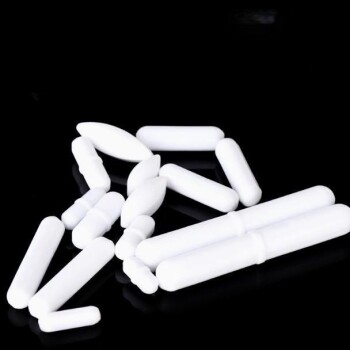
Custom PTFE Teflon Parts Manufacturer PTFE Magnetic Stirring Bar
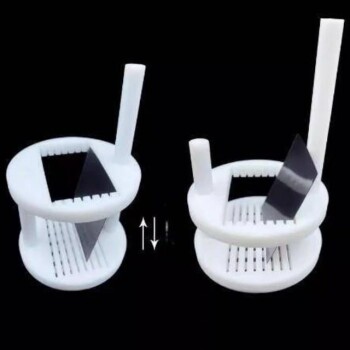
Custom PTFE Teflon Parts Manufacturer Adjustable Height Flower Basket
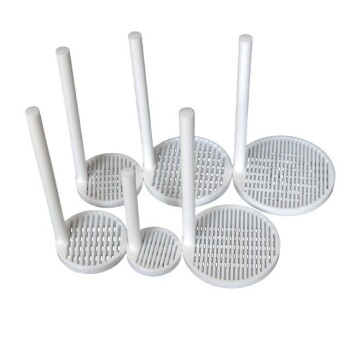
Custom PTFE Teflon Parts Manufacturer PTFE Cleaning Rack
Custom PTFE Teflon Parts Manufacturer Conductive Glass Substrate Cleaning Rack
Custom Machined Molded PTFE Teflon Parts Manufacturer for Laboratory ITO FTO Conductive Glass Cleaning Flower Basket