All Questions
What Role Do Non-Stick Fluoropolymer Substrates Play During The Thermal Processing And Film Casting Of Electroactive Pvdf Membranes? Optimize Your Fabrication With Ptfe/Pfa Release Surfaces.
Learn how PTFE/PFA substrates enable clean release during PVDF membrane casting and heat treatment, preserving electroactive performance.
How Do High-Performance Fluoropolymer Fluid Transfer Components And Reaction Apparatus Support The Characterization And Testing Of Electroactive Polymer Sensors And Biosensors? Achieve Reliable, Low-Contamination Testing
Discover how PTFE/PFA components enhance sensor testing with chemical inertness, electrical insulation, and stable flow for accurate measurements.
How Does The Carbon-Fluorine (C-F) Bond Strength Contribute To The Thermal Stability And Chemical Resistance Of High-Performance Fluoropolymers? Discover The Molecular Key To Durability
Learn how the strong C-F bond enhances thermal stability and chemical resistance in fluoropolymers, ensuring reliable performance.
Why Is Ambient Temperature Control Crucial When Measuring Dimensional Tolerances Of Custom Cnc-Machined Ptfe Laboratory Components? Unlock Precision With Thermal Stability
Learn why PTFE dimensions shift near 19-30°C and how temperature control ensures accurate CNC-machined lab part tolerances.
How Do The Unique Thermal And Chemical Resistance Properties Of Ptfe Fluoropolymers Benefit Custom-Machined Laboratory Components And Fluid Transfer Systems? Achieve Reliable Performance In Harsh Conditions
Discover how PTFE's chemical inertness, thermal stability, and low friction enhance lab components and fluid systems. Ideal for demanding applications.
What Structural Characteristics Contribute To High Thermal Stability And High Mass Retention At Extreme Temperatures (Up To 800 °C) In High-Performance Fluoropolymers?
Discover how cyclic perfluoro moieties and bisphenol AF enable high thermal stability and up to 85% mass retention at 800 °C.
How Do Thermal Crosslinking Mechanisms In Fluorinated Polymers Contribute To The Thermal Stability And Solvent Resistance Of Custom-Machined Fluoropolymer Components? Unlock High-Performance Solutions
Explore how thermal crosslinking enhances thermal stability and solvent resistance in custom-machined fluoropolymer parts, ensuring durability and purity.
How Do The Equipment Requirements For Split Synthesis Of Zeolites Differ? Custom Cnc Modular Hardware Needs
Learn how zeolite split synthesis requires custom CNC-machined modular hardware and high-pressure liners compared to traditional one-pot methods.
How Does Polytetrafluoroethylene (Ptfe) Tape Function In The Hydrothermal Synthesis Process Of Cobalt Sulfide? Ensure Precision.
Learn how PTFE tape acts as a critical masking tool and chemical shield to ensure precise reaction areas and high purity in cobalt sulfide synthesis.
Why Is Cnc Fabrication Vital For Cs2Nasccl6:Sb3+ Mechanoluminescence Fixtures? Achieve Precise & Repeatable Ml Data.
Learn why high-precision CNC fabrication is vital for Cs2NaScCl6:Sb3+ mechanoluminescence testing to ensure accurate, repeatable research results.
What Is The Function Of A Polytetrafluoroethylene (Ptfe) Substrate Fixture? Achieve Precise Epitaxial Thin Film Growth
Learn how PTFE substrate fixtures optimize hydrothermal synthesis by ensuring uniform thin film growth, preventing sediment, and maintaining purity.
How Does Custom Cnc Machining Benefit Semiconductor And New Energy Lab Equipment? Precision Ptfe/Pfa Solutions.
Discover how custom CNC machining of PTFE and PFA provides the geometric complexity and purity required for advanced semiconductor and energy research.
What Is The Primary Purpose Of Incorporating High-Precision Ptfe Components Into Battery Testing Fixtures? Ensure Data Accuracy.
Learn how PTFE components enhance battery testing by providing chemical inertness, electrical isolation, and mechanical stability for accurate data.
What Are The Material Requirements For Fluid Path Components In Photocatalytic Reactors? Pfa & Ptfe For Durable Results
Discover why high-purity PFA and PTFE are essential for photocatalytic reactors to resist radicals and ensure light transmittance during dye degradation.
How Does The Use Of Custom Cnc-Fabricated Pfa Components Support Specialized Laboratory Prototypes For Chemical Research?
Discover how CNC-machined PFA components enable high-purity, complex geometries for chemical research, micro-reactors, and electrochemical cells.
How Does Custom Cnc Fabrication Of Ptfe And Pfa Components Support Specialized Mxene Research Applications? - Kintek
Optimize MXene research with custom CNC PTFE & PFA components. High purity and chemical resistance for aggressive etchants like HF. Learn more.
How Does The Phenomenon Of Cold Flow Or Creep Affect The Design Of Ptfe Lab Components? Optimize Structural Integrity
Learn how PTFE cold flow affects lab equipment design. Discover strategies like live-loading and reinforcement to ensure long-term sealing integrity.
What Are The Advantages Of Using Porous Ptfe Junctions In Industrial Ph And Orp Sensors? Enhance Stability & Longevity
Discover how porous PTFE junctions improve pH/ORP sensor reliability with superior clog resistance, chemical stability, and reduced maintenance costs.
Why Are Ptfe Bellows Important In The Medical Industry? Ensuring Patient Safety And Device Reliability
Learn why PTFE bellows are vital for medical devices, offering biocompatibility, chemical inertness, and reliable sterilization for ventilators and anesthesia machines.
What Are Ptfe Bushes And Where Are They Commonly Used? Solve Friction, Chemical, And Temperature Challenges
Learn how PTFE bushes provide self-lubrication, chemical resistance, and thermal stability for industrial, chemical, and aerospace applications.
What Materials Are Used In Ptfe Bellows And What Compliance Standards Do They Meet? Ensure Safety And Performance
Learn about PTFE bellows materials, their chemical resistance, temperature range, and key compliance standards like FDA, USP Class VI, RoHS, and REACH.
In Which Applications Are Ptfe Bellows Commonly Utilized? Essential Protection For Demanding Industries
Explore the critical uses of PTFE bellows in chemical, pharmaceutical, semiconductor, and food industries for chemical inertness, high temperature, and purity.
What Types Of Ptfe Bellows Are Available And Their Specific Uses? A Guide To Round, Angular, And Sharp Fold Designs
Explore PTFE bellow types: round, angular, and sharp fold designs. Learn their specific uses in chemical, pharmaceutical, and industrial applications.
What Are The Key Benefits Of Using Ptfe Bellows? Achieve Superior Chemical Resistance And Purity
Discover the core benefits of PTFE bellows: universal chemical resistance, FDA-compliant purity, and long-term durability for demanding industries.
How Do Ptfe Bellows Differ From Pusher Seals? Unlock Superior Reliability For Demanding Applications
Learn the key differences between PTFE bellows and pusher seals, including reliability, failure modes, and suitability for harsh chemical and abrasive services.
What Are Ptfe Bellows Seals And Where Are They Commonly Used? The Ultimate Guide To Corrosive Fluid Sealing
Learn about PTFE Bellows seals: their design, benefits for chemical resistance and purity, and common uses in chemical, pharmaceutical, and food industries.
What Overall Value Do Ptfe-Free Bushings Provide? A Strategic Choice For Environmental & Mechanical Performance
Explore the benefits of PTFE-free bushings: environmental compliance, cost savings, and superior mechanical strength for specific applications.
Why Are Ptfe-Free Bushings Considered Environmentally Friendly? Reduce Pfas Risk & Enhance Sustainability
PTFE-free bushings avoid PFAS 'forever chemicals,' improve recyclability, and offer longer life for reduced waste. Learn the eco-friendly advantages.
What Industries Can Benefit From Ptfe-Free Bushings? Automotive, Aerospace, And Heavy Machinery Solutions
Explore PTFE-free bushing benefits for automotive, aerospace, and heavy machinery. Handle extreme loads, temperatures, and comply with PFAS regulations.
How Do Ptfe-Free Bushings Compare In Longevity To Ptfe Bushings? Choose For Superior Durability
Compare PTFE-free vs. PTFE bushings for longevity, cost, and performance. Learn which is best for high-stress or low-friction applications.
What Are The Benefits Of Ptfe-Free Bushings? Enhance Durability & Environmental Compliance
Explore the key advantages of PTFE-free bushings: superior durability, environmental compliance, and versatility for demanding industrial applications.
Can Ptfe Parts Be Customized According To Specific Requirements? Achieve Precision Custom Ptfe Components
Learn how PTFE parts are custom machined for specific requirements. Explore design considerations for thermal expansion, softness, and performance.
What Are The Main Advantages Of Using Teflon Sheets In Engineering? Boost Efficiency & Durability
Explore Teflon (PTFE) sheet advantages: low friction, chemical resistance, heat stability for improved machinery efficiency and component lifespan.
How Do Teflon-Coated Pins Function In Machinery? Reduce Friction And Prevent Wear
Learn how Teflon-coated pins provide low-friction, non-stick surfaces to reduce wear, prevent seizing, and eliminate the need for liquid lubricants in machinery.
What Are The Different Types Of Washers Made From Teflon Sheets? Choose The Right Ptfe Washer For Your Application
Learn about the 3 types of Teflon washers: plain, spring, and locking. Discover their unique benefits for chemical resistance, low friction, and vibration control.
What Are The Advantages Of Using Teflon-Coated Bolts? Achieve Reliable Performance In Harsh Environments
Discover the key benefits of Teflon-coated bolts: superior corrosion resistance, predictable friction for precise clamping, and easy maintenance.
How Are Teflon Sheets Used In Hardware Manufacturing? Solve Extreme Friction, Chemical, And Heat Problems
Discover how Teflon (PTFE) sheets are machined into seals, washers, and insulators for superior chemical resistance, low friction, and high-temperature stability.
What Properties Make Teflon Sheets Useful For Industrial Applications? Solve Friction, Heat, And Chemical Challenges
Discover how Teflon (PTFE) sheets' chemical inertness, extreme temperature range, and low friction solve industrial challenges in demanding environments.
What Are The Main Advantages Of Using Teflon Bushings Across Different Industries? Achieve Maintenance-Free Performance
Discover how Teflon (PTFE) bushings reduce wear, eliminate lubrication, and ensure reliability in harsh environments across industries.
What Makes Teflon Bushings Suitable For Food And Pharmaceutical Industries? Ensure Product Purity And Compliance
Discover why Teflon (PTFE) bushings are ideal for food and pharma, offering self-lubrication, chemical inertness, and FDA compliance to prevent contamination.
How Do Teflon Bushings Benefit Chemical Processing Plants? Enhance Reliability And Purity In Harsh Environments
Discover how Teflon (PTFE) bushings provide chemical inertness, self-lubrication, and high-temperature tolerance to prevent contamination and reduce downtime.
Why Are Teflon Bushings Preferred In The Aerospace Industry? Achieve Lighter, More Reliable Aircraft Systems
Discover why Teflon (PTFE) bushings are essential for aerospace. Learn how their self-lubrication, chemical inertness, and thermal stability solve critical engineering challenges.
What Are The Common Applications Of Teflon Bushings In Industrial Machinery? Solve Friction, Corrosion, And Contamination Problems
Discover how Teflon (PTFE) bushings solve friction, corrosion, and contamination issues in pumps, valves, conveyors, and more for reliable, maintenance-free operation.
What Are The Key Properties Of Teflon Bushings? Achieve Superior Performance In Demanding Industrial Environments
Discover the core properties of Teflon (PTFE) bushings: low friction, high heat resistance, and chemical inertness for industrial reliability.
How Does Ptfe Contribute To The Performance Of Metal Expansion Joints? Enhance Durability In Harsh Chemical Environments
Learn how PTFE liners in metal expansion joints provide superior corrosion resistance, prevent contamination, and ensure system purity for demanding applications.
What Are The Advantages Of Using Ptfe-Lined Expansion Joints? Achieve Superior Corrosion And Temperature Resistance
Discover how PTFE-lined expansion joints provide unmatched chemical resistance, high-temperature performance, and non-stick purity for demanding applications.
What Types Of Ptfe Expansion Joints Are Available? Choose The Right Joint For Your Piping System
Compare formed vs. lined PTFE expansion joints. Learn their uses in pharmaceutical, chemical, power generation, and oil & gas industries for optimal system performance.
What Is Ptfe, And Why Is It Used In Expansion Joints? Superior Chemical & Thermal Stability
Discover why PTFE expansion joints are ideal for extreme chemical resistance, wide temperature ranges (-260°C to 260°C), and high-purity applications.
What Are Some Applications Of Teflon In Bearing Technology? Achieve Maintenance-Free, Low-Friction Performance
Explore how Teflon (PTFE) bearings provide self-lubrication, chemical resistance, and extreme temperature stability for demanding applications.
Why Are Ptfe Balls Particularly Suitable For High-Performance Applications? Key Properties & Selection Guide
Discover why PTFE balls excel in demanding applications with extreme chemical inertness, wide temperature range, and low friction.
What Factors Determine The Different Grades Of Ptfe Balls Available? Select The Right Grade For Your Application
Learn how PTFE purity and fillers like glass or carbon create different grades for chemical resistance, wear, or conductivity.
What Temperature Range Can Ptfe Balls Typically Withstand? From -200°C To +260°C With Key Limitations
PTFE balls operate from -200°C to +260°C, but their working temperature under load is much lower. Learn the critical limits for your application.
How Do The Chemical Properties Of Ptfe Balls Influence Their Performance? Unmatched Durability In Harsh Environments
Discover how PTFE balls' chemical resistance, low friction, and non-stick properties make them ideal for demanding industrial applications.
What Are The Key Chemical Properties Of Ptfe Balls? Unmatched Chemical & Thermal Stability
Discover the key chemical properties of PTFE balls, including universal chemical resistance, thermal stability from -200°C to +260°C, and low friction.
What Are The Advantages Of Using A Teflon Sheet For Heat Press? Protect Your Projects & Achieve Flawless Results
Discover the key benefits of Teflon heat press sheets: prevent scorching, ensure even heat distribution, and protect your equipment for professional transfers.
How Do You Clean A Teflon Sheet? Maintain Non-Stick Performance With Proper Care
Learn the best practices for cleaning and maintaining Teflon sheets to preserve their non-stick properties and extend their lifespan.
Are Teflon Sheets Reusable? Maximize Their Lifespan For Cost-Effective Projects
Learn how to extend the life of reusable Teflon sheets with proper care, cleaning, and inspection for consistent heat press and food prep results.
Can A Teflon Sheet Be Used For Sublimation Printing? Enhance Print Quality & Protect Equipment
Discover how Teflon sheets improve sublimation printing with even heat distribution, stain protection, and reusability for flawless transfers.
What Are Some Best Practices For Using A Teflon Sheet? Ensure Flawless Heat Press Results Every Time
Learn essential Teflon sheet best practices for heat pressing: prevent scorching, ensure even heat, protect your platen, and know when to replace it.
How Do You Use A Teflon Sheet For Heat Press Applications? Protect Your Projects And Equipment
Learn the correct way to use a Teflon sheet for heat pressing to prevent scorching, ink smudging, and adhesive contamination on garments and equipment.
In What Scenarios Is A Teflon Sheet Particularly Useful? Essential Protection & Finish Control
Learn the 4 key scenarios for using a Teflon sheet in heat transfer, including protecting equipment, shielding designs, and achieving a glossy finish.
Is A Teflon Sheet Necessary For All Heat Press Applications? Essential Protection For Consistent Results
Discover when Teflon sheets are crucial for heat pressing, their key benefits like uniform heat distribution, and alternatives for specific scenarios.
What Are The Main Benefits Of Using A Teflon Sheet For Heat Press? Achieve Flawless, Professional Transfers
Discover how a Teflon sheet protects garments from scorching, shields your heat press from residue, and ensures even heat distribution for perfect results.
What Is A Teflon Sheet For Heat Press? Your Essential Guide To Flawless Transfers
Learn how a Teflon sheet protects your heat press and garments, prevents scorching, and ensures professional, consistent results every time.
What Are The Alternatives To Ptfe Sheet Lining For Chemical Tanks? Explore Better Options
Discover alternatives to PTFE sheet linings for chemical tanks, including centrifugally cast and spray-applied linings for superior vacuum resistance.
What Are The Advantages Of Ptfe Sheet Lining In Chemical Tanks? Achieve Ultimate Corrosion Protection
Discover the key benefits of PTFE sheet lining for chemical tanks, including unmatched chemical resistance, durability, and enhanced safety for industrial applications.
Why Is Surface Treatment Necessary For Ptfe Sheets Used In Tank Linings? Ensuring A Secure And Reliable Bond
Learn why surface treatment is critical for bonding PTFE tank liners, preventing adhesive failure and hidden corrosion in industrial tanks.
What Is The Role Of Pfa In Ptfe Sheet Welding? Key Insights For Seamless Chemical Resistance
Discover how PFA enables durable PTFE sheet welding for industrial applications, maintaining chemical resistance and structural integrity.
What Are The Limitations Of Ptfe Sheet Lining In Chemical Tanks? Understand The Critical Trade-Offs
Explore the key limitations of PTFE sheet linings, including poor vacuum resistance, unsuitability for complex tanks, and reliance on expert installation.
How Is A Ptfe Sheet Attached To Metal Surfaces In Chemical Tanks? A Guide To Specialized Adhesive Bonding
Learn how PTFE sheets are bonded to metal tanks using chemically treated surfaces and specialized adhesives for superior chemical resistance.
What Methods Are Used To Join Or Weld Two Ptfe Sheets Together? Achieve A Seamless, Leak-Proof Bond
Learn the industry-standard method for welding PTFE sheets using PFA hot gas welding. Overcome PTFE's high melt viscosity for strong, chemical-resistant joints.
What Industries Benefit From The High-Temperature And High-Pressure Resistance Of Ptfe Bellows? Ensure System Integrity In Demanding Applications
Discover how chemical, pharmaceutical, semiconductor, and aerospace industries use PTFE bellows for unmatched chemical resistance, purity, and reliability under extreme conditions.
What Are Some Unusual Industries Where Ptfe Bellows Are Utilized? Mastering Extreme Purity, Heat, And Precision
Discover how PTFE bellows solve critical sealing challenges in semiconductor, steel, and automotive industries where other materials fail.
In Which Applications Are Anti-Static Ptfe Bellows Used? Essential For Static-Sensitive Industries
Discover the critical uses of anti-static PTFE bellows in semiconductor, aerospace, and chemical industries for safe static dissipation.
What Mechanical Properties Make Ptfe Bellows Durable For Critical Applications? Ensure Long-Term Reliability In Demanding Environments
Discover how PTFE bellows' chemical inertness, high flex life, and thermal stability provide unmatched durability for semiconductor, medical, and industrial applications.
Why Are Ptfe Bellows Preferred In The Food, Dairy, And Pharmaceutical Industries? Ensure Uncompromising Product Purity And Safety
Learn why FDA-compliant PTFE bellows are essential for sterile processes, offering chemical inertness, non-stick surfaces, and durability against harsh sterilization.
What Makes Ptfe Bellows Easier To Sanitize? Superior Non-Stick & Chemical Resistance For Critical Processes
PTFE bellows offer superior sanitization with a non-stick surface and resistance to harsh chemicals and high temperatures, preventing contamination.
In Which Industries Are Ptfe Bellows Commonly Used Due To Their Chemical Resistivity? Essential For Corrosive & Pure Environments
Explore how PTFE bellows ensure safety and purity in chemical, pharmaceutical, semiconductor, and wastewater industries with unmatched chemical resistance.
Why Are Ptfe Bellows Suitable For Corrosive Environments? Ensure System Reliability With Inert Sealing
Discover how PTFE bellows provide unmatched chemical resistance, thermal stability, and non-stick properties for demanding applications in harsh environments.
What Are The General Functions Of Bellows In Mechanical Systems? Achieve Superior System Reliability
Learn the 4 key functions of mechanical bellows: absorbing movement, compensating for misalignment, dampening vibration, and protecting components.
What Makes Ptfe Gland Packings Suitable For Demanding Sealing Conditions? Unmatched Chemical & Thermal Resistance
PTFE gland packings excel in extreme conditions with chemical inertness, a wide temperature range (-200°C to 260°C), and low friction for reliable sealing.
What Are The Key Performance Parameters Of Ptfe Gland Packings? Maximize Seal Performance And Reliability
Learn the 4 key parameters of PTFE gland packings: temperature, chemical resistance, pressure, and speed. Ensure optimal sealing for demanding applications.
In Which Industries Are Ptfe Gland Packings Commonly Used? For Purity, Chemical Resistance & Reliability
Explore key industries using PTFE gland packings for their chemical inertness, purity, and low friction in demanding sealing applications.
What Are The Advantages Of Oil-Impregnated Ptfe Gland Packing? Superior Sealing For Harsh And Sanitary Applications
Discover the benefits of oil-impregnated PTFE packing: exceptional chemical resistance, low friction, and non-contaminating properties for reliable sealing.
What Types Of Environments Are Teflon (Ptfe) Balls Particularly Suitable For? Ideal For Extreme Chemical & Thermal Conditions
Discover where PTFE balls excel: extreme temperatures, aggressive chemicals, and electrical insulation. Learn their ideal applications and limitations.
What Are The Features Of Split-Film Ptfe Gland Packing? A High-Pressure Sealing Solution
Discover the high-density structure, extrusion resistance, and chemical stability of split-film PTFE gland packing for demanding industrial applications.
In Which Industries Are Teflon (Ptfe) Balls Commonly Used? Key Applications & Benefits
Discover the industries and applications for PTFE balls. Learn how their chemical inertness, temperature stability, and electrical insulation solve critical challenges.
What Are The Characteristics Of Graphite Ptfe Gland Packings? High-Performance Sealing For Demanding Applications
Explore the benefits of graphite PTFE gland packings: superior thermal conductivity, high-speed capability, and broad chemical resistance for industrial sealing.
What Temperature Range Can Teflon (Ptfe) Balls Withstand? -200°C To +260°C Performance Guide
Learn the operational temperature range of PTFE balls (-200°C to +260°C), their chemical inertness, limitations, and ideal applications.
How Does Ptfe Impregnated With Silicone Oil Improve Gland Packing Performance? Enhance Sealing With Low Friction
Learn how silicone oil-impregnated PTFE packing reduces friction, prevents shaft wear, and ensures long-term sealing in high-speed, clean applications.
What Are The Benefits Of Ptfe With Aramid In Gland Packings? Achieve Superior Sealing Under Extreme Conditions
Discover how PTFE-aramid gland packings combine chemical inertness with high strength for superior performance in high-pressure, high-speed, and abrasive applications.
What Are The Key Characteristics Of Polytetrafluoroethylene (Ptfe) In Gland Packings? Maximize Sealing Performance
Discover PTFE gland packings' key traits: chemical inertness, low friction, and thermal stability for reliable sealing in demanding industrial applications.
What Is Ptfe Gland Packing And What Is It Commonly Known As? Discover Teflon's Superior Sealing Power
Learn about PTFE (Teflon) gland packing, its unmatched chemical resistance, low friction, and high-pressure capabilities for industrial sealing.
What Are The Most Popular And Processed Forms Of Ptfe Materials? A Guide To Rods, Tubes, Sheets & Tapes
Explore the most common PTFE forms (rods, tubes, sheets, tapes) and material types (Virgin, Filled, ePTFE) for industrial applications.
What Are The Characteristics And Applications Of Ptfe Beading? Solve Sealing And Friction Problems
Learn how PTFE beading's low friction, chemical resistance, and durability make it ideal for seals, bearing protection, and fillers in demanding industries.
Why Is Bronze-Filled Ptfe Commonly Used In Electronics? Enhance Conductivity & Durability
Discover how bronze-filled PTFE solves static dissipation, heat management, and wear resistance challenges in sensitive electronic components.
How Does Graphite-Filled Ptfe Compare To Carbon-Filled Ptfe? Choose The Right Filler For Your Application
Carbon-filled PTFE offers superior strength & wear resistance, while graphite-filled PTFE provides better lubricity. Learn which is right for your needs.
What Are The Overall Advantages Of Using Ptfe Bellows? Superior Chemical Resistance & Purity
Discover the key advantages of PTFE bellows: unmatched chemical inertness, high-purity non-stick surface, and resilient performance in extreme conditions.
What Are The Available Forms Of Ptfe Semi-Finished Products? A Guide To Stock Shapes For Machining
Explore PTFE semi-finished products: rods, plates, tubes, and sheets. Learn how to choose the right stock shape for machining custom seals, gaskets, and components.
What Environmental Factors Do Ptfe Bellows Resist? Superior Chemical And Thermal Resilience For Demanding Applications
Discover why PTFE bellows resist extreme chemicals, temperatures from cryogenic to 260°C, UV, ozone, and aging, making them ideal for harsh environments.
Related Products
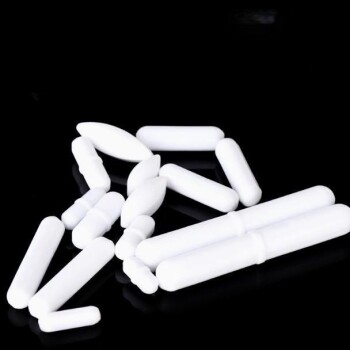
Custom PTFE Teflon Parts Manufacturer PTFE Magnetic Stirring Bar
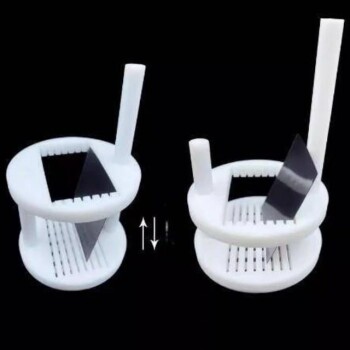
Custom PTFE Teflon Parts Manufacturer Adjustable Height Flower Basket
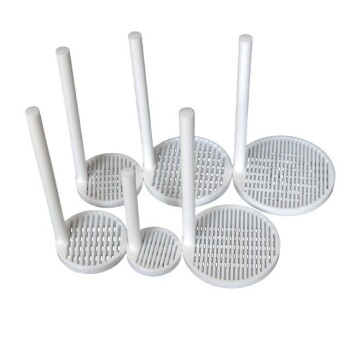
Custom PTFE Teflon Parts Manufacturer PTFE Cleaning Rack
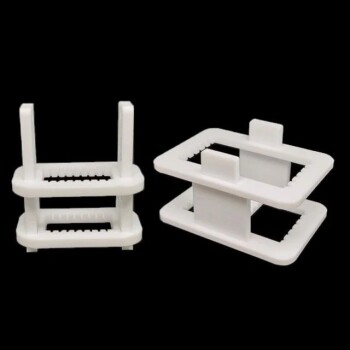
Custom PTFE Teflon Parts Manufacturer Conductive Glass Substrate Cleaning Rack
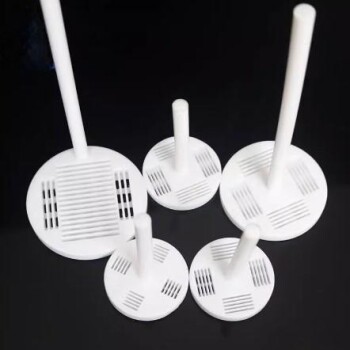
Custom Machined Molded PTFE Teflon Parts Manufacturer for Laboratory ITO FTO Conductive Glass Cleaning Flower Basket