Anti-static PTFE bellows are specialized components designed to address static electricity concerns while leveraging PTFE's inherent properties like chemical resistance, temperature tolerance, and flexibility. They are critical in industries where static discharge could damage sensitive equipment or ignite flammable substances, such as semiconductor manufacturing, aerospace, and chemical processing. Their ability to dissipate static makes them indispensable in cleanrooms, fuel systems, and high-precision environments.
Key Points Explained:
-
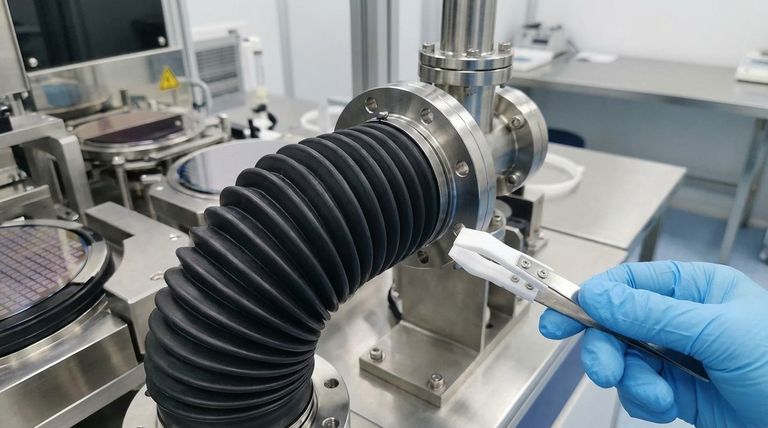
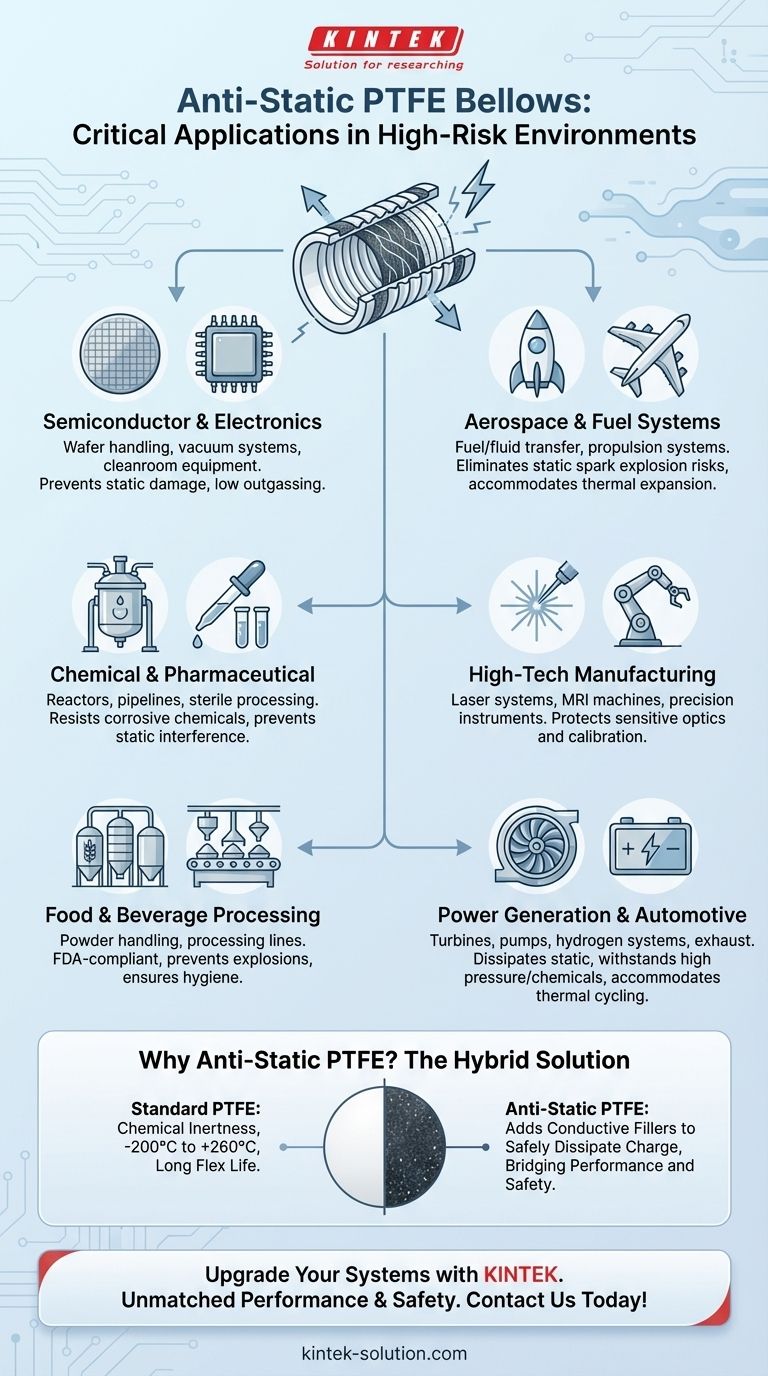
Semiconductor and Electronics Manufacturing
- Anti-static PTFE bellows prevent static buildup that could disrupt microchip production or damage delicate components.
- Used in wafer handling, vacuum systems, and cleanroom equipment where even minor static discharge can compromise product quality.
- Their low outgassing properties ensure no contamination of sensitive processes.
-
Aerospace and Fuel Systems
- Critical for fuel/fluid transfer systems in aircraft and spacecraft, where static sparks pose explosion risks.
- PTFE's flexibility and durability accommodate vibration and thermal expansion in dynamic aerospace environments.
- Example: Bellows in rocket propulsion systems or aircraft fuel lines.
-
Chemical and Pharmaceutical Industries
- Resistant to corrosive chemicals (e.g., acids, solvents), making them ideal for reactors, pipelines, and sterile processing.
- Shield sterile areas in pharmaceutical labs from particulate contamination while preventing static interference.
- ptfe balls are also used here for similar anti-static and non-reactive properties.
-
High-Tech Manufacturing (Medical/Laser Equipment)
- Protect sensitive optics in laser systems or MRI machines from static-induced misalignment.
- Used in robotic arms or precision instruments where static could disrupt calibration.
-
Food and Beverage Processing
- FDA-compliant PTFE bellows prevent static in powder handling (e.g., flour, spices) to avoid explosions.
- Non-stick surface ensures hygiene and easy cleaning in processing lines.
-
Power Generation and Water Treatment
- Withstand high-pressure steam or aggressive chemicals in turbines/pumps while dissipating static.
- Prevent static-related corrosion in pipelines carrying purified water or industrial fluids.
-
Automotive and Energy Sectors
- Used in hydrogen fuel cell systems or battery manufacturing, where static control is vital for safety.
- Flexible bellows accommodate thermal cycling in exhaust systems or renewable energy setups.
Why Anti-Static PTFE?
Unlike standard PTFE, anti-static variants incorporate carbon or other conductive fillers to safely dissipate charge without compromising PTFE’s core benefits—chemical inertness, -200°C to +260°C tolerance, and long flex life. This hybrid solution bridges the gap between performance and safety in critical applications.
Have you considered how static dissipation in these bellows compares to traditional grounding methods in high-risk environments? The integration of conductive materials offers a more reliable, maintenance-free solution.
Summary Table:
| Industry | Key Applications | Benefits of Anti-Static PTFE Bellows |
|---|---|---|
| Semiconductor/Electronics | Wafer handling, vacuum systems, cleanroom equipment | Prevents static damage to microchips; low outgassing ensures no contamination |
| Aerospace/Fuel Systems | Fuel transfer, rocket propulsion, aircraft fuel lines | Eliminates explosion risks from static sparks; withstands vibration and thermal expansion |
| Chemical/Pharmaceutical | Reactors, pipelines, sterile processing | Resists corrosive chemicals; prevents static interference in sterile environments |
| High-Tech Manufacturing | Laser systems, MRI machines, robotic arms | Protects sensitive optics/calibration from static disruption |
| Food/Beverage Processing | Powder handling (flour, spices), processing lines | FDA-compliant; prevents explosions and ensures hygiene |
| Power Generation/Water | Turbines, pumps, pipelines for purified water/fluids | Dissipates static in high-pressure/chemical environments; prevents corrosion |
| Automotive/Energy | Hydrogen fuel cells, battery manufacturing, exhaust systems | Ensures safety in energy systems; accommodates thermal cycling |
Upgrade your static-sensitive systems with KINTEK’s precision-engineered anti-static PTFE bellows. Ideal for semiconductor, aerospace, medical, and industrial applications, our bellows combine unmatched chemical resistance, flexibility, and reliable static dissipation. Whether you need standard solutions or custom designs for prototypes or high-volume orders, KINTEK delivers durability and performance. Contact us today to discuss your requirements and explore how our PTFE solutions can enhance your operational safety and efficiency!
Visual Guide
Related Products
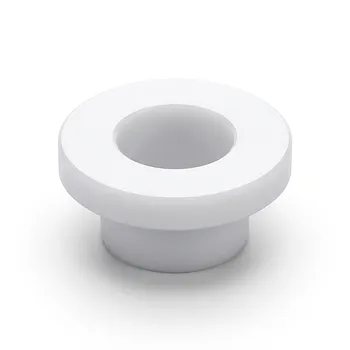
- Customizable High Temperature Resistant Anti Static PTFE Insulating Gaskets Flame Retardant Corrosion Proof Industrial Seals
- Custom PTFE Teflon Balls for Advanced Industrial Applications
- Corrosion Resistant PTFE Polytetrafluoroethylene Valve and Customizable Laboratory Fluid Dispensing Faucet for Aggressive Chemical Handling in Industrial Storage Tanks and Plastic Drums
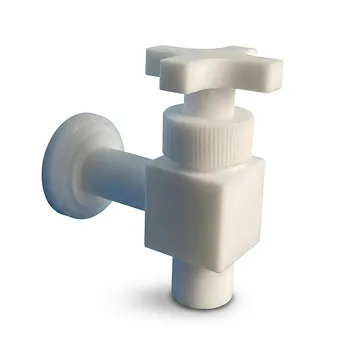
- High Corrosion Resistant PTFE Faucet Polytetrafluoroethylene Valve for Chemical Storage Drums and Fluid Transfer Systems Customizable Industrial Grade
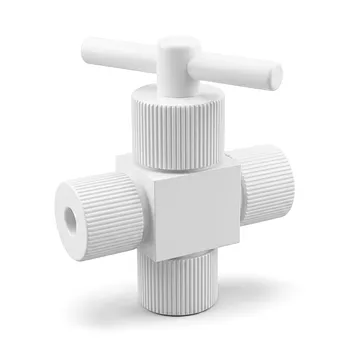
- Corrosion Resistant PTFE Valves Customizable 2 Way 3 Way 4 Way High Temperature Teflon Fluid Control Solutions
People Also Ask
- How is PTFE utilized in seals and gaskets? Leverage Its Chemical & Temperature Resistance
- What are the key properties of PTFE that make it suitable for seals and gaskets? Unlock Superior Sealing Performance
- What industries benefit from PTFE gaskets due to their FDA compliance? Ensure Product Purity and Safety
- How do filled PTFE and ePTFE gaskets differ from virgin PTFE? Optimize Your Seals for Strength and Stability
- What are some specific applications of PTFE gaskets? Sealing Solutions for Harsh Chemical & Thermal Environments