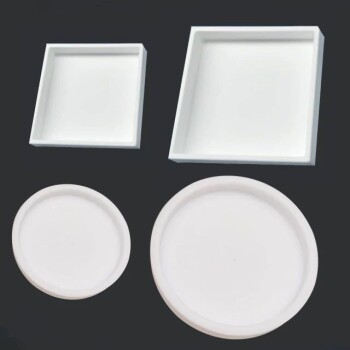
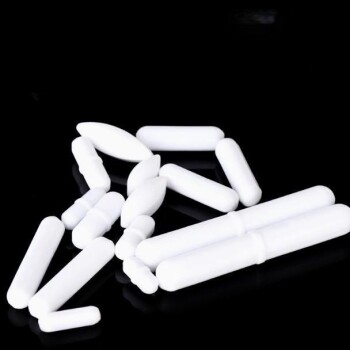
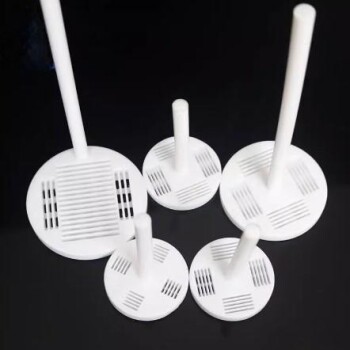
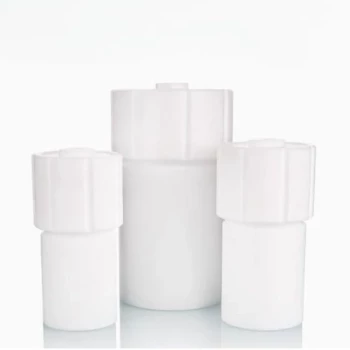
Thematics Ptfe Disc

ptfe disc

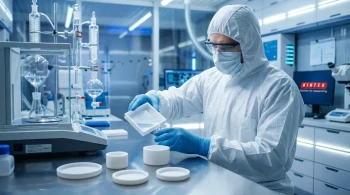
PTFE discs from KINTEK are essential components across multiple industries, offering unmatched performance in challenging environments. Our precision-engineered PTFE discs serve critical functions in:

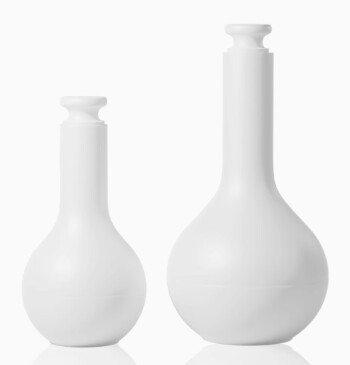
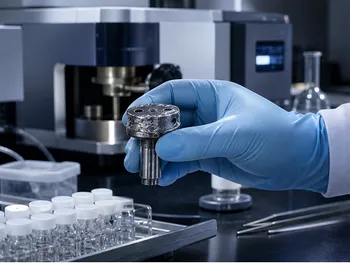
  • Laboratory glassware and chemical processing systems
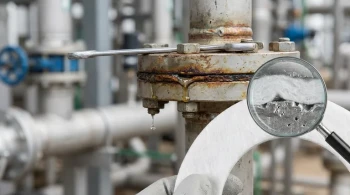
  • Industrial piping and valve applications
  • Shock absorbers and pneumatic systems
  • Food & beverage processing equipment
  • Robotics and injection molding presses

Available in various configurations including guide strips, plugs, and custom-designed components, our PTFE discs combine the exceptional material properties of PTFE with application-specific engineering.


Premium PTFE Disc Solutions for Extreme Environments

KINTEK's PTFE discs represent the pinnacle of fluoropolymer engineering, designed to outperform in the most demanding industrial and laboratory settings. Our discs leverage the unique molecular structure of polytetrafluoroethylene to deliver:

Unrivaled Material Properties

  • Exceptional chemical inertness: Resists virtually all acids, bases, and solvents
  • Broad temperature tolerance: Stable from -200°C to +260°C (-328°F to +500°F)
  • Ultra-low coefficient of friction (0.05-0.10) for smooth operation
  • Superior dielectric properties for electrical insulation
  • Non-stick surface prevents material buildup

Advanced Engineering Features Our PTFE discs incorporate specialized design elements for enhanced performance:

  1. Precision Sealing Technology

    • Elastic deformation creates perfect seals under compression
    • Maintains sealing integrity across thermal cycling
    • Custom durometer options for specific pressure requirements
  2. Hybrid Material Solutions

    • PTFE-rubber composites for improved compression set
    • Glass or carbon-filled options for enhanced wear resistance
    • Conductive variants available for static-sensitive applications
  3. Application-Specific Designs

    • Multi-layered discs for complex fluid handling
    • Grooved and channeled surfaces for flow control
    • Reinforced edges for high-pressure environments

Industry-Proven Performance KINTEK PTFE discs deliver measurable advantages in critical applications:

  • Semiconductor Manufacturing

    • Contamination-free handling of wafers and substrates
    • Resists ultra-pure chemicals and plasma environments
  • Pharmaceutical Processing

    • FDA-compliant materials for GMP applications
    • Withstands repeated sterilization cycles
  • Chemical Processing

    • Long service life in aggressive media
    • Reduces maintenance downtime
  • Food Production

    • NSF-certified options available
    • Prevents bacterial adhesion

Custom Engineering Capabilities Our in-house engineering team can develop PTFE disc solutions tailored to your exact requirements:

  • Prototype to production volume manufacturing
  • CAD modeling and finite element analysis
  • Material testing and validation services
  • Application-specific performance optimization

Why Choose KINTEK PTFE Discs?

  • 40+ years of fluoropolymer expertise
  • ISO 9001:2015 certified production
  • Batch traceability and material certification
  • Rapid prototyping with 5-day average turnaround
  • Just-in-time manufacturing capabilities

Contact our engineering team today to discuss your PTFE disc requirements. Let us develop a custom solution that optimizes your process performance and reduces total cost of ownership. Our application specialists are ready to provide technical consultation and sample evaluation.

FAQ

What Are The Main Applications Of PTFE Discs?

PTFE discs are widely used in laboratory glassware, chemical processing equipment, and industrial piping systems. They are also applied in shock absorbers, agriculture, food and beverage, robotics, maintenance, injection presses, presses, and pneumatics.

What Are The Key Features Of PTFE Discs?

PTFE discs combine the properties of PTFE and rubber, offering excellent chemical resistance, low friction, heat resistance, and good compression set. They also feature a low coefficient of friction, excellent chemical inertness, a non-adhesive surface, a wide temperature range (-200°C to +260°C), and excellent dielectric properties.

How Do PTFE Discs Work In Sealing Applications?

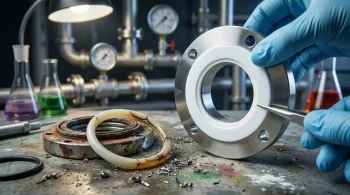
PTFE O-ring seals, which have a circular cross-section, achieve sealing through their elastic properties and preload. When placed between connected parts, the O-ring fills the sealing gap and forms a sealing interface due to its elasticity. External stress ensures the O-ring maintains sealing interface stability, preventing liquid or gas leakage.

What Are The Advantages Of Using PTFE Discs?

PTFE discs offer numerous advantages, including chemical resistance, temperature resistance, versatility, non-corrosive properties, electrical and thermal insulation, and easy availability. These properties make them suitable for a wide range of industrial applications.

Why Are PTFE Discs Preferred In High-temperature Environments?

PTFE discs can withstand extreme temperatures ranging from -200°C to +260°C, making them ideal for high-temperature environments. Their heat resistance ensures they maintain their properties and performance even under such conditions.

Are PTFE Discs Resistant To Chemicals?

Yes, PTFE discs are highly resistant to a wide range of chemicals, making them suitable for use in harsh chemical environments. Their excellent chemical inertness ensures they do not react with most substances.

What Makes PTFE Discs Non-stick?

PTFE discs have a non-adhesive surface due to the inherent properties of PTFE, which prevent materials from sticking to them. This makes them ideal for applications where easy cleaning and minimal contamination are required.

Can PTFE Discs Be Used In Electrical Applications?

Yes, PTFE discs have excellent dielectric properties, making them suitable for electrical insulation applications. They provide great electrical insulation and are often used in electrical and electronic components.

How Do PTFE Discs Perform In Low-temperature Environments?

PTFE discs can perform reliably in low-temperature environments, as they can withstand temperatures as low as -200°C. Their properties remain stable, ensuring consistent performance even in extreme cold.

Are PTFE Discs Customizable For Specific Applications?

Yes, PTFE discs can be customized in terms of size, shape, and other specifications to meet the requirements of specific applications. This versatility makes them suitable for a wide range of industrial and laboratory uses.

REQUEST A QUOTE

Our professional team will reply to you within one business day. Please feel free to contact us!


Related Articles

Why Standard Tubing Fails in High-Performance Systems—And How High-Precision PTFE Secures the Modern Vehicle

Discover why standard fluid lines fail in EVs and high-heat engines, and how precision PTFE engineering provides the thermal and electrical isolation required for modern automotive safety.

Read more

Why Your PTFE Connections Leak Under Pressure—And the Precision Engineering That Stops It

Discover why standard fittings fail in high-purity labs and how the four-part mechanics of a two-ferrule PTFE connector ensure a leak-proof, high-grip seal.

Read more

Why Traditional Plastic Molding Fails with PTFE—And the Secret to Precision Labware Fabrication

Learn why PTFE’s high melt viscosity makes injection molding impossible and how specialized sintering and CNC machining deliver high-precision lab components.

Read more

The Invisible Deformation: Why Your PTFE Digestion Liners Fail Under Pressure—And How TFM Fixes It

Discover why standard PTFE liners fail in microwave digestion and how TFM's modified molecular structure prevents creep, leaks, and contamination.

Read more

Beyond the Melting Point: Why Your PTFE Labware Fails Sooner Than You Think—And How to Fix It

Discover the real thermal limits of PTFE labware. Learn why "melting point" isn't the only safety metric and how to ensure reliability from -200°C to +260°C.

Read more

The Invisible Yield Killer: Why Standard Fluid Components Are Compromising Your Semiconductor Purity

Discover why microscopic contamination in fluid paths ruins semiconductor yields and how precision-engineered PTFE components provide the PPT-level purity required.

Read more

Beyond the Boiling Point: Why Closed-Vessel Design is Non-Negotiable for Trace Analysis

Discover why closed-vessel microwave digestion outperforms open-vessel methods by mastering pressure and temperature for faster, more accurate trace analysis.

Read more

Why Your High-Acidity Mixing Fails—And How PTFE Rotors Solve the Contamination Crisis

Discover why standard laboratory stirrers fail in aggressive chemical environments and how PTFE rotors provide the ultimate solution for contamination-free mixing.

Read more

Why Your "Indestructible" PTFE Liners Fail—And How to Protect Your High-Value Equipment

Stop unexpected autoclave failures and cross-contamination. Learn the science of PTFE maintenance, from the 1% mass loss rule to preventing vessel corrosion.

Read more
Beyond the Bolt: Why Your Flange Leaks Are a Material Science Problem, Not a Mechanical One

Beyond the Bolt: Why Your Flange Leaks Are a Material Science Problem, Not a Mechanical One

Tired of recurring flange leaks? Discover the hidden material failure causing them and how ePTFE gaskets provide a permanent solution for equipment reliability.

Read more
Your Recurring Nightmare: Why High-Purity Fluid Systems Fail and How to Stop It for Good

Your Recurring Nightmare: Why High-Purity Fluid Systems Fail and How to Stop It for Good

Discover the root cause of recurring pipe corrosion and contamination in critical systems. It's not wear and tear—it's a chemical war you can win.

Read more
When "Chemically Inert" Isn't Enough: The Hidden Cause of PTFE Component Failure

When "Chemically Inert" Isn't Enough: The Hidden Cause of PTFE Component Failure

Discover why standard PTFE components fail in critical applications, even with 'safe' chemicals. Learn the hidden role of fabrication quality and how to prevent costly downtime.

Read more
Why 'Medical-Grade' Isn't Enough: The Hidden Risk in Your PTFE Components

Why 'Medical-Grade' Isn't Enough: The Hidden Risk in Your PTFE Components

Generic 'medical-grade' PTFE poses hidden risks. Discover why material purity and manufacturing precision are the real keys to device safety.

Read more
When 'Tougher' Isn't Enough: The Hidden Reason Your Industrial Components Are Failing

When 'Tougher' Isn't Enough: The Hidden Reason Your Industrial Components Are Failing

Discover why conventional materials fail under combined stress and how PTFE components provide a definitive solution for chemical, thermal, and friction challenges.

Read more
The PTFE Paradox: Why Your Catheter Liner's Best Trait Is Also Its Biggest Challenge

The PTFE Paradox: Why Your Catheter Liner's Best Trait Is Also Its Biggest Challenge

Struggling with PTFE catheter liner delamination? Discover the root cause of bonding failures and how a precision manufacturing partner turns this challenge into a competitive advantage.

Read more
The Gasket Keeps Leaking: Why Your Standard PTFE Seal Fails and How to Fix It for Good

The Gasket Keeps Leaking: Why Your Standard PTFE Seal Fails and How to Fix It for Good

Tired of PTFE gasket leaks? Discover the hidden flaw in standard PTFE and how expanded PTFE (ePTFE) provides a permanent fix for critical applications.

Read more
Why Your PTFE Gaskets Keep Leaking—And Why Tighter Bolts Won't Fix It

Why Your PTFE Gaskets Keep Leaking—And Why Tighter Bolts Won't Fix It

Tired of recurring PTFE gasket leaks? Discover the true cause of failure ('creep') and learn how to select the right material for a permanent, reliable seal.

Read more
The Unseen Guardian: How PTFE's Molecular Shield Protects Our Most Critical Systems

The Unseen Guardian: How PTFE's Molecular Shield Protects Our Most Critical Systems

An engineer's look at PTFE's chemical inertness and thermal stability, and why precision fabrication is key to its reliability.

Read more
Why Your Medical Device Components Fail Under Stress—And What to Do About It

Why Your Medical Device Components Fail Under Stress—And What to Do About It

Tired of component failures in medical devices? Discover why common elastomers fail under combined stress and how precision PTFE offers a permanent solution.

Read more
The Asymmetric Cost of Failure: Why Precision PTFE Is Your Last Line of Defense

The Asymmetric Cost of Failure: Why Precision PTFE Is Your Last Line of Defense

Learn how PTFE components save money not by being reusable, but by preventing catastrophic analytical failures and mitigating invisible financial risks.

Read more