Thematics Ptfe Ring
Toggle Categories

Get Instant Support

Choose your preferred way to connect with our team

Response Time

Within 8 hours on working days, 24 hours on holidays

ptfe ring

PTFE rings are essential components in industries requiring superior chemical resistance, low friction, and high-temperature stability. Our PTFE rings are widely used in semiconductor manufacturing, medical devices, laboratory equipment, and industrial machinery. Key products in this category include:

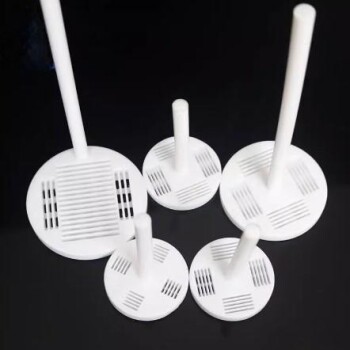
  • Custom PTFE Parts: Precision-engineered for specific applications, from prototypes to high-volume orders.
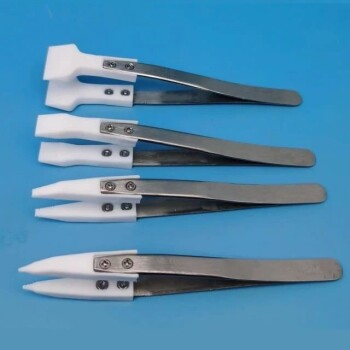
  • PTFE Tweezers and Containers: Ideal for handling sensitive materials in labs and cleanrooms.
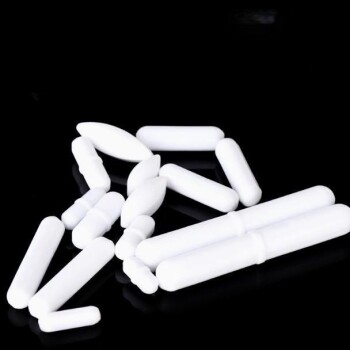
  • PTFE Magnetic Stirring Bars: Chemical-resistant and durable for laboratory mixing.
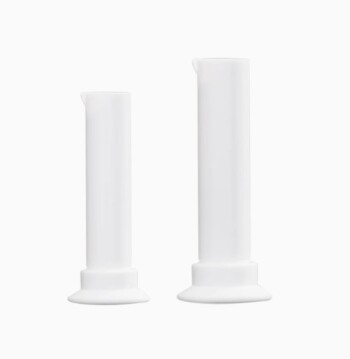
  • PTFE Measuring Cylinders: Precision tools for accurate measurements in harsh environments.
  • PTFE Scrapers and Shovels: Non-stick and durable for material handling in chemical industries.
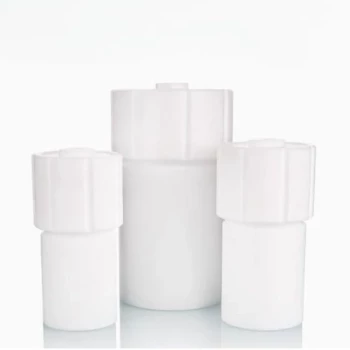
  • PTFE Microwave Digestion Vessels: Safe and contamination-free for sample preparation.
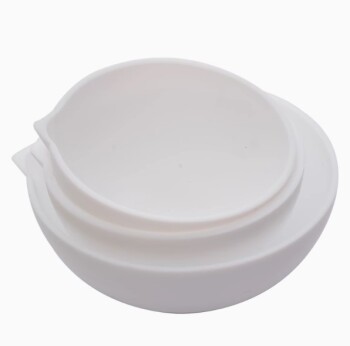
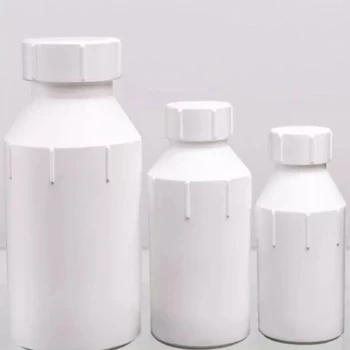
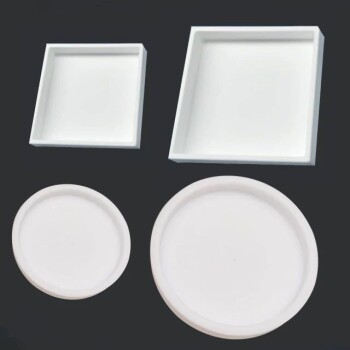
  • PTFE Bottles and Evaporating Dishes: Resistant to acids and solvents for reliable storage and sample prep.

Why Choose Our PTFE Rings?

PTFE (Polytetrafluoroethylene) rings are renowned for their exceptional properties, making them indispensable in demanding applications across various industries. Here’s a detailed look at what makes our PTFE rings stand out:

Key Features

  • High-Temperature Resistance: With a melting point of around 347°C, PTFE rings can withstand extreme temperatures, making them suitable for high-heat environments.
  • Chemical Resistance: PTFE is inert to nearly all industrial chemicals and solvents, ensuring longevity in corrosive environments.
  • Low Friction: PTFE has the lowest coefficient of friction of any solid material, reducing wear and tear in moving parts.
  • Electrical Insulation: Excellent dielectric properties make PTFE rings ideal for electrical and semiconductor applications.
  • FDA Compliance: Safe for use in food and medical applications, meeting stringent regulatory standards.
  • UV and Flame Resistance: PTFE resists UV radiation and has a UL94-VO flame rating, enhancing safety in various applications.

Applications

Our PTFE rings are used in:

  • Semiconductor Industry: For handling corrosive chemicals and high-purity processes.
  • Medical Devices: As coatings for catheters and grafts, ensuring biocompatibility and bacteria resistance.
  • Industrial Machinery: In bearings, gears, and liners to reduce friction and wear.
  • Laboratory Equipment: For non-stick surfaces and chemical-resistant tools.
  • Aerospace and Electronics: As insulators and wire coatings due to their excellent dielectric properties.

Customization and Precision

At KINTEK, we specialize in custom fabrication to meet your exact specifications. Whether you need prototypes or high-volume production, our precision manufacturing ensures consistent quality and performance. Our PTFE rings can be tailored in size, shape, and filler materials to enhance specific properties like wear resistance or thermal conductivity.

Advantages Over Competitors

  • Superior Material Quality: We use high-purity PTFE to ensure optimal performance.
  • Advanced Manufacturing Techniques: From electrostatic coating to high-temperature curing, our processes guarantee durability and precision.
  • Comprehensive Support: From design to delivery, our team provides expert guidance to meet your unique needs.

Get Started Today

Ready to enhance your operations with high-performance PTFE rings? Contact us to discuss your requirements or request a quote. Our team is here to provide tailored solutions that meet your exact needs, ensuring reliability and efficiency in your applications.

Why wait? Let KINTEK be your trusted partner for all your PTFE ring needs. Get in touch now to learn more about our products and customization options!

FAQ

What Are The Main Applications Of PTFE Rings?

PTFE rings are widely used in aerospace and computer wiring due to their excellent dielectric properties. They are also used in industrial applications for low-friction parts like bearings and gears, in medicine as graft materials and catheter coatings, and in the semiconductor industry for their resistance to strong acids. Additionally, they are used in liners for engineering, non-stick equipment, medical applications, rainwear, and as lubricants in machinery.

What Are The Key Features Of PTFE Rings?

PTFE rings have a high melting point of around 347°C, high resistance to water, a very low coefficient of friction, and remain flexible even at low temperatures. They are known for being the most slippery material, withstanding extreme temperatures, and providing excellent insulation. They are also resistant to nearly all industrial chemicals and solvents, have outstanding dielectric properties, and resist ignition and flame spread.

How Are PTFE Rings Manufactured?

PTFE rings can be made from raw PTFE, which comes in powder or liquid forms. Smaller items can be dipped and spun to remove excess material. Another method involves using an electrostatic spray gun to apply negatively charged PTFE particles. The coated object is then cured at high temperatures to finalize the product.

What Are The Advantages Of Using PTFE Rings?

PTFE rings offer numerous advantages, including corrosion resistance, a long shelf life, and the ability to withstand a wide temperature range (-325°F to above 500°F). They are hydrophobic (do not swell), FDA compliant, resistant to UV radiation, and provide excellent electrical resistance. Additionally, they are non-stick, chemically resistant, and provide great electrical insulation.

Why Are PTFE Rings Preferred In The Semiconductor Industry?

PTFE rings are preferred in the semiconductor industry due to their exceptional chemical resistance, particularly to strong acids. Their ability to withstand harsh chemical environments while maintaining structural integrity makes them ideal for use in semiconductor manufacturing and processing equipment.

Are PTFE Rings Suitable For Medical Applications?

Yes, PTFE rings are suitable for medical applications. They are used as graft materials and catheter coatings due to their biocompatibility, flexibility, and resistance to bacteria. Their non-reactive nature and ability to prevent bacterial growth make them ideal for various medical uses.

REQUEST A QUOTE

Our professional team will reply to you within one business day. Please feel free to contact us!


Related Articles

Why 'Medical-Grade' Isn't Enough: The Hidden Risk in Your PTFE Components

Why 'Medical-Grade' Isn't Enough: The Hidden Risk in Your PTFE Components

Generic 'medical-grade' PTFE poses hidden risks. Discover why material purity and manufacturing precision are the real keys to device safety.

Read more
Why Your High-Performance Seals Keep Leaking—And Why It's Not the Seal's Fault

Why Your High-Performance Seals Keep Leaking—And Why It's Not the Seal's Fault

Stop the cycle of failed PTFE seals. Discover the real reason for chronic leaks isn't the part, but the installation system, and how to fix it for good.

Read more
When 'Tougher' Isn't Enough: The Hidden Reason Your Industrial Components Are Failing

When 'Tougher' Isn't Enough: The Hidden Reason Your Industrial Components Are Failing

Discover why conventional materials fail under combined stress and how PTFE components provide a definitive solution for chemical, thermal, and friction challenges.

Read more
The PTFE Paradox: Why Your Catheter Liner's Best Trait Is Also Its Biggest Challenge

The PTFE Paradox: Why Your Catheter Liner's Best Trait Is Also Its Biggest Challenge

Struggling with PTFE catheter liner delamination? Discover the root cause of bonding failures and how a precision manufacturing partner turns this challenge into a competitive advantage.

Read more
Your High-Performance Seals Are Failing. The Reason Isn't What You Think.

Your High-Performance Seals Are Failing. The Reason Isn't What You Think.

Discover the hidden reason your spring-energized seals fail and how to fix it by understanding the seal as a two-part system, not a single component.

Read more
The Gasket Keeps Leaking: Why Your Standard PTFE Seal Fails and How to Fix It for Good

The Gasket Keeps Leaking: Why Your Standard PTFE Seal Fails and How to Fix It for Good

Tired of PTFE gasket leaks? Discover the hidden flaw in standard PTFE and how expanded PTFE (ePTFE) provides a permanent fix for critical applications.

Read more
Why Your Lab Plugs Stick and Contaminate: The Hidden Science of Surface Energy

Why Your Lab Plugs Stick and Contaminate: The Hidden Science of Surface Energy

Frustrated with seized plugs and failed experiments? Learn the hidden physics of surface energy and why precision PTFE components are the definitive solution.

Read more
The Hidden Saboteur in Your Vial: Why Your Chromatography Results Are Inconsistent—And How to Fix It

The Hidden Saboteur in Your Vial: Why Your Chromatography Results Are Inconsistent—And How to Fix It

Frustrated by phantom peaks and drifting results? Discover how a faulty vial septum, not your instrument, is often the culprit and how to fix it for good.

Read more
Why Your PTFE Gaskets Keep Leaking—And Why Tighter Bolts Won't Fix It

Why Your PTFE Gaskets Keep Leaking—And Why Tighter Bolts Won't Fix It

Tired of recurring PTFE gasket leaks? Discover the true cause of failure ('creep') and learn how to select the right material for a permanent, reliable seal.

Read more
The Unseen Guardian: How PTFE's Molecular Shield Protects Our Most Critical Systems

The Unseen Guardian: How PTFE's Molecular Shield Protects Our Most Critical Systems

An engineer's look at PTFE's chemical inertness and thermal stability, and why precision fabrication is key to its reliability.

Read more
Why Your Medical Device Components Fail Under Stress—And What to Do About It

Why Your Medical Device Components Fail Under Stress—And What to Do About It

Tired of component failures in medical devices? Discover why common elastomers fail under combined stress and how precision PTFE offers a permanent solution.

Read more
The Asymmetric Cost of Failure: Why Precision PTFE Is Your Last Line of Defense

The Asymmetric Cost of Failure: Why Precision PTFE Is Your Last Line of Defense

Learn how PTFE components save money not by being reusable, but by preventing catastrophic analytical failures and mitigating invisible financial risks.

Read more
Why Your Lab Results Are So Unpredictable (It’s Probably Your Vial Septa)

Why Your Lab Results Are So Unpredictable (It’s Probably Your Vial Septa)

Tired of inconsistent lab data? Discover the hidden reason your vial septa fail under heat or cold and how to finally ensure reliable results.

Read more
Designing for the Edge: The Material Science of Infallible Sealing

Designing for the Edge: The Material Science of Infallible Sealing

Explore the material science of spring energized seals, where polymer jackets and metal springs combine for reliable sealing in extreme environments.

Read more
The Real Reason Your Pulp Mill Seals Keep Failing—And the Permanent Fix

The Real Reason Your Pulp Mill Seals Keep Failing—And the Permanent Fix

Tired of constant pump seal failures in your pulp mill? Discover the hidden cause of leaks and downtime and how to solve it for good.

Read more
The Silent Thief: How Component Surfaces Dictate Pharmaceutical Profitability

The Silent Thief: How Component Surfaces Dictate Pharmaceutical Profitability

Discover how PTFE's unique material properties in components combat product loss and contamination, directly boosting pharmaceutical yield and purity.

Read more
The PTFE Paradox: Why Using Less of This 'Miracle' Material Unlocks More Performance

The PTFE Paradox: Why Using Less of This 'Miracle' Material Unlocks More Performance

Stop costly design failures. Discover why PTFE's true power isn't as a structural material, but as a precision surface component that solves friction.

Read more
Torque, Tension, and Trust: The Engineering Case for PTFE-Coated Fasteners

Torque, Tension, and Trust: The Engineering Case for PTFE-Coated Fasteners

Discover how PTFE coatings solve the critical engineering problems of friction and corrosion, ensuring predictable clamp force and easy maintenance.

Read more
Beyond Exotic Alloys: The Real Secret to Defeating Corrosion in Your Fluid Systems

Beyond Exotic Alloys: The Real Secret to Defeating Corrosion in Your Fluid Systems

Discover why 'corrosion-resistant' valves fail and how precision-engineered PTFE liners offer a more reliable, cost-effective solution than exotic alloys.

Read more
The Price of Purity: When a Simple Bottle Becomes Mission-Critical

The Price of Purity: When a Simple Bottle Becomes Mission-Critical

Discover why PTFE bottles are not just containers, but precision tools that mitigate invisible risks in high-stakes chemical and sample handling.

Read more