Thematics Ptfe Brush
Toggle Categories

Get Instant Support

Choose your preferred way to connect with our team

Response Time

Within 8 hours on working days, 24 hours on holidays

ptfe brush

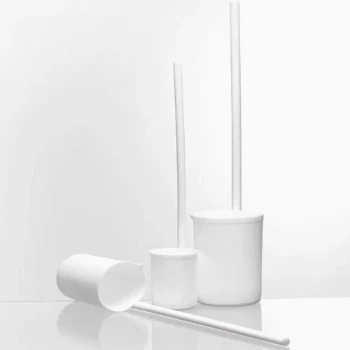
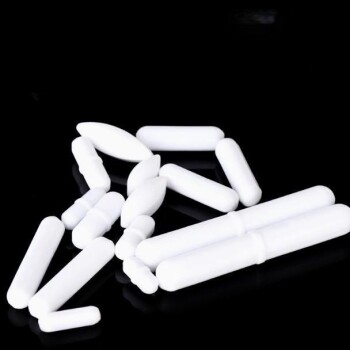
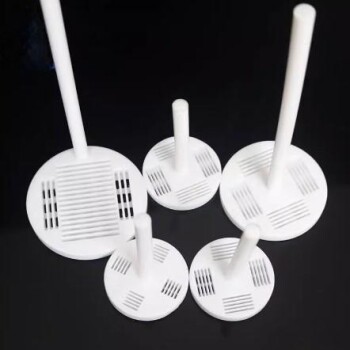
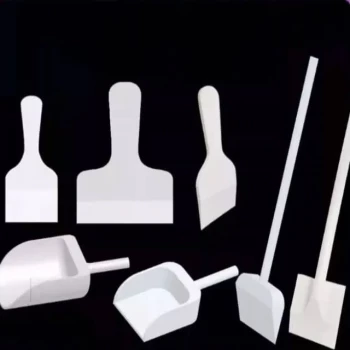
PTFE brushes and tools from KINTEK are engineered for precision handling in demanding environments. Our products serve critical applications across semiconductor manufacturing, medical devices, and laboratory settings. The category includes:

  • PTFE Flower Baskets: High-purity cleaning tools for silicon wafers and conductive glass
  • PTFE Scrapers/Shovels: Non-stick tools for material handling in chemical processes
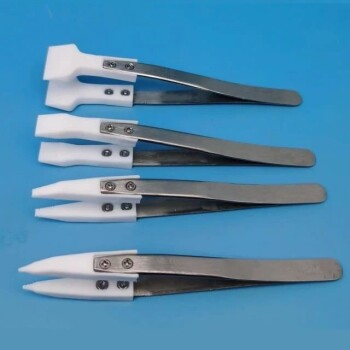
  • PTFE Tweezers: Anti-static, contamination-free handling of sensitive components
  • PTFE Sampling Spoons: Safe chemical/solvent sampling with zero contamination
  • PTFE Stirring Bars: Chemically inert mixing solutions for lab applications

Premium PTFE Brushes & Tools for Critical Applications

KINTEK's PTFE brush category represents the pinnacle of fluoropolymer engineering, combining exceptional material properties with precision manufacturing. Our PTFE (Polytetrafluoroethylene) products deliver unmatched performance in the most demanding industrial and scientific environments.

Material Advantages

PTFE's molecular structure provides:

  • Chemical Immunity: Resists all known acids, bases, and solvents
  • Temperature Resilience: Stable from -30°C to +260°C continuously
  • Ultra-Low Friction: Coefficient of friction lower than ice-on-ice
  • Electrical Insulation: Superior dielectric properties
  • Biocompatibility: FDA-approved for food and medical contact

Engineering Excellence

Our PTFE brushes and tools feature:

  1. Precision Machining: Tolerances within ±0.01mm for critical applications
  2. Custom Formulations: Virgin-grade PTFE with optional fillers (glass, carbon, etc.)
  3. Surface Treatments: Enhanced wettability or non-stick properties as required
  4. Structural Integrity: High flexural strength despite material softness

Application-Specific Solutions

Semiconductor Manufacturing

  • Non-particulating surfaces prevent wafer contamination
  • Static-dissipative versions available
  • Custom geometries for wafer handling tools

Medical/Laboratory Use

  • Autoclavable designs for sterilization
  • Radiolucent properties for imaging compatibility
  • Chemical-resistant sample handling tools

Industrial Processing

  • Non-stick surfaces for powder handling
  • Corrosion-proof components for chemical plants
  • High-purity material meets USP Class VI standards

Customization Capabilities

KINTEK specializes in:

  • Prototype development with rapid turnaround
  • DFM (Design for Manufacturing) consultation
  • High-volume production with consistent quality
  • Special features like:
    • Embedded sensors
    • Composite structures
    • Multi-material assemblies

Why Choose KINTEK PTFE?

  • 50+ Years of fluoropolymer expertise
  • ISO 9001:2015 certified manufacturing
  • Class 1000 Clean Room production available
  • Material Traceability from raw resin to finished product

Contact our engineering team today to discuss your specific PTFE brush or tooling requirements. We'll help you design the perfect solution that combines material advantages with functional precision.

Samples available for qualified applications - Request your test units now!

FAQ

What Are The Main Applications Of PTFE Brushes?

PTFE brushes are widely used in food and drink production equipment, medical devices (such as catheters, syringes, and sutures), electrical insulation, electronic component protection, and chemical industry products (including gaskets, vessel linings, and tanks). They are also suitable for cooking equipment, conveyor belt rollers, temperature sensor casings, and non-stick surface covers due to their ability to withstand harsh environments.

What Are The Key Features Of PTFE Brushes?

PTFE brushes have several unique characteristics, including extremely high working temperatures, nonstick properties, a low friction surface, high resistance to chemicals and solvents, excellent electrical resistance, and resistance to weather, UV light, and corrosion. They are also non-toxic, inert, and biocompatible. PTFE is known for being the most slippery material, withstanding extreme temperatures, and providing excellent insulation.

What Is The Principle Behind PTFE Brushes?

PTFE brushes are made from a low friction, soft fluoropolymer with superior chemical and weathering resistance. They are hydrophobic, non-wetting, heavy, and resistant to high temperatures. Additionally, PTFE brushes have good electrical insulating characteristics, making them ideal for various industrial and laboratory applications.

What Are The Advantages Of Using PTFE Brushes?

PTFE brushes offer numerous benefits, including a wide operating temperature range (-30°C to +200°C), high flexural strength due to strong carbon-fluorine bonds, outstanding electrical insulation, weatherability, non-adhesiveness, water resistance, and the lowest coefficient of friction of any solid. They also provide the best price-to-performance ratio and can withstand continuous working temperatures up to +260°C. Their extremely low coefficient of friction reduces resistance during movement, making them ideal for bearings, bushings, and gears, which minimizes wear and tear, extends component lifespan, and reduces maintenance costs.

Are PTFE Brushes Safe For Food And Medical Applications?

Yes, PTFE brushes are non-toxic, inert, and biocompatible, making them safe for food and medical applications. They are FDA approved for food contact and are commonly used in medical devices such as catheters, syringes, and sutures.

How Does The Chemical Resistance Of PTFE Brushes Benefit Industrial Applications?

PTFE brushes are highly resistant to nearly all industrial chemicals and solvents, which makes them ideal for use in harsh chemical environments. This resistance ensures durability and longevity in applications such as chemical industry products, laboratory equipment, and semiconductor manufacturing.

What Makes PTFE Brushes Suitable For High-temperature Environments?

PTFE brushes can withstand extreme temperatures, with a continuous working temperature range up to +260°C. This makes them suitable for high-temperature environments such as cooking equipment, industrial machinery, and laboratory applications where heat resistance is critical.

Why Are PTFE Brushes Preferred For Electrical Insulation?

PTFE brushes have outstanding dielectric properties and excellent electrical insulation, which makes them ideal for protecting electronic components and ensuring safe electrical insulation in various applications.

REQUEST A QUOTE

Our professional team will reply to you within one business day. Please feel free to contact us!


Related Articles

The Art of Material Selection: A Pragmatic Guide to PTFE's Strengths and Weaknesses

The Art of Material Selection: A Pragmatic Guide to PTFE's Strengths and Weaknesses

Effective PTFE application requires a deep understanding of its trade-offs. This guide explores its unique properties and critical limitations.

Read more
Your Plant's Silent Killer: Why Standard Valves Fail with Corrosive Chemicals (And the One Fix That Works)

Your Plant's Silent Killer: Why Standard Valves Fail with Corrosive Chemicals (And the One Fix That Works)

Tired of costly downtime from failed valves? Discover the root cause of chemical corrosion and backflow, and how precision PTFE components offer a permanent solution.

Read more
Beyond the Spec Sheet: The Systemic Impact of PTFE in Pharmaceutical Manufacturing

Beyond the Spec Sheet: The Systemic Impact of PTFE in Pharmaceutical Manufacturing

Discover how PTFE's core properties—inertness and durability—systemically solve the critical pharma challenges of contamination, downtime, and cost.

Read more
Your Flanges Keep Leaking. The Problem Isn't the Gasket Material—It's the Compromise.

Your Flanges Keep Leaking. The Problem Isn't the Gasket Material—It's the Compromise.

Tired of flange leaks? Discover why choosing between chemical resistance & sealability is the problem, and how a hybrid PTFE gasket offers a permanent fix.

Read more
Why Your Chemical Tank Liner Failed (And It's Not the PTFE's Fault)

Why Your Chemical Tank Liner Failed (And It's Not the PTFE's Fault)

Discover the real reason expensive PTFE sheet liners fail in chemical tanks. It's not the material, but the method. Learn how to choose the right solution.

Read more
The Physics of Trust: Why PTFE Is the Bedrock of High-Stakes Electronics

The Physics of Trust: Why PTFE Is the Bedrock of High-Stakes Electronics

PTFE's value isn't just insulation; its unparalleled electrical and thermal stability provides the trust and reliability essential for 5G, aerospace, and advanced computing.

Read more
The Unbreakable Bond: Why PTFE Defines Chemical Containment and Purity

The Unbreakable Bond: Why PTFE Defines Chemical Containment and Purity

Explore the molecular basis of PTFE's near-absolute chemical resistance and its critical role in high-purity industrial applications.

Read more
The Persistent Leak: Why Your High-Performance Seals Fail and How to Fix Them for Good

The Persistent Leak: Why Your High-Performance Seals Fail and How to Fix Them for Good

Discover the hidden reason your industrial seals fail despite repeated fixes. Learn how PTFE's unique properties solve the root cause of persistent leaks.

Read more
Beyond the Green: Why Your Field Maintenance Equipment Keeps Failing

Beyond the Green: Why Your Field Maintenance Equipment Keeps Failing

Discover the hidden reason your field mowers and line markers fail. Learn how PTFE components solve the root cause of equipment downtime and poor results.

Read more
Beyond the Coating: The Physics of a Perfect Pitch and the Role of PTFE Components

Beyond the Coating: The Physics of a Perfect Pitch and the Role of PTFE Components

Discover how Polytetrafluoroethylene (PTFE) enhances sports equipment through precision-engineered, low-friction components, not just coatings.

Read more
Why Your Bearings Keep Failing in Harsh Environments—And Why More Grease Isn't the Answer

Why Your Bearings Keep Failing in Harsh Environments—And Why More Grease Isn't the Answer

Struggling with bearing failure in chemical, high-temp, or cleanroom settings? Discover why traditional solutions fail and how engineered PTFE components solve the root cause.

Read more
Why Your High-Performance Shoes Are Failing Athletes—And How One Material Fixes It

Why Your High-Performance Shoes Are Failing Athletes—And How One Material Fixes It

Discover why athletic shoes fail from loose laces and mud-caked cleats. Learn how PTFE's physics solve these core issues, boosting performance and reliability.

Read more
How PTFE Solves Critical Industrial Challenges Through Material Superiority

How PTFE Solves Critical Industrial Challenges Through Material Superiority

Discover how PTFE's chemical resistance, thermal stability, and durability solve critical industrial challenges in aerospace, chemical processing, and more.

Read more
How to Choose the Right Septa Material for Handling Reactive Chemicals

How to Choose the Right Septa Material for Handling Reactive Chemicals

Compare PTFE vs. silicone septa for reactive chemicals: chemical resistance, temperature limits, and pressure tolerance for HPLC, pharma, and semiconductor labs.

Read more
How Teflon Sheets Ensure Safety and Efficiency in Food Processing

How Teflon Sheets Ensure Safety and Efficiency in Food Processing

Discover how FDA/EU-compliant Teflon sheets enhance food safety, prevent contamination, and withstand high temps in industrial processing.

Read more
How PTFE Gaskets Solve Critical Industry-Specific Challenges

How PTFE Gaskets Solve Critical Industry-Specific Challenges

PTFE gaskets offer unmatched corrosion resistance, temperature resilience, and compliance for chemical, food, petrochemical, and electronics industries.

Read more
When PTFE Seals Fail: Choosing Advanced Materials for Harsh Alkali and Stress Environments

When PTFE Seals Fail: Choosing Advanced Materials for Harsh Alkali and Stress Environments

Discover advanced seal materials for harsh alkali and stress environments where PTFE fails. Explore PEEK, UHMW-PE, and hybrid solutions for reliability.

Read more
How PTFE Ring-Type Gaskets Outperform in Harsh Industrial Environments

How PTFE Ring-Type Gaskets Outperform in Harsh Industrial Environments

PTFE ring-type gaskets excel in harsh industrial environments with unmatched chemical resistance, thermal stability, and long-term reliability.

Read more
How to Install PTFE Gaskets Correctly: Preventing Failures Through Precision Protocols

How to Install PTFE Gaskets Correctly: Preventing Failures Through Precision Protocols

Learn proper PTFE gasket installation to prevent leaks & failures. Essential protocols for chemical resistance, temperature stability & long-term sealing performance.

Read more
How PTFE-Lined Butterfly Valves Solve Critical Safety Challenges in High-Risk Industries

How PTFE-Lined Butterfly Valves Solve Critical Safety Challenges in High-Risk Industries

PTFE-lined butterfly valves enhance safety in high-risk industries by preventing leaks, contamination, and corrosion with advanced material science.

Read more