Thematics Ptfe Seal Ring
Toggle Categories

Get Instant Support

Choose your preferred way to connect with our team

Response Time

Within 8 hours on working days, 24 hours on holidays

ptfe seal ring

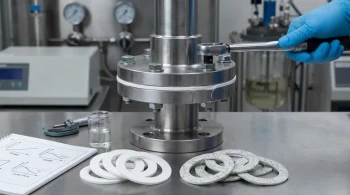
PTFE seal rings are essential components in industries requiring superior chemical resistance and reliable performance under extreme conditions. Our product line includes:

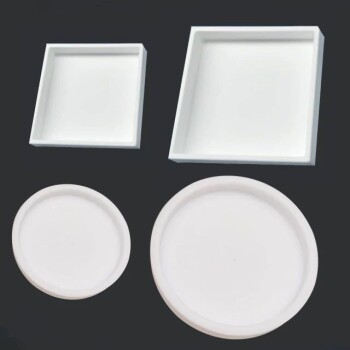
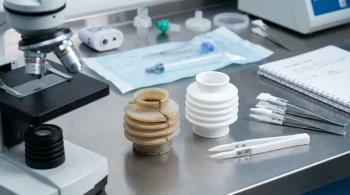
  • Custom PTFE Parts: Precision-manufactured for specific applications in semiconductor and laboratory settings
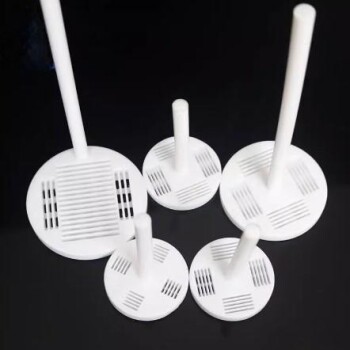
  • PTFE Flower Baskets: High-purity designs for sensitive cleaning processes in wafer production
  • PTFE Containers: Chemically inert solutions for medical and industrial storage needs

These products are widely used in hydraulic systems, pharmaceutical processing, food production, and turbine engineering where traditional seals would fail.


Premium PTFE Seal Rings: Engineered for Extreme Performance

Unmatched Material Properties

Our PTFE seal rings combine polytetrafluoroethylene's legendary chemical resistance with precision engineering. The unique composition features:

  • Metal Spring Core: Provides constant pre-tightening force for reliable sealing
  • PTFE Encapsulation: Creates an impervious barrier against even the most aggressive chemicals
  • Temperature Resilience: Performs consistently from -73°C to 204°C (-100°F to 400°F)

Advanced Engineering Principles

The sealing mechanism operates through:

  1. Spring-Loaded Compression: The internal metal spring maintains optimal contact pressure
  2. Self-Lubricating Surface: PTFE's natural slickness reduces friction by up to 85%
  3. Conformable Design: Compensates for surface imperfections up to 0.005"

Industry-Leading Advantages

  • Chemical Immunity: Resists virtually all acids, bases, and solvents including HF and aqua regia
  • Non-Stick Performance: Prevents buildup that compromises seal integrity
  • FDA-Compliant: Safe for food, pharmaceutical, and medical applications
  • Long Service Life: Outlasts conventional seals by 3-5x in most applications

Custom Solutions for Specialized Needs

Our engineering team can develop:

  • Size Variations: From miniature 0.5mm seals to large 24" diameter rings
  • Material Blends: PTFE compounds with fillers like glass or graphite for enhanced properties
  • Special Profiles: U-cups, V-rings, and custom geometries for unique applications

Proven Applications

  • Semiconductor: Wafer processing equipment, CVD chambers
  • Medical: Sterile fluid handling, implant manufacturing
  • Energy: Turbine shaft seals, geothermal applications
  • Industrial: Chemical pumps, hydraulic cylinders

Why Choose KINTEK PTFE Seals?

With over 15 years of specialized PTFE manufacturing experience, we deliver:

  • ISO 9001 Certified Quality: Every seal meets rigorous performance standards
  • Rapid Prototyping: 2-week turnaround for custom designs
  • High-Volume Production: Capacity for 50,000+ units monthly
  • Technical Support: Dedicated engineers for application consulting

Ready to solve your toughest sealing challenges? Contact our experts today for a free application review and quote on custom PTFE seal solutions. Our team will recommend the optimal design for your specific temperature, pressure, and chemical exposure requirements.

FAQ

What Are The Common Applications Of PTFE Seal Rings?

PTFE seal rings are commonly used in applications requiring good sliding properties, wide temperature ranges, and high chemical resistance. These include hydraulic/pneumatic seals, rod seals, scrapers, piston seals, chemical/pharmaceutical industries, turbine construction, hydroelectric plants, and food production. They are also used in liners for engineering, non-stick equipment, medical applications, rainwear, and as lubricants in machinery.

What Are The Features Of A Spring PTFE Sealing Ring?

A spring PTFE sealing ring consists of a metal spring covered with polytetrafluoroethylene (PTFE). The PTFE provides the sealing surface, while the spring provides the pre-tightening force. PTFE O-rings are white, offer high chemical resistance, and can operate in a wide temperature range from -73°C to 204°C. They also provide weathering resistance, low friction, electrical and thermal insulation, and a slippery surface.

How Does A PTFE Lined Butterfly Valve Operate?

A PTFE lined butterfly valve operates on the quick shut off principle. It features a circular disc (butterfly) placed in the center of the pipe, with a rod connected to an actuator on the outer side of the valve. By rotating the metal disc using a handwheel, the disc can be positioned parallel or perpendicular to the flow, thereby allowing or closing the flow.

What Are The Advantages Of Mechanical Seals With PTFE Rings?

Mechanical seals with PTFE rings offer several advantages, including resistance to most chemicals, low friction (which reduces wear and improves efficiency), suitability for a wide temperature range, formation of a lubricating film (extending seal life), non-stick properties (preventing residue buildup), and flexibility (compensating for surface imperfections).

Why Is PTFE Used In Medical Applications?

PTFE is used in medical applications, such as catheters, due to its ability to prevent bacterial growth. Its non-stick and chemical-resistant properties make it ideal for medical devices that require sterility and durability.

REQUEST A QUOTE

Our professional team will reply to you within one business day. Please feel free to contact us!


Related Articles

The Gasket Keeps Leaking: Why Your Standard PTFE Seal Fails and How to Fix It for Good

The Gasket Keeps Leaking: Why Your Standard PTFE Seal Fails and How to Fix It for Good

Tired of PTFE gasket leaks? Discover the hidden flaw in standard PTFE and how expanded PTFE (ePTFE) provides a permanent fix for critical applications.

Read more
Why Your Lab Plugs Stick and Contaminate: The Hidden Science of Surface Energy

Why Your Lab Plugs Stick and Contaminate: The Hidden Science of Surface Energy

Frustrated with seized plugs and failed experiments? Learn the hidden physics of surface energy and why precision PTFE components are the definitive solution.

Read more
The Hidden Saboteur in Your Vial: Why Your Chromatography Results Are Inconsistent—And How to Fix It

The Hidden Saboteur in Your Vial: Why Your Chromatography Results Are Inconsistent—And How to Fix It

Frustrated by phantom peaks and drifting results? Discover how a faulty vial septum, not your instrument, is often the culprit and how to fix it for good.

Read more
Why Your PTFE Gaskets Keep Leaking—And Why Tighter Bolts Won't Fix It

Why Your PTFE Gaskets Keep Leaking—And Why Tighter Bolts Won't Fix It

Tired of recurring PTFE gasket leaks? Discover the true cause of failure ('creep') and learn how to select the right material for a permanent, reliable seal.

Read more
The Unseen Guardian: How PTFE's Molecular Shield Protects Our Most Critical Systems

The Unseen Guardian: How PTFE's Molecular Shield Protects Our Most Critical Systems

An engineer's look at PTFE's chemical inertness and thermal stability, and why precision fabrication is key to its reliability.

Read more
Why Your Medical Device Components Fail Under Stress—And What to Do About It

Why Your Medical Device Components Fail Under Stress—And What to Do About It

Tired of component failures in medical devices? Discover why common elastomers fail under combined stress and how precision PTFE offers a permanent solution.

Read more
The Asymmetric Cost of Failure: Why Precision PTFE Is Your Last Line of Defense

The Asymmetric Cost of Failure: Why Precision PTFE Is Your Last Line of Defense

Learn how PTFE components save money not by being reusable, but by preventing catastrophic analytical failures and mitigating invisible financial risks.

Read more
Why Your Lab Results Are So Unpredictable (It’s Probably Your Vial Septa)

Why Your Lab Results Are So Unpredictable (It’s Probably Your Vial Septa)

Tired of inconsistent lab data? Discover the hidden reason your vial septa fail under heat or cold and how to finally ensure reliable results.

Read more
Designing for the Edge: The Material Science of Infallible Sealing

Designing for the Edge: The Material Science of Infallible Sealing

Explore the material science of spring energized seals, where polymer jackets and metal springs combine for reliable sealing in extreme environments.

Read more
The Real Reason Your Pulp Mill Seals Keep Failing—And the Permanent Fix

The Real Reason Your Pulp Mill Seals Keep Failing—And the Permanent Fix

Tired of constant pump seal failures in your pulp mill? Discover the hidden cause of leaks and downtime and how to solve it for good.

Read more
The Silent Thief: How Component Surfaces Dictate Pharmaceutical Profitability

The Silent Thief: How Component Surfaces Dictate Pharmaceutical Profitability

Discover how PTFE's unique material properties in components combat product loss and contamination, directly boosting pharmaceutical yield and purity.

Read more
The PTFE Paradox: Why Using Less of This 'Miracle' Material Unlocks More Performance

The PTFE Paradox: Why Using Less of This 'Miracle' Material Unlocks More Performance

Stop costly design failures. Discover why PTFE's true power isn't as a structural material, but as a precision surface component that solves friction.

Read more
Torque, Tension, and Trust: The Engineering Case for PTFE-Coated Fasteners

Torque, Tension, and Trust: The Engineering Case for PTFE-Coated Fasteners

Discover how PTFE coatings solve the critical engineering problems of friction and corrosion, ensuring predictable clamp force and easy maintenance.

Read more
Beyond Exotic Alloys: The Real Secret to Defeating Corrosion in Your Fluid Systems

Beyond Exotic Alloys: The Real Secret to Defeating Corrosion in Your Fluid Systems

Discover why 'corrosion-resistant' valves fail and how precision-engineered PTFE liners offer a more reliable, cost-effective solution than exotic alloys.

Read more
The Price of Purity: When a Simple Bottle Becomes Mission-Critical

The Price of Purity: When a Simple Bottle Becomes Mission-Critical

Discover why PTFE bottles are not just containers, but precision tools that mitigate invisible risks in high-stakes chemical and sample handling.

Read more
Your "Inert" PTFE Component Might Be the Real Source of System Failure

Your "Inert" PTFE Component Might Be the Real Source of System Failure

Inconsistent results? Learn why standard PTFE components fail under stress and how precision-fabricated, application-specific grades are the key to reliability.

Read more
Beyond the Bolt: The Physics and Psychology of Choosing the Right PTFE Washer

Beyond the Bolt: The Physics and Psychology of Choosing the Right PTFE Washer

A deep dive into PTFE washers, exploring how plain, spring, and lock types solve distinct mechanical problems of pressure, vibration, and loosening.

Read more
The Datasheet Said It Was Perfect. So Why Did Your Component Fail?

The Datasheet Said It Was Perfect. So Why Did Your Component Fail?

Discover the hidden reason high-performance components fail despite meeting specs. Learn why a material's combined properties are the key to reliability.

Read more
Beyond Non-Stick: The Material Science of Absolute Purity in PTFE

Beyond Non-Stick: The Material Science of Absolute Purity in PTFE

Explore the critical difference between solid virgin PTFE and PTFE-lined components for applications where purity and chemical inertness are non-negotiable.

Read more
Why Your High-Performance Seals Keep Failing—And Why a Better O-Ring Isn't the Answer

Why Your High-Performance Seals Keep Failing—And Why a Better O-Ring Isn't the Answer

Frustrated by failing seals in extreme environments? Discover the root cause and learn how a different sealing technology offers a permanent solution.

Read more