Thematics Custom Ptfe
Toggle Categories

Get Instant Support

Choose your preferred way to connect with our team

Response Time

Within 8 hours on working days, 24 hours on holidays

custom ptfe

PTFE (Polytetrafluoroethylene) is a versatile material known for its exceptional chemical resistance, high-temperature stability, and low friction properties. At KINTEK, we specialize in manufacturing custom PTFE components for a wide range of industries including semiconductor, medical, laboratory, and industrial applications. Our product lineup includes:

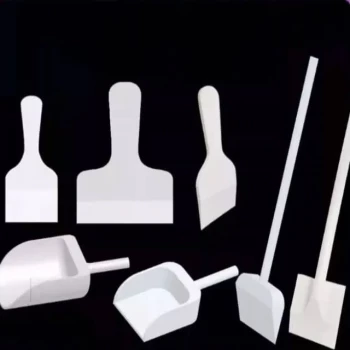
  • PTFE Scrapers & Shovels: Precision tools for material handling in labs and chemical industries
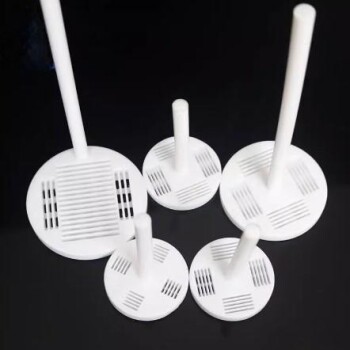
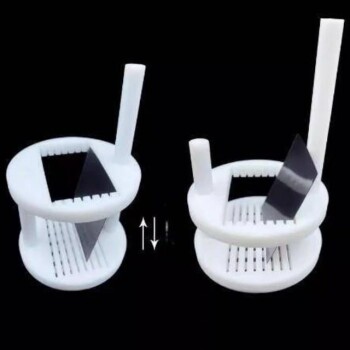
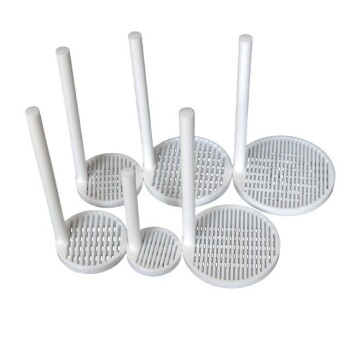
  • PTFE Cleaning Racks & Flower Baskets: Custom solutions for semiconductor wafer processing
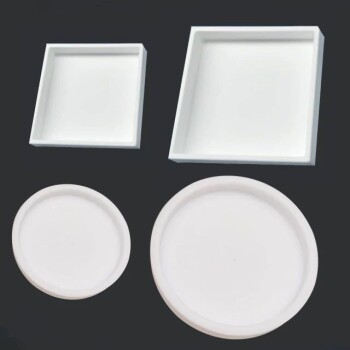
  • PTFE Evaporating Dishes: Non-stick containers for laboratory sample preparation
  • PTFE Bottles & Containers: Chemical-resistant storage solutions
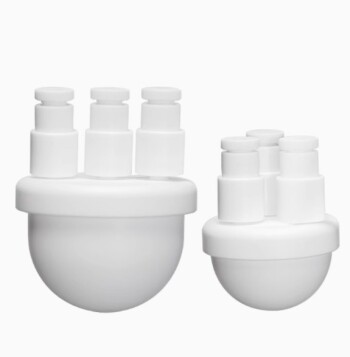
  • PTFE Three Neck Flasks: Specialized vessels for advanced chemical applications

All our PTFE products are available in custom sizes and configurations to meet your specific requirements.


Why Choose KINTEK's Custom PTFE Solutions?

PTFE (Polytetrafluoroethylene) is a fluoropolymer with unique properties that make it indispensable in demanding industrial and scientific applications. At KINTEK, we leverage these properties to create high-performance custom components that excel in challenging environments.

Exceptional Material Properties

Our PTFE products benefit from the material's outstanding characteristics:

  • Chemical Resistance: Withstands virtually all industrial chemicals, including strong acids and solvents
  • Temperature Stability: Performs consistently from -180°C to +250°C (-292°F to +482°F)
  • Non-Stick Surface: Prevents material buildup and ensures easy cleaning
  • Low Friction: Coefficient of friction is among the lowest of any solid material
  • Electrical Insulation: Excellent dielectric properties for electronic applications
  • Biocompatibility: FDA-compliant for medical and food-grade applications

Precision Manufacturing Capabilities

We employ advanced processing techniques to overcome PTFE's unique manufacturing challenges:

  1. Compression Molding: For creating high-density, void-free components
  2. CNC Machining: For achieving tight tolerances and complex geometries
  3. Sintering Process: Carefully controlled to maintain material integrity
  4. Surface Treatment: Optional treatments to enhance specific properties

Industry-Specific Solutions

Our custom PTFE components serve critical functions across multiple sectors:

Semiconductor Industry

  • Wafer handling baskets and carriers
  • Chemical process vessels
  • Cleanroom-compatible tools

Medical Applications

  • Implantable device components
  • Surgical instrument parts
  • Diagnostic equipment liners

Laboratory Equipment

  • Reaction vessels and liners
  • Sample handling tools
  • Analytical instrument components

Industrial Applications

  • Chemical processing equipment
  • High-purity fluid handling systems
  • Wear-resistant bearing surfaces

Customization Options

We offer comprehensive customization services:

  • Material Grades: Virgin, glass-filled, or composite PTFE formulations
  • Dimensions: From micro-components to large-scale parts
  • Surface Finishes: Various roughness options for specific applications
  • Color Coding: Available for easy identification
  • Markings/Engravings: For traceability and branding

Quality Assurance

Every KINTEK PTFE component undergoes rigorous quality control:

  • Material certification (RoHS, FDA, USP Class VI)
  • Dimensional verification
  • Leak testing for containers
  • Surface quality inspection
  • Performance validation

The KINTEK Advantage

Choosing KINTEK for your custom PTFE needs means partnering with experts who understand both the material science and application requirements. Our team works closely with you from concept to final product, ensuring:

  • Technical Expertise: Decades of PTFE processing knowledge
  • Rapid Prototyping: Accelerate your development cycle
  • Scalable Production: From one-off prototypes to high-volume orders
  • Regulatory Compliance: Meeting industry-specific standards

Get Started With Your Custom PTFE Project

Ready to discuss your specific PTFE component requirements? Contact our engineering team today for a consultation. We'll help you determine the optimal material formulation, design features, and manufacturing approach for your application. With KINTEK, you get more than just parts - you get solutions engineered for performance.

For immediate assistance, call our customer service team or submit your project details through our online form. Let's create the perfect PTFE solution together!

FAQ

What Are The Main Applications Of Custom PTFE Products?

Custom PTFE products are widely used in aerospace and computer wiring due to their excellent dielectric properties. In industrial settings, they are used for low friction parts like bearings and gears. In the medical field, PTFE is used for grafts, catheter coatings, and medical-grade components. The semiconductor industry utilizes PTFE for its resistance to strong acids. Additionally, PTFE is used in chemical processing equipment and as coatings for pipes carrying corrosive chemicals.

What Are The Key Features Of PTFE That Make It Suitable For These Applications?

PTFE has a high melting point of around 347 °C, high resistance to water, and a very low coefficient of friction. It remains flexible even at low temperatures. These properties make it ideal for applications requiring chemical resistance, low friction, and durability, such as wire insulation, surface coatings, and chemical processing equipment.

How Is PTFE Processed Into Custom Parts?

PTFE resin does not flow when melted, so it cannot be injection molded. The best methods for processing PTFE are molding and machining, which allow for the creation of custom parts with precise dimensions and properties.

What Are The Advantages Of Using PTFE Gaskets?

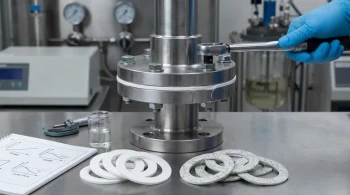
PTFE gaskets offer excellent sealing performance, low friction, and high-temperature resistance. They are also resistant to wear, fatigue, and chemical corrosion. Additionally, PTFE gaskets have anti-adhesion properties, are electrically insulating, and are easy to install and maintain.

Why Is PTFE Preferred In The Medical And Food Industries?

PTFE is preferred in the medical and food industries because it is non-toxic, complies with FDA regulations, and has excellent chemical and friction resistance. Its food-grade approval and ease of cleaning make it ideal for applications requiring high hygiene standards.

What Types Of Custom PTFE Products Are Available?

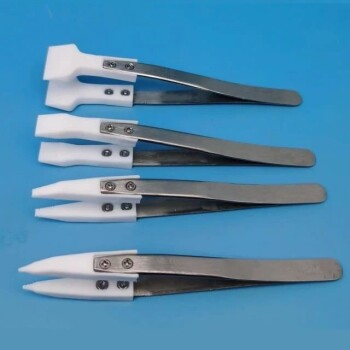
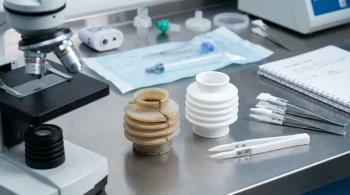
Custom PTFE products include scrapers, shovels, cleaning racks, evaporating dishes, flower baskets, tweezers, containers, three-neck flasks, and bottles. These products are customizable in size and design to meet specific industrial, laboratory, and medical needs.

REQUEST A QUOTE

Our professional team will reply to you within one business day. Please feel free to contact us!


Related Articles

Why 'Medical-Grade' Isn't Enough: The Hidden Risk in Your PTFE Components

Why 'Medical-Grade' Isn't Enough: The Hidden Risk in Your PTFE Components

Generic 'medical-grade' PTFE poses hidden risks. Discover why material purity and manufacturing precision are the real keys to device safety.

Read more
Why Your High-Performance Seals Keep Leaking—And Why It's Not the Seal's Fault

Why Your High-Performance Seals Keep Leaking—And Why It's Not the Seal's Fault

Stop the cycle of failed PTFE seals. Discover the real reason for chronic leaks isn't the part, but the installation system, and how to fix it for good.

Read more
When 'Tougher' Isn't Enough: The Hidden Reason Your Industrial Components Are Failing

When 'Tougher' Isn't Enough: The Hidden Reason Your Industrial Components Are Failing

Discover why conventional materials fail under combined stress and how PTFE components provide a definitive solution for chemical, thermal, and friction challenges.

Read more
The PTFE Paradox: Why Your Catheter Liner's Best Trait Is Also Its Biggest Challenge

The PTFE Paradox: Why Your Catheter Liner's Best Trait Is Also Its Biggest Challenge

Struggling with PTFE catheter liner delamination? Discover the root cause of bonding failures and how a precision manufacturing partner turns this challenge into a competitive advantage.

Read more
Your High-Performance Seals Are Failing. The Reason Isn't What You Think.

Your High-Performance Seals Are Failing. The Reason Isn't What You Think.

Discover the hidden reason your spring-energized seals fail and how to fix it by understanding the seal as a two-part system, not a single component.

Read more
The Gasket Keeps Leaking: Why Your Standard PTFE Seal Fails and How to Fix It for Good

The Gasket Keeps Leaking: Why Your Standard PTFE Seal Fails and How to Fix It for Good

Tired of PTFE gasket leaks? Discover the hidden flaw in standard PTFE and how expanded PTFE (ePTFE) provides a permanent fix for critical applications.

Read more
Why Your Lab Plugs Stick and Contaminate: The Hidden Science of Surface Energy

Why Your Lab Plugs Stick and Contaminate: The Hidden Science of Surface Energy

Frustrated with seized plugs and failed experiments? Learn the hidden physics of surface energy and why precision PTFE components are the definitive solution.

Read more
The Hidden Saboteur in Your Vial: Why Your Chromatography Results Are Inconsistent—And How to Fix It

The Hidden Saboteur in Your Vial: Why Your Chromatography Results Are Inconsistent—And How to Fix It

Frustrated by phantom peaks and drifting results? Discover how a faulty vial septum, not your instrument, is often the culprit and how to fix it for good.

Read more
Why Your PTFE Gaskets Keep Leaking—And Why Tighter Bolts Won't Fix It

Why Your PTFE Gaskets Keep Leaking—And Why Tighter Bolts Won't Fix It

Tired of recurring PTFE gasket leaks? Discover the true cause of failure ('creep') and learn how to select the right material for a permanent, reliable seal.

Read more
The Unseen Guardian: How PTFE's Molecular Shield Protects Our Most Critical Systems

The Unseen Guardian: How PTFE's Molecular Shield Protects Our Most Critical Systems

An engineer's look at PTFE's chemical inertness and thermal stability, and why precision fabrication is key to its reliability.

Read more
Why Your Medical Device Components Fail Under Stress—And What to Do About It

Why Your Medical Device Components Fail Under Stress—And What to Do About It

Tired of component failures in medical devices? Discover why common elastomers fail under combined stress and how precision PTFE offers a permanent solution.

Read more
The Asymmetric Cost of Failure: Why Precision PTFE Is Your Last Line of Defense

The Asymmetric Cost of Failure: Why Precision PTFE Is Your Last Line of Defense

Learn how PTFE components save money not by being reusable, but by preventing catastrophic analytical failures and mitigating invisible financial risks.

Read more
Why Your Lab Results Are So Unpredictable (It’s Probably Your Vial Septa)

Why Your Lab Results Are So Unpredictable (It’s Probably Your Vial Septa)

Tired of inconsistent lab data? Discover the hidden reason your vial septa fail under heat or cold and how to finally ensure reliable results.

Read more
Designing for the Edge: The Material Science of Infallible Sealing

Designing for the Edge: The Material Science of Infallible Sealing

Explore the material science of spring energized seals, where polymer jackets and metal springs combine for reliable sealing in extreme environments.

Read more
The Real Reason Your Pulp Mill Seals Keep Failing—And the Permanent Fix

The Real Reason Your Pulp Mill Seals Keep Failing—And the Permanent Fix

Tired of constant pump seal failures in your pulp mill? Discover the hidden cause of leaks and downtime and how to solve it for good.

Read more
The Silent Thief: How Component Surfaces Dictate Pharmaceutical Profitability

The Silent Thief: How Component Surfaces Dictate Pharmaceutical Profitability

Discover how PTFE's unique material properties in components combat product loss and contamination, directly boosting pharmaceutical yield and purity.

Read more
The PTFE Paradox: Why Using Less of This 'Miracle' Material Unlocks More Performance

The PTFE Paradox: Why Using Less of This 'Miracle' Material Unlocks More Performance

Stop costly design failures. Discover why PTFE's true power isn't as a structural material, but as a precision surface component that solves friction.

Read more
Torque, Tension, and Trust: The Engineering Case for PTFE-Coated Fasteners

Torque, Tension, and Trust: The Engineering Case for PTFE-Coated Fasteners

Discover how PTFE coatings solve the critical engineering problems of friction and corrosion, ensuring predictable clamp force and easy maintenance.

Read more
Beyond Exotic Alloys: The Real Secret to Defeating Corrosion in Your Fluid Systems

Beyond Exotic Alloys: The Real Secret to Defeating Corrosion in Your Fluid Systems

Discover why 'corrosion-resistant' valves fail and how precision-engineered PTFE liners offer a more reliable, cost-effective solution than exotic alloys.

Read more
The Price of Purity: When a Simple Bottle Becomes Mission-Critical

The Price of Purity: When a Simple Bottle Becomes Mission-Critical

Discover why PTFE bottles are not just containers, but precision tools that mitigate invisible risks in high-stakes chemical and sample handling.

Read more