Thematics Ptfe Barrel

ptfe barrel

PTFE barrels from KINTEK are essential for industries requiring high chemical resistance and thermal stability. Our product range includes:

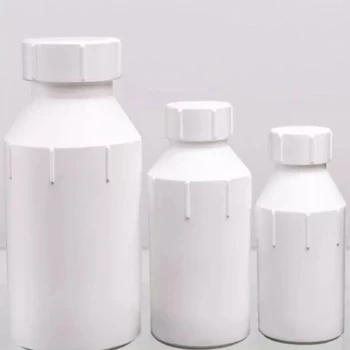
  • Custom PTFE Bottles: Ideal for chemical storage with leak-proof designs and wide/narrow mouth options.
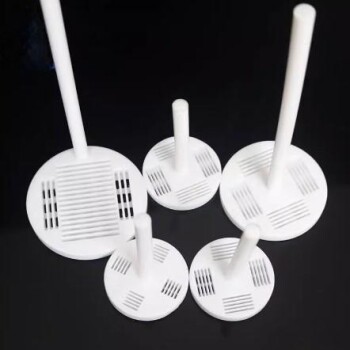
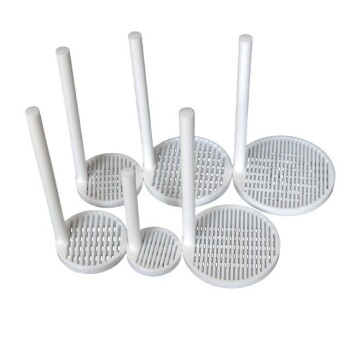
  • PTFE Flower Baskets: Perfect for semiconductor and lab use, resistant to harsh chemicals.
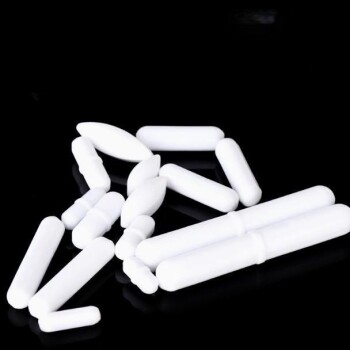
  • PTFE Magnetic Stirring Bars: Ensure smooth mixing in labs with high-temperature stability.
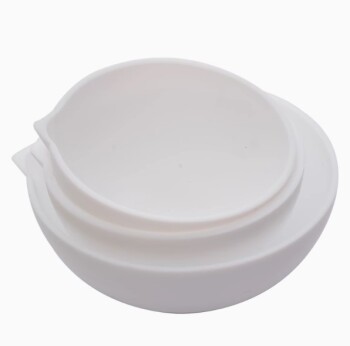
  • PTFE Evaporating Dishes: Non-stick and durable, perfect for sample preparation.
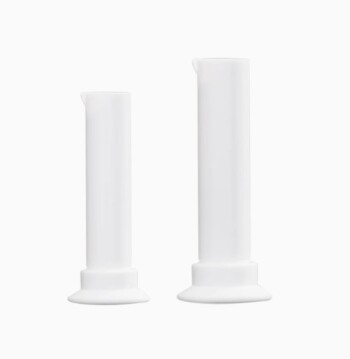
  • PTFE Measuring Cylinders: Precision-engineered for demanding environments.
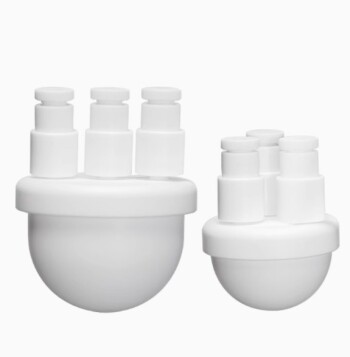
  • PTFE Three Neck Flasks: Crafted for advanced chemical applications with exceptional durability.
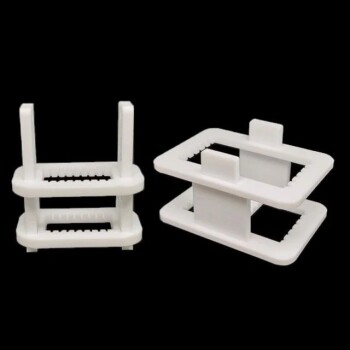
  • PTFE Cleaning Racks: Designed for lab and semiconductor use, resistant to extreme temperatures.
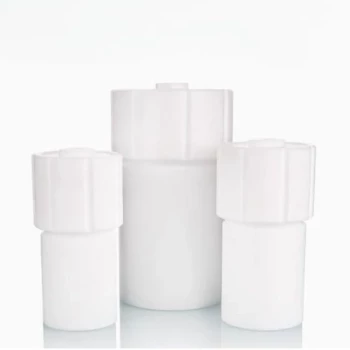
  • PTFE Microwave Digestion Vessels: Safe and contamination-free for sample prep.
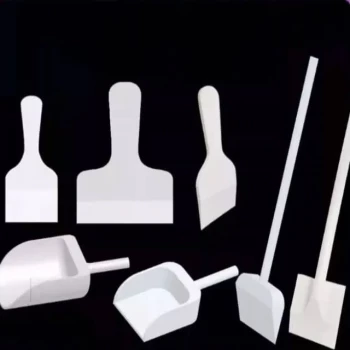
  • PTFE Scrapers and Shovels: Non-stick and durable for precise material handling.
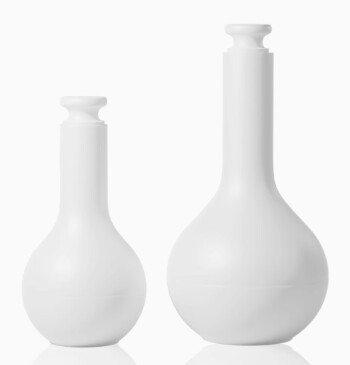
  • PTFE Volumetric Flasks: Chemical-resistant and non-stick for accurate measurements.
  • PTFE Deep Evaporating Dishes: Customizable for various sample handling needs.

Premium PTFE Barrels for Demanding Applications

KINTEK's PTFE barrels are engineered to meet the highest standards of chemical resistance, thermal stability, and durability. PTFE (Polytetrafluoroethylene) is renowned for its exceptional properties, making it the material of choice for industries that require reliable performance in harsh environments.

Key Features of Our PTFE Barrels

  • Chemical Resistance: PTFE is inert to most chemicals, including strong acids, bases, and solvents, ensuring safe storage and handling of corrosive substances.
  • High-Temperature Stability: With a melting point of around 347°C, our PTFE barrels can withstand extreme temperatures, making them suitable for both high and low-temperature applications.
  • Low Coefficient of Friction: PTFE's non-stick properties prevent material buildup, ensuring easy cleaning and maintenance.
  • Flexibility at Low Temperatures: PTFE remains flexible even at extremely low temperatures, down to -270°C, ensuring reliable performance in cryogenic applications.
  • Leak-Proof Design: Our PTFE barrels feature heavy wall construction and smooth internal finishes to prevent leaks and ensure contamination-free storage.

Applications of PTFE Barrels

Our PTFE barrels are widely used in various industries, including:

  • Semiconductor: For cleaning and handling silicon wafers and conductive glass substrates.
  • Medical: Ensuring purity and sterility in pharmaceutical and biomedical applications.
  • Laboratory: Ideal for sample preparation, digestion, and evaporation processes.
  • Industrial: Used in chemical processing, petrochemical, and food processing industries for safe storage and handling of corrosive materials.
  • Aerospace: Providing reliable performance in engines and components exposed to extreme conditions.

Custom Solutions for Your Needs

At KINTEK, we understand that every application is unique. That's why we offer custom fabrication services to meet your specific requirements. Whether you need prototypes or high-volume orders, our team of experts will work with you to deliver precision-engineered PTFE barrels tailored to your needs.

Why Choose KINTEK?

  • Precision Production: Our PTFE barrels are manufactured with the highest precision to ensure consistent quality and performance.
  • Custom Fabrication: From design to delivery, we provide tailored solutions to meet your exact specifications.
  • Durability and Reliability: Our products are built to last, offering long-term performance in the most demanding environments.
  • Expert Support: Our team is always ready to assist you with technical advice and product recommendations.

Get Started Today

Ready to experience the superior performance of KINTEK's PTFE barrels? Contact us today to discuss your requirements and get a quote. Our experts are here to help you find the perfect solution for your application.

Don't compromise on quality and performance. Choose KINTEK for all your PTFE barrel needs and enjoy the benefits of working with a trusted industry leader.

FAQ

What Are The Common Applications Of PTFE Barrels?

PTFE barrels are widely used in various industries including plumbing (washers and sealing tapes), petrochemical (pipelines, valves, and fittings), food processing (hygienic conditions), pharmaceutical (product purity), aerospace (engines and components), and electrical (insulation and leak prevention). They are also ideal for chemical storage and handling due to their resistance to corrosive substances.

What Are The Key Features Of PTFE Barrels?

PTFE barrels feature a high melting point (around 347°C), excellent resistance to water and chemicals, a very low coefficient of friction, and flexibility even at low temperatures. They can be used continuously from -270°C up to 250°C, with a maximum use temperature of 280°C. Their heavy wall construction and smooth internal finish ensure leak-free performance.

How Does A PTFE Lined Butterfly Valve Work?

A PTFE lined butterfly valve operates on the quick shut off principle. It consists of a circular disc (butterfly) placed in the center of the pipe, connected to an actuator via a rod. By rotating the disc using a handwheel, the flow can be either allowed (disc parallel to flow) or closed (disc perpendicular to flow).

What Are The Advantages Of Using PTFE Barrels?

PTFE barrels offer numerous advantages including corrosion resistance, a wide temperature range (-325°F to above 500°F), no swelling (hydrophobic properties), FDA compliance, UV radiation resistance, and excellent electrical insulation. They also provide non-stick properties and are resistant to extreme temperatures and chemicals.

Why Are PTFE Barrels Suitable For Laboratory Use?

PTFE barrels are ideal for laboratory use due to their excellent chemical, mechanical, and heat resistance. They are perfect for dissolutions and digestions with acids and corrosive agents, and their non-reactive nature ensures sample purity. Additionally, their durability and leak-proof design make them reliable for various lab applications.

REQUEST A QUOTE

Our professional team will reply to you within one business day. Please feel free to contact us!


Related Articles

Why Standard Tubing Fails in High-Performance Systems—And How High-Precision PTFE Secures the Modern Vehicle

Discover why standard fluid lines fail in EVs and high-heat engines, and how precision PTFE engineering provides the thermal and electrical isolation required for modern automotive safety.

Read more

Why Your PTFE Connections Leak Under Pressure—And the Precision Engineering That Stops It

Discover why standard fittings fail in high-purity labs and how the four-part mechanics of a two-ferrule PTFE connector ensure a leak-proof, high-grip seal.

Read more

Why Traditional Plastic Molding Fails with PTFE—And the Secret to Precision Labware Fabrication

Learn why PTFE’s high melt viscosity makes injection molding impossible and how specialized sintering and CNC machining deliver high-precision lab components.

Read more

The Invisible Deformation: Why Your PTFE Digestion Liners Fail Under Pressure—And How TFM Fixes It

Discover why standard PTFE liners fail in microwave digestion and how TFM's modified molecular structure prevents creep, leaks, and contamination.

Read more

Beyond the Melting Point: Why Your PTFE Labware Fails Sooner Than You Think—And How to Fix It

Discover the real thermal limits of PTFE labware. Learn why "melting point" isn't the only safety metric and how to ensure reliability from -200°C to +260°C.

Read more

The Invisible Yield Killer: Why Standard Fluid Components Are Compromising Your Semiconductor Purity

Discover why microscopic contamination in fluid paths ruins semiconductor yields and how precision-engineered PTFE components provide the PPT-level purity required.

Read more

Beyond the Boiling Point: Why Closed-Vessel Design is Non-Negotiable for Trace Analysis

Discover why closed-vessel microwave digestion outperforms open-vessel methods by mastering pressure and temperature for faster, more accurate trace analysis.

Read more

Why Your High-Acidity Mixing Fails—And How PTFE Rotors Solve the Contamination Crisis

Discover why standard laboratory stirrers fail in aggressive chemical environments and how PTFE rotors provide the ultimate solution for contamination-free mixing.

Read more

Why Your "Indestructible" PTFE Liners Fail—And How to Protect Your High-Value Equipment

Stop unexpected autoclave failures and cross-contamination. Learn the science of PTFE maintenance, from the 1% mass loss rule to preventing vessel corrosion.

Read more
Beyond the Bolt: Why Your Flange Leaks Are a Material Science Problem, Not a Mechanical One

Beyond the Bolt: Why Your Flange Leaks Are a Material Science Problem, Not a Mechanical One

Tired of recurring flange leaks? Discover the hidden material failure causing them and how ePTFE gaskets provide a permanent solution for equipment reliability.

Read more
Your Recurring Nightmare: Why High-Purity Fluid Systems Fail and How to Stop It for Good

Your Recurring Nightmare: Why High-Purity Fluid Systems Fail and How to Stop It for Good

Discover the root cause of recurring pipe corrosion and contamination in critical systems. It's not wear and tear—it's a chemical war you can win.

Read more
When "Chemically Inert" Isn't Enough: The Hidden Cause of PTFE Component Failure

When "Chemically Inert" Isn't Enough: The Hidden Cause of PTFE Component Failure

Discover why standard PTFE components fail in critical applications, even with 'safe' chemicals. Learn the hidden role of fabrication quality and how to prevent costly downtime.

Read more
Why 'Medical-Grade' Isn't Enough: The Hidden Risk in Your PTFE Components

Why 'Medical-Grade' Isn't Enough: The Hidden Risk in Your PTFE Components

Generic 'medical-grade' PTFE poses hidden risks. Discover why material purity and manufacturing precision are the real keys to device safety.

Read more
When 'Tougher' Isn't Enough: The Hidden Reason Your Industrial Components Are Failing

When 'Tougher' Isn't Enough: The Hidden Reason Your Industrial Components Are Failing

Discover why conventional materials fail under combined stress and how PTFE components provide a definitive solution for chemical, thermal, and friction challenges.

Read more
The PTFE Paradox: Why Your Catheter Liner's Best Trait Is Also Its Biggest Challenge

The PTFE Paradox: Why Your Catheter Liner's Best Trait Is Also Its Biggest Challenge

Struggling with PTFE catheter liner delamination? Discover the root cause of bonding failures and how a precision manufacturing partner turns this challenge into a competitive advantage.

Read more
The Gasket Keeps Leaking: Why Your Standard PTFE Seal Fails and How to Fix It for Good

The Gasket Keeps Leaking: Why Your Standard PTFE Seal Fails and How to Fix It for Good

Tired of PTFE gasket leaks? Discover the hidden flaw in standard PTFE and how expanded PTFE (ePTFE) provides a permanent fix for critical applications.

Read more
Why Your PTFE Gaskets Keep Leaking—And Why Tighter Bolts Won't Fix It

Why Your PTFE Gaskets Keep Leaking—And Why Tighter Bolts Won't Fix It

Tired of recurring PTFE gasket leaks? Discover the true cause of failure ('creep') and learn how to select the right material for a permanent, reliable seal.

Read more
The Unseen Guardian: How PTFE's Molecular Shield Protects Our Most Critical Systems

The Unseen Guardian: How PTFE's Molecular Shield Protects Our Most Critical Systems

An engineer's look at PTFE's chemical inertness and thermal stability, and why precision fabrication is key to its reliability.

Read more
Why Your Medical Device Components Fail Under Stress—And What to Do About It

Why Your Medical Device Components Fail Under Stress—And What to Do About It

Tired of component failures in medical devices? Discover why common elastomers fail under combined stress and how precision PTFE offers a permanent solution.

Read more
The Asymmetric Cost of Failure: Why Precision PTFE Is Your Last Line of Defense

The Asymmetric Cost of Failure: Why Precision PTFE Is Your Last Line of Defense

Learn how PTFE components save money not by being reusable, but by preventing catastrophic analytical failures and mitigating invisible financial risks.

Read more