The Inevitability of Failure
Imagine a chemical processing plant. Deep inside a complex network of pipes, a valve controls the flow of a highly corrosive acid. The seal inside that valve, a simple elastomeric O-ring, has been slowly degrading for months. One day, it fails. The leak is catastrophic, leading to a costly shutdown, safety hazards, and lost production.
The problem wasn't a faulty O-ring. The problem was asking a simple material to survive in an environment it was never designed for.
This is the central challenge in advanced engineering: standard components fail at the extremes of temperature, pressure, and chemical aggression. Success in these environments requires designing not just for function, but for the inevitability of failure. It demands a different kind of solution.
A System Disguised as a Component
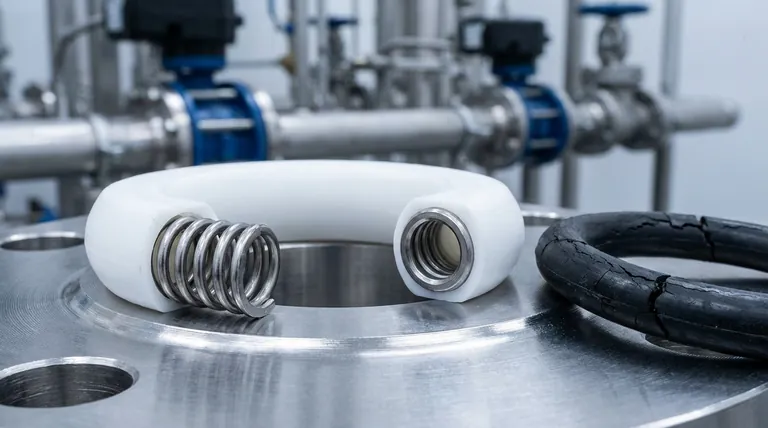
This is where the spring energized seal enters the picture. It looks like a single component, but it’s a sophisticated system—a partnership between two dissimilar materials, each covering the other's weaknesses.
The concept is a brilliant fusion of properties:
- A Polymer Jacket: The primary barrier. It's the smooth, diplomatic face of the seal, offering low friction and near-universal chemical inertness.
- A Metal Spring: The engine. It's the relentless force inside, providing the constant energy that makes the seal work when all else fails.
This dual-material design isn't just an improvement; it's a paradigm shift from passive elastomeric rings to an active, responsive sealing system.
A Tale of Two Materials
The genius of the spring energized seal lies in how the jacket and spring work in concert. The jacket provides the seal, but the spring provides the certainty.
The Jacket: The First Line of Defense
The jacket is precision-machined, not molded. This detail is crucial. Machining allows for sharp, precise sealing edges and avoids the internal stresses that can compromise a molded part. The primary material, PTFE, is chosen for its profound chemical aloofness; its molecular structure simply refuses to react with almost anything.
But not all challenges are chemical. Different applications demand different strengths:
- Virgin PTFE: The purist. Chosen when absolute chemical inertness and non-contamination are critical, such as in semiconductor or medical applications.
- Filled PTFE: The workhorse. By blending PTFE with fillers like carbon, graphite, or glass, its resistance to wear and deformation under load (creep) is dramatically improved. This is the choice for high-pressure service.
- PEEK: The heavyweight. For applications with extreme pressures or where rigidity is paramount, Polyether Ether Ketone (PEEK) offers a level of mechanical strength that even filled PTFE cannot match.
The Spring: The Unseen Engine
The spring is the heart of the system. It provides the initial force that sets the seal against the hardware, ensuring a leak-free start-up at low pressure or in a vacuum.
More importantly, it’s a dynamic compensator.
- It fights thermal contraction, especially in cryogenic applications where a polymer jacket would otherwise shrink and lose contact.
- It compensates for material wear, pushing the seal lips outward to maintain force over millions of cycles.
- It accommodates for hardware imperfections, ensuring a consistent seal even with slight misalignments.
The choice of spring alloy is a direct response to the specific threat it will face:
| Spring Material | Primary Mission | Key Strength |
|---|---|---|
| Stainless Steel | General-purpose industrial reliability | Good corrosion resistance and mechanical strength. |
| Elgiloy | Conquer extreme cold and fatigue | Retains springiness at cryogenic temperatures. |
| Hastelloy | Survive chemical warfare | Exceptional resistance to aggressive acids. |
The Invisible Trade-offs of Certainty
This level of performance doesn't come without considerations. Adopting a spring energized seal is a conscious engineering decision that involves acknowledging certain realities.
The Cost of Confidence
These seals are significantly more expensive than commodity O-rings. This isn't a cost; it's an insurance premium. You are investing in avoiding the astronomical cost of failure in a critical system.
The Paradox of Strength
The rigidity that makes PTFE and PEEK so resilient also makes them sensitive. Unlike a soft, forgiving elastomer, the jacket's sealing lip can be scratched or damaged during installation. Success requires discipline, care, and the right tools.
The Danger of Specificity
This is not a one-size-fits-all solution. A spring energized seal is a prescription tailored to a specific ailment. Choosing the wrong combination of jacket material, spring alloy, or spring load can create a false sense of security, leading to a failure that is all the more unexpected.
Specification as a System Dialogue
Choosing the right seal isn't about picking a part from a catalog. It's a dialogue between the demands of your application and the capabilities of the materials.
The process begins with questions:
- What is the chemical environment? If it's highly aggressive, the conversation starts with a Hastelloy spring and a PTFE or PEEK jacket.
- What is the temperature range? For cryogenic service, an Elgiloy spring is non-negotiable to counteract the jacket's thermal contraction.
- What are the pressure and motion dynamics? High pressure and continuous movement point towards a filled-PTFE or PEEK jacket to resist wear and creep.
Precision in manufacturing is only half the battle; precision in specification is what ensures performance. This requires a partner who understands the nuanced language of material science and its application in the real world. At KINTEK, we specialize in this dialogue, manufacturing custom PTFE components and seals for the world's most demanding industries. Our expertise isn't just in fabrication, but in helping you translate your operational challenges into the ideal material solution.
If you are designing for the edge, where failure is not an option, let's engineer the right solution together. Contact Our Experts
Visual Guide

Related Products
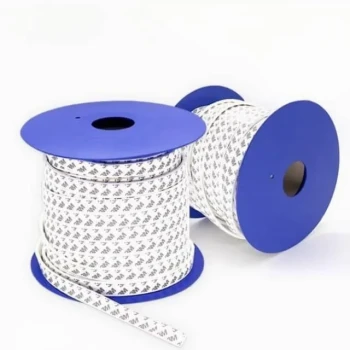
- Custom PTFE Sealing Tapes for Industrial and High Tech Applications
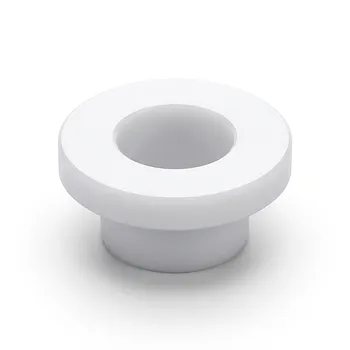
- Customizable High Temperature Resistant Anti Static PTFE Insulating Gaskets Flame Retardant Corrosion Proof Industrial Seals
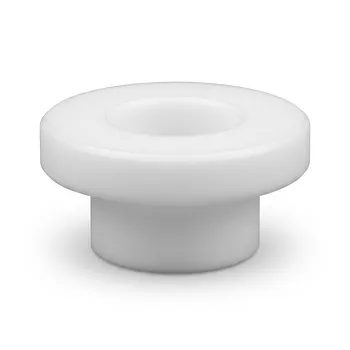
- Custom PTFE Insulating Gaskets and Corrosion Resistant Fluoropolymer Seals for Industrial Electrical Applications
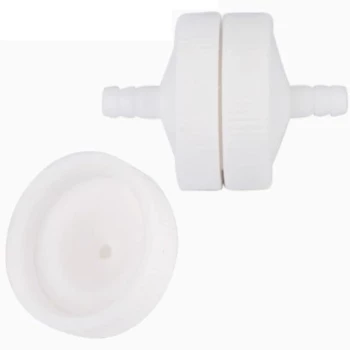
- Customizable PTFE Seals Filter Holders for Versatile Applications
- Custom PTFE Insulating Gaskets Corrosion Resistant Teflon Seals Tailored Engineering Plastic Components
Related Articles
- The Hidden Physics of Leak-Proof Experiments: Why Over-Tightening Won't Save Your PTFE Seals
- Why Your High-Performance Seals Keep Leaking—And Why It's Not the Seal's Fault
- Stop Chasing Leaks: Mastering PTFE Sealing Performance Across Extreme Temperatures
- The Unseen System: Why PTFE Seal Performance is More Than Just the Seal
- Why Your "Perfect" PTFE Seals Are Leaking Under Pressure—and How to Stop the Flow