All Questions
How Does The Low Spring Rate Of Ptfe Benefit Bellows Applications? Absorb Vibration And Protect Fragile Equipment
Learn how PTFE's low spring rate makes bellows ideal for absorbing vibration, shock, and misalignment to protect sensitive components in demanding systems.
What Is A Unique Surface Property Of Ptfe Bellows? Leverage Extreme Non-Stick Performance
Discover the unique self-cleaning surface of PTFE bellows: extreme non-stick, low friction, and chemical resistance for demanding applications.
What Makes Ptfe Bellows Suitable For Dynamic Flexing Applications? Endure Millions Of Cycles In Harsh Environments
Discover why PTFE bellows excel in dynamic applications with exceptional flex life, chemical inertness, and thermal stability for demanding industries.
Why Is Ptfe An Ideal Material For Bellows Applications? Achieve Superior Sealing & Flexibility
Discover why PTFE bellows excel in chemical inertness, flex life, and purity for demanding applications in medical, aerospace, and chemical processing.
What Makes Ptfe Plugs Durable? Unmatched Chemical And Temperature Resistance
Discover the key properties that make PTFE plugs durable, including chemical inertness, UV resistance, and a wide operating temperature range.
What Are The Non-Stick Properties Of Ptfe Plugs Useful For? Ensuring Purity & Easy Maintenance
Discover how PTFE plugs' non-stick surface prevents contamination, ensures easy removal, and provides reliable seals in demanding chemical and lab environments.
What Industries Benefit From Using Ptfe Plugs? Solve Extreme Sealing Challenges
Discover how PTFE plugs provide critical sealing solutions in chemical, medical, food, and electronics industries with unmatched chemical and temperature resistance.
What Are The Key Characteristics Of Ptfe Plugs? Master Performance In Extreme Conditions
Discover the key characteristics of PTFE plugs: extreme chemical inertness, wide temperature range, non-stick surface, and superior electrical insulation.
What Are The Key Applications Of Ptfe Plugs? Seal And Protect In Demanding Environments
Discover how PTFE plugs provide inert, non-stick seals for lab glassware, industrial piping, and chemical processing equipment.
In What Industries Or Applications Are Ptfe Bellows Commonly Used? Essential For Purity And Corrosion Resistance
Discover how PTFE bellows ensure reliability in semiconductor, pharmaceutical, chemical, and aerospace applications with superior purity and chemical resistance.
What Advantages Does Ptfe's Low Coefficient Of Friction Provide In Bellows Applications? Achieve Long-Lasting, Maintenance-Free Performance
Discover how PTFE's low friction in bellows enables millions of cycles, superior seal integrity, and contamination-free operation for demanding industries.
How Can Ptfe Bellows Be Customized For Different Applications? Tailor Flexibility, Pressure Rating, And Purity
Learn how to customize PTFE bellows for your specific needs. Explore material grades, fold geometries, and end fittings for optimal performance in demanding applications.
What Are The Key Properties Of Ptfe Bellows? Unmatched Resilience For Demanding Environments
Explore how PTFE bellows' chemical inertness, extreme temperature range, and non-stick surface ensure reliability in harsh industrial applications.
What Are Ptfe Bellows And What Are They Made Of? Solve Tough Chemical & Thermal Challenges
PTFE bellows are flexible seals made of Teflon, offering unmatched chemical resistance and thermal stability for demanding industrial applications.
Why Are Ptfe Bars Considered Essential In Modern Industrial Applications? Unlock Unmatched Chemical & Thermal Resistance
Discover why PTFE bars are vital for extreme environments. Learn about their chemical inertness, thermal stability, and electrical insulation properties.
What Are Some Future Trends In The Application Of Ptfe Bars In The Chemical Industry? Engineering For Extreme Performance
Explore future trends in PTFE bars: hyper-customization with filled grades, advanced manufacturing, and high-purity materials for demanding chemical applications.
Can You Provide Examples Of Industries Where Ptfe Bars Have Been Successfully Applied? Discover Key Applications
Explore how PTFE bars excel in chemical processing, medical, food & beverage, and aerospace due to their chemical inertness and high-performance.
How Can The Lifespan And Performance Of Ptfe Bars Be Maintained? A Guide To Proactive Care
Learn key PTFE bar maintenance steps: inspection, proper cleaning, and correct storage to prevent wear, creep, and degradation.
What Factors Should Be Considered When Choosing Ptfe Bars For Chemical Applications? Select The Right Grade For Your Process
Learn how to choose the correct PTFE bar grade (virgin, filled, reprocessed) for your chemical application based on purity, wear resistance, and compatibility.
What Advantages Do Ptfe Bars Offer In Chemical Industries? Ensure Safety And Efficiency In Demanding Applications
Discover how PTFE bars provide unmatched chemical resistance, thermal stability, and low friction for safe, reliable, and cost-effective performance in chemical processing.
What Are The Primary Applications Of Ptfe Bars In The Chemical Industry? Solve Your Toughest Corrosion Problems
Learn how PTFE bars are machined into seals, valves, and linings for superior chemical resistance, low friction, and high purity in demanding applications.
Why Are Teflon Sheets Considered Cost-Effective For Frequent Users? Maximize Savings With Every Press
Discover how Teflon (PTFE) sheets' reusability reduces cost-per-use, protects equipment, and ensures project quality for high-volume operations.
When Should You Choose Ptfe Sheets Over Teflon Paper? Maximize Durability For High-Volume Work
Learn when to choose durable PTFE sheets over flexible Teflon paper for heat pressing, based on durability, pressure tolerance, and long-term cost.
What Is The Difference Between Ptfe Sheets And Teflon Paper? A Guide To Choosing The Right Form
Learn the key differences between durable PTFE sheets and flexible Teflon paper. Choose the right material for your heat-resistant, non-stick application.
How Do Teflon Sheets Protect Garments During Heat Transfers? Essential Guide For Flawless Results
Learn how Teflon sheets prevent scorching, ensure even heat distribution, and protect your heat press for professional-quality heat transfers.
What Are The Pros And Cons Of Silicone Sheets Compared To Teflon Sheets? Choose The Right Protective Sheet For Your Project
Silicone vs. Teflon sheets: a guide to non-stick performance, flexibility, durability, and cost. Choose the right material for heat pressing, crafting, or baking.
What Are Some Common Alternatives To Teflon Sheets For Heat Press Applications? Find The Right Protective Sheet
Compare Teflon, parchment paper, and silicone sheets for heat pressing. Learn the trade-offs in durability, reusability, and heat resistance for professional results.
What Types Of Projects Are Teflon Sheets Compatible With? From Crafts To Industry
Discover if Teflon (PTFE) sheets are right for your project. Learn about their non-stick, heat-resistant, and chemically inert properties for various applications.
How Does The Non-Stick Surface Of Teflon Sheets Benefit Heat Transfer Projects? Achieve Flawless, Professional Results
Discover how Teflon sheets prevent material adhesion, shield garments, and preserve equipment for clean, consistent heat transfers on HTV and sublimation projects.
What Temperature Can Ptfe Sheets Withstand? From -200°C To +260°C With Unmatched Stability
Learn the true operating temperature range of PTFE sheets, from cryogenic -200°C to high-heat 260°C, and how to apply them correctly.
What Are The Benefits Of Using Teflon Sheets In Heat Press Machines? Achieve Flawless Transfers & Protect Your Equipment
Discover how Teflon sheets prevent scorching, ensure even heat distribution, and protect your heat press machine and garments for professional results every time.
What Are The Standard Sheet Sizes For Ptfe? Optimize Your Material Selection
Learn about standard PTFE sheet sizes (1000x1000mm to 1500x1500mm) and how to select the right thickness and custom cuts for your application.
What Material Are Teflon Sheets Typically Made From? Uncover The Power Of Ptfe
Teflon sheets are made from PTFE, a fluoropolymer with exceptional heat resistance, chemical inertness, and a non-stick surface. Learn about its variants and applications.
What Are The Standard Thickness Options For Ptfe Sheets? Choose The Right Thickness For Your Application
Explore standard PTFE sheet thicknesses from 1mm to 25mm+ and learn how to select the right size for gaskets, seals, and machined parts.
What Is A Teflon Sheet Used For In Heat Press Applications? The Essential Non-Stick Barrier
Discover how a Teflon sheet prevents scorching, protects your heat press, and ensures professional heat transfer results. Essential for any press.
Is Ptfe Sheet Suitable For Food Applications? Ensuring Fda-Compliant Safety In Food Processing
Learn why virgin PTFE sheet is FDA-approved for food contact, offering chemical inertness, non-stick properties, and thermal stability for safe food processing.
What Are The Mechanical, Thermal, And Electrical Properties Of Ptfe Sheets? The Ultimate Guide To Performance
Explore PTFE's extreme properties: low friction, high temp stability (-190°C to +260°C), chemical inertness & superior electrical insulation.
What Should Be Considered When Bonding Ptfe Sheets? A Guide To Achieving A Reliable, Permanent Bond
Learn the essential steps for bonding PTFE sheets, including chemical etching, surface preparation, and adhesive selection for a strong, durable bond.
What Are The Available Sizes And Thicknesses For Ptfe Sheets? A Guide For Engineers & Designers
Explore standard PTFE sheet sizes (1000x1000mm to 1500x1500mm) & thicknesses (1mm to 150mm) for sealing, insulation, and machining applications.
How Can The Properties Of Ptfe Sheets Be Enhanced? Improve Wear, Strength, And Performance With Fillers
Learn how adding fillers like glass, carbon, or graphite to PTFE enhances wear resistance, compressive strength, and dimensional stability for demanding applications.
What Is Virgin Ptfe Sheet And How Is It Different From Teflon? | Choosing The Right Grade For Your Application
Virgin PTFE is 100% pure PTFE, offering unmatched chemical inertness and temperature resistance. Learn the key differences from Teflon and other grades.
What Types Of Equipment Are Ptfe Ferromagnetic Support Discs Compatible With? Boost Your Lab's Efficiency
Learn how PTFE ferromagnetic discs work with magnetic grinding/polishing systems to eliminate adhesive residue and speed up sample prep.
What Is The Advantage Of Using Ptfe Ferromagnetic Support Discs? Achieve Flawless, Efficient Sample Preparation
Discover how PTFE ferromagnetic support discs eliminate adhesive residue, save time, and ensure perfect sample planarity for grinding and polishing workflows.
What Are Ptfe Ferromagnetic Support Discs Composed Of? A Dual-Material Design For Superior Grinding & Polishing
PTFE ferromagnetic discs combine a chemically inert PTFE surface with a rigid, magnetic steel core for contamination-free, efficient sample preparation.
What Is The Recommended Storage Method For Ptfe Stopcock Plugs When Not In Use? Prevent Seizing And Leaks
Learn the correct way to store PTFE stopcock plugs to prevent cold flow deformation, seizing, and leaks, ensuring your lab glassware's longevity.
How Should Ptfe Plugs Be Handled With Corrosive Liquids? Prevent Costly Glassware Damage
Learn the critical steps to handle PTFE stopcocks with corrosive liquids. Prevent glass etching, plug damage, and seal failure with proper rinsing techniques.
Why Should Ptfe Plugs Not Be Used For Long-Term Storage Of Liquids That Attack Glass? Avoid Dangerous Seal Failure
Learn why PTFE plugs fail with glass-corrosive liquids due to barrel etching, leading to leaks. Discover safer material alternatives for storage.
What Can Happen If Ptfe Plugs Are Rotated With Solid Particles Lodged Between The Plug And Barrel? Avoid Permanent Seal Failure
Learn how trapped solid particles permanently score PTFE plugs, causing irreversible leaks. Discover best practices to prevent damage and ensure seal integrity.
How Should New Ptfe Stopcock Plugs Be Cleaned And Prepared For Use? Ensure A Perfect, Leak-Free Seal
Learn the correct steps to clean and prepare new PTFE stopcock plugs for reliable, leak-free performance in your lab applications.
In What Industries Or Applications Can The Ptfe Lined Spacer Be Used? Solve Friction, Wear, And Corrosion Challenges
Discover how PTFE Lined Spacers provide low-friction, chemical-resistant solutions for automotive, manufacturing, and sealing applications.
What Advantage Does The Ptfe Lining Provide In Terms Of Environmental Resistance? Unmatched Protection For Harsh Conditions
Discover how PTFE lining's chemical inertness, extreme temperature stability, and UV/moisture resistance provide a durable barrier against harsh environments.
What Primary Function Does The Ptfe Lined Spacer Serve? Achieve Long-Term Reliability In Demanding Environments
Discover how PTFE lined spacers reduce friction, resist corrosion, and provide reliable sealing in semiconductor, chemical, and industrial applications.
What Visual Feature Does The Ptfe Lined Spacer Have? A Guide To Its High-Performance Design
Learn how the round shape and smooth surface of a PTFE spacer are designed for superior friction reduction and chemical resistance.
What Are The Key Properties Of Ptfe Material Used In The Spacer? Ensure Stability In Harsh Environments
Discover the key properties of PTFE spacers: extreme chemical inertness, low friction, wide temperature range, and how to choose the right formulation for your application.
What Is The Shape And Material Of The Ptfe Lined Spacer? A Guide To Its Round Design And Ptfe Benefits
Learn why PTFE lined spacers use a round shape and PTFE material for low friction, durability, and chemical resistance in demanding applications.
What Non-Standard Sizes Can Be Produced For Ptfe Wear Strips And Bands? Custom Dimensions Up To 50Mm Wide, 5Mm Thick
Learn about custom PTFE wear strip dimensions: widths up to 50mm, thicknesses to 5mm, lengths to 25m. Understand manufacturing limits and material options.
What Are The Standard Sizes Available For Ptfe Wear Strips And Bands? Custom Sizes For Optimal Performance
Explore standard PTFE wear strip sizes (2.5mm thick, widths 5.8-24.8mm) and learn why custom dimensions are the industry norm for precise applications.
What Materials Are Used To Manufacture Ptfe Wear Strips And Bands? Choose The Right Filler For Your Application
Learn about PTFE wear strip materials: Virgin, Bronze, Carbon, and Glass-filled grades. Compare properties for chemical resistance, wear, and load capacity.
How Does The Company Ensure Quality In Ptfe Wear Strips And Bands? Achieve Consistent Performance & Dimensional Accuracy
Learn how an ISO 9001:2015 certified process, in-house manufacturing, and material control ensure high-quality PTFE wear strips and bands.
What Manufacturing Facilities Are Used To Produce Ptfe Wear Strips And Bands? A Guide To In-House Production
Explore the specialized machinery and process for PTFE wear strip production, from billet creation to precision CNC machining for custom components.
What Customization Options Are Available For Ptfe Wear Strips And Bands? Tailor Performance With Material, Size & Format
Explore PTFE wear strip customization: material fillers (carbon, bronze), precise dimensions, and supply formats for optimal wear resistance and fit.
What Are The Key Properties Of Ptfe Heat Sealing Bands And Wear Strips? Enhance System Performance & Reliability
Discover how PTFE's low friction, chemical inertness, and thermal stability improve efficiency, durability, and reliability in demanding applications.
How Should One Choose The Right Packing Material? A Guide To Maximizing Seal Performance And Lifespan
Learn how to select the optimal packing material based on chemical compatibility, temperature, pressure, and speed to prevent leaks and downtime.
What Advantages Does Ptfe Packing Provide? Superior Chemical Resistance, Low Friction & Thermal Stability
Discover the key benefits of PTFE packing: unmatched chemical resistance, low friction for energy savings, and wide temperature stability for demanding industries.
What Are The Benefits Of Using Graphite Packing? Achieve Superior Sealing In High-Temp Applications
Discover the key benefits of graphite packing, including high-temperature tolerance, self-lubrication, and chemical resistance for demanding industrial seals.
What Are The Properties Of Stainless Steel-Filled Ptfe? Enhance Load & Wear Resistance For Demanding Applications
Discover the key properties of stainless steel-filled PTFE, a composite material offering superior strength, wear resistance, and high-temperature performance for industrial applications.
Why Is Bronze-Filled Ptfe Suitable For High-Pressure Environments? Achieve Superior Strength & Durability
Bronze-filled PTFE offers high compression strength, superior wear resistance, and enhanced thermal conductivity for demanding high-pressure applications.
What Advantages Does Carbon-Graphite-Filled Ptfe Offer? Enhance Wear Resistance & Thermal Management
Discover how carbon-graphite-filled PTFE improves mechanical strength, wear resistance, and thermal conductivity for demanding industrial seals and bearings.
How Does Graphite-Filled Ptfe Improve Sealing Performance? Enhance Wear Resistance & Self-Lubrication
Discover how graphite-filled PTFE seals outperform pure PTFE in dynamic applications with superior wear resistance, self-lubrication, and longevity.
Under What Conditions Is The Coefficient Of Friction Minimized In Ptfe Slide Bearings? Optimize For Low Friction
Discover how high pressure, low speed, and material choice minimize PTFE bearing friction. Learn the trade-offs between friction, wear, and creep.
What Are The Operating Conditions Where Ptfe Slide Bearings Perform Best? Optimize For High Load & Low Speed
PTFE slide bearings excel under high compressive load and low sliding speed. Learn how to activate their self-lubricating properties for zero-maintenance applications.
In What Applications Are Ptfe Slide Bearings Superior To Conventional Supports? Ensuring Predictable Movement For Critical Structures
Discover why PTFE slide bearings outperform conventional supports in bridges, pipelines, and heavy machinery by offering low-friction, maintenance-free movement.
How Does The Long Life And Wear Resistance Of Teflon Gland Fillers Reduce Maintenance Needs?
Discover how Teflon (PTFE) gland fillers reduce maintenance via chemical inertness, low friction, and durability, cutting downtime and costs.
What Role Does Chemical Stability Play In The Performance Of Teflon Gland Fillers? Ensure Long-Term Reliability In Harsh Environments
Discover how Teflon's chemical inertness prevents seal failure, ensures product purity, and extends equipment life in corrosive industrial applications.
How Do The Anti-Adhesion Properties Of Teflon Gland Fillers Benefit Handling Viscous Liquids? Prevent Clogs And Downtime
Learn how Teflon gland fillers use anti-adhesion and low friction to prevent buildup, reduce wear, and ensure reliable sealing with viscous fluids.
Why Are Teflon Gland Fillers Suitable For Food And Beverage Processing? Ensure Purity And Reliability
Discover why Teflon (PTFE) gland fillers are ideal for food processing: chemical inertness, low friction, and high temperature resistance.
What Makes Teflon Gland Fillers Effective For Sealing Applications In The Chemical Industry? Superior Chemical Resistance And Reliability
Discover why Teflon gland fillers excel in chemical sealing with unmatched inertness, high-temperature stability, and low friction for safe, durable performance.
How Does The Low Friction Coefficient Of Teflon Gland Fillers Improve Equipment Performance? Boost Efficiency & Lifespan
Discover how Teflon's low friction reduces wear, lowers energy consumption, and minimizes heat for enhanced equipment reliability and cost savings.
Why Is High Temperature Stability Important For Teflon Gland Fillers? Ensuring Leak-Free Seals In Harsh Chemical Processes
Learn why Teflon gland fillers need high-temperature stability to maintain seals and chemical inertness, preventing leaks and contamination in demanding applications.
How Does The Corrosion Resistance Of Teflon Gland Fillers Benefit Chemical Industry Applications? Ensuring Safety And Reliability
Discover how Teflon (PTFE) gland fillers prevent leaks, extend equipment life, and ensure product purity in aggressive chemical environments.
What Are The Key Advantages Of Teflon Gland Fillers In The Chemical Industry? Enhance Sealing Safety & Efficiency
Discover how Teflon gland fillers offer unmatched chemical inertness, high-temperature stability, and low friction for reliable, long-lasting seals.
In What Situations Would Teflon Packing Not Be The Optimal Choice? Avoid Seal Failure In Extreme Conditions
Discover when Teflon (PTFE) packing fails: high temperatures above 260°C, abrasive media, high pressure causing creep, and specific chemical incompatibilities.
What Is The Tensile Strength Of Teflon Balls? Leverage Its Unique Properties For Your Application
Learn the tensile strength of Teflon (PTFE) balls (2,990-4,970 psi) and why its chemical inertness, low friction, and thermal range are more critical.
What Environmental Concerns Are Associated With Teflon Packing? The Hidden Cost Of A Non-Biodegradable Seal
Learn why Teflon (PTFE) packing's non-biodegradable nature and microplastic generation pose significant, long-term environmental challenges.
What Is The Hardness Rating Of Teflon Balls? Understanding Ptfe's Softness For Optimal Use
Teflon (PTFE) balls have a hardness of ~55 Shore D. Learn why this softness is key to their chemical resistance and low friction applications.
What Are The Temperature Limitations Of Teflon Packing? Ensure Sealing Integrity From -200°C To 260°C
Learn the critical temperature limits of Teflon (PTFE) packing, from -200°C to 260°C, and how to avoid thermal degradation for reliable sealing.
What Is The Maximum Working Temperature For Teflon Balls? Ensuring Safe And Reliable Performance
Learn the maximum continuous working temperature for PTFE/Teflon balls (260°C/500°F) and how to prevent degradation and safety risks.
How Can Teflon Packing Be Enhanced For Specific Applications? Tailor Ptfe For Superior Performance
Learn how to enhance Teflon packing with graphite, aramid fibers, and multi-yarn weaves for high-speed, high-pressure, and sanitary applications.
What Are The Recommended Applications For Teflon Balls? Ideal Uses For Chemical Resistance & Low Friction
Discover where Teflon (PTFE) balls excel: fluid handling, low-load bearings, and high-purity medical/food processing applications requiring chemical inertness.
Why Is Teflon Packing Popular In Chemical And Heat-Sensitive Environments? For Unmatched Chemical Resistance And Low Friction
Discover why Teflon (PTFE) packing is the top choice for chemical inertness, thermal stability, and low friction in demanding industries.
What Are The Chemical Resistance Properties Of Teflon (Ptfe) Balls? Unmatched Inertness For Harsh Environments
Discover why PTFE balls offer near-universal chemical resistance to acids, bases, and solvents, making them ideal for demanding industrial applications.
What Are The Main Benefits Of Teflon Packing? Achieve Superior Sealing For Demanding Applications
Discover the key benefits of Teflon (PTFE) packing: unmatched chemical resistance, low friction, and high-temperature stability for reliable sealing.
What Makes Ptfe Guide Strips A Reliable Choice For Harsh Environments? Unmatched Chemical & Thermal Resilience
Discover why PTFE guide strips excel in harsh environments with superior chemical inertness, thermal stability, low friction, and high wear resistance.
What Are The Advantages Of Using Ptfe Guide Strips In Industrial Applications? Enhance Equipment Life & Efficiency
Discover how PTFE guide strips reduce friction, resist chemicals, and extend equipment life in demanding industrial applications like hydraulics and pneumatics.
How Do Ptfe Guide Strips Benefit The Automotive Industry? Enhance Vehicle Performance And Reliability
Discover how PTFE guide strips reduce friction, withstand extreme temperatures, and improve durability in automotive systems for better performance and longevity.
What Role Do Ptfe Guide Strips Play In The Aerospace Industry? Ensure Safety And Reliability In Critical Systems
Discover how PTFE guide strips prevent metal-to-metal contact, reduce friction, and ensure reliable operation in aerospace hydraulic and pneumatic systems.
Why Are Ptfe Guide Strips Suitable For The Food And Beverage Industry? Ensure Safety, Compliance, And Reliability
Discover why FDA-approved PTFE guide strips are ideal for food processing, offering chemical inertness, high-temperature resistance, and superior hygiene.
How Are Ptfe Guide Strips Used In The Chemical And Pharmaceutical Industries? Essential For Sealing And Purity
Learn how PTFE guide strips provide critical chemical resistance, low-friction guidance, and product purity in demanding chemical and pharmaceutical applications.
What Are The Primary Applications Of Ptfe Guide Strips? Enhance Cylinder Performance And Longevity
Discover the key uses of PTFE guide strips in hydraulic/pneumatic systems for bearing loads, guiding components, and preventing metal-to-metal contact.
What Are The Key Properties Of Ptfe Guide Strips? Ensure Low-Friction, High-Temp Performance
Discover the key properties of PTFE guide strips: extremely low friction, wide temperature range (-200°C to 260°C), and chemical inertness for demanding applications.
Related Products
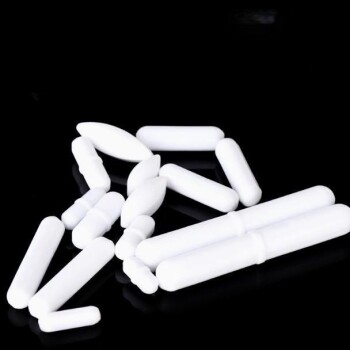
Custom PTFE Teflon Parts Manufacturer PTFE Magnetic Stirring Bar
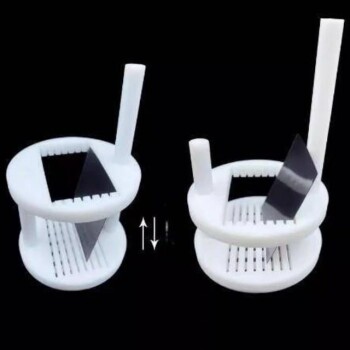
Custom PTFE Teflon Parts Manufacturer Adjustable Height Flower Basket
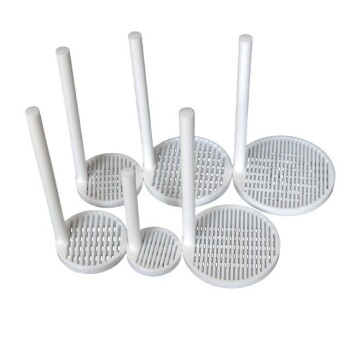
Custom PTFE Teflon Parts Manufacturer PTFE Cleaning Rack
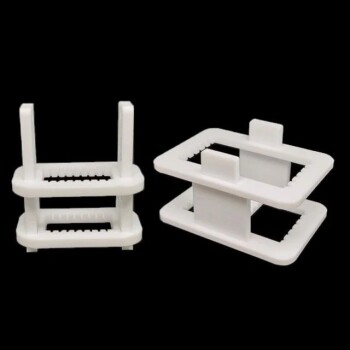
Custom PTFE Teflon Parts Manufacturer Conductive Glass Substrate Cleaning Rack
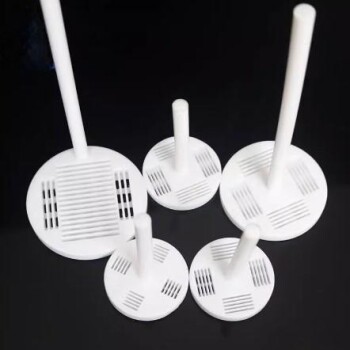
Custom Machined Molded PTFE Teflon Parts Manufacturer for Laboratory ITO FTO Conductive Glass Cleaning Flower Basket