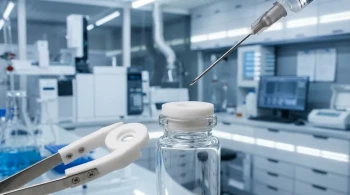
High-Purity PTFE & PFA Sampling Tools for Corrosive and Contamination-Sensitive Workflows
Although magnetic stirring bars and retrievers are commonly used for mixing and recovering stir bars in laboratory vessels, the products listed in this category are high-purity PTFE and PFA sampling tools. They are engineered for obtaining, transferring, and handling liquid, solid, powder, and deep-vessel samples without compromising purity. KINTEK designs and manufactures fluoropolymer laboratory supplies for environments in which conventional metal, glass, or general-purpose plastics can introduce extractables, corrode, retain residues, or create unacceptable process risk.
Reliable sampling begins with the material in contact with the sample. In trace analysis, semiconductor chemical handling, pharmaceutical manufacturing, biopharmaceutical processing, environmental monitoring, and aggressive chemical production, a sampling device is not simply a utility. It becomes part of the analytical chain of custody. The device must reach the required sampling depth, collect a representative quantity, drain or transfer predictably, withstand cleaning, and avoid contributing contaminants that can distort downstream measurements. KINTEK PTFE and PFA sampling equipment is developed around those practical requirements.
Why fluoropolymer sampling tools are used in critical laboratories
PTFE and PFA are high-performance fluoropolymers valued for broad chemical resistance, low surface energy, cleanability, and low potential for sample interaction. Their properties make them well suited to routine and high-purity laboratory work involving acids, alkalis, oxidizers, solvents, salt solutions, slurries, powders, and reactive process fluids.
Chemical resistance for demanding media is one of the primary advantages. Many laboratory sampling tasks involve substances that attack common metals, embrittle standard plastics, or leave permanent damage in less resistant components. PTFE and PFA maintain their performance across a wide range of corrosive media, enabling users to select a more durable contact surface for acid sampling, solvent handling, chemical-process inspection, and wet-chemistry workflows. Material compatibility should always be confirmed for the specific chemical concentration, temperature, pressure, and exposure duration, but fluoropolymers provide a highly versatile starting point for difficult applications.
Low-background sample handling is equally important. High-purity laboratories often need to control metal-ion contribution, particle shedding, carryover, and residues from wetted surfaces. PFA and virgin PTFE components can help reduce these risks compared with poorly matched material choices. Their smooth, non-wetting surfaces also make them easier to rinse thoroughly between samples, supporting more reliable blank values and helping laboratories establish disciplined cleaning procedures.
Low adhesion and easier cleaning improve day-to-day efficiency. Powder residues, viscous fluids, and precipitates can cling to many materials, complicating sample recovery and increasing the chance of cross-contamination. PTFE's naturally low-friction surface helps reduce sticking, making it a practical choice for reusable sampling scoops, ladles, barrels, and buckets. The actual cleaning method should be validated for the laboratory's analytes and quality program, but the fluoropolymer surface gives operators a useful advantage when thorough rinsing and residue control are priorities.
Temperature tolerance and mechanical stability expand the range of possible uses. PTFE sampling devices are often selected for operations beyond ambient-temperature bench work, including heated chemical processes and applications requiring repeated use. Product geometry, wall thickness, support design, and any reinforced handle structure should be matched to the actual loading conditions. KINTEK can help specify a configuration that balances purity requirements with the strength, reach, capacity, and handling ergonomics required by the operation.
Sampling tools for liquids, reactors, powders, solids, and deep vessels
The listed product range addresses multiple sample forms and collection points. Selecting the right tool depends on whether the target is a surface liquid, a deep liquid layer, a reactor charge, a free-flowing powder, a compacted solid, or an environmental water sample. Capacity, reach, opening design, tip geometry, drainage behavior, and handle construction all affect whether a sample is representative and whether operators can work safely and consistently.
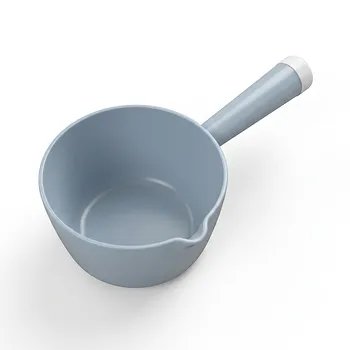
PFA sampling ladles, water scoops, and chemical dippers are practical for collecting liquid samples from containers, baths, tanks, and process vessels. PFA is especially valued in ultra-clean liquid handling because it combines high purity with excellent chemical resistance and a smooth, easily cleaned surface. A ladle configuration is useful when operators need a defined liquid volume or when the sample must be dipped from an open vessel. Custom cup volume, handle length, angle, wall thickness, pouring lip, and overall geometry can be tailored to fit the access opening and operational method.
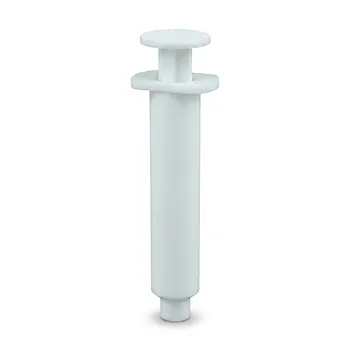
PTFE syringe sampling barrels offer controlled collection and transfer where a measured draw of aggressive liquid is needed. These tools can be configured for laboratory process sampling, trace-analysis preparation, or direct transfer from constrained spaces. Depending on the application, dimensional details such as barrel volume, plunger arrangement, tip design, connection interface, and length can be adjusted. For users working with high-value or hazardous fluids, a correctly sized PTFE barrel helps improve control while preserving chemical compatibility at the wetted surface.
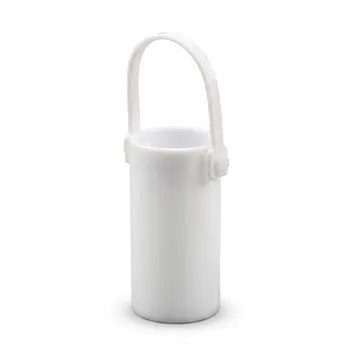
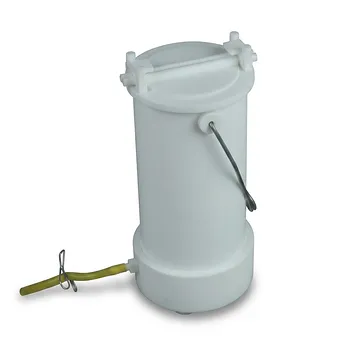
Deep-layer samplers and sampling buckets are intended for vessels where a surface sample does not adequately represent the process. A 22 mL deep-layer sampler, for example, can be used to obtain material at a defined depth from a tank or container. Deep-water sampling buckets support similar needs in industrial or environmental liquid collection. The required depth, vessel diameter, sample viscosity, and operator handling method should guide the final design. A secure handle and appropriately proportioned bucket are important for stable insertion, collection, and retrieval.
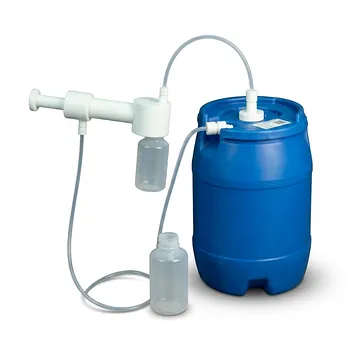
Ultrapure liquid samplers for reactors are designed for applications such as acid extraction from larger process systems, including 200 L reactors. In these settings, the device must be compatible not only with the chemical but also with the vessel opening, access distance, collection volume, and cleaning protocol. Standard equipment may not fit safely through the available port or may not reach the target level. KINTEK can manufacture custom PTFE sampling devices to suit reactor dimensions and process constraints, helping users integrate a fluoropolymer solution into existing production or laboratory equipment.
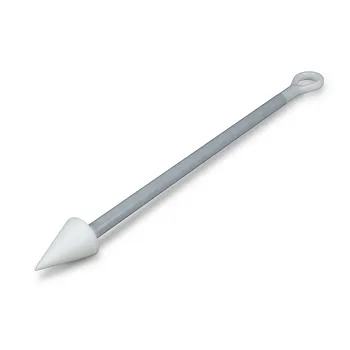
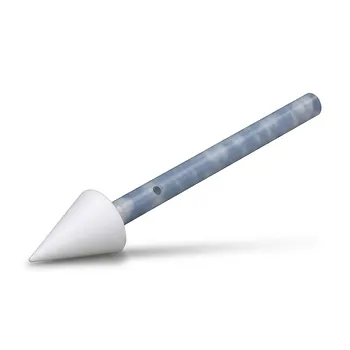
PTFE solid samplers with pointed tips are suited to collecting powders, granules, pastes, and solid materials from containers, drums, bags, or process vessels. The pointed geometry assists penetration into bulk material so that operators can collect from below the surface rather than relying only on top-layer material. Where higher rigidity is needed, a stainless-steel reinforced handle can provide structural support while the PTFE sampling end remains the primary contact surface. This configuration is particularly useful when sampling dense or compacted materials, provided the process requirements permit the reinforced construction.
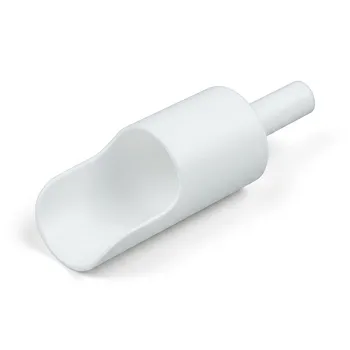
Pharmaceutical sampling scoops and cylindrical powder samplers support clean material handling in formulation, quality control, and production areas. Their low-leaching fluoropolymer construction helps support contamination-control goals for powders and intermediates. Scoop capacity, cylindrical diameter, handle length, and edge profile can all affect accuracy and recovery. A custom design can be matched to the required sample mass, powder flow behavior, container shape, and site-specific standard operating procedure.
Reusable high-temperature PTFE solid sampling devices provide an option for biopharmaceutical and chemical workflows requiring corrosion resistance, low background, and repeat-use capability. Reusability can reduce consumable demand, but it also makes cleaning validation and traceability important. KINTEK can assist with material selection and component design so the tool can be integrated more effectively into the customer's defined cleaning, inspection, and maintenance process.
Supporting representative sampling and reliable analysis
A high-quality analytical result depends on more than the performance of the instrument. Sampling is often the first physical interaction with the process material, and errors at this stage cannot always be corrected later. Inadequate reach may produce a surface-only sample. An undersized collection chamber may require multiple handling steps. An incompatible material may contaminate or chemically alter the sample. Rough or poorly designed surfaces may retain material from a previous batch. These risks are why the design of laboratory sampling equipment deserves careful consideration.
KINTEK fluoropolymer sampling tools are intended to help users establish a more controlled sampling approach. The goal is not merely to withstand a harsh chemical. It is to provide a practical device that supports consistent operator technique, suitable sample access, manageable cleaning, and a contact surface selected for purity-sensitive work. By matching the sampling geometry to the vessel and material, laboratories can reduce unnecessary handling and create a more repeatable workflow.
For trace-element analysis, the focus is often on minimizing background contribution and ensuring the sample has not contacted unsuitable surfaces. For pharmaceutical and biopharmaceutical applications, users may prioritize cleanability, low extractables, smooth surfaces, and batch-to-batch consistency. For chemical-process laboratories, corrosion resistance, depth access, mechanical durability, and compatibility with aggressive reagents may be central. Environmental sampling teams may need portable, deep-reach tools that can be rinsed effectively between locations. PTFE and PFA provide a strong foundation across these different needs, while custom machining makes the final device more relevant to the specific task.
Custom PTFE and PFA manufacturing from KINTEK
Off-the-shelf sampling equipment is not always adequate for unusual vessel ports, narrow openings, specialized collection depths, limited headroom, high-purity protocols, or non-standard sample volumes. KINTEK's fluoropolymer-focused manufacturing capability allows customers to specify sampling tools beyond generic catalog dimensions.
Customizable details can include:
- Sampling cup, ladle, scoop, or barrel capacity.
- Overall length and effective sampling depth.
- Handle length, diameter, angle, grip arrangement, and reinforcement requirements.
- Pointed, cylindrical, open, closed, or application-specific sampler tips.
- Pouring lips, drainage holes, openings, and transfer-oriented geometry.
- PTFE or PFA material selection according to purity and chemical-handling needs.
- Wall thickness and structural features for the operating environment.
- Interfaces designed to fit reactor ports, tanks, bottles, drums, and laboratory fixtures.
- Custom CNC-machined components for specialized laboratory setups or scaled procurement programs.
This flexibility is valuable for laboratories that need a sampling tool to fit an established workflow rather than forcing the workflow to adapt to a generic tool. Sharing the target chemical, sample state, operating temperature, required volume, vessel dimensions, insertion depth, and cleaning method enables a more useful technical discussion. For critical applications, customers should also define any requirements for material grade, surface finish, documentation, dimensional tolerances, packaging, and quality control.
KINTEK is exclusively focused on high-performance fluoropolymer laboratory products, including PTFE and PFA labware, liquid-transfer components, trace-analysis equipment, sample-preparation tools, tanks, custom machined parts, and bespoke reaction or electrochemical assemblies. This specialization means that sampling equipment can be considered as part of a larger fluoropolymer workflow, from sample collection through transfer, storage, preparation, and analysis. Where a standard scoop, ladle, or sampler is only one element of the process, KINTEK can help align related PTFE/PFA components for material consistency and compatibility.
Choose a sampling configuration based on the real operating conditions
Before selecting a liquid or solid sampler, assess the sample and process requirements in practical terms. Consider whether the material is a low-viscosity liquid, viscous fluid, slurry, powder, granule, paste, or compacted solid. Identify the chemical composition, concentration, temperature, and potential for deposition or crystallization. Measure the vessel opening, wall height, desired sampling depth, and any internal obstructions. Establish the target sample amount, allowable handling time, required transfer path, and cleaning or disposal procedure.
These details determine whether a simple PFA dipper, a PTFE syringe barrel, a deep-layer bucket, a reactor-specific liquid sampler, or a reinforced solid sampler is the best fit. They also identify when a custom solution offers a material operational benefit. A longer handle may improve access but require greater rigidity. A narrower profile may fit a port but reduce capacity. A larger scoop may speed collection but be unsuitable for a small container. A custom balance of these factors helps produce a tool that operators can use consistently.
For high-purity and regulated environments, it is also important to validate the complete process. Material selection alone does not guarantee analytical suitability. Laboratories should qualify cleaning, handling, storage, sample contact time, and any relevant blank-testing procedures according to their own method requirements. KINTEK can provide the fluoropolymer product expertise and custom manufacturing support needed to begin with an appropriate physical design.
Discuss your PTFE or PFA sampling requirement
Whether you need a low-background PFA ladle for trace analysis, a corrosion-resistant PTFE sampler for reactor acid collection, a deep-water bucket, a pharmaceutical powder scoop, or a custom solid sampler with a specific reach and tip profile, KINTEK can help develop a solution around your application. Our team understands fluoropolymer material behavior, laboratory purity expectations, and the practical details that make a sampling tool usable in the field or laboratory.
Contact KINTEK through our inquiry form with your sample medium, vessel drawing or dimensions, required capacity, working temperature, chemical conditions, and target configuration. We will help evaluate a standard or custom PTFE/PFA sampling design, including CNC-machined non-standard parts and scalable production options for laboratory, pilot, and industrial use.