High-Purity PTFE and PFA Fittings for Corrosive Fluid Control
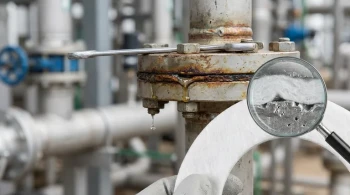
Reliable fluid transfer is fundamental to the safety, repeatability, and productivity of chemical and analytical work. Yet conventional metal fittings, general-purpose valves, and unsuitable polymer components can become weak points when exposed to strong acids, alkalis, oxidizers, organic solvents, or high-purity reagents. Corrosion can compromise sealing surfaces, contaminate process liquids, create leakage risks, and lead to unplanned maintenance. For laboratories and industrial operations working with chemically aggressive media, selecting the right fitting material and connection design is therefore a practical process-control decision, not merely a hardware choice.
KINTEK corrosion-resistant fittings are developed around the exceptional chemical stability of fluoropolymers. Our PTFE and PFA components help users build fluid paths that resist difficult reagents while maintaining clean, controlled liquid handling. From a compact dispensing point on a chemical drum to a filtration connection within a sample-preparation workflow, these products are intended to protect fluid purity, simplify operation, and support dependable long-term service.
Designed for aggressive chemicals and purity-critical workflows
PTFE and PFA are widely valued in laboratory and process environments because fluoropolymer wetted surfaces are highly resistant to a broad range of corrosive and reactive substances. Their chemical inertness helps reduce material degradation when systems handle strong acids, strong bases, many organic solvents, and oxidizing agents. This makes fluoropolymer fittings especially relevant to applications where metal corrosion, elastomer incompatibility, or extractable contamination may threaten process performance.
The need is particularly clear in trace analysis and high-purity chemistry. When analyzing very low concentrations of metals or other contaminants, the vessel, valve, filter housing, tubing connection, and dispensing component can all influence sample integrity. A poorly selected contact material may introduce background contamination, adsorb or retain residues, or degrade after repeated exposure to reagents. High-purity PTFE and PFA fluid-contact parts offer a practical route to more controlled handling of digestion acids, standards, wash solutions, blanks, and other sensitive liquids.
The same principles apply in semiconductor-related wet processing and chemical delivery. Process chemicals may be highly corrosive, while low contamination is essential for stable downstream results. A chemically compatible fluid path helps maintain operational consistency and limits the avoidable risks associated with corrosion particles, degraded seals, or material incompatibility. For complex systems, reliable fittings and valves also make it easier to isolate a process stage, direct flow safely, dispense media with control, and service individual components without redesigning the entire setup.
Product options in this category
KINTEK provides corrosion-resistant components that address both filtration and controlled dispensing requirements:
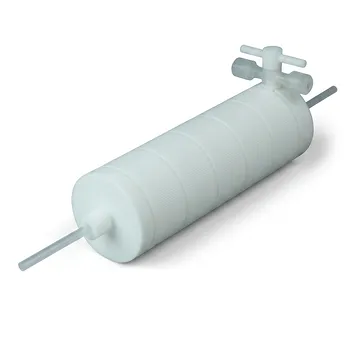
- High-purity PTFE filtration equipment with PFA valve connections supports corrosive-fluid processing where filtration, liquid isolation, and chemical compatibility must work together. The integrated sieve plate provides support for the applicable filtration medium or process arrangement, while the fluoropolymer construction helps maintain compatibility with demanding reagents.
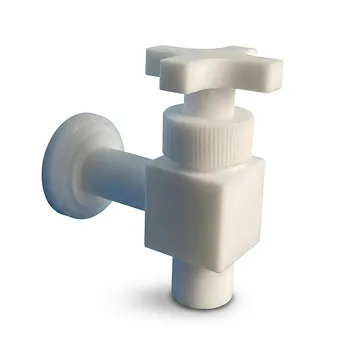
- PTFE valves and laboratory fluid-dispensing faucets provide a robust outlet and flow-control solution for industrial storage tanks, chemical drums, plastic containers, and custom liquid-transfer assemblies. Precision-machined designs can be adapted to the physical installation, flow direction, connection style, and operational requirements of the user’s system.
These products can be used independently or incorporated into a broader fluoropolymer fluid-handling configuration with PTFE/PFA tubing, adapters, fittings, bottles, tanks, reaction apparatus, and sample-preparation equipment. This product-family compatibility is useful when a facility needs to reduce the number of dissimilar wetted materials in a process line and create a more coherent, chemically compatible system.
Why PTFE and PFA are preferred fitting materials
The primary function of a fitting or valve is simple: create a secure interface that guides, stops, releases, or regulates fluid. In corrosive service, however, the component must accomplish this function while maintaining dimensional stability and sealing reliability after repeated chemical exposure. Fluoropolymers are selected because they offer a combination of properties that conventional materials often cannot provide at the same time.
Chemical resistance is the first advantage. PTFE and PFA are well suited to contact with many harsh reagents encountered in laboratories and chemical-processing environments. Their resistance can help prevent the corrosion, swelling, embrittlement, or surface attack that can affect less suitable materials. Actual material compatibility should always be confirmed against the specific chemical, concentration, temperature, pressure, and exposure duration, but fluoropolymer construction offers a strong starting point for demanding applications.
High purity is equally important for contamination-controlled work. In analytical chemistry, a chemically resistant part is not automatically a clean part. Users also need materials that help minimize unwanted contributions to the sample or reagent stream. High-purity PTFE and PFA components are well suited to workflows involving ultrapure acids, trace-metal testing, environmental analysis, geochemical preparation, pharmaceutical research, and other applications where background contamination can undermine confidence in results.
Low surface energy is another practical benefit. Fluoropolymer surfaces are non-wetting relative to many materials and can be easier to rinse between operations. This characteristic can support more effective cleaning practices, especially when working with difficult chemical residues. It does not eliminate the need for validated cleaning procedures, but it can make fluoropolymer equipment a strong choice for repeat-use systems where carryover control matters.
Temperature capability and operational durability also broaden the usefulness of PTFE and PFA fittings. Fluoropolymers are frequently used across laboratory and process conditions that would challenge standard plastic hardware. The final allowable operating range depends on the exact product geometry, joint design, pressure load, and application conditions. KINTEK can help evaluate these requirements when configuring a component for a particular system.
Reliable sealing begins with correct geometry
A fitting is only as reliable as its sealing interface. Chemical resistance alone cannot compensate for an unsuitable thread, poorly supported connection, incorrect gasket selection, excessive torque, or a mismatch between the fitting and the connected vessel or tube. KINTEK approaches corrosion-resistant fluid components as functional parts of a complete assembly, considering the interaction among body design, valve mechanism, port geometry, sealing surface, tubing or vessel interface, and intended operating environment.
For valves and dispensing faucets, a controlled flow path helps users transfer liquids from storage containers and tanks with greater precision. The valve body provides the chemically resistant structure, while the internal flow-control arrangement enables the user to open, close, or dispense the liquid as required. A properly selected faucet can make routine chemical handling more orderly by directing the liquid into a receiving vessel, reducing unnecessary handling steps, and supporting cleaner work areas.
For filtration equipment, the design must manage more than chemical compatibility. A filtration assembly needs to support the intended filter media or sieve plate arrangement, maintain a practical connection to upstream and downstream fluid paths, and allow operators to isolate or direct flow safely. PFA valve connections complement the PTFE filtration body by providing chemical-resistant control points at the inlet or outlet. This integrated approach can reduce the need to combine unrelated components from multiple material systems.
The result is a more dependable fluid-transfer setup: the liquid enters through a compatible connection, passes through the selected filtration or dispensing zone, and exits through an appropriately controlled pathway. By keeping critical wetted components within the PTFE/PFA family, users can better align their material selection with the chemical and purity requirements of the process.
Applications across laboratory and industrial environments
Corrosion-resistant PTFE and PFA fittings are not limited to one type of facility. Their value comes from their ability to support difficult fluids in workflows where contamination, corrosion, and leakage cannot be treated as secondary concerns.
In analytical laboratories, fluoropolymer filters, valves, and outlets can be used for trace-element sample preparation, reagent dispensing, acid handling, blank preparation, and cleaning operations. Laboratories conducting ICP-related sample preparation, elemental analysis, environmental testing, and materials characterization often need contact components that are compatible with aggressive acids and appropriate for low-background workflows.
In chemical research and synthesis, these components support reagent transfer, reactor feed lines, wash operations, corrosive liquid storage, and product or solvent handling. A chemical-resistant dispensing valve can be especially useful where users repeatedly withdraw liquid from a storage tank or drum and need an outlet that is easier to control than manual decanting.
In semiconductor and electronics-related processing, high-purity fluoropolymer fluid paths are relevant to chemical distribution, wet bench support equipment, process solution handling, and filtration arrangements. Material purity and chemical stability can both influence the reliability of process support systems.
In environmental, geological, and mining laboratories, aggressive digestion chemistry is common. PTFE/PFA components can support the handling of acids and prepared solutions used in extraction, digestion, washing, and transfer operations. Their chemical resistance is useful where repeated exposure would rapidly degrade standard metal hardware.
In pharmaceutical, biotechnology, and specialty manufacturing environments, the same benefits can support chemical utility operations, cleaning workflows, research-scale processing, and controlled material transfer. The right component must still be evaluated for the specific regulatory and process requirements, but fluoropolymer construction provides valuable flexibility when chemical compatibility is a primary concern.
In industrial storage and chemical distribution, custom PTFE valves and faucets can turn tanks, drums, and plastic containers into safer, more manageable dispensing points. Instead of relying on temporary equipment or repeated container tilting, facilities can configure a more stable outlet arrangement suited to their storage vessel and handling procedure.
Benefits that support everyday operation
Choosing a corrosion-resistant fitting is often motivated by a need to withstand harsh chemistry, but its operational value goes further. The right PTFE or PFA component can improve routine work in several ways.
Reduced risk of material degradation: Fluoropolymer wetted surfaces help resist chemical attack that may otherwise lead to weakened components, compromised seals, or frequent replacement cycles.
Improved process cleanliness: High-purity materials help support low-contamination handling of sensitive samples and reagents, particularly where metallic ions or degraded polymer residues could be problematic.
More controlled dispensing: A dedicated valve or faucet offers a purposeful mechanism for starting, stopping, and directing liquid flow from a vessel, tank, or transfer line.
Simplified system design: Selecting fittings, valves, tubing, and process accessories from compatible fluoropolymer materials can make it easier to establish a consistent fluid path for corrosive service.
Serviceability: Well-designed connections and valve locations can support practical cleaning, inspection, filter changes, system isolation, and replacement of consumable elements when needed.
Long-term value: Although the correct high-performance material may involve a higher initial investment than a general-purpose alternative, improved chemical durability and reduced contamination risk can provide meaningful value over the operating life of the system.
A filtration solution built for corrosive liquid processing
The high-purity PTFE filter in this category is intended for users who need to filter or condition corrosive fluids without introducing unsuitable wetted materials into the process. Its PTFE construction addresses chemical-resistance and purity requirements, while PFA valve connections provide controlled access to the fluid path. The integrated sieve plate adds a functional support element for the relevant filtration configuration.
This type of arrangement can be valuable when operators need to remove particulates, protect downstream equipment, clarify a process liquid, or prepare a solution before analytical or production use. The exact filter medium, pore size, flow rate, differential pressure, and cleaning procedure should be selected according to the application. KINTEK can help align the equipment configuration with the user’s chemical media and operating objectives.
A practical filtration system should be considered as a whole. The feed solution, upstream container, tubing, connections, filter support, downstream collection vessel, and cleaning protocol all affect performance. By using high-purity fluoropolymer materials in critical contact areas, users can establish a more chemically consistent system for aggressive or contamination-sensitive liquids.
PTFE valves and faucets for tanks, drums, and custom assemblies
A dispensing outlet may appear simple, but it has an important role in chemical handling. Operators need to draw liquid safely and repeatedly without compromising the vessel, creating uncontrolled splashing, or exposing incompatible materials to the fluid. KINTEK PTFE valves and dispensing faucets are designed to provide chemically resistant flow control for industrial storage tanks, plastic drums, laboratory containers, and bespoke process equipment.
These components can be configured for the physical constraints of the installation. Depending on the application, customization may involve port dimensions, thread form, connection orientation, overall geometry, mounting arrangement, valve style, or integration with a specific vessel or tube. This flexibility is important because chemical-handling systems rarely share identical requirements. A standard component may be appropriate for a common drum outlet, while a specialized research apparatus or production line may require a part engineered around limited space, unusual connections, a specific operating sequence, or compatibility with existing equipment.
Precision machining allows KINTEK to translate those practical requirements into fluoropolymer components with deliberate dimensions and interfaces. For users, this means access to more than an off-the-shelf fitting. It means the opportunity to specify a fluid-control part that fits the process rather than forcing the process to accommodate an unsuitable part.
Material selection and operating considerations
Even highly resistant fluoropolymers should be selected with the complete application in mind. Chemical compatibility depends on more than the name of the reagent. Concentration, temperature, pressure, cycling frequency, fluid purity requirements, external environment, and the presence of mixed chemicals can all affect the selection of a fitting or valve. A product that is appropriate for a room-temperature laboratory transfer may require a different design approach for elevated temperatures, vacuum service, pressurized lines, continuous duty, or complex multi-reagent systems.
Connection compatibility is also essential. Users should consider the connected tubing or vessel material, thread specifications, nominal size, support requirements, and desired sealing method. The fitting must not only resist the chemical; it must also interface securely with the rest of the system. Improper installation can place stress on a valve body, distort threads, or compromise sealing performance. During design and installation, it is important to avoid over-tightening, unsupported loads, and incompatible accessories.
Maintenance and cleaning procedures should match the process. Fluoropolymer components are valued for their resistance and cleanability, but systems handling sensitive fluids still benefit from defined rinse procedures, inspection intervals, and contamination-control practices. For filtration units, users should establish a protocol for filter-media replacement, flushing, and verification. For valves and faucets, periodic inspection helps confirm that the outlet remains clean, properly supported, and appropriate for the current chemical service.
Custom engineering from a fluoropolymer specialist
KINTEK is exclusively dedicated to high-performance fluoropolymer laboratory products. This focus allows us to support projects that range from standard fluid-handling items to custom PTFE/PFA equipment manufactured for specialized technical requirements. Our capabilities extend across basic labware, high-purity analytical products, cleaning and storage tanks, tubing, fittings, valves, filtration tools, electrochemical cells, digestion vessels, and custom-machined components.
For corrosion-resistant fittings, our engineering value lies in connecting material knowledge with practical manufacturing. We can evaluate how a part will be installed, what fluids it will contact, how it will be operated, and which features are necessary for reliable integration. Custom CNC machining enables the production of non-standard geometries, bespoke ports, special adapters, integrated fluid paths, and assemblies designed around a particular laboratory or industrial setup.
This is especially useful when replacing discontinued components, adapting equipment to a different container or process connection, upgrading a metal wetted part to fluoropolymer construction, or consolidating several separate fittings into a more functional custom piece. We also support projects that require repeatable high-volume production after a design has been validated.
A productive custom project begins with application details. Useful information includes the chemical media, expected temperature and pressure, target flow direction, vessel or tubing dimensions, connection standards, available installation space, required purity level, and any drawings or reference samples. With these inputs, KINTEK can help recommend an appropriate PTFE/PFA configuration and develop a solution aligned with the real operating conditions.
Build a more dependable corrosive-fluid system
Whether you need a high-purity filter assembly for aggressive reagent processing, a chemically resistant faucet for a storage drum, or a custom-machined PTFE/PFA fitting for a specialized fluid line, KINTEK can help configure the right component for your application. Our team combines fluoropolymer material expertise with practical machining and laboratory-equipment experience to support both individual replacements and complete custom setups.
Contact KINTEK about your corrosion-resistant fitting requirements to discuss your chemicals, vessel or tubing connections, dimensional needs, purity targets, and operating conditions. We will help you develop a PTFE or PFA solution that delivers the chemical resistance, sealing reliability, and customization your process requires.