KINTEK condensation and reflux apparatus support closed-loop heating, solvent recovery, purification, extraction, synthesis, gas treatment, and high-purity laboratory cleaning where conventional glass equipment may be unsuitable. Our fluoropolymer range includes PTFE and PFA straight and serpentine condensers, reflux and continuous-reaction systems, HF-resistant three-neck flask assemblies, cooling and circulation columns, condensation-jacket absorption bottles, gas collection units, separatory-funnel reflux devices, and acid steam cleaning or gravity leaching systems. Designed for corrosive media, ultra-trace analysis, semiconductor-related chemical handling, petrochemical processing, and custom laboratory workflows, each solution can be configured around the required vessel interfaces, flow path, capacity, and operating process.
Toggle Categories
Get Instant Support
Choose your preferred way to connect with our team
Response Time
Within 8 hours on working days, 24 hours on holidays
Condensation & Reflux Apparatus
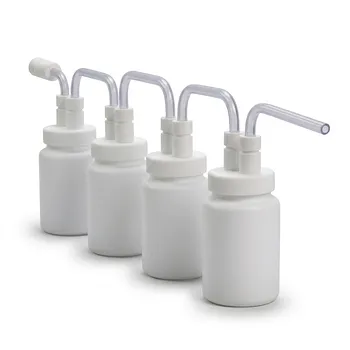
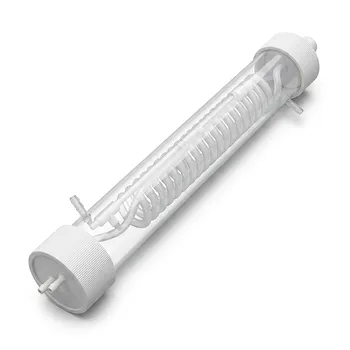
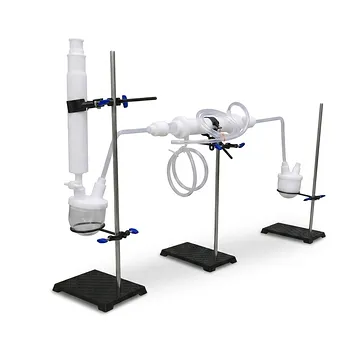
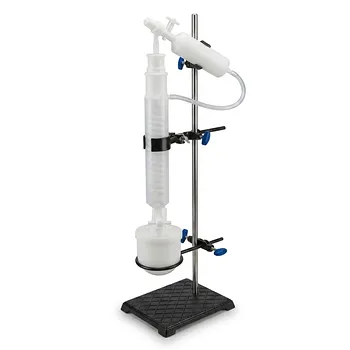
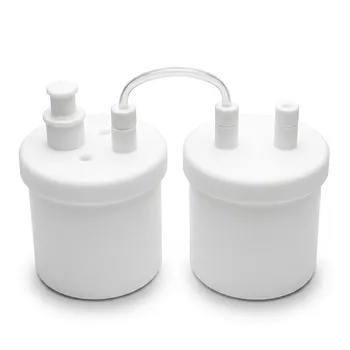
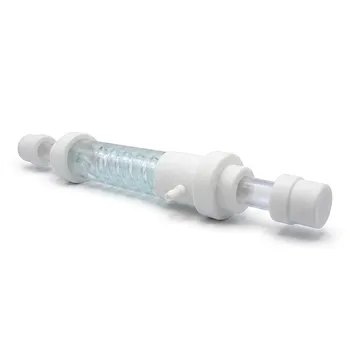
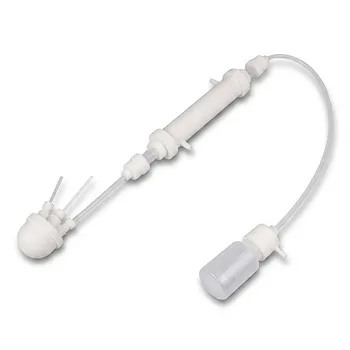
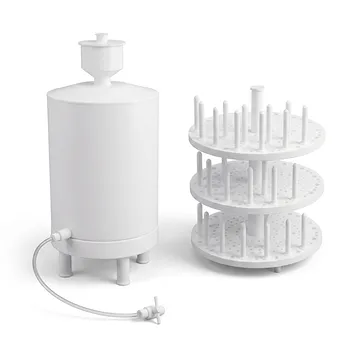
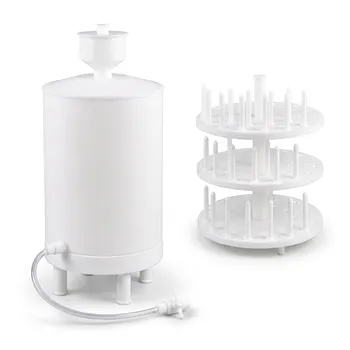
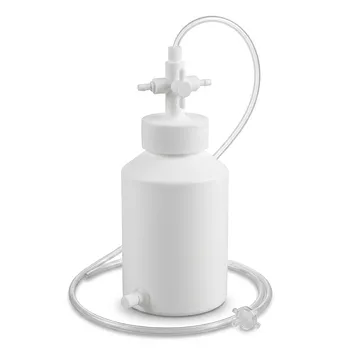
High Purity PTFE Gravity Leaching System for Trace Analysis and Pure Water Filtration
Item Number: PL-CP119
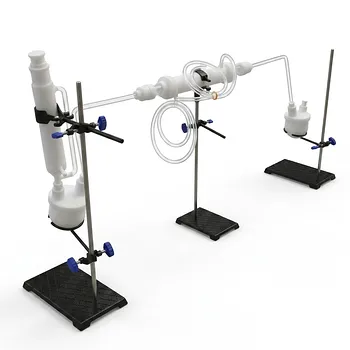
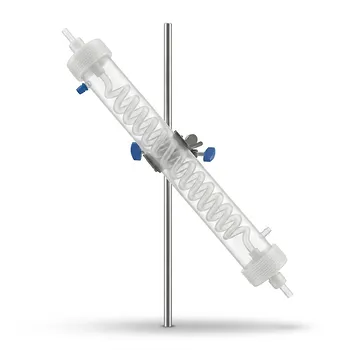
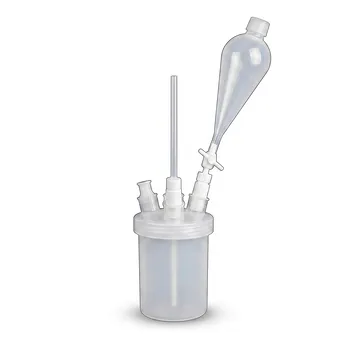
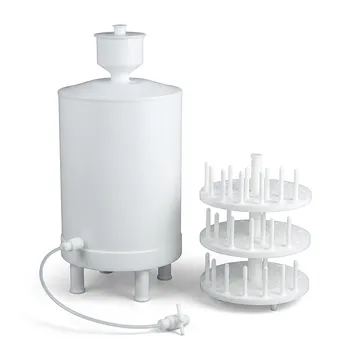
PTFE & PFA Condensation and Reflux Apparatus for Corrosive, High-Purity Processes
Condensation and reflux apparatus are fundamental tools for processes that require controlled heating without unnecessary loss of solvent, reagent, or volatile reaction components. During reflux, a liquid is heated until vapor forms, the vapor enters a cooler condenser zone, and the condensed liquid returns to the reaction vessel. This continuous cycle makes it possible to maintain a reaction or extraction near the solvent's boiling point for an extended period while preserving a more consistent working volume and solvent-to-solute ratio.
For laboratories and process teams handling corrosive, high-purity, or contamination-sensitive chemistry, the materials used throughout this loop matter as much as the condenser geometry. KINTEK manufactures condensation and reflux apparatus from high-performance PTFE and PFA fluoropolymers to address applications where standard glass, metal, or general-purpose plastics can create risks through corrosion, breakage, extractables, or difficult cleaning. Our product category covers both established condenser and reflux configurations and engineered assemblies tailored to a customer's vessels, process sequence, utility connections, sample volumes, and chemical environment.
Why condensation and reflux control matter
Heating often improves reaction kinetics, dissolution, extraction efficiency, and mass transfer. However, direct heating of volatile liquids can lead to evaporation losses, shifts in concentration, exposure to hazardous vapor, and inconsistent batch conditions. A properly designed reflux loop returns condensed vapor to the system, helping users sustain the intended liquid inventory throughout a longer operation.
This approach is useful across many workflows:
- Chemical synthesis: Maintain a reaction under heated conditions while returning volatile solvent and reaction components to the vessel.
- Solvent extraction: Support extended extraction of soluble compounds from solid samples or complex matrices without rapidly concentrating the extraction liquor through vapor loss.
- Digestion and sample preparation: Manage acid vapor in controlled laboratory processes, including workflows where vessel purity and chemical resistance are critical.
- Solvent recovery and purification: Condense vapor for collection, recirculation, or downstream handling.
- Gas absorption and scrubbing: Direct evolved gases through a cooled or jacketed absorption stage to improve capture and containment.
- Continuous and semi-continuous processing: Integrate reaction vessels, condensers, columns, collection flasks, and circulation paths into a controlled process train.
- Trace analysis cleaning: Use closed reflux or acid-vapor cleaning arrangements to decontaminate labware while reducing exposure and helping conserve cleaning acid.
In each case, condenser surface area, vapor path, cooling conditions, joint or adapter interfaces, vessel volume, drainage direction, and chemical compatibility need to work together. KINTEK's custom manufacturing capability allows these factors to be considered as a complete system rather than treated as isolated components.
PTFE and PFA materials for challenging chemical service
PTFE and PFA are widely selected for laboratory and process components because fluoropolymers combine broad chemical resistance with low surface energy and useful temperature stability. Their characteristics make them particularly relevant where corrosive acids, reactive reagents, high-purity fluids, or sticky residues make ordinary apparatus difficult to use and maintain.
PTFE is valued for its exceptional chemical inertness, non-wetting surface, and resistance to a broad range of acids, alkalis, solvents, and other aggressive media. It is a practical material for machined condenser parts, adapters, vessel components, reflux lines, collection systems, and specialized configurations requiring robust chemical compatibility.
PFA provides many of the same fluoropolymer advantages while also offering transparency and melt-processability that can be beneficial for selected tubing, column, sleeve, and high-purity fluid-contact designs. The ability to visually observe fluid level, condensate movement, vapor behavior, or cleaning progress can be particularly useful when process visibility is important. PFA is also well suited to applications involving highly corrosive chemical environments, including hydrofluoric acid service when the complete system design is appropriate for the process conditions.
Neither material choice should be based on chemical name alone. Temperature, concentration, pressure or vacuum conditions, thermal cycling, mechanical loading, trace-metal background requirements, cleaning method, and connection style all affect the correct design. KINTEK works from the actual application details to help identify a suitable PTFE, PFA, or mixed-fluoropolymer construction.
Benefits compared with conventional glass condenser setups
Glass remains familiar in many laboratory reflux operations, but it may be less appropriate for severe chemical environments or applications that demand greater mechanical resilience. PTFE and PFA condensation and reflux apparatus provide meaningful advantages in the right use case.
Resistance to corrosive chemicals: Fluoropolymer equipment is often selected for acids, alkaline solutions, corrosive vapors, high-purity reagents, and solvents that can attack metals, degrade general plastics, or create concerns with conventional assemblies. This is especially relevant for hydrofluoric acid-related work, aggressive acid cleaning, and corrosion-sensitive process steps.
Greater impact tolerance: PFA and PTFE components can offer a more resilient alternative to fragile glass parts in busy laboratories and industrial settings. Reduced susceptibility to shattering can help lower the operational consequences of accidental contact or handling incidents. Equipment still requires correct support and installation, but fluoropolymer construction is valuable where mechanical robustness is a priority.
Low contamination potential: For trace analysis, semiconductor-related chemistry, high-purity reagent preparation, and sensitive sample work, users need equipment that limits unwanted background contributions. High-purity fluoropolymer fluid-contact surfaces can support cleaner workflows when specified, manufactured, cleaned, and operated appropriately.
Low surface adhesion: PTFE's non-stick surface characteristics can simplify the removal of many residues and support more efficient cleaning between runs. This can be important for viscous samples, concentrated acids, reagent deposits, and processes where carryover control is essential.
Thermal-cycle stability: Fluoropolymer systems can be designed for repeated heating and cooling cycles, helping users manage routine reflux, condensation, and acid-vapor cleaning operations. The usable temperature range always depends on the material grade, geometry, process media, support arrangement, and operating conditions, so it should be confirmed for each project.
Process visibility where needed: Transparent PFA parts, such as selected condenser sections or thermometer sleeves, can make it easier to observe condensate flow and liquid behavior without sacrificing chemical compatibility required by demanding processes.
Straight, serpentine, and custom condenser designs
A condenser must remove enough heat from vapor to create the desired amount of condensate while maintaining a stable, manageable flow path. There is no universal condenser layout for every application. KINTEK supplies straight and serpentine fluoropolymer condenser configurations and can adapt the geometry to the heating load, available cooling service, vapor composition, installation space, and vessel connection requirements.
Straight condenser tubes provide a direct vapor path and can be appropriate where a compact, simple configuration is required. They may be used for reflux, vapor cooling, sample transfer, solvent recovery, or integration with reaction flasks and custom adapter assemblies. Their straightforward architecture can also make cleaning and inspection more convenient in certain workflows.
Serpentine condensers increase the effective cooling path within a compact footprint. The extended route can improve contact time and heat exchange potential for vapors that require greater cooling capacity or for systems with limited vertical installation space. Serpentine designs are commonly considered for reflux, solvent condensation, circulation columns, and integrated reaction-and-collection assemblies.
Cooling columns and circulation condensers can be incorporated into higher-capacity or more specialized reaction systems. These may include custom cooling connections, vessel transitions, support features, and configurations for coupling to external recirculating cooling equipment. The final design should reflect the cooling medium, expected thermal duty, process temperature, flow conditions, and the physical layout of the laboratory or production area.
Condenser tube assemblies with flask adapters help establish a practical interface between a condenser and the reaction or collection vessel. KINTEK can produce custom adapters, ports, stoppers, sleeves, and mating components to suit specific vessel necks, connection dimensions, and process requirements. This is especially useful when users need fluoropolymer alternatives to standard joints or when an existing apparatus must be upgraded for more aggressive chemistry.
Reflux assemblies for reaction, extraction, and recovery
KINTEK's PTFE and PFA reflux apparatus can be built as individual condenser components or as integrated systems including reaction vessels, collection flasks, receiving sections, gas paths, and supporting accessories. A system-level approach is valuable when maintaining containment, reducing dead volume, improving drainage, and controlling connections are important to the operation.
For heated chemical synthesis, a fluoropolymer reflux assembly can help retain volatile solvent while the reaction proceeds at elevated temperature. This can improve operational consistency by limiting concentration changes that otherwise result from sustained evaporation. It can also help users manage reactive or hazardous vapor within a more controlled closed-loop arrangement.
For botanical, natural-product, and materials extraction, reflux can support extraction at an elevated solvent temperature over a prolonged period. The condensate returns to the extraction vessel, helping maintain the solvent volume and the extraction environment. In suitable processes, this can improve repeatability when targeting soluble constituents such as polyphenols, flavonoids, saponins, or other analytes and compounds of interest. Actual extraction performance depends on the solvent, plant or sample matrix, particle size, temperature, time, agitation, and downstream separation method.
For solvent recovery, condensed vapor can be returned to a process or directed to a dedicated receiving vessel. KINTEK can tailor collection geometry and connections to help users align the equipment with their recovery, transfer, or containment procedure.
For corrosive reaction service, fluoropolymer construction provides a route to replace or supplement vulnerable wetted materials. This is relevant to acid handling, HF-related chemistry, aggressive reagent reflux, and other operations where chemical compatibility and long-term reliability must be evaluated carefully.
Gas collection, absorption, and vapor management
Not every heated process should simply return condensate to its reaction vessel. Some operations generate gases or vapors that must be captured, absorbed, sampled, transferred, or routed to downstream treatment. Our category includes PTFE condensation, reflux, and gas collection apparatus as well as custom absorption bottles with condensation jackets.
A gas collection system can be configured to guide evolved vapor from a reaction zone through a cooling section and toward an appropriate receiving, absorption, or treatment stage. The intended purpose may be to recover a valuable component, reduce fugitive vapor, protect downstream equipment, or support safer handling of hazardous process gases. System design should account for gas composition, temperature, anticipated condensate, pressure behavior, and the requirements of any site ventilation or scrubbing infrastructure.
A condensation-jacket absorption bottle combines chemical-resistant containment with a cooled region that can improve vapor condensation before or during absorption. Such a component may be valuable for corrosive gas sampling, acid fume treatment, chemical synthesis, or high-purity processes where a controlled fluid-contact path is required. The required absorbent, bottle capacity, inlet/outlet arrangement, cooling method, and venting strategy can all be tailored to the application.
For toxic, corrosive, or pressure-generating chemistry, apparatus selection is only one part of process safety. Users should establish suitable operating procedures, ventilation, secondary containment, temperature control, personal protective equipment, and pressure-relief measures. KINTEK can engineer the fluoropolymer equipment around the process requirements, while the end user remains responsible for validating the complete system and site-specific safety controls.
High-purity acid reflux cleaning and leaching systems
The category also includes PTFE acid reflux cleaning systems, acid steam cleaning systems, digestion-tank cleaning units, and gravity leaching systems for trace-analysis workflows. These products address a different but related challenge: preparing laboratory vessels and fluid paths to minimize contamination before ultra-sensitive analysis.
In trace-element testing, background contamination can compromise results even when analytical instrumentation is highly capable. Sample vessels, digestion containers, beakers, transfer components, and storage equipment may retain residues from previous use or introduce unwanted elements during cleaning. Fluoropolymer cleaning systems provide a controlled platform for acid-vapor or reflux-based decontamination processes where high chemical resistance and low-background materials are required.
A closed reflux acid cleaning system can circulate or condense acid vapor within a contained setup, exposing vessels to cleaning conditions while helping reduce direct acid handling and unnecessary vapor escape. The closed-loop principle can also help make more efficient use of cleaning acid compared with open heating arrangements, depending on the procedure and system configuration.
A multi-position acid steam cleaning unit can support batch cleaning of several vessels, beakers, digestion containers, or related labware. Customizable capacity, internal arrangement, port configuration, and vessel interface design allow the system to better match the laboratory's actual throughput and vessel dimensions.
A gravity leaching system supports controlled purification or rinsing operations where fluid cleanliness, chemical compatibility, and low contamination potential are essential. It can be relevant to pure-water handling, acid leaching, reagent preparation, sample-preparation support, and other high-purity workflows. The process chemistry and validation method should be defined by the user's analytical requirements.
These systems are particularly relevant to ICP-MS, ICP-OES, semiconductor-related analysis, environmental trace analysis, geological sample preparation, high-purity chemical research, and laboratories where repeatable low-background cleaning is a prerequisite for trustworthy data.
Designed around the real process, not a generic catalog configuration
Condensation and reflux performance depends on more than choosing PTFE or PFA. An apparatus needs the correct dimensions, interfaces, thermal design, drainage arrangement, and process flow to perform reliably in its intended environment. KINTEK's fluoropolymer manufacturing and CNC machining capabilities support practical customization from a single replacement component through to a complete laboratory setup.
Available customization considerations include:
- Condenser type, including straight, serpentine, coil, column, and jacketed designs.
- PTFE, PFA, or selected mixed-material fluoropolymer construction based on chemical and visibility requirements.
- Reaction vessel, flask, receiver, absorption bottle, or separatory funnel interfaces.
- Neck size, port count, stopper arrangement, thermometer sleeve, sampling port, and adapter geometry.
- Condenser length, diameter, internal routing, and cooling connection details.
- Single-position, multi-position, bench-scale, pilot-scale, or higher-throughput configurations.
- Gas inlet, outlet, vent, collection, transfer, and downstream-treatment connections.
- Closed reflux, continuous reaction, cleaning, leaching, circulation, or recovery layouts.
- High-purity surface and cleaning considerations for contamination-sensitive applications.
- Custom fixtures, supports, mounts, access points, and non-standard machined fluoropolymer components.
This engineering flexibility is useful for organizations replacing obsolete equipment, adapting a process to hydrofluoric acid or another corrosive medium, reducing glass use, developing a new synthesis route, increasing cleaning capacity, or integrating a condenser into an existing process platform. Rather than forcing a critical workflow into a fixed format, the apparatus can be designed around the workflow.
Selecting the right configuration
When specifying a condensation or reflux system, it is helpful to prepare the core application details before requesting a design. The most effective solution usually begins with a clear understanding of the chemistry and operating environment.
Key information includes the chemical media and concentrations; expected process temperature; whether the system operates at atmospheric pressure, under vacuum, or with possible pressure generation; reaction or sample volume; desired throughput; cooling medium and available utility conditions; required vessel connections; target purity level; required collection or gas-treatment steps; and any dimensional or installation constraints.
For trace-analysis or high-purity applications, users should also identify relevant analytical limits, cleaning chemistry, prior contamination concerns, and the vessels or sample-contact parts to be processed. For HF or highly corrosive service, all wetted components, seals, connections, support methods, and operating procedures should be reviewed as a complete compatibility system.
KINTEK can use this information to recommend a practical configuration, clarify interfaces, and develop custom PTFE/PFA components or complete assemblies. This reduces uncertainty during installation and gives the equipment a better foundation for reliable, repeatable operation.
Partner with KINTEK for fluoropolymer process equipment
KINTEK is exclusively focused on high-performance fluoropolymer laboratory supplies and custom PTFE/PFA manufacturing. Our experience spans routine labware, high-purity trace-analysis equipment, fluid transfer parts, reaction systems, digestion and cleaning tools, and complex non-standard machined components. That breadth allows us to approach a condensation or reflux request with an understanding of the surrounding workflow, not merely the condenser itself.
Whether you need a replacement PTFE condenser tube, a transparent PFA cooling column, an HF-resistant reflux device, a customized gas collection and absorption system, or a multi-position acid steam cleaning unit, we can help convert process requirements into a workable fluoropolymer solution. Share your drawing, sample vessel dimensions, medium, operating conditions, target capacity, or existing equipment photos, and our team can evaluate a tailored design.
For a custom quotation or technical discussion, contact KINTEK through our inquiry form. Tell us what you are processing, the chemical environment, and the required connection or capacity details, and we will help develop PTFE or PFA condensation and reflux apparatus suited to your laboratory or industrial application.
REQUEST A QUOTE
Our professional team will reply to you within one business day. Please feel free to contact us!
Related Articles
Why Your RDE Data Isn’t Following the Levich Equation—And How the Shroud Fixes It
Struggling with inconsistent RDE results? Learn how the precision of your PTFE shroud dictates hydrodynamic stability and why it's the key to accurate Levich plots.
Is Your Electrode Housing Corrupting Your Data? Why PTFE Jackets Are Crucial for Precise Electrochemistry
Discover why electrode housing affects data accuracy and how precision-machined PTFE jackets prevent parasitic currents and mechanical failure in research.
The Hidden Risks of Medical Fluid Transfer: Why Standard Tubing Fails and How to Solve the Purity Puzzle
Discover why standard polymers fail in medical and pharma applications and how precision PTFE tubing ensures biocompatibility, sterilization resilience, and zero contamination.
Why Your PTFE Tubing Shouldn't Be "Melted": Understanding the Power of Paste Extrusion
Discover why PTFE requires a unique paste extrusion process rather than traditional melting, and how this impacts the quality of your laboratory fluid components.
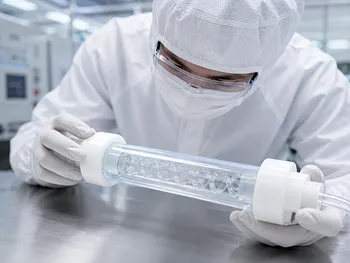
Why Trace Contamination Still Haunts Your Yields—And the Overlooked Role of Condenser Surface Integrity
Learn how PTFE condenser tubes prevent ionic leaching and particle entrapment, securing sub-ppb purity and protecting silicon wafer yields in semiconductor manufacturing.
Why Your PTFE Liner Fails Before Its Melting Point: The Truth About Hydrothermal Temperature Limits
Discover why PTFE reactor liners fail at 220°C despite higher melting points. Learn how to choose between PTFE and PPL for safe, high-pressure synthesis.
Why the "Inner-Outer" Synergy is the Secret to Flawless Hydrothermal Synthesis
Discover why the dual-structure of hydrothermal reactors is critical for safety and purity, and how precision engineering prevents common lab failures.
Why Your PTFE Connections Leak Under Pressure—And the Precision Engineering That Stops It
Discover why standard fittings fail in high-purity labs and how the four-part mechanics of a two-ferrule PTFE connector ensure a leak-proof, high-grip seal.
Why Your High-Purity Fluid Systems Keep Failing: The Hidden Culprit in Your Connectors
Discover why standard fluid connectors fail in corrosive environments and how precision-machined PTFE components ensure leak-free, high-purity performance.
Beyond the Melting Point: Why Your Condenser Tubes Fail Under Thermal Stress—and How PTFE Solves It
Discover why PTFE condenser tubes withstand temperatures from -268°C to 260°C. Learn how molecular stability prevents thermal failure in industrial chemical processes.
Why Your Hydrothermal Synthesis Results Are Inconsistent—and How to Master the Pressure
Stop hydrothermal reactor failures. Learn why precision PTFE liners and strict thermal protocols are the keys to repeatable nanomaterial synthesis.
Why Your Hydrothermal Crystal Growth is Inconsistent—And How to Achieve Tailored Morphologies Every Time
Stop struggling with messy crystal results. Learn how hydrothermal reactors control morphology and why your choice of liner is the key to precision results.
Why Your "Indestructible" PTFE Liners Fail—And How to Protect Your High-Value Equipment
Stop unexpected autoclave failures and cross-contamination. Learn the science of PTFE maintenance, from the 1% mass loss rule to preventing vessel corrosion.
The "Efficiency Drift" Problem: Why Your Heat Exchangers Fail and How PTFE Stops the Cycle
Stop the constant cycle of descaling and downtime. Discover how the unique surface physics of PTFE condenser tubes eliminates fouling and extends service life to 20 years.
Why Your Hydrothermal Synthesis Results Are Inconsistent—And How the "Dual-Shell" Design Fixes It
Struggling with failed hydrothermal experiments? Learn how the interaction between PTFE liners and stainless steel shells determines your research success.
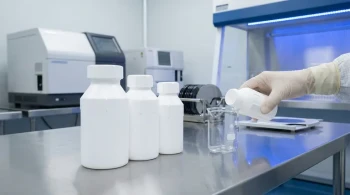
The Price of Purity: When a Simple Bottle Becomes Mission-Critical
Discover why PTFE bottles are not just containers, but precision tools that mitigate invisible risks in high-stakes chemical and sample handling.

Beyond the Bolt: The Physics and Psychology of Choosing the Right PTFE Washer
A deep dive into PTFE washers, exploring how plain, spring, and lock types solve distinct mechanical problems of pressure, vibration, and loosening.
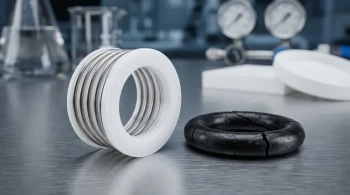
Why Your High-Performance Seals Keep Failing—And Why a Better O-Ring Isn't the Answer
Frustrated by failing seals in extreme environments? Discover the root cause and learn how a different sealing technology offers a permanent solution.
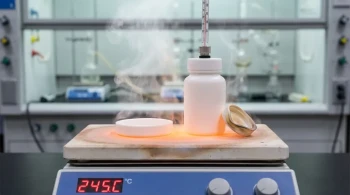
The 260°C Illusion: Why Your PTFE Bottle's True Limit is a System, Not a Number
PTFE's thermal limit isn't just a material spec. True safety and integrity depend on understanding the entire system, where the cap is often the weakest link.

The Inner Architecture of Strength: How Free Extrusion Forges Order in PTFE
Discover how the free extrusion process reengineers PTFE's molecular structure, creating immense axial strength through a principle of ordered chaos.