The Invisible Wall in Your Hydrothermal Research
You have followed the recipe to the letter. Your precursors are weighed precisely, your solvent ratios are perfect, and your hydrothermal autoclave is sealed tight. Yet, when you open the vessel after a 24-hour run, the results are inconsistent. Perhaps the crystals didn’t grow to the right size, or worse, you find the internal PTFE liner has deformed, or the stainless steel shell shows signs of "weeping" from a pressure leak.
In high-pressure chemistry, "close enough" is a recipe for failure. Hydrothermal synthesis is often treated as a "set it and forget it" process, but the reality is that you are managing a miniature, high-energy environment where the margin between a successful nanomaterial synthesis and a ruined batch—or a dangerous laboratory incident—is thinner than a sheet of paper.
The High Cost of "Standard" Shortcuts
When researchers encounter inconsistent results or equipment failure, the typical response is to "tweak" the chemistry. However, the problem often isn't the chemistry; it's the physics of the vessel.
We often see labs attempting to speed up their R&D cycles by pushing heating rates or filling the liners to 90% capacity to increase yield. These "common sense" adjustments often lead to:
- Thermal Shock: Rapid heating or cooling that causes the PTFE liner to crack or lose its seal.
- Pressure Spikes: Overfilling the vessel (exceeding the recommended 60-80% fill volume) leaves no room for the liquid-to-vapor expansion, leading to internal pressures that can exceed 30 MPa—well beyond the safety limits of standard hardware.
- Contamination: Using low-grade or worn liners that leach impurities into high-purity semiconductor or battery materials.
The business consequence isn't just a lost day of work. It is the cost of replacing expensive stainless steel jackets, the delay of critical project milestones, and the inherent risk to personnel when working with "digestion bombs" that are operating on the edge of structural failure.
The Science of the "Black Box": Why Reactors Fail
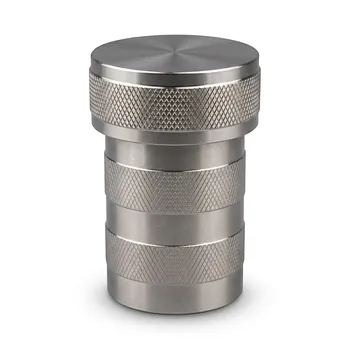
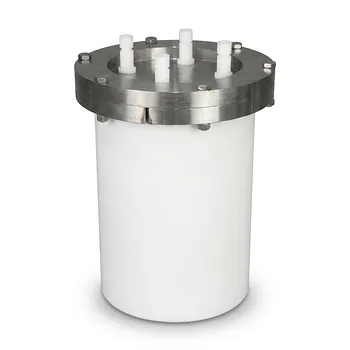
To solve these issues, we must understand the "why" behind the standard operating procedure. A hydrothermal reactor is a dual-material system: a high-strength stainless steel (304 or 316) outer shell and a chemically inert PTFE (Polytetrafluoroethylene) liner.
The core problem lies in differential thermal expansion. PTFE expands significantly more than stainless steel when heated. If the liner is not precision-machined to fit the shell perfectly, or if the temperature is raised too quickly (exceeding the recommended ≤5 °C/min), the liner can expand against the steel walls with enough force to deform itself or compromise the seal.
Furthermore, water at 200°C behaves nothing like water at room temperature. It becomes a highly aggressive solvent with a high diffusion coefficient. If your liner has even microscopic surface irregularities from poor manufacturing, the high-pressure steam will find those "pathways," leading to structural degradation and sample contamination. This is why "standard" liners often fail after only a few cycles.
Precision Engineering: The Solution to Predictable Synthesis
Truly mastering hydrothermal synthesis requires moving beyond "standard" equipment to tools designed with these physical stresses in mind. At KINTEK, we view the PTFE liner not as a disposable insert, but as a high-precision engineering component.
The solution to inconsistent results lies in three pillars of reactor design:
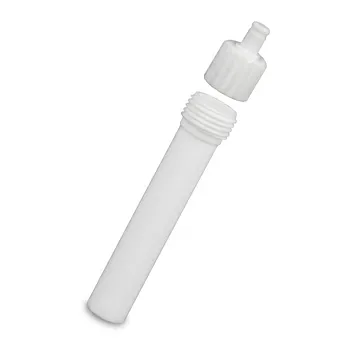
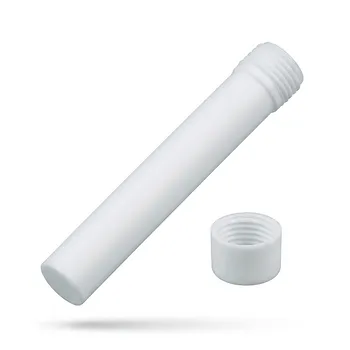
- CNC-Machined Tolerances: Our liners are custom-fabricated using high-precision CNC machining. This ensures a perfect fit within the stainless steel jacket, allowing for controlled expansion and a superior hermetic seal that prevents "weeping" even at 30 MPa.
- Ultra-High Purity Materials: By using premium-grade PTFE and PFA, we eliminate the risk of trace metal contamination, which is critical for sensitive applications like semiconductor research and new energy battery testing.
- Thermal Integrity: Our liners are designed to withstand the autogenous pressures of hydrothermal reactions up to 300°C (depending on material choice), providing a wider safety margin and longer operational life.
Our products are not designed just to "hold" a reaction; they are designed to control the environment so that your results are dictated by your chemistry, not by equipment volatility.
From Lab Bench to Industrial Scale: Opening New Doors
When you eliminate the "equipment variable," your research potential expands. By using high-precision, reliable hydrothermal tools, researchers can move from "hoping it works" to "knowing it will."
With a stable, high-pressure environment, you can:
- Accelerate R&D: Confidently run long-duration crystal growth cycles without fear of pressure loss.
- Ensure Extreme Purity: Synthesize metal oxides and hydroxides for next-generation semiconductors that meet the most stringent purity standards.
- Scale with Confidence: Move from specialized prototypes to high-volume industrial orders, knowing that the structural integrity of your vessels is backed by precision fabrication.
Solving the hydrothermal challenge isn't just about safety; it’s about giving your team the freedom to explore more complex chemical pathways without the distraction of equipment failure.
At KINTEK, we understand that your research is only as reliable as the vessels that contain it. Whether you are developing the next breakthrough in battery technology or synthesizing high-purity nanomaterials, our team of specialists is ready to help you design the perfect high-precision PTFE or PFA solution for your specific needs. From custom CNC fabrication to standard high-purity labware, we provide the tools that turn complex chemical challenges into repeatable successes.
To discuss your project requirements or to optimize your current hydrothermal setup, Contact Our Experts.
Related Products
- PTFE Lined High Pressure Digestion Vessel 50ml High Temperature Hydrothermal Synthesis Tank
- High Temperature Corrosion Resistant Hydrothermal Synthesis Reactor with TFM Inner Liner and Straight Cylinder Design
- High Pressure Custom TFM Reactor Stainless Steel Outer Vessel PTFE Inner Cup for Corrosive Synthesis
- Custom TFM Reaction Vessel with Stainless Steel Jacket and PTFE Inner Cup for High Corrosion Resistance
- High Purity PTFE Microwave Digestion Vessel Replacement Liner for Acid Sample Preparation and Trace Analysis
Related Articles
- Why Refractory Mineral Digestion Often Fails—and How PTFE Solves the Sample Integrity Crisis
- Why Your Hydrothermal Synthesis Results Are Inconsistent—And How the "Dual-Shell" Design Fixes It
- Why Your PTFE Liner Fails Before Its Melting Point: The Truth About Hydrothermal Temperature Limits
- The Specialist's Dilemma: Understanding the Critical Trade-offs of PTFE-Lined Valves
- Beyond Exotic Alloys: The Real Secret to Defeating Corrosion in Your Fluid Systems