Products Basic Labware & Containers Crucibles & Evaporating Dishes

Crucibles & Evaporating Dishes

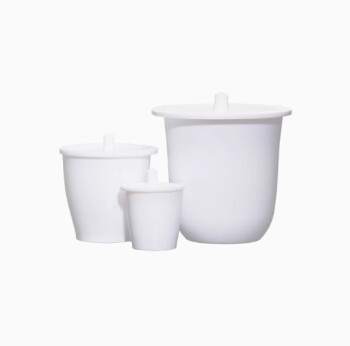
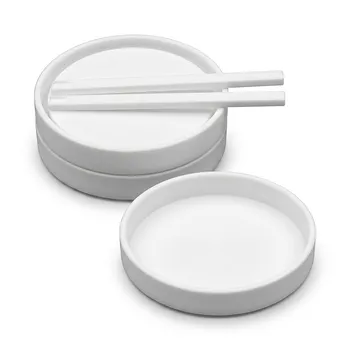
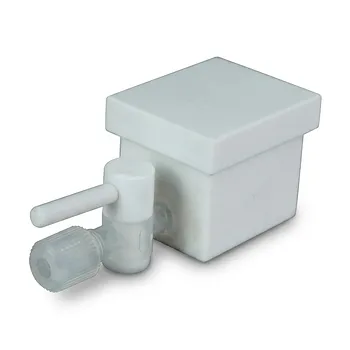
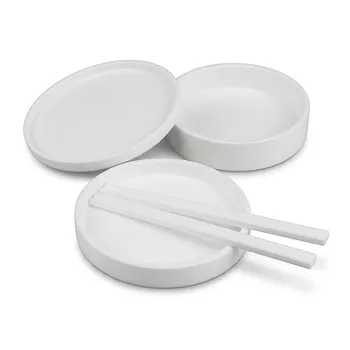
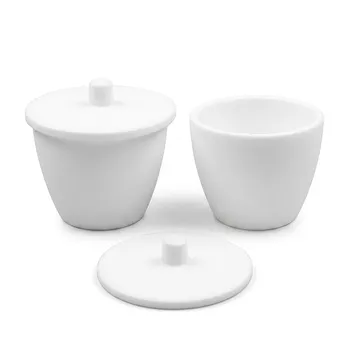
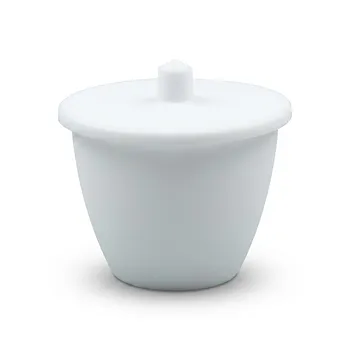
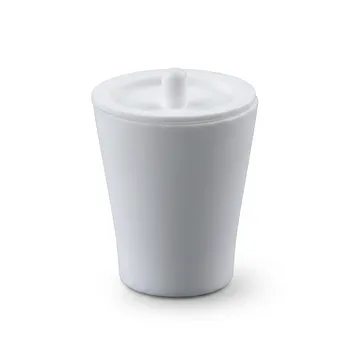
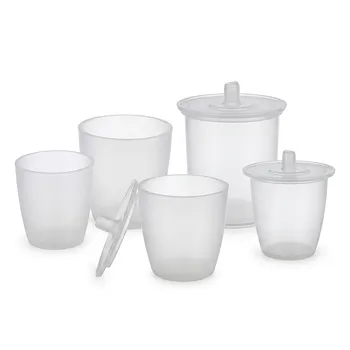
KINTEK's Crucibles & Evaporating Dishes are engineered for laboratories and industrial processes that handle aggressive chemicals, high-purity samples, and contamination-sensitive workflows. Manufactured from premium PTFE and PFA, this category includes lidded crucibles for acid digestion and hot-plate heating, shallow and standard evaporating dishes for sample concentration, and related specialty vessels such as conical sample cells, electrophoresis/evaporation cells, Petri dishes, and compatible fluoropolymer beakers. These chemically inert, non-stick vessels support trace-metal analysis, ICP-MS and AA preparation, semiconductor processing, pharmaceutical research, wet chemistry, and corrosive-process development. Standard and bespoke sizes are available to fit your heating equipment, sample volume, and handling requirements.


High-Purity PTFE and PFA Crucibles & Evaporating Dishes for Demanding Chemical Workflows

Laboratory vessels used for evaporation, digestion, concentration, and sample storage can directly affect analytical quality, operator safety, and process repeatability. In workflows involving strong acids, strong bases, oxidizers, organic solvents, or ultra-trace analytes, conventional glass, metal, and lower-grade plastic containers may introduce contamination, suffer chemical attack, retain residues, or create handling limitations. KINTEK designs and manufactures PTFE and PFA crucibles, evaporating dishes, and related fluoropolymer vessels to solve these challenges with a material platform built around chemical inertness, purity, durability, and custom engineering flexibility.

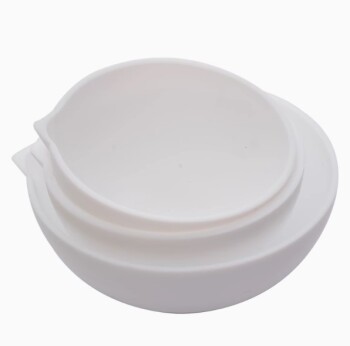
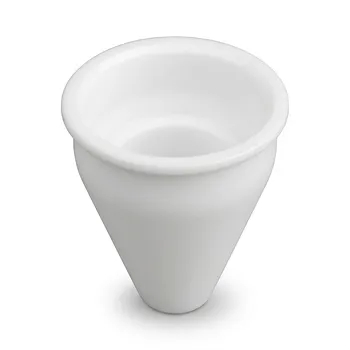
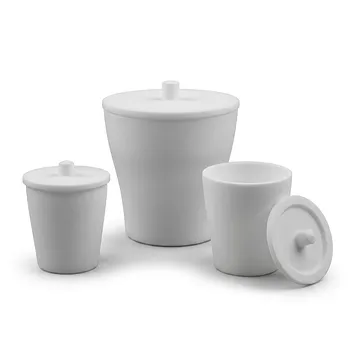
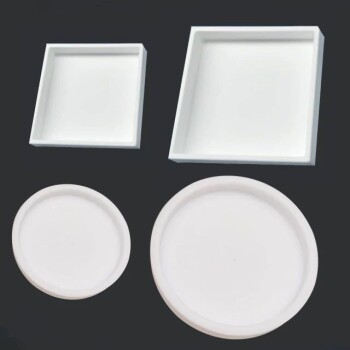
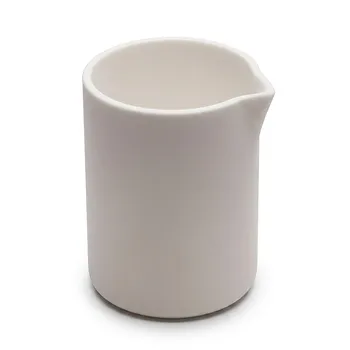
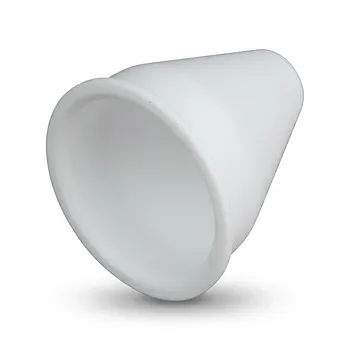
Our Crucibles & Evaporating Dishes category includes practical vessels for routine wet chemistry as well as specialized components for highly controlled sample-preparation environments. It covers shallow PTFE evaporating dishes, standard PTFE evaporating dishes, lidded PTFE and PFA crucibles, small-volume digestion crucibles, graphite-heating-block-compatible crucibles, custom conical sample cells, triangular fluoropolymer containers, PTFE Petri dishes, corrosion-resistant evaporation and electrophoresis cells, and complementary PTFE beakers. While each geometry serves a different workflow, the shared objective is consistent: maintain sample integrity while providing reliable containment for chemically aggressive media.

Built for chemical resistance and sample integrity

PTFE and PFA are high-performance fluoropolymers valued in laboratories because they are exceptionally resistant to a broad range of chemicals. These materials are suitable for many applications involving mineral acids, alkaline solutions, halogen-containing reagents, organic solvents, corrosive process liquids, and demanding cleaning procedures. Their low surface energy also creates a naturally non-stick surface that helps reduce sample adherence, simplifies cleaning, and supports more efficient material recovery after evaporation or digestion.

For trace analysis, background control is often as important as chemical compatibility. When measuring trace and ultra-trace elements, contamination can arise from leachable metals, vessel corrosion products, retained residues, or transfer between samples. High-purity PTFE and PFA vessels are selected specifically to reduce these risks. Their chemically stable fluoropolymer surfaces help laboratories establish cleaner preparation pathways for samples destined for ICP-MS, ICP-OES, atomic absorption, ion analysis, elemental analysis, and related techniques. Properly matched vessel design, cleaning protocol, reagent grade, and handling practice remain essential, but high-purity fluoropolymer labware provides a strong foundation for contamination-conscious work.

KINTEK crucibles and dishes are designed to support laboratories that need dependable performance without accepting a one-size-fits-all vessel. We can provide designs with practical features such as matching lids, tailored capacities, thicker walls, altered profiles, special diameters, custom depths, equipment-compatible bases, and precision-machined functional details. This helps users replace difficult-to-source vessels, adapt a standard workflow to a new sample type, or create a dedicated component for a proprietary method.

PTFE crucibles for digestion, heating, and high-purity preparation

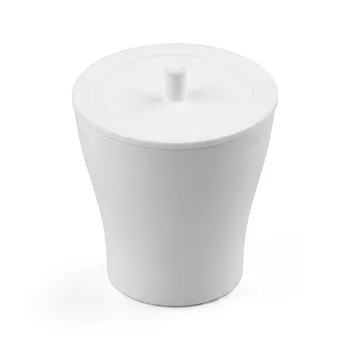
PTFE crucibles are widely used when samples must be exposed to corrosive reagents during digestion, dissolution, reaction, or controlled heating. A lidded crucible can help limit airborne contamination, reduce splash risk, and provide more controlled handling during multi-step preparation. The lid is particularly useful in laboratories processing low-concentration samples, volatile reagent systems, or batches that require a covered interval between additions, heating, cooling, and transfer.

Our PTFE crucibles are available for applications such as:

  • Acid digestion for environmental, geological, metallurgical, food, pharmaceutical, and industrial samples
  • Sample preparation before ICP-MS, ICP-OES, AA, and other elemental-analysis methods
  • Evaporation and concentration of acid solutions or process liquids
  • Hot-plate heating and controlled wet-chemistry reactions within appropriate temperature limits
  • Small-volume preparation where low background and easy recovery are priorities
  • Graphite-block-heating workflows requiring compatible outer dimensions and vessel geometry
  • Corrosion-resistant processing of strong acids, strong bases, and solvent-containing mixtures
  • High-purity laboratory procedures in semiconductor, materials-science, and research environments

PTFE is particularly useful where chemical robustness and economical, durable vessel construction are required. It is well known for excellent resistance to many corrosive media and for its non-wetting, easy-clean surface. For workflows with more demanding thermal conditions, a need for greater transparency, or a preference for specific forming and handling characteristics, PFA crucibles may be an appropriate alternative. KINTEK can help evaluate the vessel material and design according to chemical exposure, heating method, temperature, capacity, purity requirement, and operating sequence.

The term "crucible" can mean different things across laboratory disciplines. In some settings, it refers to a vessel for acid digestion or hot-plate concentration rather than a ceramic container for very high-temperature combustion or fusion. PTFE and PFA are high-performance polymers, not refractory ceramics. Their maximum use temperature and suitability depend on the specific polymer grade, vessel design, heating method, chemical system, duration of exposure, and operating conditions. For this reason, KINTEK works with customers to select an appropriate fluoropolymer vessel for the actual process instead of making broad assumptions based on a product name alone.

Evaporating dishes that improve control during sample concentration

Evaporation is a common step in analytical preparation and chemical processing. Users may need to reduce sample volume, concentrate analytes, remove a solvent, prepare a residue for reconstitution, or bring a digest toward a target volume before dilution. An effective evaporating dish needs a stable profile, useful open surface area, resistance to the working chemicals, and a surface that can be cleaned thoroughly between runs.

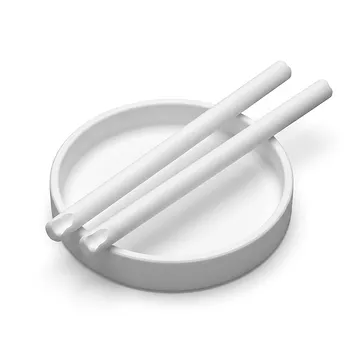
KINTEK PTFE evaporating dishes are available in standard and shallow configurations. A shallow dish provides a broad exposed surface that can support efficient evaporation in workflows where the selected heating method and process conditions allow it. Standard dish geometries may be preferred when users need a different balance of capacity, splash control, surface area, and handling comfort. The smooth fluoropolymer surface helps reduce residue retention, which is valuable when recovering a concentrated sample or preparing vessels for the next high-purity batch.

Typical uses for PTFE evaporating dishes include:

  • Concentrating samples before instrumental analysis
  • Evaporating acid or solvent systems in controlled laboratory procedures
  • Preparing residues for gravimetric, spectroscopic, or subsequent dissolution steps
  • Holding corrosive solutions during staged reaction or transfer operations
  • Supporting sample washing, rinsing, soaking, and cleaning procedures
  • Handling high-purity reagents and process solutions where vessel contamination must be minimized
  • Performing research-scale chemical development with aggressive media

The correct evaporation vessel is not determined by capacity alone. Dish diameter, depth, base thickness, wall profile, lip geometry, and compatibility with the heat source can all affect usability. For example, a larger-diameter shallow dish may favor surface exposure, while a deeper profile may be better suited to applications where operators need greater liquid containment. A thicker PTFE structure can provide a more robust handling profile, while an equipment-specific base may improve seating on a particular hot plate or heating block. KINTEK can customize these physical details to fit the workflow rather than requiring the workflow to fit an off-the-shelf component.

Related specialty fluoropolymer vessels for complete workflows

Many laboratory processes do not start and end with a crucible or dish. Samples may need to be collected, stored, mixed, evaporated, separated, digested, or transferred through several vessels. This category therefore also includes specialty PTFE and PFA containers that extend the same high-purity, corrosion-resistant material advantages into adjacent stages of sample preparation and process development.

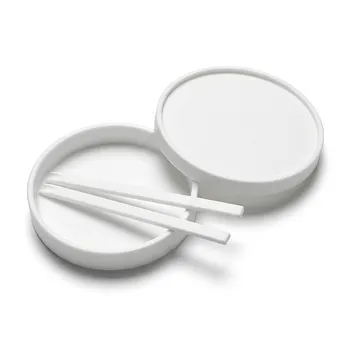
PTFE Petri dishes provide chemically resistant, low-background, reusable surfaces for specialized laboratory tasks. Unlike conventional disposable culture dishes, fluoropolymer Petri dishes are often selected for trace-analysis work, handling corrosive media, membrane casting, controlled drying, sample observation, or applications where chemical inertness matters more than optical clarity. Available diameters such as 60 mm, 80 mm, 90 mm, and 200 mm can be customized when a specific instrument, process fixture, or sample volume requires a different dimension.

Conical sample cells and triangular containers offer a geometry tailored to certain small-volume, transfer-sensitive, or instrument-related workflows. A custom conical base can help guide liquid toward a collection point, while a triangular or application-specific design can integrate more effectively with a laboratory fixture, holder, or process sequence. Precision CNC machining makes it possible to create features that standard molded containers cannot easily provide, including custom wall thicknesses, ports, lips, seating surfaces, notches, internal cavities, or dimensional interfaces.

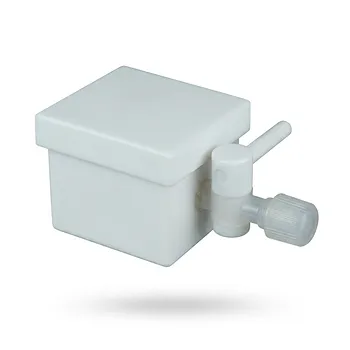
Evaporation cells, hydrolysis cells, and electrophoresis-related vessels bring fluoropolymer chemical resistance to more specialized reaction and separation environments. These components may require defined capacity, insulation-related geometry, thicker walls, customized openings, or functional integration with external equipment. KINTEK can manufacture these vessels around the operational requirements of your process, including solution volume, reagent exposure, thermal conditions, electrode or tubing interfaces, and required handling features.

PTFE beakers complement crucibles and dishes in workflows that require mixing, temporary holding, reagent preparation, washing, or transfer. A beaker with an optional lid can be useful for controlled storage and for reducing incidental contamination before a sample moves into an evaporating dish or digestion crucible. Larger thick-walled PTFE beakers can also support corrosive-fluid handling and preparation steps where conventional labware is not adequate.

Why fluoropolymer vessels are preferred in corrosive and high-purity applications

The practical advantages of PTFE and PFA are grounded in their fluorinated molecular structure. Strong carbon-fluorine bonds contribute to their chemical stability, while the materials' low surface energy creates a surface that resists wetting and adhesion by many substances. In day-to-day laboratory use, this combination translates into vessels that are easier to clean, less prone to chemical attack from compatible media, and better suited to applications where a vessel's own contribution to the sample must be minimized.

Key advantages include:

  • Excellent chemical inertness: PTFE and PFA are compatible with a wide range of aggressive chemical systems, supporting work with acids, bases, solvents, and reactive solutions within validated operating conditions.
  • Low-background performance: High-purity fluoropolymer construction helps reduce risks associated with metallic contamination and leaching, making these vessels appropriate for trace-sensitive analytical workflows.
  • Non-stick surfaces: Low surface energy can reduce sample retention, simplify rinsing, and make cleanup more efficient after evaporation, digestion, or reagent exposure.
  • Corrosion resistance: Fluoropolymer vessels do not rust and are not subject to the same corrosion mechanisms as metallic containers in chemically aggressive environments.
  • Thermal stability for appropriate heating processes: PTFE crucibles and dishes can support many controlled hot-plate and heating-block procedures when temperature limits, heating uniformity, and process conditions are respected.
  • Mechanical durability: Properly designed thick-walled or machined PTFE parts provide robust service for repeated laboratory handling and industrial use.
  • Customizable geometry: CNC machining enables non-standard diameters, depths, capacities, lids, ports, profiles, and system-specific interfaces.
  • Reusable laboratory value: For suitable processes, durable fluoropolymer vessels can be cleaned, conditioned, and used repeatedly, supporting long-term laboratory operations.

It is important to distinguish material capability from process validation. Chemical compatibility and thermal performance should be confirmed for the actual reagent concentration, temperature, exposure time, pressure condition, heating method, and mechanical load. Laboratories should use suitable ventilation, personal protective equipment, established chemical-safety practices, and validated operating procedures. KINTEK can provide technical input on vessel selection, but users should evaluate the complete process conditions before implementation.

Selecting the right crucible or evaporating dish

A successful selection begins with the process rather than the catalog dimension. First consider the sample volume, expected final volume, reagent type, and whether the operation is digestion, evaporation, storage, mixing, reaction, or transfer. Next, consider the heating approach. Hot plates, graphite heating blocks, water baths, ovens, and custom fixtures impose different geometric and thermal requirements. Finally, define the analytical cleanliness target. A routine chemical-processing vessel may need a different design and cleaning standard than a vessel used for ultra-trace elemental analysis.

For a straightforward application, a standard PTFE evaporating dish or lidded crucible may be the most efficient solution. For an established method using a dedicated heating block, a precisely dimensioned small-volume crucible can reduce setup variation and improve operational consistency. For a custom instrument, semi-automated station, or unique reaction sequence, a CNC-machined PTFE or PFA component may be more appropriate than modifying a standard vessel by hand.

Useful details to define when requesting a product recommendation or quotation include:

  • Required material: PTFE, PFA, or a material recommendation based on your process
  • Nominal and working volume
  • Required diameter, height, depth, wall thickness, and tolerance
  • Lid requirement, lid style, and any venting or access features
  • Reagents, concentrations, and anticipated temperature range
  • Heating method, heating-block dimensions, and equipment interfaces
  • Purity and contamination-control requirements
  • Number of units, prototype needs, and expected annual quantity
  • Required custom features, such as ports, threads, flanges, handles, notches, labels, or mounting provisions

Providing these parameters early helps our engineering team propose a vessel that is practical to manufacture, reliable in service, and appropriately aligned with your process. It also reduces the risk of receiving a container that is chemically compatible but operationally inconvenient.

KINTEK custom manufacturing for PTFE and PFA labware

KINTEK is exclusively focused on high-performance fluoropolymers and manufactures a broad range of PTFE and PFA laboratory supplies, fluid-transfer components, sample-preparation tools, and custom chemical-processing assemblies. This specialization matters because fluoropolymer fabrication requires attention to material behavior, dimensional control, machining strategy, wall thickness, thermal expansion, sealing interfaces, and application-specific cleanliness.

Our custom CNC machining capability supports both individual non-standard parts and scalable production requirements. We can work from a drawing, sample, sketch, dimensional table, or a clear description of the intended use. Whether you need to replace an obsolete vessel, adapt a crucible to a graphite block, create a deeper evaporation dish, add a custom lid, develop a specialized conical sample cell, or build a complete fluoropolymer laboratory setup, our team can help translate application requirements into a manufacturable component.

Custom manufacturing can be especially valuable when standard labware introduces recurring problems, such as poor fit on a heating platform, insufficient capacity, difficult sample recovery, unsupported lid geometry, excessive contamination risk, or poor compatibility with an existing apparatus. Instead of accepting compromises in a critical workflow, users can specify a fluoropolymer vessel designed around their operating conditions.

Contact KINTEK to discuss your crucible, evaporating dish, or custom PTFE/PFA vessel requirement. Send your drawings, target dimensions, sample volume, chemical environment, heating method, and quantity needs, and our fluoropolymer specialists will help develop a practical, high-purity solution for your laboratory or industrial process.

FAQ

What Are The Main Applications Of PTFE Labware?

PTFE labware is widely used in various fields including engineering (e.g., tube lining), non-stick equipment (e.g., pans and bearings), medical applications (e.g., bacteria prevention on catheters), rainwear, and as lubricants in machinery. In laboratories, it is ideal due to its resistance to strong acids and bases, steam resistance, and ability to withstand a wide temperature range from -200°C to +300°C.

What Are The Main Applications Of PTFE Parts?

PTFE parts are widely used in various industries including medical (surgical instruments, prosthetic devices), electrical (wiring, electrical components), and food and beverage (equipment in direct contact with food). Their biocompatibility, insulating properties, and non-toxic nature make them versatile across these fields.

What Are The Main Applications Of PTFE Components?

PTFE components are widely used as sealing materials in gaskets, O-rings, seals, and bearings, especially in applications that require chemical resistance and high-temperature capabilities. They are also used for non-stick cookware coatings and electrical insulation.

What Are The Main Applications Of Teflon Seals?

Teflon seals are widely used in various industries due to their versatility. Common applications include non-stick cookware (pans, skillets, baking sheets), industrial components like seals, gaskets, and bearings, electrical insulation, automotive coatings, medical devices, and aerospace components. They are also used in automotive parts, medical tools, and as padding due to their resistance to water, heat, and chemicals.

What Are The Common Applications Of Teflon Balls?

Teflon balls are widely used in ball valves, check valves, compressors, bearings, gears, slide plates, and volume displacement. They are also utilized in medical devices, food preparation, electronics, pharmaceuticals, and various industrial applications due to their purity and chemical resistance.

What Are The Main Applications Of PTFE Discs?

PTFE discs are widely used in laboratory glassware, chemical processing equipment, and industrial piping systems. They are also applied in shock absorbers, agriculture, food and beverage, robotics, maintenance, injection presses, presses, and pneumatics.

What Are The Common Applications Of PTFE Barrels?

PTFE barrels are widely used in various industries including plumbing (washers and sealing tapes), petrochemical (pipelines, valves, and fittings), food processing (hygienic conditions), pharmaceutical (product purity), aerospace (engines and components), and electrical (insulation and leak prevention). They are also ideal for chemical storage and handling due to their resistance to corrosive substances.

What Are The Main Applications Of PTFE Gaskets?

PTFE gaskets are widely used in conveying pipes, exhaust pipes, steam pipes, high-pressure oil pipes in steel rolling mills, aircraft hydraulic systems, cold-pressing systems, distillation towers, heat exchangers, kettles, tank linings, valves, and other chemical equipment. They are also used in machinery, heat exchangers, high-pressure vessels, large-diameter vessels, pumps, and seals for grooved flanges, glass reactors, flat flanges, and large-diameter flange seals. Additionally, they are used in industries requiring chemical or heat resistance, including chemical processing, automotive, industrial, electrical, and medical sectors.

What Are The Main Applications Of PTFE Glands?

PTFE glands are widely used in various industries including food and drink production equipment, medical devices (such as catheters, syringes, and sutures), electrical insulation, electronic component protection, and chemical industry products (like gaskets, vessel linings, and tanks). They are also utilized in cooking equipment, conveyor belt rollers, temperature sensor casings, and non-stick surface covers due to their ability to withstand harsh environments.

What Are The Main Applications Of PTFE Rings?

PTFE rings are widely used in aerospace and computer wiring due to their excellent dielectric properties. They are also used in industrial applications for low-friction parts like bearings and gears, in medicine as graft materials and catheter coatings, and in the semiconductor industry for their resistance to strong acids. Additionally, they are used in liners for engineering, non-stick equipment, medical applications, rainwear, and as lubricants in machinery.

What Are The Main Applications Of Custom Teflon Parts?

Custom Teflon parts are widely used in various industries including aerospace, automotive, chemical processing, food and beverage, pharmaceuticals, heavy machinery, and marine and offshore applications. They are also used as coatings for non-stick surfaces, insulation for electrical components, and sealing materials for high-pressure systems.

What Are The Common Applications Of PTFE Seal Rings?

PTFE seal rings are commonly used in applications requiring good sliding properties, wide temperature ranges, and high chemical resistance. These include hydraulic/pneumatic seals, rod seals, scrapers, piston seals, chemical/pharmaceutical industries, turbine construction, hydroelectric plants, and food production. They are also used in liners for engineering, non-stick equipment, medical applications, rainwear, and as lubricants in machinery.

What Are The Main Applications Of PTFE Rollers?

PTFE rollers are widely used in food and drink production equipment, medical devices (such as catheters, syringes, and sutures), electrical insulation, electronic component protection, and chemical industry products (including gaskets, vessel linings, and tanks). They are also suitable for cooking equipment, conveyor belt rollers, temperature sensor casings, and non-stick surface covers due to their ability to withstand harsh environments.

What Are The Main Applications Of Custom PTFE Products?

Custom PTFE products are widely used in aerospace and computer wiring due to their excellent dielectric properties. In industrial settings, they are used for low friction parts like bearings and gears. In the medical field, PTFE is used for grafts, catheter coatings, and medical-grade components. The semiconductor industry utilizes PTFE for its resistance to strong acids. Additionally, PTFE is used in chemical processing equipment and as coatings for pipes carrying corrosive chemicals.

What Are The Main Applications Of PTFE Brushes?

PTFE brushes are widely used in food and drink production equipment, medical devices (such as catheters, syringes, and sutures), electrical insulation, electronic component protection, and chemical industry products (including gaskets, vessel linings, and tanks). They are also suitable for cooking equipment, conveyor belt rollers, temperature sensor casings, and non-stick surface covers due to their ability to withstand harsh environments.

What Are The Key Features Of PTFE Labware?

PTFE labware is known for its legendary resistance to strong acids and bases, steam resistance, and a wide temperature range from -200°C to +300°C. Its three-dimensional molecular structure makes it highly resistant to most solvents, and the helical polymer chain sheathed by fluorine atoms protects the carbon-carbon bonds, enhancing its chemical resistance. However, it can be attacked by molten alkali metals and fluorine at high temperatures.

What Are The Key Features Of PTFE?

PTFE has several notable features: a high melting point of around 347 °C, high resistance to water, a very low coefficient of friction, and flexibility even at low temperatures. It also offers outstanding chemical resistance, is soft and formable, has good weathering resistance, and performs well at elevated temperatures.

What Are The Key Features Of PTFE Components?

PTFE components are known for their low friction coefficient, ability to function at extreme temperatures, excellent moisture resistance, good cryogenic capabilities, and strong tensile strength.

What Are The Key Features Of Teflon Seals?

Teflon seals are known for their exceptional chemical resistance, flexibility, and durability. These features make them highly suitable for demanding industrial applications where resistance to harsh chemicals and long-term performance are critical.

What Are The Key Features Of Teflon Balls?

Teflon balls are waterproof, non-porous, and can be machined or molded to any desired size. They are inert, chemically resistant, and operate effectively across a wide temperature range. Additionally, they are corrosion-resistant against caustic chemicals, have a long surface life, and excellent ductility, making them ideal for sealing applications.

What Are The Key Features Of PTFE Discs?

PTFE discs combine the properties of PTFE and rubber, offering excellent chemical resistance, low friction, heat resistance, and good compression set. They also feature a low coefficient of friction, excellent chemical inertness, a non-adhesive surface, a wide temperature range (-200°C to +260°C), and excellent dielectric properties.

What Are The Key Features Of PTFE Barrels?

PTFE barrels feature a high melting point (around 347°C), excellent resistance to water and chemicals, a very low coefficient of friction, and flexibility even at low temperatures. They can be used continuously from -270°C up to 250°C, with a maximum use temperature of 280°C. Their heavy wall construction and smooth internal finish ensure leak-free performance.

What Are The Key Features Of PTFE Gaskets?

PTFE gaskets come in various types including virgin, expanded, and modified options. They can handle nearly all chemicals and temperatures up to 500 degrees Fahrenheit. They are available for any need from small batch to high-volume production while meeting demanding standards. PTFE has a high melting point of around 347 °C, high resistance to water, a very low coefficient of friction, and flexibility even at low temperatures.

What Are The Key Features Of PTFE Glands?

PTFE glands are known for their outstanding chemical resistance, extremely low friction, soft and formable nature, good weathering resistance, and excellent performance at elevated temperatures. Key performance parameters include temperature resistance up to 280°C, a pH range of 0 to 14, pressure resistance of 15 to 25 MPa, and line speed of 8 to 21 m/s.

What Are The Key Features Of PTFE Rings?

PTFE rings have a high melting point of around 347°C, high resistance to water, a very low coefficient of friction, and remain flexible even at low temperatures. They are known for being the most slippery material, withstanding extreme temperatures, and providing excellent insulation. They are also resistant to nearly all industrial chemicals and solvents, have outstanding dielectric properties, and resist ignition and flame spread.

What Are The Key Features Of Custom Teflon Parts?

Custom Teflon parts are known for their high chemical resistance, low friction coefficient, high-temperature stability, and excellent electrical insulation. These features make them suitable for demanding industrial and laboratory environments.

What Are The Features Of A Spring PTFE Sealing Ring?

A spring PTFE sealing ring consists of a metal spring covered with polytetrafluoroethylene (PTFE). The PTFE provides the sealing surface, while the spring provides the pre-tightening force. PTFE O-rings are white, offer high chemical resistance, and can operate in a wide temperature range from -73°C to 204°C. They also provide weathering resistance, low friction, electrical and thermal insulation, and a slippery surface.

What Are The Key Features Of PTFE Rollers?

PTFE rollers have a low coefficient of friction, excellent chemical inertness, a non-adhesive surface, and can withstand a wide temperature range from –200°C to +260°C. They also possess excellent dielectric properties, making them ideal for various demanding applications.

What Are The Key Features Of PTFE That Make It Suitable For These Applications?

PTFE has a high melting point of around 347 °C, high resistance to water, and a very low coefficient of friction. It remains flexible even at low temperatures. These properties make it ideal for applications requiring chemical resistance, low friction, and durability, such as wire insulation, surface coatings, and chemical processing equipment.

What Are The Key Features Of PTFE Brushes?

PTFE brushes have several unique characteristics, including extremely high working temperatures, nonstick properties, a low friction surface, high resistance to chemicals and solvents, excellent electrical resistance, and resistance to weather, UV light, and corrosion. They are also non-toxic, inert, and biocompatible. PTFE is known for being the most slippery material, withstanding extreme temperatures, and providing excellent insulation.

What Makes PTFE Suitable For Labware?

PTFE is chemically inert, durable under load, stable across temperature fluctuations, forms excellent seals, is flexible, and can be moulded with a magnetic core. These properties make it ideal for labware items like stopcocks, beakers, pipes, test tubes, stirrers, petri dishes, and stands. Its resistance to strong acids and bases, steam, and a wide temperature range further enhance its suitability for laboratory use.

How Do PTFE O-ring Seals Work?

PTFE O-ring seals have a circular cross-section and are typically made of elastic rubber material. They achieve sealing through elastic properties and preload. When placed between connected parts, the O-ring fills the sealing gap and forms a sealing interface due to its elasticity. External stress causes the O-ring to maintain sealing interface stability, preventing liquid or gas leakage.

What Are The Key Components Of PTFE (Polytetrafluoroethylene)?

The primary components of PTFE are fluorine and carbon, which contribute to its unique properties such as chemical resistance and high-temperature stability.

How Do Teflon Seals Work In Harsh Environments?

Teflon seals operate effectively in harsh environments due to their great chemical resistance. They can withstand exposure to a wide variety of chemicals without degrading, making them ideal for use in industries where chemical exposure is common.

What Are The Technical Specifications Of Teflon Balls?

Teflon balls have a specific gravity of 2.10 – 2.20 g/cc, hardness shore of 55D, tensile strength of 2990-4970 psi, flexural strength of 2490 psi, melting point of 621°F (327°C), heat deflection temperature of 248°F (120°C), coefficient of friction of 0.110, water absorption of 0.01% over 24 hours, and a dielectric constant of 2.1.

How Do PTFE Discs Work In Sealing Applications?

PTFE O-ring seals, which have a circular cross-section, achieve sealing through their elastic properties and preload. When placed between connected parts, the O-ring fills the sealing gap and forms a sealing interface due to its elasticity. External stress ensures the O-ring maintains sealing interface stability, preventing liquid or gas leakage.

How Does A PTFE Lined Butterfly Valve Work?

A PTFE lined butterfly valve operates on the quick shut off principle. It consists of a circular disc (butterfly) placed in the center of the pipe, connected to an actuator via a rod. By rotating the disc using a handwheel, the flow can be either allowed (disc parallel to flow) or closed (disc perpendicular to flow).

What Is The Principle Behind PTFE Gaskets?

PTFE gasket materials are known for their non-reactive characteristics, making them impervious to attack and degradation by aggressive gases, vapors, and fluids. They exhibit excellent dielectric properties, a very low coefficient of friction, and can operate across a wide temperature range from -400°F to 500°F. PTFE is among the most chemically resistant materials available.

How Are PTFE Rings Manufactured?

PTFE rings can be made from raw PTFE, which comes in powder or liquid forms. Smaller items can be dipped and spun to remove excess material. Another method involves using an electrostatic spray gun to apply negatively charged PTFE particles. The coated object is then cured at high temperatures to finalize the product.

What Are The Advantages Of Using Custom Teflon Parts?

The advantages of custom Teflon parts include a long service life, cost-effectiveness, enhanced performance under harsh conditions, and versatility in design for multiple applications. These benefits make them a preferred choice in many industries.

How Does A PTFE Lined Butterfly Valve Operate?

A PTFE lined butterfly valve operates on the quick shut off principle. It features a circular disc (butterfly) placed in the center of the pipe, with a rod connected to an actuator on the outer side of the valve. By rotating the metal disc using a handwheel, the disc can be positioned parallel or perpendicular to the flow, thereby allowing or closing the flow.

How Are PTFE Rollers Manufactured?

PTFE rollers are manufactured using raw PTFE in powder or liquid forms. Smaller items can be dipped and spun to remove excess material. Another method involves negatively charging PTFE particles with an electrode-equipped spray gun for an electrostatic coating. The final step is curing the coated object at high temperatures.

How Is PTFE Processed Into Custom Parts?

PTFE resin does not flow when melted, so it cannot be injection molded. The best methods for processing PTFE are molding and machining, which allow for the creation of custom parts with precise dimensions and properties.

What Is The Principle Behind PTFE Brushes?

PTFE brushes are made from a low friction, soft fluoropolymer with superior chemical and weathering resistance. They are hydrophobic, non-wetting, heavy, and resistant to high temperatures. Additionally, PTFE brushes have good electrical insulating characteristics, making them ideal for various industrial and laboratory applications.

What Are The Advantages Of Using PTFE Labware?

PTFE labware offers high strength, moisture resistance, temperature resistance, and thermal expansion resistance. It is suitable for storing strong acids, aqua regia, and various chemical liquids. PTFE coatings also provide resistance to extreme temperatures, non-stick properties, chemical resistance, and excellent electrical insulation. These advantages make PTFE labware a preferred choice in demanding laboratory and industrial environments.

What Are The Advantages Of Using PTFE Parts?

PTFE parts are easy to machine, affordable, and long-lasting. They have a low coefficient of friction and wear resistance, making them ideal for mechanisms that rotate or slide. Additionally, PTFE has non-stick properties, is moisture and chemical resistant, has a high strength-to-weight ratio, is easily machinable with excellent dielectric properties, and has a relatively high melting point. They are also FDA approved for food-related applications.

What Are The Advantages Of Using PTFE Components?

PTFE components offer several advantages, including resistance to extreme temperatures, non-stick properties, excellent chemical resistance, and superior electrical insulation. They also have a low friction coefficient and good tensile strength.

What Are The Advantages Of Using Teflon Seals?

Teflon seals offer several advantages, including easy machinability due to their softness and density, and excellent thermal stability. These properties prevent part deformation and tool clogging during manufacturing, ensuring high-quality and reliable seals for various applications.

What Are The Advantages Of Using Teflon Balls?

Teflon balls offer several advantages including high chemical resistance, excellent durability, and a low coefficient of friction. They are also waterproof, non-porous, and can withstand a wide range of temperatures. Their corrosion resistance and long surface life make them excellent for sealing and other demanding applications.

What Are The Advantages Of Using PTFE Discs?

PTFE discs offer numerous advantages, including chemical resistance, temperature resistance, versatility, non-corrosive properties, electrical and thermal insulation, and easy availability. These properties make them suitable for a wide range of industrial applications.

What Are The Advantages Of Using PTFE Barrels?

PTFE barrels offer numerous advantages including corrosion resistance, a wide temperature range (-325°F to above 500°F), no swelling (hydrophobic properties), FDA compliance, UV radiation resistance, and excellent electrical insulation. They also provide non-stick properties and are resistant to extreme temperatures and chemicals.

What Are The Advantages Of Using PTFE Gaskets?

PTFE gaskets are non-corrosive, available in various shapes and sizes, work well with both high and low temperatures, have excellent chemical resistance, prevent leakage and cross-linking, and are economical in price. They offer chemical resistance to most acids, bases, and solvents; temperature resistance from -200°C to +260°C; excellent non-stick properties; high purity free from contaminants; and superior sealing performance against gas and liquid leakage.

What Are The Advantages Of Using PTFE Glands?

PTFE glands offer several advantages including resistance to extreme temperatures, non-stick properties, excellent chemical resistance, and great electrical insulation. They enhance performance and efficiency across various industries while supporting sustainability by reducing the use of harmful chemicals and extending the lifespan of products.

What Are The Advantages Of Using PTFE Rings?

PTFE rings offer numerous advantages, including corrosion resistance, a long shelf life, and the ability to withstand a wide temperature range (-325°F to above 500°F). They are hydrophobic (do not swell), FDA compliant, resistant to UV radiation, and provide excellent electrical resistance. Additionally, they are non-stick, chemically resistant, and provide great electrical insulation.

Why Is Teflon Preferred For High-temperature Applications?

Teflon is preferred for high-temperature applications due to its high-temperature stability, which allows it to maintain its properties and performance even under extreme heat conditions.

What Are The Advantages Of Mechanical Seals With PTFE Rings?

Mechanical seals with PTFE rings offer several advantages, including resistance to most chemicals, low friction (which reduces wear and improves efficiency), suitability for a wide temperature range, formation of a lubricating film (extending seal life), non-stick properties (preventing residue buildup), and flexibility (compensating for surface imperfections).

What Are The Advantages Of Using PTFE Rollers?

PTFE rollers offer numerous advantages, including exceptional corrosion resistance, a long shelf life, a wide temperature range (-325°F to above 500°F), no swelling (hydrophobic properties), FDA compliance, UV radiation resistance, and excellent electrical resistance. These properties make them highly durable and reliable in challenging environments.

What Are The Advantages Of Using PTFE Brushes?

PTFE brushes offer numerous benefits, including a wide operating temperature range (-30°C to +200°C), high flexural strength due to strong carbon-fluorine bonds, outstanding electrical insulation, weatherability, non-adhesiveness, water resistance, and the lowest coefficient of friction of any solid. They also provide the best price-to-performance ratio and can withstand continuous working temperatures up to +260°C. Their extremely low coefficient of friction reduces resistance during movement, making them ideal for bearings, bushings, and gears, which minimizes wear and tear, extends component lifespan, and reduces maintenance costs.

What Types Of PTFE Labware Are Available?

PTFE labware includes a wide range of products such as custom machined parts, tweezers, scrapers, shovels, containers, volumetric flasks, microwave digestion vessels, sampling spoons, square trays, bottles, measuring cylinders, evaporating dishes, three-neck flasks, magnetic stirring bars, and cleaning racks. These items are designed for precision and resilience in demanding environments.

Why Is PTFE Suitable For CNC Machining?

PTFE's machinability allows for precise CNC customization to meet specific industrial requirements. This enables the creation of specialized components like chemical-resistant tank linings, food-grade cutting boards, and precision seals that optimize performance for unique operational challenges while maintaining all of PTFE's beneficial properties.

Why Are PTFE Components Ideal For Chemical And High-temperature Applications?

PTFE components are ideal for chemical and high-temperature applications due to their exceptional chemical resistance and ability to function at extreme temperatures, making them suitable for environments where other materials might degrade or fail.

Are Teflon Seals Environmentally Friendly?

Yes, Teflon seals are environmentally friendly as they are made from renewable resources. Additionally, they are fire-safe, adding to their safety and sustainability benefits.

Why Are Teflon Balls Preferred In Medical And Food Industries?

Teflon balls are preferred in medical and food industries due to their high purity, chemical inertness, and non-toxic properties. They do not react with substances they come into contact with, ensuring safety and hygiene in sensitive applications like medical devices and food preparation.

Why Are PTFE Discs Preferred In High-temperature Environments?

PTFE discs can withstand extreme temperatures ranging from -200°C to +260°C, making them ideal for high-temperature environments. Their heat resistance ensures they maintain their properties and performance even under such conditions.

Why Are PTFE Barrels Suitable For Laboratory Use?

PTFE barrels are ideal for laboratory use due to their excellent chemical, mechanical, and heat resistance. They are perfect for dissolutions and digestions with acids and corrosive agents, and their non-reactive nature ensures sample purity. Additionally, their durability and leak-proof design make them reliable for various lab applications.

How Are PTFE Gaskets Installed?

The installation process includes preparing the flange surfaces, inspecting the gasket, positioning it correctly, using alignment tools if necessary, applying lubrication if required, assembling the flanges, tightening the bolts in a crisscross pattern, and conducting a final check for leaks or misalignment.

Are Custom PTFE Glands Available For Specific Applications?

Yes, custom PTFE glands are available to meet specific application requirements. Manufacturers offer custom fabrication from prototypes to high-volume orders, ensuring precision and suitability for diverse applications such as semiconductor, medical, and laboratory uses.

Why Are PTFE Rings Preferred In The Semiconductor Industry?

PTFE rings are preferred in the semiconductor industry due to their exceptional chemical resistance, particularly to strong acids. Their ability to withstand harsh chemical environments while maintaining structural integrity makes them ideal for use in semiconductor manufacturing and processing equipment.

Can Custom Teflon Parts Be Used In The Food And Beverage Industry?

Yes, custom Teflon parts are commonly used in the food and beverage industry due to their chemical inertness, non-stick properties, and ability to withstand high temperatures, making them safe and efficient for food processing applications.

Why Is PTFE Used In Medical Applications?

PTFE is used in medical applications, such as catheters, due to its ability to prevent bacterial growth. Its non-stick and chemical-resistant properties make it ideal for medical devices that require sterility and durability.

Why Are PTFE Rollers Preferred In The Chemical Industry?

PTFE rollers are preferred in the chemical industry due to their excellent chemical inertness and corrosion resistance. They can withstand exposure to harsh chemicals and extreme temperatures, making them ideal for use in gaskets, vessel linings, tanks, and other chemical industry applications.

Why Is PTFE Preferred In The Medical And Food Industries?

PTFE is preferred in the medical and food industries because it is non-toxic, complies with FDA regulations, and has excellent chemical and friction resistance. Its food-grade approval and ease of cleaning make it ideal for applications requiring high hygiene standards.

Are PTFE Brushes Safe For Food And Medical Applications?

Yes, PTFE brushes are non-toxic, inert, and biocompatible, making them safe for food and medical applications. They are FDA approved for food contact and are commonly used in medical devices such as catheters, syringes, and sutures.

What Types Of PTFE Parts Are Commonly Manufactured?

Commonly manufactured PTFE parts include containers, flower baskets, tweezers, magnetic stirring bars, measuring cylinders, scrapers, shovels, square trays, bottles, microwave digestion vessels, crucibles, three-neck flasks, volumetric flasks, cleaning racks, evaporating dishes, and sampling spoons. These parts are used in labs, semiconductor industries, and medical applications.

How Do PTFE Components Perform In Cryogenic Conditions?

PTFE components perform well in cryogenic conditions due to their good cryogenic capabilities, maintaining their structural integrity and functionality even at very low temperatures.

Can Teflon Balls Be Customized For Specific Applications?

Yes, Teflon balls can be machined or molded to any desired size and shape to meet specific application requirements. Custom designs are available to suit various industrial, laboratory, and medical needs, ensuring optimal performance in specialized environments.

Are PTFE Discs Resistant To Chemicals?

Yes, PTFE discs are highly resistant to a wide range of chemicals, making them suitable for use in harsh chemical environments. Their excellent chemical inertness ensures they do not react with most substances.

Are PTFE Rings Suitable For Medical Applications?

Yes, PTFE rings are suitable for medical applications. They are used as graft materials and catheter coatings due to their biocompatibility, flexibility, and resistance to bacteria. Their non-reactive nature and ability to prevent bacterial growth make them ideal for various medical uses.

What Makes Teflon Suitable For Electrical Insulation?

Teflon's excellent electrical insulation properties, combined with its high-temperature stability and chemical resistance, make it an ideal material for insulating electrical components in various industrial and laboratory settings.

Can PTFE Rollers Be Customized For Specific Applications?

Yes, PTFE rollers can be customized for specific applications. Manufacturers offer custom fabrication from prototypes to high-volume orders, ensuring that the rollers meet the precise requirements of different industries, such as semiconductor, medical, and laboratory applications.

What Types Of Custom PTFE Products Are Available?

Custom PTFE products include scrapers, shovels, cleaning racks, evaporating dishes, flower baskets, tweezers, containers, three-neck flasks, and bottles. These products are customizable in size and design to meet specific industrial, laboratory, and medical needs.

How Does The Chemical Resistance Of PTFE Brushes Benefit Industrial Applications?

PTFE brushes are highly resistant to nearly all industrial chemicals and solvents, which makes them ideal for use in harsh chemical environments. This resistance ensures durability and longevity in applications such as chemical industry products, laboratory equipment, and semiconductor manufacturing.

What Makes PTFE Discs Non-stick?

PTFE discs have a non-adhesive surface due to the inherent properties of PTFE, which prevent materials from sticking to them. This makes them ideal for applications where easy cleaning and minimal contamination are required.

What Makes PTFE Brushes Suitable For High-temperature Environments?

PTFE brushes can withstand extreme temperatures, with a continuous working temperature range up to +260°C. This makes them suitable for high-temperature environments such as cooking equipment, industrial machinery, and laboratory applications where heat resistance is critical.

Can PTFE Discs Be Used In Electrical Applications?

Yes, PTFE discs have excellent dielectric properties, making them suitable for electrical insulation applications. They provide great electrical insulation and are often used in electrical and electronic components.

Why Are PTFE Brushes Preferred For Electrical Insulation?

PTFE brushes have outstanding dielectric properties and excellent electrical insulation, which makes them ideal for protecting electronic components and ensuring safe electrical insulation in various applications.

How Do PTFE Discs Perform In Low-temperature Environments?

PTFE discs can perform reliably in low-temperature environments, as they can withstand temperatures as low as -200°C. Their properties remain stable, ensuring consistent performance even in extreme cold.

Are PTFE Discs Customizable For Specific Applications?

Yes, PTFE discs can be customized in terms of size, shape, and other specifications to meet the requirements of specific applications. This versatility makes them suitable for a wide range of industrial and laboratory uses.

REQUEST A QUOTE

Our professional team will reply to you within one business day. Please feel free to contact us!


Related Articles

Beyond the Textbook: Why Your Electrolytic Cell Needs More Voltage Than You Calculated

Discover why theoretical voltage calculations often fail in practice and how precision-engineered cell design can overcome kinetic barriers and ohmic drops.

Read more

Why Your Labware Fails Under Thermal Stress—and the Chemistry of the One-Vessel Solution

Discover how PFA laboratory products maintain integrity from -200°C to +260°C, ensuring data accuracy in semiconductor and trace analysis applications.

Read more

Invisible Obstacles: Why Your "Clean" Labware Might Still Be Sabotaging Your Trace Analysis

Discover why traditional labware causes cross-contamination in trace analysis and how PFA's unique molecular structure provides a zero-memory solution.

Read more

Why Critical Aerospace Systems Fail in Extreme Conditions—and the Material Strategy That Prevents It

Discover why standard materials fail in aerospace environments and how high-precision PTFE components solve thermal, chemical, and vacuum challenges.

Read more

Why Your Results Drift in Harsh Electrolytes—and the Atomic Armor That Fixes It

Discover how the molecular structure of PTFE prevents contamination and equipment failure in battery testing and chemical research, ensuring long-term data integrity.

Read more

Why Your PTFE Microfluidic Chips Leak—and the Fabrication Secrets to a Perfect Seal

Stop struggling with leaky PTFE microchannels. Learn why standard bonding fails and how precision CNC machining and thermal sealing unlock chemical-resistant microfluidics.

Read more

Beyond "Indestructible": Understanding the Critical Limits of PFA for Ultra-Trace Integrity

Discover the physical and thermal limits of PFA labware. Learn how to prevent chain scission and surface contamination to ensure ultra-trace analysis accuracy.

Read more

Why Traditional Plastic Molding Fails with PTFE—And the Secret to Precision Labware Fabrication

Learn why PTFE’s high melt viscosity makes injection molding impossible and how specialized sintering and CNC machining deliver high-precision lab components.

Read more

Beyond the Melting Point: Why Your PTFE Labware Fails Sooner Than You Think—And How to Fix It

Discover the real thermal limits of PTFE labware. Learn why "melting point" isn't the only safety metric and how to ensure reliability from -200°C to +260°C.

Read more

The Invisible Yield Killer: Why Standard Fluid Components Are Compromising Your Semiconductor Purity

Discover why microscopic contamination in fluid paths ruins semiconductor yields and how precision-engineered PTFE components provide the PPT-level purity required.
Read more
Beyond the Circuit: Why Material Choice is the Hidden Variable in Your Electrolytic Cell’s Performance

Beyond the Circuit: Why Material Choice is the Hidden Variable in Your Electrolytic Cell’s Performance

Struggling with inconsistent electrolysis results? Discover how the fundamental principles of electrolytic cells collide with material science, and why PTFE/PFA is the key to reliable data.

Read more

Why Your Electrolysis Results Are Drifting: The Hidden Impact of Cell Environment on Non-Spontaneous Reactions

Stop struggling with inconsistent electrochemical data. Learn how the fundamental principles of electrolysis demand a precision-engineered cell environment to succeed.
Read more
Beyond the Bolt: Why Your Flange Leaks Are a Material Science Problem, Not a Mechanical One

Beyond the Bolt: Why Your Flange Leaks Are a Material Science Problem, Not a Mechanical One

Tired of recurring flange leaks? Discover the hidden material failure causing them and how ePTFE gaskets provide a permanent solution for equipment reliability.
Read more
When "Chemically Inert" Isn't Enough: The Hidden Cause of PTFE Component Failure

When "Chemically Inert" Isn't Enough: The Hidden Cause of PTFE Component Failure

Discover why standard PTFE components fail in critical applications, even with 'safe' chemicals. Learn the hidden role of fabrication quality and how to prevent costly downtime.
Read more
Why 'Medical-Grade' Isn't Enough: The Hidden Risk in Your PTFE Components

Why 'Medical-Grade' Isn't Enough: The Hidden Risk in Your PTFE Components

Generic 'medical-grade' PTFE poses hidden risks. Discover why material purity and manufacturing precision are the real keys to device safety.
Read more
When 'Tougher' Isn't Enough: The Hidden Reason Your Industrial Components Are Failing

When 'Tougher' Isn't Enough: The Hidden Reason Your Industrial Components Are Failing

Discover why conventional materials fail under combined stress and how PTFE components provide a definitive solution for chemical, thermal, and friction challenges.
Read more
The Unseen Guardian: How PTFE's Molecular Shield Protects Our Most Critical Systems

The Unseen Guardian: How PTFE's Molecular Shield Protects Our Most Critical Systems

An engineer's look at PTFE's chemical inertness and thermal stability, and why precision fabrication is key to its reliability.
Read more
Why Your Medical Device Components Fail Under Stress—And What to Do About It

Why Your Medical Device Components Fail Under Stress—And What to Do About It

Tired of component failures in medical devices? Discover why common elastomers fail under combined stress and how precision PTFE offers a permanent solution.
Read more
The Asymmetric Cost of Failure: Why Precision PTFE Is Your Last Line of Defense

The Asymmetric Cost of Failure: Why Precision PTFE Is Your Last Line of Defense

Learn how PTFE components save money not by being reusable, but by preventing catastrophic analytical failures and mitigating invisible financial risks.
Read more
The Silent Thief: How Component Surfaces Dictate Pharmaceutical Profitability

The Silent Thief: How Component Surfaces Dictate Pharmaceutical Profitability

Discover how PTFE's unique material properties in components combat product loss and contamination, directly boosting pharmaceutical yield and purity.

Read more