Why Your Custom PTFE Design Keeps Getting Rejected
Imagine you’ve designed a groundbreaking new electrochemical cell or a bespoke manifold for semiconductor fluid handling. You’ve chosen Polytetrafluoroethylene (PTFE) because nothing else survives your corrosive chemistry. You send your CAD files to a high-volume plastic manufacturer, expecting a quote for injection molding—only to be met with a rejection. Or worse, you receive a part that looks right but fails under pressure, showing internal voids or dimensional warping.
If this sounds familiar, you aren’t alone. Many engineers and researchers treat PTFE like any other high-performance thermoplastic, only to find that this "miracle material" follows an entirely different set of rules.
The "Standard Plastic" Trap: Why Common Methods Fail
In the world of polymers, injection molding is king. For materials like Polypropylene or PEEK, you melt the plastic, squirt it into a mold, cool it, and pop out a finished part. It is fast, repeatable, and cost-effective for high volumes.
Naturally, when a lab needs complex fittings, valves, or battery testing fixtures, the first instinct is to look for a molder. However, traditional "melt-and-mold" companies will fail with PTFE for one simple reason: it refuses to flow. This mechanical stubbornness leads to significant business risks:
- Failed Prototypes: Parts that are forced into molds often have "knit lines" where the material didn't fuse, leading to leaks.
- Project Delays: Weeks are lost searching for a vendor who understands why their standard equipment can't handle the material.
- Cost Overruns: Incorrect fabrication leads to high scrap rates in expensive, high-purity materials.
The Science of "Flowless" Plastic: Understanding High Melt Viscosity
The "problem" is actually PTFE’s greatest strength. PTFE is a linear polymer with an incredibly high molecular weight. This structure gives it its legendary chemical inertness and thermal stability. But it also gives PTFE an extremely high melt viscosity.
Even when heated above its melting point of 327°C, PTFE does not become a liquid; it becomes a thick, translucent gel. It won't flow into a mold’s tiny crevices no matter how much pressure you apply. To fabricate PTFE, we cannot treat it like a plastic; we must treat it more like a metal or a ceramic.
The real fabrication process involves a transition from powder to solid:
- Compression or Isostatic Molding: PTFE powder (produced via suspension polymerization) is compacted into a "preform" at room temperature.
- Sintering: The preform is placed in a high-temperature oven and heated to between 360°C and 380°C. At these temperatures, the particles fuse through a diffusion process.
- Controlled Cooling: The rate of cooling determines the crystallinity of the final part, which directly impacts its mechanical strength and chemical permeability.
If a manufacturer skips the precision balance of temperature and hold-time during sintering, the result is a porous, weak component that will fail in a laboratory environment.
Precision Beyond the Mold: Navigating the Complexities of PTFE Fabrication
To solve the "un-moldable" problem, high-precision labware requires a dual-track approach: Advanced Molding and Precision Machining.
At KINTEK, we don't try to force PTFE to act like common plastic. Instead, we embrace its unique physics. Our fabrication logic is built around two core pillars:
1. Custom Isostatic and Compression Molding
For large or thick-walled components like hydrothermal synthesis liners or microwave digestion vessels, we use isostatic molding. By applying equal pressure from all directions on the PTFE powder, we ensure a uniform density and eliminate the internal stress points that cause cracking during thermal cycling.
2. High-End CNC CNC Fabrication
For the intricate geometries found in electrochemical cells or threaded fluid fittings, molding is often just the beginning. We perform end-to-end CNC machining (milling and turning) from high-density extruded or molded stock. This allows us to achieve tolerances and complex internal paths that would be physically impossible via molding alone. This is not "general fabrication"—it is a specialized process that accounts for PTFE’s thermal expansion and "creep" to ensure your valves and fittings provide a perfect seal every time.
Unlocking Performance: From Complex Prototypes to Industrial Scale
When you move away from the "injection molding" mindset and embrace specialized PTFE fabrication, you open the door to possibilities that were previously off-limits for researchers and engineers.
By mastering the transition from powder to precision-machined part, we enable:
- Zero-Contamination Trace Analysis: High-purity PFA and PTFE labware that doesn't leach additives or fillers.
- Custom Battery Fixtures: Fixtures that can withstand aggressive electrolytes while maintaining complex internal geometries for sensor integration.
- Rapid Iteration: CNC-machined prototypes that allow you to test a new design in days, rather than waiting months for a mold to be built.
Solving the PTFE puzzle is about more than just making a part; it's about ensuring your research isn't compromised by material failure. Whether you are scaling a semiconductor process or designing a new energy storage system, the integrity of your hardware is the foundation of your data. Let our team of specialists help you navigate the complexities of high-precision polymer engineering to turn your most challenging designs into reality. Contact Our Experts
Related Products
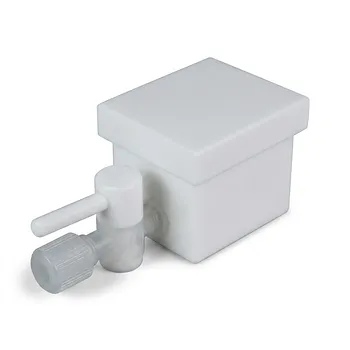
- Custom PTFE Laboratory Apparatus Corrosion Resistant Low Background Reaction Cells Precision CNC Fabrication
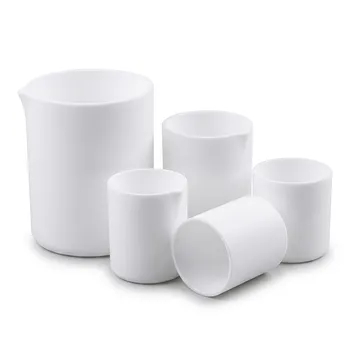
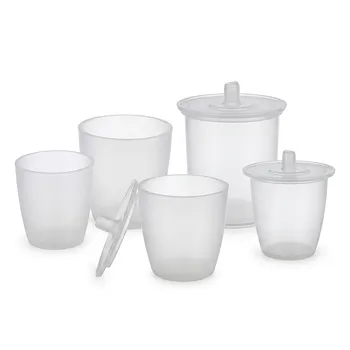
- Large Scale PTFE Beakers and Flasks for High Temperature Corrosion Resistant Laboratory Applications with Custom CNC Fabrication
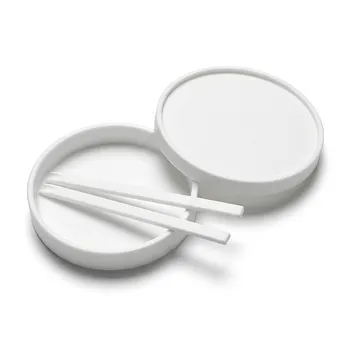
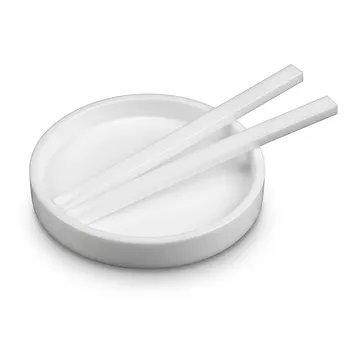
- Custom Polytetrafluoroethylene PTFE Petri Dishes 60mm Corrosion Resistant Low Background Labware
- Custom PTFE Petri Dishes Corrosion Resistant High Purity Low Background Labware
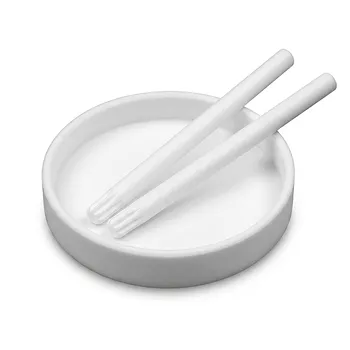
- Custom PTFE Petri Dish 30mm Corrosion Resistant Low Background Non Leaching Laboratory Ware
Related Articles
- Beyond the Melting Point: Why Your PTFE Labware Fails Sooner Than You Think—And How to Fix It
- Beyond 'Non-Stick': The Physics and Psychology of Purity in PTFE Labware
- Why Your PTFE Labware Fails at High Temps—And It's Not the Bottle's Fault
- The Hidden Risk of PTFE: Why Your Go-To Material Is Now a Liability—And What to Do About It
- The Physics of a Perfect Fit: How PTFE Eliminates an Athlete's Hidden Distractions