Within 8 hours on working days, 24 hours on holidays
Beakers, Measuring Cups & Cylinders
KINTEK's PTFE and PFA beakers, measuring cups and measuring cylinders are built for laboratories and industrial processes where glass, metal, and conventional plastics can compromise chemical compatibility, durability, or sample purity. The category supports corrosive reagent handling, sample preparation, environmental monitoring, semiconductor wet processing, pharmaceutical research, trace-element analysis, and chemical production.
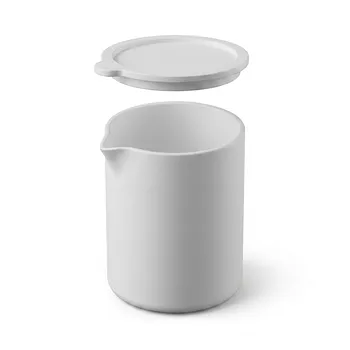
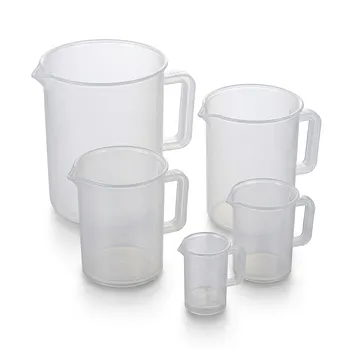
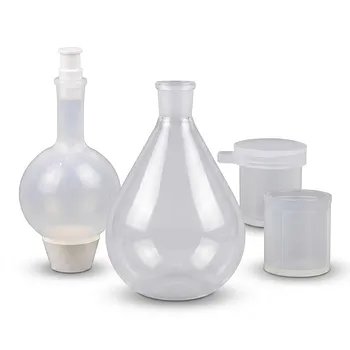
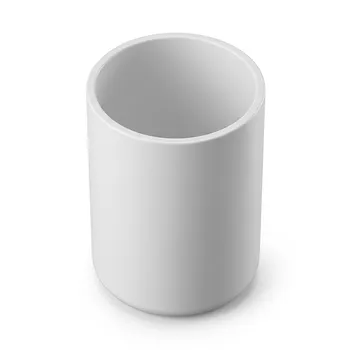
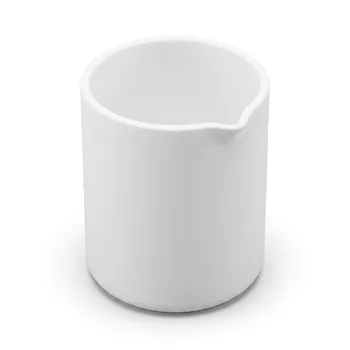
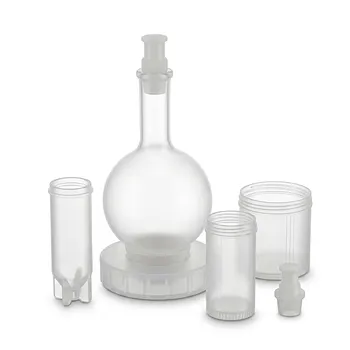
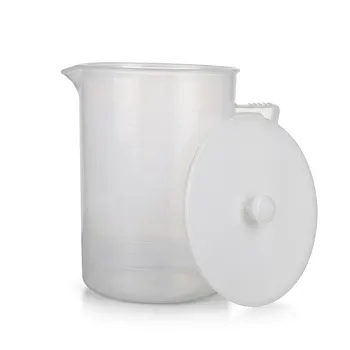
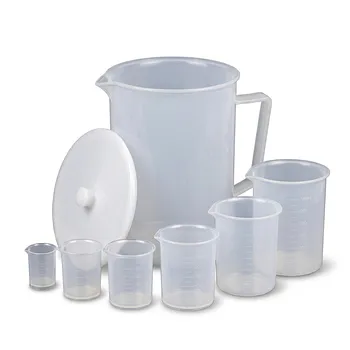
Our range includes thick-walled PTFE beakers for hot-plate work, large-capacity beakers and flasks, covered beakers, precision PTFE measuring cylinders, high-purity PFA beakers with handles, cleaning and soaking baskets, PFA dissolution cups with lids, pear-shaped flasks, and custom groundwater sampling buckets. Related fluoropolymer pipetting and centrifugation vessels extend the workflow from collection and measurement through preparation, transfer, and processing. Every format can be evaluated for your required capacity, geometry, temperature exposure, chemical medium, and cleanliness target.
High-Purity Fluoropolymer Vessels for Accurate Measurement, Reliable Processing, and Cleaner Results
In a demanding laboratory, a beaker or measuring cylinder is not simply a container. It is part of the analytical method, the chemical process, and the chain of custody for every sample. Its material can influence extractables, trace-metal background, solvent compatibility, cleaning time, heating performance, operator safety, and the repeatability of the result. KINTEK develops PTFE and PFA laboratory vessels for users who need these factors under control when working with aggressive acids, alkalis, oxidizers, solvents, high-purity reagents, and sensitive samples.
The category brings together practical day-to-day vessels and purpose-built fluoropolymer formats: PTFE beakers, measuring cylinders, large processing beakers, covered vessels, PFA beakers, handled beakers, cleaning baskets, sample dissolution cups, pear-shaped flasks, groundwater sampling buckets, pipetting tubes, and centrifuge containers. They serve as individual laboratory tools, but they are also components of a complete sample-handling and chemical-processing workflow. A team may use a sampling bucket to collect a corrosive wastewater sample, a measuring cylinder to dispense a controlled volume, a covered beaker to heat or evaporate it, a dissolution cup to prepare it for instrumental analysis, and a PFA basket to clean the vessels between runs. Using compatible fluoropolymer equipment throughout that sequence helps laboratories reduce avoidable material-related variables.
Why PTFE and PFA Are Chosen for Critical Laboratory Work
PTFE and PFA are high-performance fluoropolymers valued for their broad chemical resistance, low surface energy, useful thermal stability, and ability to support clean handling of difficult media. Both materials are widely selected where ordinary plastics may swell, crack, discolor, or release interfering substances, and where glass may be vulnerable to breakage or unsuitable for a particular process condition.
PTFE is a highly inert fluoropolymer with excellent resistance to a wide range of laboratory chemicals. It is particularly useful for rugged beakers, measuring cylinders, sampling vessels, and custom-machined components. Its non-wetting surface can help reduce residue adhesion and simplify cleaning after many chemical operations. Thickened PTFE beaker designs add mechanical robustness and can improve resistance to distortion during suitable hot-plate applications. KINTEK can engineer wall thickness, base form, lip profile, and dimensions around the intended heating and handling conditions rather than treating every application as a standard commodity purchase.
PFA combines fluoropolymer chemical resistance with a smooth, high-purity surface and melt-processable manufacturing characteristics. It is often preferred for trace analysis, semiconductor chemistry, high-purity reagent handling, sample dissolution, and applications requiring transparent or translucent observation of liquid level and contents. PFA beakers, dissolution cups, and pear-shaped flasks can provide a durable alternative to fragile glassware while helping users maintain a low-contamination workflow. Material selection should always account for the full operating environment, including reagent concentration, temperature, pressure, exposure duration, sample purity requirements, cleaning method, and mechanical loads.
A major advantage of fluoropolymer labware is chemical compatibility across many demanding media. Laboratories handling mineral acids, alkaline solutions, aggressive cleaning agents, or corrosive process chemicals need vessels that remain dependable over repeated use. However, chemical resistance is not a blanket guarantee for every reagent and condition. Fluoropolymer performance depends on concentration, temperature, pressure, exposure time, and the combined chemistry of the system. KINTEK can help review these conditions and recommend an appropriate vessel construction, material, closure concept, and operating range for the application.
Beakers Designed Around Heating, Mixing, and Process Scale
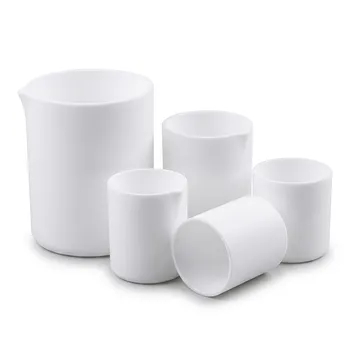
PTFE and PFA beakers are the foundation of this category because they support so many routine and specialized operations: reagent preparation, dissolution, wet digestion, evaporation, cleaning, soaking, temporary storage, chemical transfer, and reaction support. Available vessel geometry affects how easily operators can pour, stir, heat, cover, clean, and retrieve a sample. For high-value analytical workflows, details such as a stable base, adequate wall thickness, appropriate spout design, a well-fitting lid, and a clean internal surface can make a meaningful difference in daily handling.
KINTEK offers custom PTFE beakers for high-temperature and hot-plate-related work, including thickened constructions intended for improved stability in demanding use. A thicker wall can add durability and help the vessel retain its geometry under the application conditions for which it is designed. Large-scale PTFE beakers and flasks provide a useful route for users whose process volumes exceed conventional laboratory sizes, such as pilot processing, bulk reagent preparation, industrial chemical work, cleaning operations, or environmental sample workflows.
Beaker heating must be evaluated as a system. The vessel material, wall thickness, base shape, fill volume, heating plate uniformity, chemical properties, agitation method, and heating rate all affect performance. Rapid thermal changes, uneven heat input, an empty vessel on a hot surface, or operating above the rated condition can reduce service life. KINTEK can tailor a beaker for the real operating method, including capacity, bottom thickness, overall dimensions, lid arrangement, and features that support safer handling. Product-specific temperature limits should be confirmed for each design before use.
Covered PTFE beakers are valuable when a process requires protection from airborne contaminants, splash reduction, lower evaporative loss, or temporary sample coverage. A lid can support cleaner handling during dissolution, reagent staging, and sample preparation, but it does not automatically make a vessel suitable for pressure operation. Unless a vessel is expressly designed, manufactured, and specified for pressure service, it should be used as an atmospheric-pressure laboratory container. This distinction is important for both safety and reliable process design.
PFA beakers with handles offer a practical solution for transferring corrosive liquids, retrieving vessels from baths, and managing larger volumes. Ergonomic handles can improve operator control, while custom cleaning or soaking baskets keep multiple vessels organized during acid cleaning, rinsing, or storage. In trace-analysis laboratories, baskets also reduce unnecessary direct handling of clean vessels and help establish a more repeatable cleaning sequence.
Measuring Cylinders for Controlled Dispensing
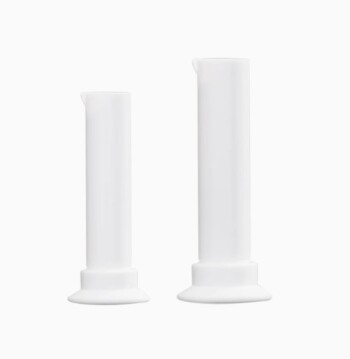
Accurate volume control begins with the right vessel and the right measurement practice. PTFE measuring cylinders are intended for laboratories and industrial users who need a chemically resilient alternative to conventional graduated glass or plastic cylinders. They can be specified for use with corrosive solutions and workflows where the vessel material must be considered alongside graduation readability and usable capacity.
The practical value of a measuring cylinder depends on more than a nominal volume mark. Users need a stable base, clear and durable graduation layout, geometry appropriate for the required resolution, a pouring arrangement that minimizes loss, and a material compatible with the liquid being measured. Tall, narrow cylinders can offer finer reading intervals for a given volume range, while wider formats may better suit viscous fluids, quicker filling, or robust industrial handling. The right option depends on whether the priority is dispensing a process quantity, preparing a reagent, verifying a volume, or transferring a sample under contamination-controlled conditions.
For analytical work, operators should use defined reading practices, clean vessels thoroughly, account for liquid meniscus where applicable, and recognize that temperature can affect liquid volume. A custom cylinder should be selected according to its intended measurement role and applicable quality requirements; it should not be assumed to replace calibrated volumetric glassware where a formal analytical calibration is required. KINTEK can discuss nominal capacity, graduation scheme, dimensional requirements, and the desired balance between chemical resistance, readability, and measurement resolution.
High-Purity Sample Preparation and Trace Analysis
Trace analysis raises the standard for every surface that contacts the sample. When laboratories perform ICP-MS, elemental analysis, semiconductor process monitoring, environmental testing, or high-purity chemical control, even very small contaminants can affect blanks, detection limits, recovery, and confidence in reported results. PFA beakers and dissolution cups are designed for these workflows because they provide chemically resilient, low-contamination surfaces suitable for controlled sample preparation when correctly cleaned and qualified within the laboratory method.
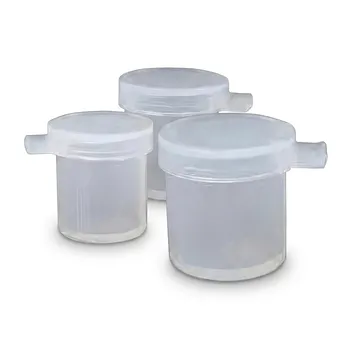
PFA sample dissolution cups with lids support digestion, dissolution, evaporation, reagent mixing, and protected holding of prepared solutions. The lid helps reduce exposure to laboratory particulates and can limit splash or evaporation during appropriate atmospheric-pressure processes. The internal surface should be cleaned and conditioned using a protocol appropriate to the method, target analytes, and cleanliness specification. In ultra-trace work, laboratories commonly validate their own blank performance after cleaning because the entire workflow, including reagents, water quality, environment, operator handling, and storage, influences the final background level.
PFA beakers with handles and removable cleaning baskets are especially useful for batch cleaning. Vessels can be grouped by size or application, immersed in a compatible cleaning medium, rinsed systematically, and dried or stored with reduced handling. This improves workflow consistency in laboratories processing many samples or maintaining dedicated vessels for specific analyte groups. Large-capacity PFA beakers can also support cleaning, soaking, reagent preparation, and chemical processing where high purity and chemical resistance are both important.
PFA pear-shaped or eggplant flasks provide a useful alternative geometry where a rounded lower body is desirable for mixing, collection, reaction support, or process integration. Compared with glass, fluoropolymer flasks offer improved resistance to breakage and are well suited to many corrosive chemical environments. Their final design should be matched to the actual apparatus, support method, connection needs, heating approach, and liquid volume. KINTEK's custom molding and machining capabilities allow users to specify a geometry that works with existing laboratory fixtures rather than adapting a critical process around an unsuitable standard vessel.
Environmental Sampling, Chemical Processing, and Rugged Field Use
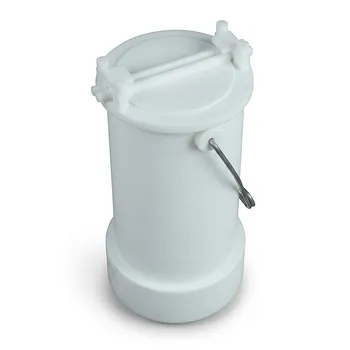
Environmental monitoring often involves unpredictable conditions: abrasive handling, corrosive wastewater, remote collection points, variable sample matrices, and strict contamination-control procedures. A custom PTFE groundwater sampling bucket can be designed to meet these field realities. Its fluoropolymer construction helps resist corrosive liquids, while a detachable configuration can simplify decontamination, inspection, and routine maintenance between sampling events. This is important when teams need to reduce carryover risk across locations or analyte programs.
Sampling equipment must be considered as part of the method, not chosen only by capacity. The collection depth, suspension arrangement, retrieval method, sample volume, rinse protocol, transport procedure, and analytes of concern all affect the right design. KINTEK can develop a sampling bucket or specialized vessel with defined dimensions, handle or attachment features, detachable sections, and material selection appropriate to the sampling plan. For applications governed by a regulatory or laboratory method, users should validate the finished equipment within their established QA/QC process.
In industrial chemical processing, fluoropolymer beakers and flasks can support small-batch preparation, quality-control sampling, corrosive reagent staging, pilot work, and cleaning operations. Their value lies in their ability to combine robust handling with chemical compatibility and customizable construction. Rather than relying on an off-the-shelf vessel that is almost suitable, engineering teams can specify a vessel designed around their required volume, clearance, fixture interface, process temperature, pouring direction, lid style, and cleaning access.
Extending the Workflow with Pipetting and Centrifugation Vessels
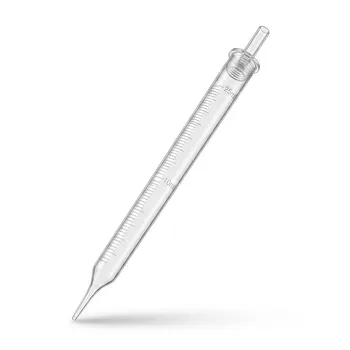
Although beakers and cylinders are the core of this category, precision handling often continues into transfer and separation steps. PFA pipetting tubes and electronic-pipettor-compatible suction components provide an option for moving aggressive or high-purity liquids where common disposable tips may not offer the needed chemical compatibility or reusability. Selection should account for the pipettor interface, aspiration volume, liquid viscosity, cleaning approach, and the risk profile of the reagent.
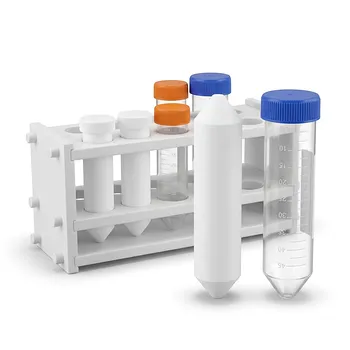
PTFE centrifuge tubes and custom racks support sample organization and compatible containment during applicable centrifugation workflows. A centrifuge tube must be selected and operated according to its product-specific speed, rotor, adapter, fill volume, temperature, and chemical-use limits. Centrifugal force depends on rotor radius as well as rotational speed, so an rpm figure alone is not a universal measure of suitability. KINTEK can help align tube dimensions, cap or closure preferences, rack configuration, and material needs with the actual laboratory equipment and procedure.
Together, these components help create a more consistent fluoropolymer sample path. That can be particularly useful where a sample moves from collection through reagent addition, dissolution, transfer, centrifugation, storage, and analysis. Consolidating compatible vessels can simplify purchasing, cleaning validation, operator training, and process documentation.
Custom CNC Fabrication for the Vessel You Actually Need
Standard labware solves common problems. Custom fluoropolymer fabrication solves the problems that arise when standard labware does not fit the process. KINTEK is exclusively focused on high-performance fluoropolymers and supports end-to-end PTFE and PFA custom CNC machining for laboratory and industrial customers. We can convert an application requirement into a practical vessel, component, or complete labware setup with attention to material, geometry, manufacturability, and use conditions.
Customization can include nominal capacity, internal and external dimensions, wall thickness, base design, handle configuration, pouring lip, lid style, openings, drainage details, mounting points, basket layout, rack format, and interfaces with surrounding equipment. For a large-scale beaker, this may mean designing a stable footprint and lifting features for a defined process volume. For a trace-analysis cup, it may mean specifying a compact geometry, a matching lid, and a surface configuration compatible with the laboratory's cleaning workflow. For a sampling bucket, it may mean a detachable assembly that can be cleaned efficiently in the field or laboratory.
The engineering conversation should begin with the actual application. Useful information includes the chemicals involved, concentration ranges, temperature profile, desired capacity, exposure time, purity target, pressure status, heating source, dimensional constraints, quantity requirement, and any drawings or photographs of the existing setup. These details allow KINTEK to recommend a practical material and construction rather than making assumptions from a product name alone.
For teams replacing glassware or metal components, custom fluoropolymer vessels can reduce breakage concerns, improve chemical compatibility, and provide a configuration better suited to the process. For laboratories developing new methods, bespoke beakers, cylinders, cups, flasks, and fixtures can help standardize handling from the outset. For OEMs and industrial users, repeatable fabrication supports a consistent component design across prototypes, small runs, and higher-volume orders.
Build a More Reliable Fluoropolymer Labware System
Choosing beakers, measuring cylinders, and related vessels based only on size can create avoidable problems later. The better approach is to define the chemical environment, analytical sensitivity, handling method, heat exposure, cleaning procedure, and dimensional requirements before selecting the material and format. KINTEK's PTFE and PFA portfolio is designed to give laboratories and industrial users that flexibility, from everyday corrosion-resistant labware to high-purity vessels and fully custom CNC-machined solutions.
Whether you need a thick-walled PTFE beaker for a hot-plate workflow, a PFA dissolution cup for sensitive sample preparation, a custom measuring cylinder for aggressive reagents, a large cleaning basket, or an entirely new fluoropolymer vessel design, our technical team can help translate your requirements into a workable product specification. Contact KINTEK through our inquiry form with your drawings, target dimensions, chemical and temperature conditions, required quantity, and application details. We will help you evaluate the appropriate PTFE or PFA construction and develop a custom solution for your laboratory or process.
FAQ
What Are The Main Applications Of PTFE Parts?
PTFE parts are widely used in various industries including medical (surgical instruments, prosthetic devices), electrical (wiring, electrical components), and food and beverage (equipment in direct contact with food). Their biocompatibility, insulating properties, and non-toxic nature make them versatile across these fields.
What Are The Common Applications Of PTFE Barrels?
PTFE barrels are widely used in various industries including plumbing (washers and sealing tapes), petrochemical (pipelines, valves, and fittings), food processing (hygienic conditions), pharmaceutical (product purity), aerospace (engines and components), and electrical (insulation and leak prevention). They are also ideal for chemical storage and handling due to their resistance to corrosive substances.
What Are The Main Applications Of PTFE Labware?
PTFE labware is widely used in various fields including engineering (e.g., tube lining), non-stick equipment (e.g., pans and bearings), medical applications (e.g., bacteria prevention on catheters), rainwear, and as lubricants in machinery. In laboratories, it is ideal due to its resistance to strong acids and bases, steam resistance, and ability to withstand a wide temperature range from -200°C to +300°C.
What Are The Main Applications Of PTFE Discs?
PTFE discs are widely used in laboratory glassware, chemical processing equipment, and industrial piping systems. They are also applied in shock absorbers, agriculture, food and beverage, robotics, maintenance, injection presses, presses, and pneumatics.
What Are The Main Applications Of PTFE Rings?
PTFE rings are widely used in aerospace and computer wiring due to their excellent dielectric properties. They are also used in industrial applications for low-friction parts like bearings and gears, in medicine as graft materials and catheter coatings, and in the semiconductor industry for their resistance to strong acids. Additionally, they are used in liners for engineering, non-stick equipment, medical applications, rainwear, and as lubricants in machinery.
What Are The Main Applications Of PTFE Rollers?
PTFE rollers are widely used in food and drink production equipment, medical devices (such as catheters, syringes, and sutures), electrical insulation, electronic component protection, and chemical industry products (including gaskets, vessel linings, and tanks). They are also suitable for cooking equipment, conveyor belt rollers, temperature sensor casings, and non-stick surface covers due to their ability to withstand harsh environments.
What Are The Main Applications Of PTFE Glands?
PTFE glands are widely used in various industries including food and drink production equipment, medical devices (such as catheters, syringes, and sutures), electrical insulation, electronic component protection, and chemical industry products (like gaskets, vessel linings, and tanks). They are also utilized in cooking equipment, conveyor belt rollers, temperature sensor casings, and non-stick surface covers due to their ability to withstand harsh environments.
What Are The Main Applications Of PTFE Gaskets?
PTFE gaskets are widely used in conveying pipes, exhaust pipes, steam pipes, high-pressure oil pipes in steel rolling mills, aircraft hydraulic systems, cold-pressing systems, distillation towers, heat exchangers, kettles, tank linings, valves, and other chemical equipment. They are also used in machinery, heat exchangers, high-pressure vessels, large-diameter vessels, pumps, and seals for grooved flanges, glass reactors, flat flanges, and large-diameter flange seals. Additionally, they are used in industries requiring chemical or heat resistance, including chemical processing, automotive, industrial, electrical, and medical sectors.
What Are The Main Applications Of PTFE Components?
PTFE components are widely used as sealing materials in gaskets, O-rings, seals, and bearings, especially in applications that require chemical resistance and high-temperature capabilities. They are also used for non-stick cookware coatings and electrical insulation.
What Are The Main Applications Of Teflon Seals?
Teflon seals are widely used in various industries due to their versatility. Common applications include non-stick cookware (pans, skillets, baking sheets), industrial components like seals, gaskets, and bearings, electrical insulation, automotive coatings, medical devices, and aerospace components. They are also used in automotive parts, medical tools, and as padding due to their resistance to water, heat, and chemicals.
What Are The Key Features Of PTFE?
PTFE has several notable features: a high melting point of around 347 °C, high resistance to water, a very low coefficient of friction, and flexibility even at low temperatures. It also offers outstanding chemical resistance, is soft and formable, has good weathering resistance, and performs well at elevated temperatures.
What Are The Key Features Of PTFE Barrels?
PTFE barrels feature a high melting point (around 347°C), excellent resistance to water and chemicals, a very low coefficient of friction, and flexibility even at low temperatures. They can be used continuously from -270°C up to 250°C, with a maximum use temperature of 280°C. Their heavy wall construction and smooth internal finish ensure leak-free performance.
What Are The Key Features Of PTFE Labware?
PTFE labware is known for its legendary resistance to strong acids and bases, steam resistance, and a wide temperature range from -200°C to +300°C. Its three-dimensional molecular structure makes it highly resistant to most solvents, and the helical polymer chain sheathed by fluorine atoms protects the carbon-carbon bonds, enhancing its chemical resistance. However, it can be attacked by molten alkali metals and fluorine at high temperatures.
What Are The Key Features Of PTFE Discs?
PTFE discs combine the properties of PTFE and rubber, offering excellent chemical resistance, low friction, heat resistance, and good compression set. They also feature a low coefficient of friction, excellent chemical inertness, a non-adhesive surface, a wide temperature range (-200°C to +260°C), and excellent dielectric properties.
What Are The Key Features Of PTFE Rings?
PTFE rings have a high melting point of around 347°C, high resistance to water, a very low coefficient of friction, and remain flexible even at low temperatures. They are known for being the most slippery material, withstanding extreme temperatures, and providing excellent insulation. They are also resistant to nearly all industrial chemicals and solvents, have outstanding dielectric properties, and resist ignition and flame spread.
What Are The Key Features Of PTFE Rollers?
PTFE rollers have a low coefficient of friction, excellent chemical inertness, a non-adhesive surface, and can withstand a wide temperature range from –200°C to +260°C. They also possess excellent dielectric properties, making them ideal for various demanding applications.
What Are The Key Features Of PTFE Glands?
PTFE glands are known for their outstanding chemical resistance, extremely low friction, soft and formable nature, good weathering resistance, and excellent performance at elevated temperatures. Key performance parameters include temperature resistance up to 280°C, a pH range of 0 to 14, pressure resistance of 15 to 25 MPa, and line speed of 8 to 21 m/s.
What Are The Key Features Of PTFE Gaskets?
PTFE gaskets come in various types including virgin, expanded, and modified options. They can handle nearly all chemicals and temperatures up to 500 degrees Fahrenheit. They are available for any need from small batch to high-volume production while meeting demanding standards. PTFE has a high melting point of around 347 °C, high resistance to water, a very low coefficient of friction, and flexibility even at low temperatures.
What Are The Key Features Of PTFE Components?
PTFE components are known for their low friction coefficient, ability to function at extreme temperatures, excellent moisture resistance, good cryogenic capabilities, and strong tensile strength.
What Are The Key Features Of Teflon Seals?
Teflon seals are known for their exceptional chemical resistance, flexibility, and durability. These features make them highly suitable for demanding industrial applications where resistance to harsh chemicals and long-term performance are critical.
How Do PTFE O-ring Seals Work?
PTFE O-ring seals have a circular cross-section and are typically made of elastic rubber material. They achieve sealing through elastic properties and preload. When placed between connected parts, the O-ring fills the sealing gap and forms a sealing interface due to its elasticity. External stress causes the O-ring to maintain sealing interface stability, preventing liquid or gas leakage.
How Does A PTFE Lined Butterfly Valve Work?
A PTFE lined butterfly valve operates on the quick shut off principle. It consists of a circular disc (butterfly) placed in the center of the pipe, connected to an actuator via a rod. By rotating the disc using a handwheel, the flow can be either allowed (disc parallel to flow) or closed (disc perpendicular to flow).
What Makes PTFE Suitable For Labware?
PTFE is chemically inert, durable under load, stable across temperature fluctuations, forms excellent seals, is flexible, and can be moulded with a magnetic core. These properties make it ideal for labware items like stopcocks, beakers, pipes, test tubes, stirrers, petri dishes, and stands. Its resistance to strong acids and bases, steam, and a wide temperature range further enhance its suitability for laboratory use.
How Do PTFE Discs Work In Sealing Applications?
PTFE O-ring seals, which have a circular cross-section, achieve sealing through their elastic properties and preload. When placed between connected parts, the O-ring fills the sealing gap and forms a sealing interface due to its elasticity. External stress ensures the O-ring maintains sealing interface stability, preventing liquid or gas leakage.
How Are PTFE Rings Manufactured?
PTFE rings can be made from raw PTFE, which comes in powder or liquid forms. Smaller items can be dipped and spun to remove excess material. Another method involves using an electrostatic spray gun to apply negatively charged PTFE particles. The coated object is then cured at high temperatures to finalize the product.
How Are PTFE Rollers Manufactured?
PTFE rollers are manufactured using raw PTFE in powder or liquid forms. Smaller items can be dipped and spun to remove excess material. Another method involves negatively charging PTFE particles with an electrode-equipped spray gun for an electrostatic coating. The final step is curing the coated object at high temperatures.
What Is The Principle Behind PTFE Gaskets?
PTFE gasket materials are known for their non-reactive characteristics, making them impervious to attack and degradation by aggressive gases, vapors, and fluids. They exhibit excellent dielectric properties, a very low coefficient of friction, and can operate across a wide temperature range from -400°F to 500°F. PTFE is among the most chemically resistant materials available.
What Are The Key Components Of PTFE (Polytetrafluoroethylene)?
The primary components of PTFE are fluorine and carbon, which contribute to its unique properties such as chemical resistance and high-temperature stability.
How Do Teflon Seals Work In Harsh Environments?
Teflon seals operate effectively in harsh environments due to their great chemical resistance. They can withstand exposure to a wide variety of chemicals without degrading, making them ideal for use in industries where chemical exposure is common.
What Are The Advantages Of Using PTFE Parts?
PTFE parts are easy to machine, affordable, and long-lasting. They have a low coefficient of friction and wear resistance, making them ideal for mechanisms that rotate or slide. Additionally, PTFE has non-stick properties, is moisture and chemical resistant, has a high strength-to-weight ratio, is easily machinable with excellent dielectric properties, and has a relatively high melting point. They are also FDA approved for food-related applications.
What Are The Advantages Of Using PTFE Barrels?
PTFE barrels offer numerous advantages including corrosion resistance, a wide temperature range (-325°F to above 500°F), no swelling (hydrophobic properties), FDA compliance, UV radiation resistance, and excellent electrical insulation. They also provide non-stick properties and are resistant to extreme temperatures and chemicals.
What Are The Advantages Of Using PTFE Labware?
PTFE labware offers high strength, moisture resistance, temperature resistance, and thermal expansion resistance. It is suitable for storing strong acids, aqua regia, and various chemical liquids. PTFE coatings also provide resistance to extreme temperatures, non-stick properties, chemical resistance, and excellent electrical insulation. These advantages make PTFE labware a preferred choice in demanding laboratory and industrial environments.
What Are The Advantages Of Using PTFE Discs?
PTFE discs offer numerous advantages, including chemical resistance, temperature resistance, versatility, non-corrosive properties, electrical and thermal insulation, and easy availability. These properties make them suitable for a wide range of industrial applications.
What Are The Advantages Of Using PTFE Rings?
PTFE rings offer numerous advantages, including corrosion resistance, a long shelf life, and the ability to withstand a wide temperature range (-325°F to above 500°F). They are hydrophobic (do not swell), FDA compliant, resistant to UV radiation, and provide excellent electrical resistance. Additionally, they are non-stick, chemically resistant, and provide great electrical insulation.
What Are The Advantages Of Using PTFE Rollers?
PTFE rollers offer numerous advantages, including exceptional corrosion resistance, a long shelf life, a wide temperature range (-325°F to above 500°F), no swelling (hydrophobic properties), FDA compliance, UV radiation resistance, and excellent electrical resistance. These properties make them highly durable and reliable in challenging environments.
What Are The Advantages Of Using PTFE Glands?
PTFE glands offer several advantages including resistance to extreme temperatures, non-stick properties, excellent chemical resistance, and great electrical insulation. They enhance performance and efficiency across various industries while supporting sustainability by reducing the use of harmful chemicals and extending the lifespan of products.
What Are The Advantages Of Using PTFE Gaskets?
PTFE gaskets are non-corrosive, available in various shapes and sizes, work well with both high and low temperatures, have excellent chemical resistance, prevent leakage and cross-linking, and are economical in price. They offer chemical resistance to most acids, bases, and solvents; temperature resistance from -200°C to +260°C; excellent non-stick properties; high purity free from contaminants; and superior sealing performance against gas and liquid leakage.
What Are The Advantages Of Using PTFE Components?
PTFE components offer several advantages, including resistance to extreme temperatures, non-stick properties, excellent chemical resistance, and superior electrical insulation. They also have a low friction coefficient and good tensile strength.
What Are The Advantages Of Using Teflon Seals?
Teflon seals offer several advantages, including easy machinability due to their softness and density, and excellent thermal stability. These properties prevent part deformation and tool clogging during manufacturing, ensuring high-quality and reliable seals for various applications.
Why Is PTFE Suitable For CNC Machining?
PTFE's machinability allows for precise CNC customization to meet specific industrial requirements. This enables the creation of specialized components like chemical-resistant tank linings, food-grade cutting boards, and precision seals that optimize performance for unique operational challenges while maintaining all of PTFE's beneficial properties.
Why Are PTFE Barrels Suitable For Laboratory Use?
PTFE barrels are ideal for laboratory use due to their excellent chemical, mechanical, and heat resistance. They are perfect for dissolutions and digestions with acids and corrosive agents, and their non-reactive nature ensures sample purity. Additionally, their durability and leak-proof design make them reliable for various lab applications.
What Types Of PTFE Labware Are Available?
PTFE labware includes a wide range of products such as custom machined parts, tweezers, scrapers, shovels, containers, volumetric flasks, microwave digestion vessels, sampling spoons, square trays, bottles, measuring cylinders, evaporating dishes, three-neck flasks, magnetic stirring bars, and cleaning racks. These items are designed for precision and resilience in demanding environments.
Why Are PTFE Discs Preferred In High-temperature Environments?
PTFE discs can withstand extreme temperatures ranging from -200°C to +260°C, making them ideal for high-temperature environments. Their heat resistance ensures they maintain their properties and performance even under such conditions.
Why Are PTFE Rings Preferred In The Semiconductor Industry?
PTFE rings are preferred in the semiconductor industry due to their exceptional chemical resistance, particularly to strong acids. Their ability to withstand harsh chemical environments while maintaining structural integrity makes them ideal for use in semiconductor manufacturing and processing equipment.
Why Are PTFE Rollers Preferred In The Chemical Industry?
PTFE rollers are preferred in the chemical industry due to their excellent chemical inertness and corrosion resistance. They can withstand exposure to harsh chemicals and extreme temperatures, making them ideal for use in gaskets, vessel linings, tanks, and other chemical industry applications.
Are Custom PTFE Glands Available For Specific Applications?
Yes, custom PTFE glands are available to meet specific application requirements. Manufacturers offer custom fabrication from prototypes to high-volume orders, ensuring precision and suitability for diverse applications such as semiconductor, medical, and laboratory uses.
How Are PTFE Gaskets Installed?
The installation process includes preparing the flange surfaces, inspecting the gasket, positioning it correctly, using alignment tools if necessary, applying lubrication if required, assembling the flanges, tightening the bolts in a crisscross pattern, and conducting a final check for leaks or misalignment.
Why Are PTFE Components Ideal For Chemical And High-temperature Applications?
PTFE components are ideal for chemical and high-temperature applications due to their exceptional chemical resistance and ability to function at extreme temperatures, making them suitable for environments where other materials might degrade or fail.
Are Teflon Seals Environmentally Friendly?
Yes, Teflon seals are environmentally friendly as they are made from renewable resources. Additionally, they are fire-safe, adding to their safety and sustainability benefits.
What Types Of PTFE Parts Are Commonly Manufactured?
Commonly manufactured PTFE parts include containers, flower baskets, tweezers, magnetic stirring bars, measuring cylinders, scrapers, shovels, square trays, bottles, microwave digestion vessels, crucibles, three-neck flasks, volumetric flasks, cleaning racks, evaporating dishes, and sampling spoons. These parts are used in labs, semiconductor industries, and medical applications.
Are PTFE Discs Resistant To Chemicals?
Yes, PTFE discs are highly resistant to a wide range of chemicals, making them suitable for use in harsh chemical environments. Their excellent chemical inertness ensures they do not react with most substances.
Are PTFE Rings Suitable For Medical Applications?
Yes, PTFE rings are suitable for medical applications. They are used as graft materials and catheter coatings due to their biocompatibility, flexibility, and resistance to bacteria. Their non-reactive nature and ability to prevent bacterial growth make them ideal for various medical uses.
Can PTFE Rollers Be Customized For Specific Applications?
Yes, PTFE rollers can be customized for specific applications. Manufacturers offer custom fabrication from prototypes to high-volume orders, ensuring that the rollers meet the precise requirements of different industries, such as semiconductor, medical, and laboratory applications.
How Do PTFE Components Perform In Cryogenic Conditions?
PTFE components perform well in cryogenic conditions due to their good cryogenic capabilities, maintaining their structural integrity and functionality even at very low temperatures.
What Makes PTFE Discs Non-stick?
PTFE discs have a non-adhesive surface due to the inherent properties of PTFE, which prevent materials from sticking to them. This makes them ideal for applications where easy cleaning and minimal contamination are required.
Can PTFE Discs Be Used In Electrical Applications?
Yes, PTFE discs have excellent dielectric properties, making them suitable for electrical insulation applications. They provide great electrical insulation and are often used in electrical and electronic components.
How Do PTFE Discs Perform In Low-temperature Environments?
PTFE discs can perform reliably in low-temperature environments, as they can withstand temperatures as low as -200°C. Their properties remain stable, ensuring consistent performance even in extreme cold.
Are PTFE Discs Customizable For Specific Applications?
Yes, PTFE discs can be customized in terms of size, shape, and other specifications to meet the requirements of specific applications. This versatility makes them suitable for a wide range of industrial and laboratory uses.
This website uses cookies to enhance your browsing experience,
analyze site traffic, and serve better user experiences. By continuing to use this site, you consent to our use of
cookies. Learn more in our cookie policy.