The Invisible Cost of "Good Enough" Sensors
You’ve likely experienced the frustration: a pH or ORP (Oxidation-Reduction Potential) sensor that was calibrated just days ago is already showing significant drift. In high-stakes environments—like wastewater treatment, chemical processing, or battery electrolyte research—this isn't just a technical nuisance. It’s an operational bottleneck.
When a sensor fails to provide a stable reading, the maintenance cycle begins. Your team pulls the sensor, cleans it, recalibrates it, and redeploys it, only for the accuracy to degrade again within 48 hours. In the worst cases, the sensor is simply discarded. While these sensors are often treated as "consumables," the true cost lies in the technician's time, the chemical waste, and the potential for a process excursion that could ruin an entire batch of product.
The Traditional Approach: Why Ceramics Often Fail
For decades, ceramic junctions have been the industry standard for industrial sensors. They are cheap and functional—under ideal conditions. However, the very nature of ceramic material creates a "trap" in modern industrial applications.
Ceramics are naturally hydrophilic (water-attracting) and have a rigid, interlocking pore structure. In "clean" laboratory water, they perform fine. But in the real world—where you are dealing with oils, viscous slurries, heavy metal hydroxides, or microbial biofilms—these pores act like a sponge for contaminants.
Once a ceramic junction "plugs," the electrical path between the reference electrode and the process liquid is restricted. This leads to:
- Sluggish Response Times: Moving from pH 4 to pH 7 takes minutes instead of seconds.
- High Junction Potential: Variations in the electrical bridge lead to inaccurate, drifting mV readings.
- Frequent Replacement: Once oils or proteins deeply penetrate a ceramic matrix, no amount of acid-washing can fully restore the sensor to its original precision.
The Root Cause: Surface Energy and Porosity
To solve the problem of sensor drift, we have to look at the physical chemistry of the interface. The "Root Cause" of most junction failures isn't the electrode itself, but the surface energy of the material connecting the electrode to the media.
Traditional materials allow substances to "stick" and "foul." To stop this, you need a material that is inherently chemically inert and physically repellent. This is where Porous PTFE (Polytetrafluoroethylene) changes the equation.
Unlike ceramic, PTFE is highly hydrophobic. It doesn't just "stay clean"; it actively repels water-based contaminants, oils, and biofilms. Because the pores in PTFE are formed through a controlled stretching or sintering process rather than a random ceramic kiln firing, the structure is more uniform and less prone to deep-seated mechanical clogging. When a PTFE junction encounters a viscous slurry, the contaminants stay on the surface—where they can be easily rinsed away—rather than migrating into the core of the sensor.
The Solution: Precision-Engineered PTFE Components
At KINTEK, we understand that a sensor is only as reliable as its weakest component. We specialize in transforming high-purity PTFE into precision-engineered laboratory and industrial solutions that thrive where others fail.
By utilizing our custom CNC fabrication and porous PTFE expertise, we provide the components necessary to build sensors that can withstand the most aggressive chemical environments. Our PTFE junctions offer:
- Superior Clogging Resistance: The hydrophobic nature of our PTFE repels oils and particulates, keeping the electrical bridge open and stable.
- Extreme Chemical Stability: Whether you are monitoring heavy metal hydroxides in wastewater or aggressive acids in semiconductor processing, our PTFE remains non-reactive.
- High Temperature and Pressure Resilience: With a high operating temperature range and minimal flex fatigue, these components maintain their integrity under industrial stress.
- Reduced Total Cost of Ownership: By extending the service life of the sensor and reducing the frequency of rinsing/recalibration, the long-term savings far outweigh the initial investment.
Beyond the Fix: Unlocking Process Stability
When you stop treating sensor maintenance as a "daily fire to put out," your facility's potential changes. By switching to high-precision PTFE junctions, you move from reactive maintenance to proactive process control.
Imagine a chemical plant where sensors remain accurate for months without intervention, or a battery research lab where electrolyte measurements remain stable through hundreds of test cycles. This stability leads to higher product purity, drastically reduced industrial downtime, and a safer working environment. When the "junction problem" is solved, your engineers can spend their time optimizing the process rather than cleaning the probes.
Solving these complex material challenges is at the core of what we do. At KINTEK, we don't just provide off-the-shelf parts; we partner with you to engineer the specific fluid transfer and sensing components your unique application demands. Whether you require specialized prototypes for new energy research or high-volume industrial orders for trace analysis, our team is ready to deliver the precision your project deserves.
To discuss how our high-purity PTFE and PFA solutions can resolve your most persistent technical hurdles, Contact Our Experts.
Related Products
- PFA Acid and Base Burette with PTFE Valve for Corrosive Chemical Analysis and Hydrofluoric Acid Resistance Customizable Labware
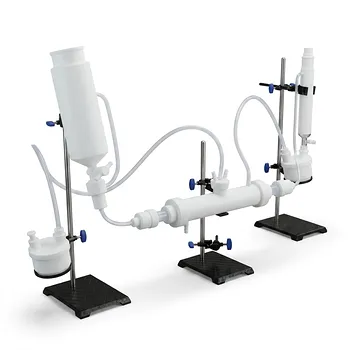
- High Purity PTFE Filter with PFA Valve Connections and Integrated Sieve Plate for Corrosive Fluid Processing
- Custom PTFE Filtration System Acid Resistant High Purity Semiconductor Grade Chemical Processing Filter
- High Purity PTFE PFA Burette Translucent Acid Base Resistant Reusable Laboratory Titration Equipment
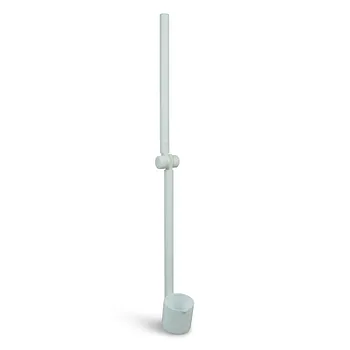
- Customizable 22ml PTFE Cup Deep Layer Sampler and Corrosion Resistant Cylinder with Handle