Hydrothermal Autoclaves for Cleaner, More Controlled Materials Synthesis
Hydrothermal synthesis is widely used when a reaction needs the combined influence of heat, pressure, solvent, and time to create a material that is difficult to produce by conventional open-vessel chemistry. In a sealed autoclave, an aqueous or solvent-based precursor mixture can be heated above its normal boiling point. The resulting self-generated pressure changes solubility, transport behavior, nucleation, crystal growth, and reaction kinetics. This makes hydrothermal processing a practical route for preparing crystalline powders, nanostructures, coatings, composites, and functional inorganic materials with controlled morphology and composition.
KINTEK hydrothermal synthesis autoclaves are designed around the factors that most often determine whether these experiments deliver reproducible results: chemical compatibility, contamination control, liner integrity, pressure-vessel reliability, thermal stability, fill volume, sealing discipline, and the ability to tailor the reactor to a specific method. Our PTFE, TFM, and PPL-lined reaction systems give laboratories a fluoropolymer contact surface between the sample and the metal pressure shell. That separation is especially valuable when working with corrosive reagents, ultra-clean formulations, metal-sensitive analytical work, or material systems whose performance can be affected by trace ionic contamination.
A Sealed Environment for Hydrothermal Growth and Reaction Control
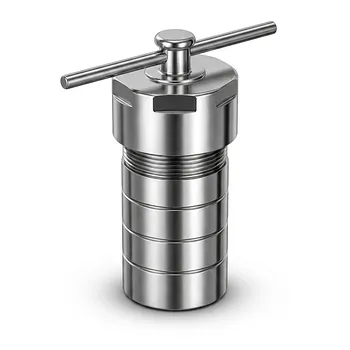
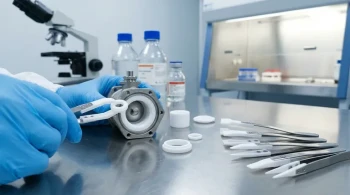
A typical hydrothermal reactor consists of a corrosion-resistant outer body, a removable fluoropolymer liner or inner cup, a closure system, and, depending on the model, supporting seals and accessories. The outer jacket provides mechanical strength for operation under the temperature and pressure conditions produced by a properly loaded reaction. The liner contains the reaction mixture and creates the primary wetted surface. In operation, the vessel is charged with precursors, solvent, modifiers, substrates, or seed materials, then sealed and heated according to the validated process recipe.
As temperature rises, the chemistry takes place in a closed environment rather than an evaporating open container. Dissolved species can react, dissolve and reprecipitate, crystallize, deposit onto a substrate, or assemble into more complex structures. Parameters such as precursor concentration, pH, mineralizer selection, temperature ramp, dwell time, cooling rate, filling ratio, and vessel geometry can all influence the result. A well-selected liner supports that experimental control by remaining chemically inert toward the formulation and by minimizing unintended interaction with the vessel wall.
Hydrothermal autoclaves are commonly used for:
- Metal oxide, hydroxide, sulfide, phosphate, ferrite, perovskite, and zeolite synthesis.
- Nanoparticle, nanorod, nanosheet, nanowire, and hierarchical-structure growth.
- Catalyst and photocatalyst development.
- Battery, supercapacitor, fuel-cell, and sensor-material research.
- Carbon-based composite and heterojunction preparation.
- In-situ growth on carbon cloth, foams, conductive substrates, and other supports.
- Mineralization, crystallization, digestion, and corrosion-related laboratory studies.
- Academic, industrial R&D, pilot laboratory, and analytical-materials applications.
The value of the hydrothermal method is not simply that it can run at elevated temperature. It enables reaction pathways and crystal-growth conditions that may be inaccessible, slower, or less controllable under ambient-pressure processing. For researchers developing functional materials, this can mean better crystallinity, narrower particle-size distributions, more defined morphology, improved substrate coverage, or more repeatable electrochemical and photocatalytic behavior. Vessel selection remains part of the method design: the reactor must be matched to the chemistry, intended temperature, anticipated pressure, sample volume, heating equipment, and laboratory safety procedure.
PTFE and TFM Liners for Chemical Inertness and Sample Purity
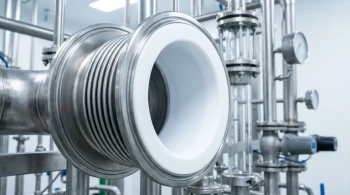
Fluoropolymer-lined hydrothermal reactors are frequently selected because PTFE and modified PTFE materials such as TFM offer broad chemical resistance and low surface reactivity. The liner helps isolate the reaction solution from the stainless-steel exterior. This is important for strong acids, strong bases, halide-containing systems, oxidizing or reducing formulations, and other media that could corrode or leach ions from an unprotected metal surface.
For example, alkaline zinc oxide synthesis can involve sodium hydroxide and zinc-containing precursor solutions. A high-purity PTFE liner provides an inert contact surface that helps resist the alkaline medium while reducing the chance that metal ions from the pressure-vessel body enter the reaction mixture. The same principle supports preparation of high-purity ZnO nanoparticles, where unwanted contaminants may affect optical, catalytic, electrical, or surface properties.
In nanocomposite work, a fluoropolymer-lined autoclave can support reactions such as the hydrothermal anchoring of ZnO nanoparticles on reduced graphene oxide surfaces. The sealed vessel enables controlled heating around process conditions often used for this type of growth, while the non-stick fluoropolymer surface reduces wall adhesion of sensitive particles and reaction products. That can simplify recovery and help preserve the intended heterojunction architecture. For electrochemical sensor materials, hydrothermal reactors can also provide the enclosed high-temperature environment needed for in-situ growth of carbon-based materials on carbon cloth or other conductive supports.
PTFE is valued for exceptional resistance to many laboratory chemicals and for its low-friction, low-adhesion surface. TFM is a modified PTFE material that can offer improved processing characteristics and is often preferred when a high-quality fluoropolymer liner is required for demanding applications. PPL liners are commonly chosen for processes requiring higher temperature capability than standard PTFE liners can support. Actual working limits depend on the liner material, liner geometry, autoclave model, seal design, fill level, heating conditions, and the chemical system. Laboratories should always use the rated limits supplied for the specific vessel and never assume that a liner material alone defines a reactor's safe operating conditions.
Choose the Liner Material Around Your Process Window
A hydrothermal autoclave is not a one-material-fits-all product. The most effective configuration begins with the reaction environment. KINTEK can help align the fluoropolymer liner and vessel design with the experiment's real requirements.
PTFE-lined autoclaves are a strong choice for many standard hydrothermal reactions involving corrosive aqueous media, acid/base chemistry, nanoparticle synthesis, and contamination-sensitive work. PTFE offers a clean, inert wetted surface and a practical solution for laboratories that need reliable handling of common hydrothermal formulations within the temperature range appropriate to the selected vessel.
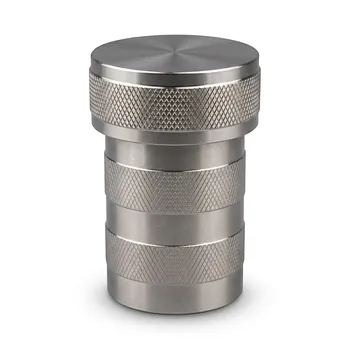
TFM-lined reactors are suited to high-purity and high-corrosion-resistance applications where liner quality, chemical inertness, and precise vessel construction are central requirements. The straight-cylinder reactor format can be especially useful where a consistent internal profile, efficient sample loading, or a tailored geometry supports the experimental procedure. TFM inner liners are appropriate for advanced materials research, trace-sensitive chemistry, specialized synthesis, and custom reaction systems.
PPL-lined autoclaves can be considered for workflows that need a higher-temperature fluoropolymer option. Their suitability must still be evaluated against the complete reaction profile, including reagent compatibility, thermal exposure, pressure development, closure system, and manufacturer-rated operating parameters. Selecting PPL should be an engineering decision based on the method, not simply a general upgrade.
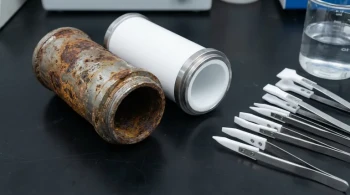
The liner is a consumable-contact component, but it is also fundamental to experiment quality. A liner should be inspected before use for deformation, cracking, deep scratches, discoloration, seal-surface damage, or residues from prior reactions. Careful cleaning, complete drying where required, compatible tools, and disciplined sample handling help maintain the low-contamination advantages that fluoropolymers provide.
Stainless-Steel Jackets Provide Structural Support
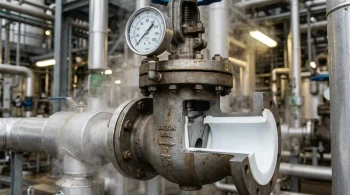
While the liner protects the chemistry, the stainless-steel outer body provides the mechanical structure required for a sealed hydrothermal process. This two-part construction brings together complementary material properties: the fluoropolymer liner manages chemical exposure, while the metal shell is engineered to contain the reaction under its specified operating conditions.
A jacketed construction also helps protect the liner from external handling and gives the reactor a practical form for furnace, oven, or heating-block use as specified by the equipment instructions. The exterior geometry, closure, thread engagement, body thickness, and internal free volume all matter. These elements should be treated as an integrated pressure-vessel system rather than interchangeable components.
KINTEK's custom TFM reaction vessels with stainless-steel jackets and PTFE inner cups are intended for laboratories that need more than a standard catalog configuration. A custom approach may be useful where the user needs a particular capacity, internal cup form, substrate holder, loading arrangement, interface feature, dimensional tolerance, or integration with an existing research setup. Because KINTEK specializes exclusively in high-performance fluoropolymers and has end-to-end PTFE/PFA CNC machining capability, we can address both the chemical-contact component and the practical mechanical requirements of a specialized laboratory assembly.
Benefits That Matter in Daily Laboratory Work
The advantages of a lined hydrothermal synthesis autoclave extend beyond chemical resistance. In research environments, successful equipment must also improve repeatability, simplify handling, and support confident scale-up from initial trials to routine experimental runs.
Reduced metal-ion contamination. A fluoropolymer inner cup separates the reaction from the metal body. This is highly relevant when trace impurities could alter catalyst activity, photoluminescence, electrochemical response, surface chemistry, crystal formation, or analytical results.
Resistance to aggressive media. Acidic and alkaline precursor solutions can challenge unlined metal vessels. PTFE, TFM, and PPL liner options allow researchers to select a wetted surface appropriate to the formulation and temperature range.
Cleaner product recovery. Low-adhesion fluoropolymer surfaces can reduce product sticking compared with many metal contact surfaces. This supports more efficient transfer, cleaning, and recovery, particularly for fine powders, colloidal products, and nanomaterials.
Consistent experimental conditions. A correctly selected sealed reactor helps standardize the reaction volume, headspace, thermal exposure, and containment conditions from batch to batch. Repeatability is essential when comparing formulations, optimizing a synthesis recipe, or preparing material for characterization.
Flexible research capability. Interchangeable or application-specific liners make it easier to support different methods in one laboratory while maintaining appropriate cleaning and contamination-control practices.
Custom engineering potential. Standard autoclaves serve many applications, but unusual experiments may require a non-standard vessel volume, custom inner cup, specialized liner configuration, or purpose-built fluoropolymer component. KINTEK can convert those technical requirements into a manufacturable design.
Straight-Cylinder and Custom Reactor Formats
The category includes straight-cylinder hydrothermal synthesis reactors with TFM liners, PTFE/PPL-lined high-temperature autoclave reactors, and custom TFM reaction vessels with stainless-steel jackets and PTFE inner cups. These formats address different priorities without changing the core hydrothermal principle.
Straight-cylinder designs offer a direct, practical vessel profile for many synthesis procedures. Depending on the specified configuration, this geometry may make loading, sample positioning, liner removal, or repeatable reaction setup more convenient. It is a sensible option for laboratories conducting recurring hydrothermal reactions and seeking a robust, easily understood vessel format.
PTFE- and PPL-lined autoclaves provide material-choice flexibility. Researchers can select the liner system based on their method's temperature, chemistry, purity requirement, and validated operating window. This is particularly useful in multi-project laboratories where one group may perform moderate-temperature alkaline nanoparticle growth while another develops a higher-temperature inorganic material process.
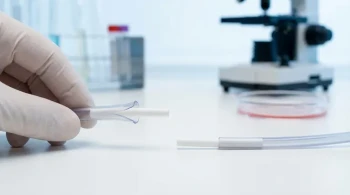
Custom reaction vessels expand the possible workflows further. A custom liner can be designed around the sample rather than forcing the sample to fit a standard vessel. For instance, a laboratory may need to accommodate a shaped substrate, carbon cloth coupon, electrode assembly, insert, holder, larger inner chamber, reduced dead volume, or a distinctive geometry required by a published method. Custom CNC-machined PTFE/PFA components can also support related sample preparation, transfer, washing, storage, and chemical-handling operations, creating a more coherent fluoropolymer workflow around the reactor.
Process Discipline and Safe Use
Hydrothermal synthesis involves elevated temperature and self-generated pressure. These vessels must be used only by trained personnel following the operating instructions and the laboratory's approved safety procedures. A hydrothermal autoclave should never be overfilled, modified without engineering approval, damaged, or opened until it has cooled and internal pressure has been safely relieved in accordance with the applicable procedure.
Before each run, confirm the chemical compatibility of the liner, outer vessel, seal components, and any inserts. Observe the model-specific maximum temperature, maximum fill ratio, and other stated operating limits. The pressure inside a sealed reactor depends on the solvent, fill volume, temperature, gas evolution, reaction behavior, and other process variables; it cannot be inferred from temperature alone. Reactions that produce gas, decompose exothermically, or involve uncertain chemistry require additional risk assessment.
Good operating practice includes inspecting threads and sealing faces, keeping contact surfaces clean, using appropriate personal protective equipment, allowing adequate cooling time, and opening the vessel only in a controlled environment. For contamination-sensitive work, dedicate liners or establish validated cleaning procedures for different chemical families. For high-purity synthesis, avoid metallic tools or accessories that could contact the sample unless their compatibility and contamination contribution have been evaluated.
Why Choose KINTEK
KINTEK is exclusively focused on high-performance fluoropolymers. That focus matters because fluoropolymer laboratory hardware is not a generic accessory category. Material quality, liner construction, machining precision, surface condition, dimensional consistency, and chemical-use knowledge all affect the product's performance in real research workflows.
Our capabilities extend from common PTFE/PFA laboratory supplies to high-purity trace-analysis equipment, fluid-transfer components, sample-preparation tools, cleaning and storage tanks, and advanced reaction apparatus. For hydrothermal synthesis customers, this means one technical partner can support the reaction vessel itself as well as complementary fluoropolymer items for reagent handling, sample transfer, filtration, washing, storage, and custom laboratory integration.
When your procedure requires a non-standard solution, our PTFE/PFA custom CNC machining capability provides a direct path from requirement to component. We can work from drawings, dimensions, sample parts, process descriptions, or application goals to develop practical custom parts and bespoke laboratory setups. Whether you need a specialized liner, a tailored vessel capacity, a complex machined fluoropolymer part, or repeat production for a high-volume requirement, KINTEK combines material specialization with manufacturing flexibility.
Contact KINTEK to discuss your hydrothermal synthesis autoclave, liner material, custom vessel geometry, or fluoropolymer laboratory component requirements. Share your chemistry, target temperature range, reaction volume, sample format, and contamination-control objectives, and our team will help identify a suitable PTFE, TFM, or PPL-lined solution for your application.