The Frustration of the "Cloudy" Result
You have spent weeks calculating the perfect precursor ratio, selected the ideal mineralizer, and carefully sealed your hydrothermal autoclave. But when the cooling cycle ends and you open the vessel, the result is disappointing: instead of the high-purity, well-defined crystals you expected, you find a messy, non-uniform precipitate—or worse, a layer of "chemical dust" at the bottom.
In the world of advanced materials research, especially in semiconductors and new energy, this inconsistency is more than a nuisance. It is a bottleneck that delays project timelines, wastes expensive precursors, and leads to irreproducible data that can stall a publication or a product launch.
The Common Struggle: Why "More Heat" Isn’t the Answer
When a synthesis fails to produce the desired morphology, the instinct is often to tweak the "obvious" variables. Researchers might increase the overall temperature, extend the reaction time, or double the concentration of mineralizers like NaOH or KOH.
However, these adjustments often fail to solve the underlying problem. In fact, increasing heat without controlling the environment often leads to higher pressure risks and potential contamination from low-quality vessel liners. The real struggle isn't a lack of energy in the system; it’s a failure in how that energy is distributed and maintained over time.
The Root Cause: The "Thermal Engine" Inside Your Reactor
To understand why crystals fail to grow, we must look at the "invisible engine" inside the reactor: The Convective Gradient.
Hydrothermal synthesis is not a static process. It relies on a delicate axial temperature gradient. Here is the science of what is actually happening:
- The Dissolution Zone: At the hotter bottom of the reactor, the nutrient material dissolves into the solvent.
- The Convective Loop: Differences in density between the hot bottom and the cooler top create convective currents. This "fluid elevator" transports the saturated solution upward.
- The Supersaturation Point: As the solution reaches the cooler upper zone, its solubility drops. This creates a state of "supersaturation."
- Epitaxial Deposition: In this controlled state, the material precipitates onto a seed crystal or forms specific morphologies (like nanowires or nanosheets) rather than crashing out as random powder.
The reason most experiments fail is that this "elevator" is erratic. If the internal vessel cannot maintain a stable, precise temperature gradient—or if the liner's material properties fluctuate under pressure—the convection currents become turbulent. The result is uneven deposition, poor crystal purity, and failed morphology.
The Solution: Engineering the Perfect Environment
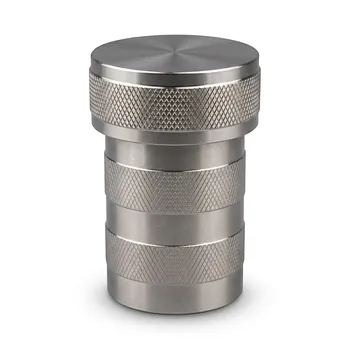
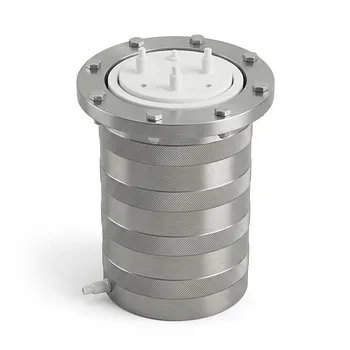
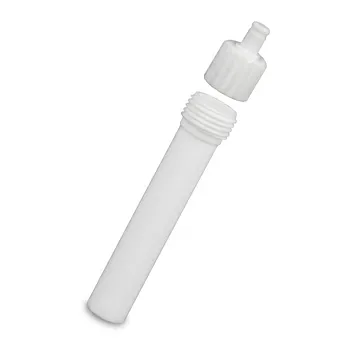
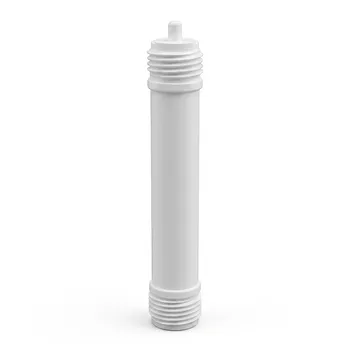
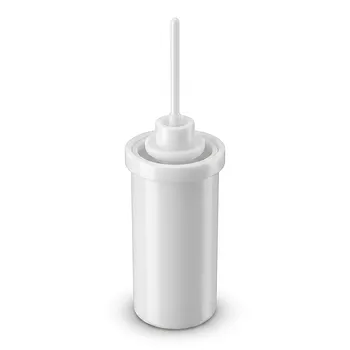
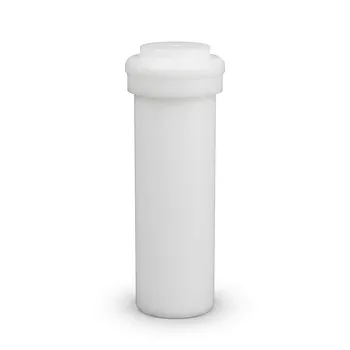
To fix the root cause, you need a vessel that acts as a perfect thermal and chemical insulator. This is where the quality of your Hydrothermal Synthesis Liner becomes the deciding factor in your research success.
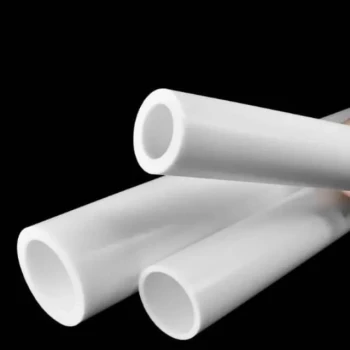
At KINTEK, we don't view a PTFE or PFA liner as a mere consumable; we view it as a precision instrument. Our liners are engineered to ensure that the "Thermal Engine" described above functions flawlessly:
- Thermal Stability: Our high-purity PTFE and PFA materials are designed to withstand the internal pressures required to keep precursors in solution while maintaining the temperature differential necessary for convective transport.
- Zero Contamination: Using trace-analysis grade PFA and high-precision CNC fabrication, we eliminate the risk of "leachables" that can poison your crystal growth and ruin purity.
- Precision Geometry: Because we use advanced CNC machining rather than standard molding, our liners provide a consistent wall thickness. This ensures uniform heat transfer from the autoclave wall to the internal fluid, preventing the "cold spots" that disrupt convective loops.
Beyond the Fix: Unlocking New Morphologies
When you master the internal environment of your reactor, you move from "trial and error" to "designed synthesis." Solving the stability problem doesn't just give you better crystals; it opens the door to possibilities that were previously out of reach.
With a stable, high-precision environment, you can begin to fine-tune reaction parameters to achieve specific, complex morphologies—nanoparticles with exact diameters, hollow spheres for drug delivery, or high-aspect-ratio nanowires for the next generation of battery anodes. You gain the ability to replicate results across dozens of batches, a requirement for any industrial-scale application in the semiconductor or chemical sectors.
Whether you are working on a specialized prototype for a new catalyst or scaling up production for industrial research, the integrity of your labware is the foundation of your data.
Is an inconsistent hydrothermal process holding back your research? At KINTEK, we specialize in translating complex technical requirements into high-precision PTFE and PFA solutions that stand up to the most demanding chemical environments. Contact Our Experts today to discuss how our custom CNC fabrication and high-purity labware can bring stability and precision to your next project.
Related Products
- High Temperature Corrosion Resistant Hydrothermal Synthesis Reactor with TFM Inner Liner and Straight Cylinder Design
- PTFE Lined High Pressure Digestion Vessel 50ml High Temperature Hydrothermal Synthesis Tank
- Custom TFM Reaction Vessel with Stainless Steel Jacket and PTFE Inner Cup for High Corrosion Resistance
- High Pressure Custom TFM Reactor Stainless Steel Outer Vessel PTFE Inner Cup for Corrosive Synthesis
- High Purity PTFE Microwave Digestion Vessel Replacement Liner for Acid Sample Preparation and Trace Analysis
Related Articles
- Why Your Hydrothermal Crystal Growth is Inconsistent—And How to Achieve Tailored Morphologies Every Time
- Why the "Inner-Outer" Synergy is the Secret to Flawless Hydrothermal Synthesis
- Why Your Advanced Materials Are Failing in the Lab—And How Hydrothermal Synthesis Resets the Standard
- Why Your Hydrothermal Synthesis Results Are Inconsistent—And How the "Dual-Shell" Design Fixes It
- Why Your Hydrothermal Synthesis Results Are Inconsistent—and How to Master the Pressure