High-Purity PFA Sampling Bottles for Contamination-Controlled Semiconductor and Trace Analysis Workflows
In semiconductor manufacturing and ultra-trace analytical laboratories, a sample bottle is not merely a storage accessory. It is part of the contamination-control strategy. The container selected for a reagent, rinse solution, process sample, or reference standard can influence particle load, ionic background, analyte recovery, and the repeatability of downstream measurement. When workflows involve aggressive acids, oxidizers, high-purity solvents, or analytes measured at extremely low concentrations, common containers may introduce unacceptable uncertainty through extractables, adsorption, poor chemical resistance, or surface defects.
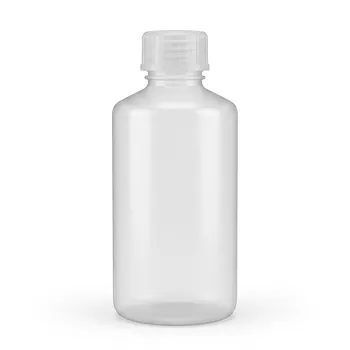
KINTEK semiconductor-grade high-purity PFA sampling bottles are engineered for applications where chemical purity and sample integrity must be maintained from filling through transport, storage, and analysis. Made from high-performance perfluoroalkoxy alkane (PFA), these bottles combine the chemical resistance associated with fluoropolymers with a smooth, nonporous fluid-contact surface suitable for demanding high-purity handling tasks. They are intended for laboratories, semiconductor facilities, research groups, and chemical-processing teams that require a more controlled alternative for contamination-sensitive fluids.
Why PFA Matters in High-Purity Chemical Handling
PFA is a fully fluorinated thermoplastic with a molecular structure that provides exceptional resistance to a broad range of corrosive chemicals. Its carbon-fluorine bonds are highly stable, helping the material resist chemical attack in environments that quickly degrade many conventional plastics. This makes PFA particularly relevant for high-purity applications involving acids, bases, oxidizing solutions, organic solvents, and specialty process chemicals, subject to verification for the specific chemical, concentration, temperature, exposure duration, and operating conditions.
For semiconductor and trace-analysis work, the benefit is not limited to chemical durability. PFA is widely valued because its inert surface can help minimize interactions between the container and its contents. A chemically compatible bottle helps reduce the risk that a fluid will attack the container, while a smooth fluoropolymer contact surface helps limit sites where residues or particles can be retained. Together, these properties support cleaner handling procedures and more consistent results across repeated sampling and analysis cycles.
Compared with many general-purpose containers, a PFA bottle can offer meaningful advantages when the purity of the fluid is as important as its volume. High-purity reagents may be compromised by trace metal ions, organic compounds, or particulate matter introduced during storage or transfer. In elemental analysis, even very small contamination contributions can affect a blank, shift a calibration result, or obscure the true concentration of the analyte under investigation. In semiconductor processing, contamination may affect process control and wafer yield. Selecting a suitable fluoropolymer container is therefore a practical step toward maintaining disciplined material control throughout the workflow.
Supporting Ultra-Pure Reagent Storage and Sampling
KINTEK PFA sampling bottles are suited to the controlled storage and collection of ultra-pure reagents, process liquids, prepared standards, cleaning solutions, and analytical samples. Their purpose is to help preserve the condition of a liquid after it leaves its original source and before it reaches the next stage of testing, preparation, or use.
Typical uses include:
- Storage of ultra-pure acids, bases, and other high-purity laboratory reagents
- Collection of process-liquid samples for quality control and contamination investigation
- Preparation and storage of trace-analysis standards, blanks, and digested samples
- Sampling of etchants, cleaning chemicals, and specialty fluids used in semiconductor-related processes
- Storage of rinse solutions for cleaning-sensitive components and laboratory vessels
- Transport of corrosion-sensitive samples between cleanroom, production, and analytical laboratory areas
- Retention of reference samples for comparison, troubleshooting, and batch documentation
- Controlled handling of liquids used in environmental, materials, geochemical, pharmaceutical, and chemical research laboratories
The right sampling bottle helps establish consistency between sampling events. When every container is chemically appropriate, cleanable, and suited to a low-contamination handling procedure, operators can reduce one avoidable source of variability. That consistency matters whether a laboratory is investigating sub-trace impurities, checking incoming chemical quality, monitoring a process bath, or preserving a sample for later confirmation.
Smooth Interior Surfaces and Reduced Retention Risk
Surface condition is a central consideration in high-purity liquid handling. Internal scratches, rough areas, seams, or difficult-to-clean geometries can retain residues and create locations where contaminants may accumulate. Smooth PFA contact surfaces support thorough rinsing and cleaning, helping users develop repeatable bottle preparation procedures before use. A cleaner, more uniform wetted surface also helps reduce the chance that residues from a previous liquid-handling step will affect a subsequent sample.
This is particularly important when moving between samples with different analyte levels or chemical matrices. For example, a bottle used to hold a concentrated reagent or sample may require a validated cleaning and conditioning process before it is used in a low-level trace-analysis workflow. PFA's chemical resistance allows it to be incorporated into robust cleaning protocols compatible with the material and the laboratory's procedures. Actual cleaning effectiveness depends on the contaminant, cleaning chemistry, water quality, handling environment, and validation method, so users should establish procedures appropriate to their analytical requirements.
The smooth interior is also useful for practical handling. It supports draining and rinsing, while the chemically inert character of PFA makes the bottle suitable for demanding fluids that could discolor, embrittle, or degrade less capable plastics. This combination contributes to a durable reusable vessel for controlled laboratory and process use.
Low-Leachable Materials for Trace-Level Confidence
In contamination-sensitive operations, every wetted material should be considered a potential source of background contribution. Metallic ions and organic extractables can be introduced by unsuitable materials, additives, pigments, metal springs, or poorly controlled contact components. For that reason, high-purity workflow design often favors fluoropolymer surfaces in direct contact with aggressive or ultra-clean process fluids.
PFA is recognized for low contamination potential relative to many commonly used container materials. By using a fluoropolymer bottle with appropriate material selection and controlled handling, laboratories can reduce the likelihood that the container becomes a significant contributor to the measured background. This helps users protect the integrity of blanks, standards, samples, and high-purity reagents.
However, low contamination performance is achieved through the complete system, not the polymer alone. Bottle cleaning, closure handling, filling technique, environmental cleanliness, chemical source purity, operator practices, and storage conditions all matter. KINTEK recommends that users qualify bottles within their own process, especially for semiconductor-grade or ultra-trace applications with stringent impurity thresholds. Incoming inspection, blank testing, rinse verification, and documented cleaning procedures remain valuable components of a reliable quality program.
Chemical Resistance for Demanding Reagents
PFA sampling bottles are designed for high chemical resistance, making them appropriate candidates for many corrosive and high-purity reagent applications. Their fluoropolymer construction can provide a longer service life than conventional containers when exposed to challenging chemistries. This can improve operational continuity by reducing the frequency of container replacement caused by chemical attack or stress degradation.
Chemical compatibility should always be confirmed before use. Performance can change with factors such as reagent concentration, temperature, internal pressure, exposure duration, fluid purity requirements, and mechanical loading. The bottle body, cap, seal, and any auxiliary components should all be evaluated as a complete assembly. Users should also avoid overfilling, unintended pressure buildup, incompatible sterilization or cleaning conditions, and storage practices that exceed the product's intended limits.
For highly aggressive, oxidizing, temperature-sensitive, or proprietary formulations, KINTEK can assist in evaluating the product configuration and material approach against the stated application. Providing the chemical name, concentration, target temperature, expected contact time, fill volume, and cleanliness objective enables a more useful technical discussion.
Reliable Handling Across the Sample Lifecycle
A high-purity container must perform through more than one moment of use. It must remain suitable during filling, capping, labeling, storage, transport, dispensing, rinsing, and reuse. PFA's combination of toughness, flexibility, and chemical stability makes it well suited to repeated laboratory handling when used within the applicable operating conditions.
During sampling, the bottle provides a chemically compatible destination for the collected liquid. During storage, it helps isolate the sample from contact with less suitable container surfaces. During transport, a properly closed and secured bottle helps maintain sample identification and minimize exposure to the surrounding environment. During dispensing or subsampling, the material's smooth wetted surface supports a controlled transfer process. After use, the bottle can be cleaned and conditioned according to the laboratory's validated procedure for its next assignment.
This lifecycle perspective is useful when standardizing procedures across multiple departments or sites. A consistent bottle platform can simplify training, documentation, inventory management, and method development. It may also make it easier to establish defined protocols for cleaning, labeling, chain of custody, and sample retention.
Relevance to Semiconductor Manufacturing
Semiconductor manufacturing depends on exceptionally clean chemical handling. Process chemicals, cleaning solutions, etchants, and analytical samples can be affected by trace contaminants that would be insignificant in many other industrial settings. Metallic contamination, particles, and residual chemicals may all have consequences for process control, device performance, and yield.
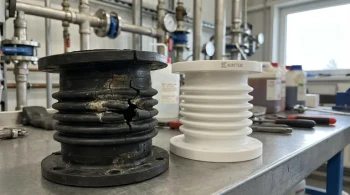
Fluoropolymers such as PFA and PTFE are commonly selected in high-purity fluid systems because of their inertness and low extractables. In related process hardware, machined virgin PTFE components can support low-dead-volume, crevice-conscious connections that help reduce retained fluid and particle-generation opportunities. Their thermal stability can also be valuable where process equipment experiences temperature changes. KINTEK's PFA sampling bottles complement this broader fluoropolymer approach by providing a suitable vessel for taking, retaining, and moving critical liquids within a contamination-aware workflow.
For semiconductor-related sampling, the goal is not simply to select a bottle labeled as high purity. The goal is to align the bottle design, preparation process, closure system, handling method, and analytical validation with the contamination-control requirements of the specific operation. KINTEK works from this practical perspective, helping customers identify fluoropolymer solutions that match their actual fluid, process, and operational constraints.
Benefits for Trace Elemental Analysis
Trace elemental analysis requires control over background contamination. In techniques such as ICP-MS, ICP-OES, and related methods, the quality of the container and the cleaning procedure can influence blanks, detection confidence, and the credibility of reported results. A chemically inert PFA sampling bottle is often a strong choice for applications involving trace metals and aggressive sample matrices because it helps avoid the limitations of containers that may contribute metallic ions or interact with the contents.
PFA bottles can be used throughout sample preparation and retention workflows, including the storage of high-purity acids, prepared calibration solutions, procedural blanks, digested samples, and field or process samples. They are also useful for controlled rinse and conditioning steps when laboratories need to maintain a consistent fluoropolymer-based handling environment.
The practical advantages include:
- Better alignment with low-contamination sample-handling protocols
- Strong resistance to many corrosive reagents used in preparation and digestion workflows
- Smooth wetted surfaces that support rinsing and cleaning routines
- Reduced concern about container degradation during storage of compatible chemicals
- A durable, reusable format for repeated laboratory use
- Material continuity with other PTFE and PFA equipment used in high-purity workflows
Results still depend on method validation. Laboratories should establish bottle-specific blank levels, evaluate analyte recovery where relevant, and confirm that cleaning and storage procedures meet their own detection-limit and quality-control targets. KINTEK's products are designed to support these efforts, not to replace the validation discipline required by a high-quality analytical method.
Choosing the Right Bottle Configuration
The optimal PFA sampling bottle depends on how it will be used. Volume, neck geometry, closure style, filling method, storage duration, and cleaning procedure all influence the preferred configuration. A bottle used for routine reagent storage may require different features from one used for low-volume sample collection, high-frequency process monitoring, or long-term retention of critical reference samples.
Before selecting a configuration, consider the following questions:
- What chemical or sample matrix will contact the bottle?
- What purity level or target contaminant limit is required?
- What volume is needed for sampling, testing, repeat analysis, and retained aliquots?
- Will the bottle be used for storage, transport, dispensing, or all three?
- Does the application require a particular opening size, closure design, or filling method?
- What cleaning, rinsing, drying, and conditioning procedure will be used?
- Are there temperature, pressure, cleanroom, packaging, or labeling requirements?
- Is a standard bottle sufficient, or does the workflow require a custom fluoropolymer component or integrated assembly?
Answering these questions early helps avoid an ill-suited container choice and supports a more efficient qualification process. It also gives KINTEK the information needed to recommend a more relevant product approach.
Custom Fluoropolymer Capability from KINTEK
KINTEK is exclusively dedicated to high-performance PTFE and PFA laboratory products. Beyond standard labware, our manufacturing capability includes end-to-end fluoropolymer CNC machining for non-standard parts, specialized liquid-handling components, and bespoke laboratory setups. This background allows us to support customers whose high-purity sampling requirements extend beyond an off-the-shelf bottle.
For a specialized project, we can discuss custom dimensions, capacity requirements, neck and opening geometry, closures, fluid-transfer interfaces, labels or identification provisions, and compatibility with surrounding PTFE/PFA tubing, fittings, valves, cleaning tanks, or sample-preparation equipment. Customers managing high-volume procurement can also discuss scalable supply requirements and standardized configurations across their operation.
A custom solution is especially valuable when a workflow has constraints that standard containers do not address well. These may include restricted installation space, unusual fill or drain arrangements, specific sample volumes, integration with existing fluid-transfer hardware, or a need to reduce unnecessary fluid hold-up in an assembly. Our fluoropolymer engineering and machining capability helps translate those process requirements into practical, manufacturable components.
Build a More Controlled Sampling Process
High-purity sampling is strongest when the vessel is treated as one part of a documented process. Use clean handling practices, assign bottles by chemical family or analytical purpose where appropriate, follow validated cleaning procedures, and maintain clear sample identification. Confirm chemical compatibility and performance under actual operating conditions before bringing a new bottle configuration into a critical workflow.
KINTEK can help you select high-purity PFA sampling bottles and related PTFE/PFA equipment for semiconductor, ultra-trace, and corrosive chemical applications. For technical guidance, standard-product availability, high-volume requirements, or a custom bottle and fluid-handling solution, contact our team. Share your chemical, target purity, bottle volume, operating conditions, and any dimensional or integration requirements so we can provide a focused recommendation.