KINTEK filtration consumables support laboratories and process teams working with corrosive chemicals, trace-level samples, particulate monitoring, and high-purity liquids. Our fluoropolymer portfolio includes PTFE vacuum filters with integrated sieve plates, 47 mm membrane filter holders, aerosol and particulate sampling holders, large-diameter water-quality filter holders, and custom PTFE filtration assemblies with PFA valve connections. Built for chemical resistance and clean sample contact, these components help environmental, semiconductor, pharmaceutical, chemical-processing, and research users collect, clarify, and transfer samples with confidence.
Toggle Categories
Get Instant Support
Choose your preferred way to connect with our team
Response Time
Within 8 hours on working days, 24 hours on holidays
Filtration Consumables
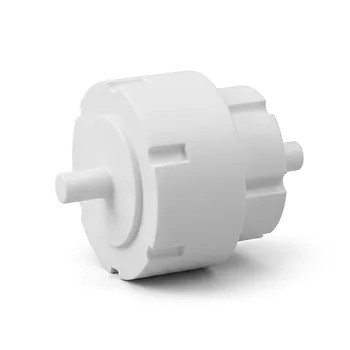
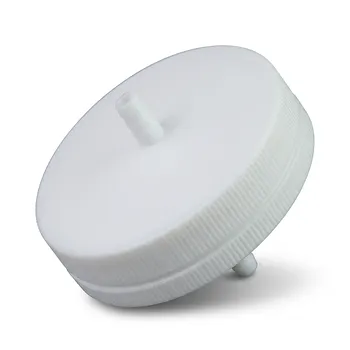
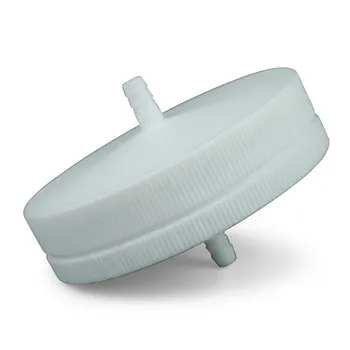
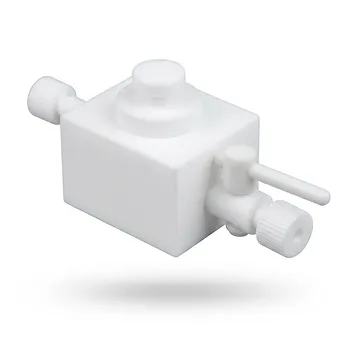
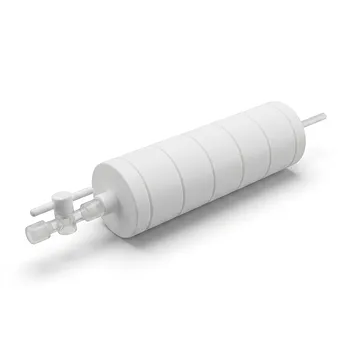
PTFE Corrosion Resistant Filter with PFA Valve Connections and Integrated Sieve Plate
Item Number: PL-CP398
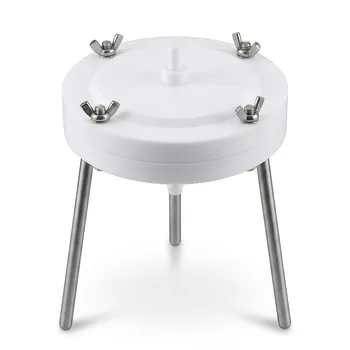
PTFE and PFA Filtration Consumables for Clean, Corrosion-Resistant Sample Handling
Filtration is often treated as a routine laboratory step, but in high-purity and chemically aggressive applications, the filter assembly can directly influence the reliability of the result. A holder that leaks, sheds particles, reacts with the sample, retains contaminants, or cannot tolerate the cleaning chemistry may compromise an entire workflow. KINTEK fluoropolymer filtration consumables are designed for laboratories and industrial users that need dependable filtration hardware where conventional metal, glass, or general-purpose plastic components may be unsuitable.
Our PTFE and PFA filtration solutions are used to support water-quality analysis, environmental sampling, aerosol and particulate-matter collection, chemical processing, semiconductor wet-process work, pharmaceutical development, trace-element analysis, and research involving aggressive acids, alkalis, solvents, or reactive reagents. By combining the inherent chemical resistance of high-performance fluoropolymers with practical mechanical design, we provide filtration hardware intended to protect both the sample and the operator's process.
A filtration portfolio built around real laboratory requirements
KINTEK offers a focused range of fluoropolymer filtration consumables and assemblies that can be selected or engineered around membrane size, sample type, connection method, flow path, and operating conditions.
- PTFE vacuum filters with integrated sieve plates provide a stable support platform for membrane filtration. They are suitable where vacuum-assisted filtration is needed for liquid clarification, residue collection, water-quality testing, or preparation of samples for subsequent analysis.
- 47 mm PTFE membrane filter holders are a practical format for common laboratory membrane filtration workflows. Their controlled clamping and sealing arrangement helps users handle corrosive liquid or gas samples while maintaining a defined sample-contact path.
- PTFE holders for aerosol and particulate sampling support air-quality monitoring and low-concentration particulate collection. They can be integrated with compatible vacuum-pump sampling arrangements for controlled passage of air through a selected membrane.
- Large-diameter PTFE water-quality filter holders, including designs for 142 mm membranes and approximately 202 mm body diameters, support higher-throughput filtration and larger sample volumes in environmental and industrial laboratories.
- Custom PTFE filtration systems can combine filter bodies, sieve plates, ports, valve interfaces, brackets, and PFA connections into a single assembly for specialized liquid-processing or high-purity sampling operations.
- PTFE filters with PFA valve connections give users a fluoropolymer-based fluid path with convenient control over inlet, outlet, isolation, and drainage positions. These configurations are particularly useful where frequent handling of corrosive media calls for reliable, compatible connections.
The right product depends on more than membrane diameter. Flow rate, vacuum level, particle loading, chemical compatibility, dead volume, cleaning requirements, sample-volume targets, mounting space, and connection standards all affect the best configuration. Our team can help translate these operating details into a filtration solution that is appropriate for the intended process.
Why fluoropolymers matter in demanding filtration work
PTFE and PFA are widely chosen for analytical and chemical-handling environments because they offer a rare combination of broad chemical resistance, low surface energy, thermal stability, and cleanliness potential. In a filtration assembly, these characteristics can be especially valuable because the holder, seal surfaces, valves, and supporting components remain in close contact with the sample before the sample reaches its next analytical or process step.
PTFE is valued for exceptional inertness across a wide range of acids, bases, solvents, and other challenging media. Its low-friction, low-surface-energy character can also help reduce unwanted interaction between the wetted component and many process liquids. PTFE is an effective material choice for filter bodies, support plates, housings, and custom-machined parts where chemical exposure would quickly degrade many ordinary plastics or corrode metals.
PFA combines fluoropolymer chemical resistance with useful properties for fluid-handling components and valve connections. PFA parts can be incorporated where a durable, high-purity-compatible connection or valve interface is needed. By keeping wetted surfaces within a fluoropolymer material family, users can simplify compatibility decisions and reduce the need to introduce dissimilar materials into an aggressive process stream.
Material compatibility should always be confirmed for the full process condition, including chemical concentration, temperature, pressure or vacuum, exposure duration, cleaning method, and the membrane selected. KINTEK can advise on construction options based on the details of your media and workflow.
How membrane filtration assemblies work
A membrane filtration system separates particulate matter from a liquid or gas stream by directing that stream through a porous membrane. Material larger than the membrane pore size is retained on the upstream face or within the membrane structure, while the filtered liquid or gas proceeds downstream. The membrane is the primary separation medium, but the holder is what makes the process controlled, repeatable, and suitable for the application.
In a typical liquid-filtration setup, the sample is introduced into an upper chamber or inlet section. The membrane is positioned across a supporting surface, frequently a sieve plate or perforated support plate. A sealing interface clamps the membrane so that the sample is directed through the active membrane area rather than bypassing around the edge. Vacuum applied downstream can create the pressure differential that draws liquid through the membrane, while gravity or positive pressure may be used in other designs.
The integrated sieve plate has an important mechanical role. It supports the membrane under differential pressure and distributes the load across its surface. Proper support helps reduce the likelihood of membrane distortion, tearing, or collapse, particularly when filtering larger volumes, viscous samples, or suspensions with substantial particle loading. The support geometry must also allow adequate fluid movement after filtration; an overly restrictive support can limit throughput, while an inadequate one can affect membrane stability.
For gas and aerosol sampling, a vacuum pump draws a measured or controlled volume of air through the membrane held in the PTFE assembly. Particulate matter is collected on the membrane for later gravimetric, microscopic, chemical, or elemental analysis. Consistent sealing and a chemically compatible flow path are essential because low-concentration monitoring can be sensitive to leakage, external contamination, and loss of collected material.
In water-quality monitoring, membrane filtration can be used to separate suspended solids, prepare samples for downstream instrumental analysis, evaluate particulate content, or collect residues for examination. Large-diameter holders enable greater membrane area, which can be useful for larger sample volumes or samples that would rapidly block a smaller filtration surface. The optimum diameter and membrane specification should be based on sample turbidity, expected solids loading, required filtration time, and the analytical method that follows.
Benefits of PTFE filtration holders and custom systems
The most valuable filtration hardware is not simply resistant to a single reagent. It must deliver controlled assembly, repeatable sealing, suitable membrane support, maintainable construction, and a sample-contact path compatible with the broader laboratory process. KINTEK designs fluoropolymer filtration consumables around these practical requirements.
Resistance to corrosive media is a central benefit. Acidic, alkaline, oxidizing, and solvent-based samples can be difficult for stainless steel, aluminum, brass, and many common plastics. PTFE and PFA components are often selected where material degradation, corrosion products, swelling, or chemical attack could affect service life and sample quality. This makes fluoropolymer holders particularly relevant in chemical laboratories, semiconductor facilities, surface-treatment operations, and environmental testing workflows involving preserved or treated samples.
Cleaner sample-contact surfaces help support high-purity work. When trace analysis, semiconductor chemistry, or low-level particulate sampling is involved, users need to control every potential source of contamination. Fluoropolymer construction offers a chemically inert contact surface that can be incorporated into a carefully managed sample-preparation process. Actual blank performance depends on the full workflow, including membrane choice, cleaning method, environment, reagents, and handling practices, but choosing appropriate holder materials is an important first step.
Leak-resistant membrane clamping improves process consistency. A properly designed holder creates a controlled seal around the membrane edge, helping ensure that the sample travels through the selected membrane rather than around it. This is critical for particle retention, volume-based sampling, and reproducible filtration. It also helps operators work with vacuum systems more confidently and reduces avoidable sample loss.
Robust membrane support enables more reliable vacuum filtration. Integrated sieve plates support the membrane during operation and help maintain the intended filtration area. The plate pattern, thickness, and support arrangement can be tailored for membrane size, flow demand, and mechanical loading. In custom systems, the support component can be engineered alongside the housing and connection geometry rather than treated as an afterthought.
Broad membrane-format support allows filtration systems to fit established methods and laboratory inventory. The 47 mm holder format is well suited to many routine sampling and analytical procedures, while larger holders accommodate larger membranes and higher-volume work. KINTEK can also develop non-standard dimensions where the required membrane, fixture, or workflow does not match catalog hardware.
Integrated fluid-control options make specialized systems easier to operate. PFA valve connections can be incorporated to manage sample feed, vacuum connection, venting, rinsing, draining, or transfer between process stages. An integrated assembly can reduce the number of separate adapters and transitions in a setup, simplifying installation while keeping chemical-contact materials aligned with the application.
Long service potential in harsh environments can reduce replacement frequency and downtime. The appropriate fluoropolymer design can withstand repeated exposure and cleaning more effectively than less compatible materials. Service life still depends on mechanical handling, operating limits, temperature, chemical conditions, and maintenance, but a purpose-built PTFE/PFA assembly gives users a strong foundation for demanding work.
Applications across environmental, analytical, and industrial sectors
Environmental laboratories require reliable filtration during water and air monitoring because sample matrices can vary widely and the resulting data can inform compliance decisions, remediation efforts, and public-health programs. PTFE membrane holders support preparation of water samples, collection of suspended matter, and aerosol sampling where chemically resistant hardware is required. For low-concentration particulate monitoring, controlled air flow, secure membrane positioning, and clean handling are all essential parts of a credible sampling process.
In industrial water-quality testing, filtration can be needed before instrumental analysis, during process troubleshooting, or when assessing solids in incoming water, wastewater, rinse solutions, and specialty process fluids. Large-diameter filtration holders can assist users managing larger volumes or heavily loaded samples. PTFE construction is especially relevant where the water stream contains acids, alkalis, treatment chemicals, or other media that are challenging for standard housings.
Semiconductor and electronics manufacturing environments often demand stringent control of chemical purity and particle contamination. Wet-process chemicals, high-purity acids, and rinse fluids require components that can tolerate aggressive chemistry while fitting disciplined contamination-control procedures. Custom PTFE filtration assemblies with fluoropolymer valve connections can be configured for specialized sampling, transfer, or filtration stages within laboratory and process-support workflows.
Pharmaceutical, biotechnology, and specialty chemical teams may use filtration for clarification, particulate control, sample preparation, or materials evaluation. Although application requirements and regulatory expectations vary, the key hardware questions remain consistent: Is the wetted path compatible with the media? Can the holder be assembled and cleaned consistently? Does it support the required membrane and volume? Is it designed to minimize avoidable retention and leakage? KINTEK works from these operational questions to develop suitable fluoropolymer components.
Research laboratories frequently face the opposite problem of standard production: the experiment does not fit the catalog. A novel reactor sample, unusual membrane diameter, high-solids suspension, restricted enclosure, non-standard tubing size, or multi-step acid-cleaning procedure may make an off-the-shelf holder impractical. Our custom CNC machining capability is intended for exactly these circumstances.
Custom engineering from a filtration requirement to a usable assembly
KINTEK is exclusively focused on high-performance fluoropolymer laboratory products. We manufacture PTFE and PFA labware, fluid-transfer components, sample-preparation tools, custom reaction apparatus, and machined parts, giving us a practical understanding of how filtration systems connect to the rest of a laboratory workflow. Rather than offering only a generic holder, we can help develop a complete fluoropolymer filtration assembly around your actual use case.
Customizable parameters may include:
- Membrane diameter, active filtration area, and required support-plate geometry
- PTFE or PFA material selection for relevant components
- Inlet, outlet, vacuum, vent, drain, and rinse-port locations
- PFA valve types and connection arrangements
- Tubing dimensions, thread standards, fittings, and adapter requirements
- Body size, wall thickness, mounting features, and laboratory-space constraints
- Sample volume, anticipated flow rate, solids loading, and vacuum or pressure conditions
- Sealing approach and ease-of-disassembly requirements
- Compatibility with existing pumps, manifolds, collection vessels, and sample-preparation equipment
- Cleaning, storage, and repeat-use expectations
A successful custom design starts with enough information to identify the true constraints. When contacting us, it is useful to provide the chemical media, concentration range, operating temperature, anticipated pressure or vacuum, membrane material and pore size, desired membrane diameter, flow direction, sample volume, connection details, and any available drawing or photograph of the current setup. We can then evaluate the functional requirements and propose a PTFE/PFA configuration suited to the task.
For larger procurement programs, custom design can also support standardization. A laboratory network, production site, or OEM may need several sizes of related holders with consistent connection logic, materials, labeling, and cleaning practices. KINTEK can support both specialized prototypes and higher-volume fluoropolymer component orders, helping customers move from a one-off requirement to a repeatable equipment platform.
Selecting the right filtration consumable
Start by defining the analytical or process objective. If the goal is collecting particulate matter from air, select a holder designed for stable membrane retention and connection to the required vacuum-sampling arrangement. If the goal is filtering a corrosive liquid before analysis, prioritize chemical compatibility, seal integrity, membrane support, and the sample-volume requirement. If the process involves larger water volumes or high particulate loading, consider a larger membrane diameter and filtration area to avoid premature blockage.
Next, examine the membrane. The holder must fit the membrane diameter, but the membrane material and pore size must match the separation requirement. PTFE membranes are frequently selected for chemical resistance and demanding media, while other membrane materials may be appropriate for specific aqueous, biological, or analytical methods. Verify that the holder's support plate, seal design, and operating mode are suitable for the membrane manufacturer's guidance.
Then assess system integration. Confirm the type of pump, tubing, fittings, collection vessel, valve, and mounting arrangement already present in the laboratory. A well-designed custom PTFE assembly should simplify the working setup rather than force users to rely on unnecessary adapters. The most efficient configuration is one that fits the full process from sample introduction through filtrate or residue collection.
Finally, account for cleaning and handling. High-purity applications depend on more than material selection. Establishing appropriate cleaning, rinsing, drying, storage, and handling procedures helps maintain the performance of the entire filtration workflow. Components should be disassembled and maintained according to their specific design and operating requirements.
Work with KINTEK on your filtration setup
Whether you need a standard 47 mm PTFE membrane holder, a corrosion-resistant water-quality filter, a vacuum filter with an integrated sieve plate, an aerosol sampling component, or a fully custom PTFE/PFA filtration system, KINTEK can help you specify the right solution. Our experience in fluoropolymer materials and end-to-end custom CNC machining enables us to address complex dimensions, specialized ports, non-standard connections, and application-specific assemblies.
Tell us what you are filtering, the membrane format you use, the chemical and operating conditions, and how the unit must connect to your existing equipment. We will help turn those requirements into a practical, high-performance fluoropolymer filtration component or complete assembly. Contact KINTEK's team to discuss your project, request technical guidance, or obtain a quotation for standard and customized PTFE/PFA filtration consumables.
REQUEST A QUOTE
Our professional team will reply to you within one business day. Please feel free to contact us!
Related Articles
Why Your RDE Data Isn’t Following the Levich Equation—And How the Shroud Fixes It
Struggling with inconsistent RDE results? Learn how the precision of your PTFE shroud dictates hydrodynamic stability and why it's the key to accurate Levich plots.
Read more
Why Critical Aerospace Systems Fail in Extreme Conditions—and the Material Strategy That Prevents It
Discover why standard materials fail in aerospace environments and how high-precision PTFE components solve thermal, chemical, and vacuum challenges.
Read more
Why Your PTFE Microfluidic Chips Leak—and the Fabrication Secrets to a Perfect Seal
Stop struggling with leaky PTFE microchannels. Learn why standard bonding fails and how precision CNC machining and thermal sealing unlock chemical-resistant microfluidics.
Read more
Why Your PTFE Valves Leak at High Temperatures—and How to Master the "Creep" Factor
Discover the real-world temperature and pressure limits of PTFE valves. Learn why "cold flow" causes leaks and how precision engineering solves it.
Read more
Why Your High-Purity Fluid Systems Keep Failing: The Hidden Culprit in Your Connectors
Discover why standard fluid connectors fail in corrosive environments and how precision-machined PTFE components ensure leak-free, high-purity performance.
Read more
The Hidden Culprit Behind Batch Contamination: Why Your Sterilization Protocol Might Not Be Enough
Discover how high-precision PTFE valves eliminate leaching and cross-contamination in pharma and biotech, ensuring USP Class VI compliance and process purity.
Read more
Why Your Samples Stick and Your Valves Jam: Solving Laboratory Inefficiencies Through Surface Science
Discover how PTFE’s low friction coefficient (0.05–0.10) and non-stick properties prevent sample loss, contamination, and mechanical failure in high-precision labs.
Read more
The Hidden Physics of Leak-Proof Experiments: Why Over-Tightening Won't Save Your PTFE Seals
Stop fighting leaks with a wrench. Discover the fundamental science of PTFE sealing—from viscoelasticity to self-energization—to ensure reliability in your high-pressure lab applications.
Read more
The Invisible Yield Killer: Why Standard Fluid Components Are Compromising Your Semiconductor Purity
Discover why microscopic contamination in fluid paths ruins semiconductor yields and how precision-engineered PTFE components provide the PPT-level purity required.
Read more
The Invisible Creep: Why Your PTFE Battery Clamps Fail and How to Achieve Perfect Contact
Discover why over-tightening PTFE battery fixtures leads to material creep and data inaccuracy, and learn the engineering balance for stable electrochemical testing.
Read more
Beyond the Bolt: Why Your Flange Leaks Are a Material Science Problem, Not a Mechanical One
Tired of recurring flange leaks? Discover the hidden material failure causing them and how ePTFE gaskets provide a permanent solution for equipment reliability.
Read more

When "Chemically Inert" Isn't Enough: The Hidden Cause of PTFE Component Failure
Discover why standard PTFE components fail in critical applications, even with 'safe' chemicals. Learn the hidden role of fabrication quality and how to prevent costly downtime.
Read more
Why 'Medical-Grade' Isn't Enough: The Hidden Risk in Your PTFE Components
Generic 'medical-grade' PTFE poses hidden risks. Discover why material purity and manufacturing precision are the real keys to device safety.
Read more
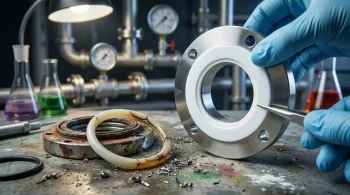
When 'Tougher' Isn't Enough: The Hidden Reason Your Industrial Components Are Failing
Discover why conventional materials fail under combined stress and how PTFE components provide a definitive solution for chemical, thermal, and friction challenges.
Read more
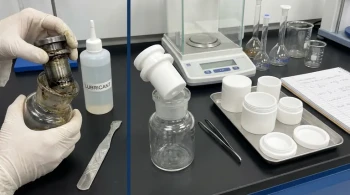
Why Your Lab Plugs Stick and Contaminate: The Hidden Science of Surface Energy
Frustrated with seized plugs and failed experiments? Learn the hidden physics of surface energy and why precision PTFE components are the definitive solution.
Read more

The Unseen Guardian: How PTFE's Molecular Shield Protects Our Most Critical Systems
An engineer's look at PTFE's chemical inertness and thermal stability, and why precision fabrication is key to its reliability.
Read more
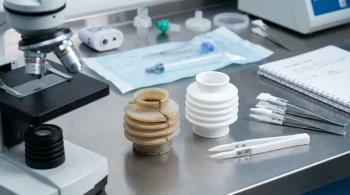
Why Your Medical Device Components Fail Under Stress—And What to Do About It
Tired of component failures in medical devices? Discover why common elastomers fail under combined stress and how precision PTFE offers a permanent solution.
Read more

The Asymmetric Cost of Failure: Why Precision PTFE Is Your Last Line of Defense
Learn how PTFE components save money not by being reusable, but by preventing catastrophic analytical failures and mitigating invisible financial risks.
Read more
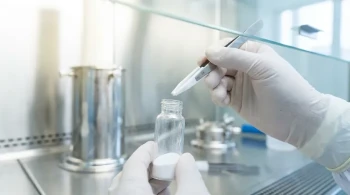
The Silent Thief: How Component Surfaces Dictate Pharmaceutical Profitability
Discover how PTFE's unique material properties in components combat product loss and contamination, directly boosting pharmaceutical yield and purity.
Read more
The PTFE Paradox: Why Using Less of This 'Miracle' Material Unlocks More Performance
Stop costly design failures. Discover why PTFE's true power isn't as a structural material, but as a precision surface component that solves friction.
Read more