The High Cost of the "Last Drop"
Have you ever watched a critical, high-purity reagent cling stubbornly to the side of a beaker, refusing to transfer to your titration flask? Or perhaps you’ve experienced the frustration of a magnetic stirrer that "jitters" rather than rotates smoothly, or a stopcock that requires excessive force to turn, leading to a sudden, messy leak.
These aren't just minor laboratory annoyances. In sectors like semiconductor research, battery testing, and trace analysis, these physical "hiccups" translate directly into compromised data, lost samples, and project delays. When your equipment works against you, the integrity of your entire workflow is at risk.
The Common Struggle: Fighting the Surface
When faced with sample adhesion or mechanical resistance, many researchers default to "workaround" solutions. They might use aggressive solvent washes to recover residues, employ manual scraping that introduces micro-scratches into the labware, or apply lubricants to moving parts that can leach contaminants into the chemistry.
These traditional fixes often create more problems than they solve. Aggressive cleaning accelerates the wear and tear of labware, while manual intervention increases the risk of cross-contamination. From a business perspective, these struggles manifest as rising consumable costs, increased labor hours spent on cleaning, and the high price of "starting over" when an experiment fails due to a jammed valve or a contaminated sample.
The Root of the Problem: Surface Energy and "Stick-Slip"
To understand why these failures happen, we have to look at the physics of the interface. Most materials have relatively high surface energy, meaning they "want" to bond with the liquids or solids that touch them. This leads to high friction and the "non-stick" failure we see in glass or standard plastics.
In dynamic components, we often see the "stick-slip" phenomenon. This is the jerky motion that occurs when the static friction between two surfaces is significantly higher than the kinetic friction. It’s why some valves require a huge "push" to start moving, only to swing too far once they do.
The solution lies in a material with a remarkably low coefficient of friction. Polytetrafluoroethylene (PTFE) possesses a friction coefficient between 0.05 and 0.10—one of the lowest of any solid material, comparable to the friction of wet ice on wet ice. This is paired with exceptionally low surface energy, which creates a natural hydrophobicity that prevents substances from adhering at a molecular level.
The Solution Embodied: Precision-Engineered PTFE
At KINTEK, we don’t just view PTFE as a material; we view it as the foundation for precision engineering. By understanding the underlying science of low friction and non-stick properties, we design laboratory tools that eliminate the "common struggles" of the modern researcher.
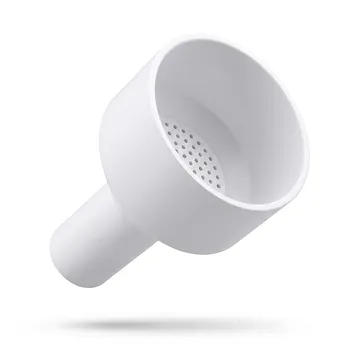
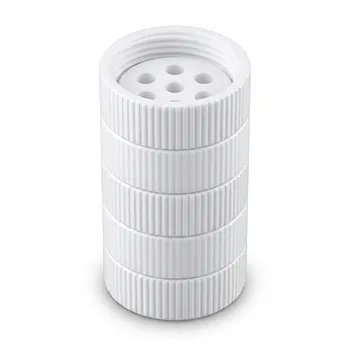
Our high-purity PTFE and PFA products—from custom CNC-machined electrochemical cells to hydrothermal synthesis liners—are designed to leverage these specific properties:
- Total Sample Recovery: Because of the low surface energy, liquids bead up and roll off, ensuring complete transfer without the need for aggressive rinsing.
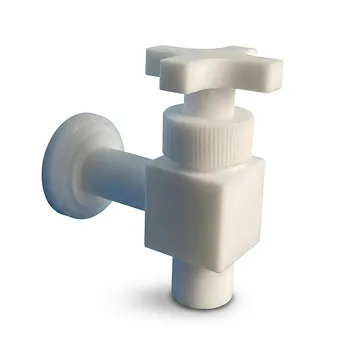
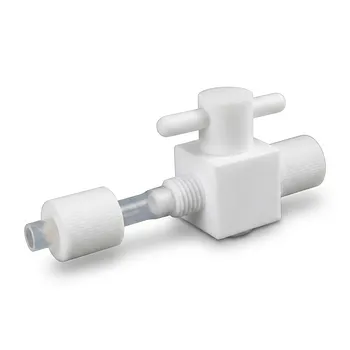
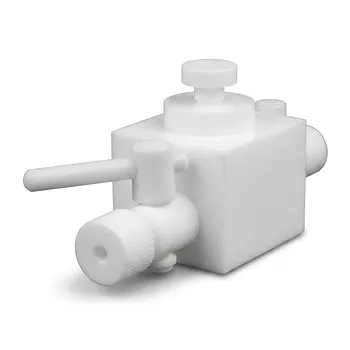
- Smooth Dynamic Operation: In our valves, stopcocks, and magnetic stirrers, the 0.05–0.10 friction coefficient ensures smooth rotation with minimal torque. This eliminates "stick-slip" behavior, allowing for the precise flow control required in semiconductor and chemical research.
- Extended Service Life: Lower friction means lower wear. KINTEK components maintain their integrity over thousands of cycles, reducing the risk of mechanical failure and lowering your long-term maintenance costs.
Beyond the Fix: Unlocking New Research Potential
When you stop fighting with your equipment, you start focusing on your science. By eliminating sample loss and mechanical inconsistency, you unlock the ability to perform more accurate trace analysis, explore more sensitive electrochemical reactions, and run long-term battery stability tests without fear of hardware failure.
The transition from "standard" labware to KINTEK’s precision-engineered PTFE components isn't just an upgrade in material—it’s an investment in the reliability of your results and the efficiency of your lab.
Whether you are scaling up a chemical process or developing the next generation of energy storage, the physics of your tools should support your goals, not hinder them. To discuss how our custom CNC fabrication and high-purity PTFE solutions can solve your specific technical challenges, Contact Our Experts.
Related Products
- Corrosion Resistant PTFE Polytetrafluoroethylene Valve and Customizable Laboratory Fluid Dispensing Faucet for Aggressive Chemical Handling in Industrial Storage Tanks and Plastic Drums
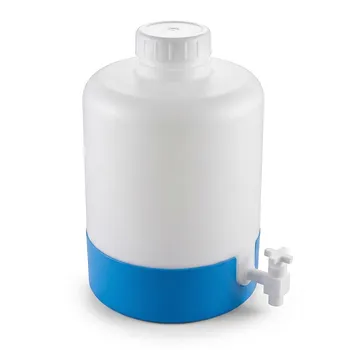
- High Corrosion Resistant PTFE Faucet Polytetrafluoroethylene Valve for Chemical Storage Drums and Fluid Transfer Systems Customizable Industrial Grade
- High Purity PTFE Faucet Corrosion Resistant Polytetrafluoroethylene Drum Valve Customizable Lab Chemical Fluid Control
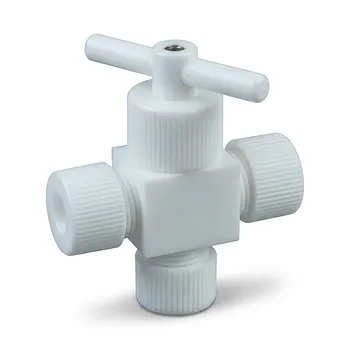
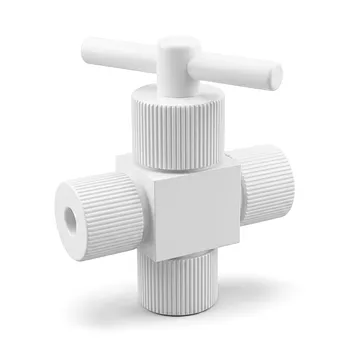
- Custom PTFE Valve 2-Way 3-Way Corrosion Resistant Low Background Virgin Fluoropolymer Industrial Fluid Control
- Corrosion Resistant PTFE Valves Customizable 2 Way 3 Way 4 Way High Temperature Teflon Fluid Control Solutions
Related Articles
- Why Your PTFE Valves Leak at High Temperatures—and How to Master the "Creep" Factor
- Your Plant's Silent Killer: Why Standard Valves Fail with Corrosive Chemicals (And the One Fix That Works)
- Beyond Exotic Alloys: The Smarter Strategy for Corrosion-Proof Fluid Control
- The Hidden Culprit Behind Batch Contamination: Why Your Sterilization Protocol Might Not Be Enough
- The Specialist's Dilemma: Understanding the Critical Trade-offs of PTFE-Lined Valves