KINTEK PTFE insulating gaskets and fluoropolymer seals support reliable connections in laboratories, analytical systems, chemical processing equipment, fluid-transfer assemblies, and electrical installations where corrosion, temperature, purity, and dielectric performance matter. Our category includes custom-machined PTFE insulating gaskets, corrosion-resistant Teflon seals, and high-temperature, anti-static, flame-retardant industrial gasket components. Each part can be engineered around the actual flange, fastener, vessel, or instrument interface to help users maintain secure sealing while protecting sensitive or brittle mating materials.
Toggle Categories
Get Instant Support
Choose your preferred way to connect with our team
Response Time
Within 8 hours on working days, 24 hours on holidays
Sealing O-Rings, Gaskets & Thread Seal Tapes
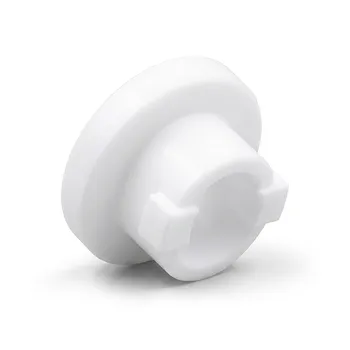
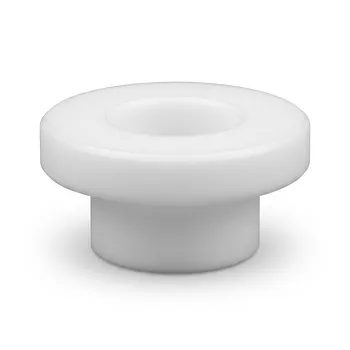
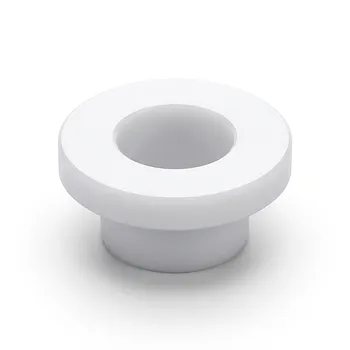
Custom PTFE Gaskets for Reliable Sealing, Insulation, and Corrosion Resistance
A gasket is often a small component within an assembly, but its performance can determine whether an entire process remains clean, safe, stable, and productive. In high-purity laboratories, corrosive chemical systems, electrical assemblies, and industrial fluid-handling equipment, sealing materials must do more than simply fill a gap. They may need to resist aggressive reagents, tolerate temperature cycling, prevent leakage through imperfect mating surfaces, electrically isolate connected parts, avoid contaminating sensitive samples, and retain useful performance throughout a long service interval.
KINTEK manufactures custom PTFE insulating gaskets and fluoropolymer sealing components for precisely these demanding conditions. With a business dedicated to high-performance PTFE and PFA laboratory and industrial components, we understand that a standard catalog seal is not always enough. Dimensions, thickness, hole patterns, material behavior, compression requirements, electrical properties, and media compatibility can all affect the final result. Our CNC machining capability enables us to produce custom parts that fit the real operating interface rather than forcing the interface to accept an approximate part.
Why PTFE Is Widely Used for Demanding Sealing Applications
PTFE, commonly known as Teflon, is one of the most widely selected fluoropolymers for chemically challenging sealing duties. Its molecular structure gives it exceptionally broad chemical resistance, a low-friction surface, strong dielectric behavior, and dependable performance over a wide temperature range. These properties make PTFE a practical material choice where conventional elastomers, metals, or general engineering plastics may swell, degrade, corrode, contaminate a process, or create unwanted electrical paths.
For laboratories and industrial users, the value of a PTFE gasket begins with chemical compatibility. Many processes involve acids, alkalis, oxidizers, solvents, cleaning solutions, and other reactive media. A sealing component exposed at a flange face, vessel closure, instrument connection, tubing interface, or electrical assembly must remain stable in contact with those substances. PTFE helps reduce the risk of material attack and can support cleaner, more durable system operation in applications where corrosion resistance is essential.
PTFE is also inherently electrically insulating. This makes a PTFE insulating gasket useful when two conductive components need to be mechanically connected while remaining electrically separated. In electrical equipment, instrument structures, conductive piping systems, fastened assemblies, and specialized laboratory setups, a correctly specified insulating gasket can help minimize unintended conductivity and support the intended electrical design. Where anti-static behavior, flame-retardant performance, or further application-specific requirements are needed, KINTEK can evaluate the design conditions and tailor the component accordingly.
Conformability Helps Address Real-World Surface Imperfections
Ideal sealing surfaces are perfectly flat, parallel, clean, and evenly loaded. Actual field and laboratory assemblies are rarely perfect. Minor scratches, machining marks, surface waviness, local damage, alignment tolerance, stiffness differences, and installation displacement can all create paths through which liquids, vapors, or process gases may escape.
The softness and high compression ratio of PTFE make it particularly useful for addressing these practical challenges. Under appropriate compression, a PTFE gasket can conform to three-dimensional surface variations and embed into fine cracks or damaged areas. This ability helps the gasket close small discontinuities between mating surfaces and improve the integrity of the seal. Rather than relying solely on perfect hardware geometry, users can specify a fluoropolymer gasket that assists the assembly in accommodating ordinary manufacturing and installation variation.
This conformability is especially valuable for connections involving brittle materials. Glass, ceramics, quartz, and other fragile components can be vulnerable to concentrated stress, uneven clamping, or direct contact with harder mating parts. A properly designed PTFE gasket provides a more forgiving interface that distributes load and cushions the connection. In laboratory vessels, analytical apparatus, sample-preparation systems, and custom reaction setups, this can help protect valuable components while supporting dependable sealing.
PTFE gaskets can also compensate for deviations caused by balancing differences, machining tolerances, stiffness deformation, or installation displacement. They can help balance uneven preload across a connection, making them an effective solution when leakage originates from a complex combination of surface condition, assembly tolerance, and clamping behavior. The gasket must still be selected and installed correctly, but the material's ability to adapt is a major reason it is used in critical sealing systems.
Key Advantages of KINTEK Custom PTFE Insulating Gaskets
KINTEK gasket components are designed around functional requirements, not just a nominal outside diameter. A custom approach gives users the flexibility to specify the factors that actually influence sealing and equipment performance:
- Chemical resistance: PTFE provides excellent resistance across a broad range of corrosive chemicals, making it well suited to chemical handling, wet processing, acid digestion, cleaning, and analytical workflows.
- Electrical isolation: The material's dielectric properties support insulated connections where metal-to-metal contact or stray electrical paths must be avoided.
- High-temperature stability: PTFE can be selected for applications that experience elevated temperatures or temperature variation beyond the practical range of many common gasket materials.
- Low contamination potential: Fluoropolymer surfaces are valuable in high-purity environments where material cleanliness and compatibility with sensitive samples or reagents are important.
- Surface conformability: The gasket can adapt to fine surface irregularities and help seal small defects, machining marks, and variations in mating faces.
- Protection for fragile interfaces: PTFE can create a cushioning, non-abrasive layer between connected parts, reducing the risk of damage to brittle materials during assembly and operation.
- Corrosion-proof construction: Unlike metallic sealing components that may corrode in aggressive environments, PTFE provides a chemically stable alternative for many exposed interfaces.
- Durability and aging resistance: Fluoropolymer components are chosen for long-term stability in conditions that can cause ordinary materials to harden, crack, corrode, or lose performance.
- Custom geometry: Thickness, outer diameter, inner diameter, bolt holes, slots, profiles, and non-standard shapes can be manufactured to match the intended connection.
These capabilities allow a PTFE gasket to perform several functions at once: sealing a joint, insulating an assembly, protecting a mating face, resisting corrosive exposure, and accommodating practical deviations in the installed hardware. This multi-function value is particularly important in compact systems where each part must contribute to reliability.
Applications Across Laboratory and Industrial Systems
Custom PTFE insulating gaskets are relevant wherever a system requires a chemically stable, nonconductive, and conformable interface. In laboratories, they can be used in custom vessels, digestion equipment, sample-preparation hardware, filtration assemblies, reagent handling systems, reaction apparatus, and analytical support equipment. Their chemical resistance and cleanliness make them suitable for workflows involving aggressive reagents or trace-sensitive processes, subject to application-specific compatibility assessment.
In fluid-transfer systems, fluoropolymer gaskets can support joints in chemical lines, fittings, valves, pumps, manifolds, storage systems, and dispensing assemblies. A gasket that resists the conveyed medium and correctly matches the sealing geometry helps reduce the risk of leakage, corrosion, process interruption, and unnecessary maintenance. The ability to produce non-standard shapes is useful for equipment with proprietary flanges, unusual bolt circles, compact spaces, or integrated functional features.
For electrical and industrial installations, PTFE insulating gaskets can be specified to separate conductive structures, provide dielectric isolation around fastening points, or protect sensitive contact areas from corrosive exposure. Their high-temperature resistance, flame-retardant characteristics, and customizable dimensions are valuable when standard insulating washers or general-purpose polymer sheets do not meet the full environmental requirement. Applications may include industrial instrumentation, electrical enclosures, chemical-processing equipment, custom fixtures, and specialized mechanical assemblies.
PTFE seals can also serve in maintenance and retrofit work. When an existing assembly suffers from recurring leaks due to surface wear, imperfect alignment, or a discontinued original component, a custom-machined gasket can provide a practical replacement path. By working from drawings, samples, dimensions, or interface requirements, KINTEK can help develop a fluoropolymer component that addresses the actual installation constraints.
Engineering the Gasket Around the Assembly
Selecting a gasket by material name alone is not enough. The geometry and operating conditions determine whether the part will create the intended seal and remain effective in service. A gasket that is too thin may not accommodate surface variation; one that is too thick may affect alignment or require different clamping conditions. An opening that is too large may leave an exposed flow path, while an opening that is too small may restrict the system or interfere with a mating component. Bolt-hole placement, edge clearance, compression area, and load distribution all deserve attention.
KINTEK supports custom PTFE gasket designs for standard and non-standard interfaces. Depending on the application, the component may be made as a flat ring, full-face gasket, insulating barrier, slotted part, multi-hole plate, shaped seal, or a more complex machined fluoropolymer component. Design details can include outside and inside diameters, thickness, fastener clearances, countersunk or stepped features, alignment tabs, ports, grooves, and irregular outer profiles. For assemblies with several functions, we can also assess whether a machined PTFE component can combine sealing, insulation, spacing, and protective functions into one part.
When preparing a specification, users should consider the media in contact with the gasket, expected temperature range, pressure or vacuum conditions, flange or interface design, surface condition, bolt pattern, required electrical isolation, installation method, and required quantity. These details provide a more useful basis for engineering than a general material request. Where a drawing is not available, dimensions, photographs, samples, or a description of the mating equipment can still help define the part.
Compression and Installation Matter
A high-quality gasket should be paired with a suitable installation process. PTFE's ability to conform under compression is beneficial, but the connection must receive appropriate and reasonably even clamping force. Excessive or uneven loading can affect gasket behavior, compromise an adjacent brittle component, or produce inconsistent sealing around the interface. Insufficient compression may leave surface variations unfilled and allow leakage paths to remain.
For this reason, the gasket should be matched to the assembly's bolt pattern, surface area, flange stiffness, and expected preload. Clean mating faces are important, especially where high purity or leak prevention is critical. During installation, gradual and balanced tightening across fasteners helps distribute load more evenly. In assemblies involving glass, ceramic, or other fragile materials, careful force control is particularly important because the gasket is intended to protect the interface, not compensate for damaging over-tightening.
Operating temperature and pressure should also be considered as part of the full sealing system. Thermal cycling can change the dimensions and loading of an assembly, while vacuum or pressure conditions can increase the consequence of a marginal seal. KINTEK can use the relevant service information to help identify an appropriate custom gasket structure for the intended environment.
Supporting High-Purity and Corrosive Workflows
High-purity operations impose requirements beyond basic leak prevention. In trace analysis, sample preparation, semiconductor-adjacent processes, analytical chemistry, and corrosive reagent handling, contact materials may influence contamination control and cleaning procedures. Fluoropolymer components are frequently selected because they provide a stable, chemically resistant contact surface that is compatible with demanding cleaning and reagent-handling environments.
KINTEK's broader focus on PTFE and PFA laboratory supplies gives our gasket work important context. We manufacture fluoropolymer laboratory ware, fluid-transfer components, vessels, sample-preparation tools, filtration accessories, and custom reaction apparatus. This experience helps us understand how a gasket interacts with the rest of a fluoropolymer-based system. Whether the requirement is a replacement seal for an existing device or a purpose-designed part for a new laboratory setup, we can align the component with the actual equipment environment.
For corrosive systems, a correctly selected PTFE gasket can help preserve the mechanical integrity of the connection while reducing exposure of vulnerable materials. For high-purity systems, the same gasket can contribute to a cleaner fluid path and an easier-to-maintain interface. For electrical assemblies, it can add a controlled insulating barrier without sacrificing resistance to aggressive surroundings. This combination of benefits makes custom fluoropolymer sealing components useful across a wide range of specialized applications.
From Prototype to Repeat Production
Many gasket requirements start with a one-off repair, prototype instrument, or custom research setup. Others involve ongoing procurement for an established production line or recurring laboratory equipment build. KINTEK is equipped to support both directions. Our end-to-end PTFE and PFA CNC machining capabilities enable development of complex non-standard parts as well as repeatable production for higher-volume orders.
For prototypes, the goal is often to validate fit, compression, clearance, and material suitability before the assembly moves into regular use. For established products, repeatability, dimensional consistency, documentation, and delivery reliability become more important. In both cases, the most useful approach is to define the component around its intended function rather than treating it as a generic consumable.
A custom gasket may appear simple on a drawing, but the right details can eliminate recurring leakage, improve electrical separation, reduce component damage, and make maintenance more predictable. KINTEK's machining expertise allows us to translate those functional requirements into precision fluoropolymer components for real equipment conditions.
Discuss Your Custom Sealing Requirement
If you need a PTFE insulating gasket, corrosion-resistant fluoropolymer seal, or a non-standard machined component for a laboratory or industrial connection, KINTEK can help evaluate the requirement. Share your drawing, dimensions, material expectations, mating-part details, operating temperature, chemical media, pressure or vacuum conditions, electrical isolation requirements, and target quantity. Our team can work with you on custom geometry, practical manufacturability, and a solution matched to your application.
Contact KINTEK to discuss your custom PTFE gasket or sealing component and request a tailored quotation. From individual prototypes to repeat production orders, we bring specialized fluoropolymer manufacturing capability to complex sealing, insulation, and corrosion-resistance challenges.
REQUEST A QUOTE
Our professional team will reply to you within one business day. Please feel free to contact us!
Related Articles
Why Your RDE Data Isn’t Following the Levich Equation—And How the Shroud Fixes It
Struggling with inconsistent RDE results? Learn how the precision of your PTFE shroud dictates hydrodynamic stability and why it's the key to accurate Levich plots.
Read more
Is Your Electrode Housing Corrupting Your Data? Why PTFE Jackets Are Crucial for Precise Electrochemistry
Discover why electrode housing affects data accuracy and how precision-machined PTFE jackets prevent parasitic currents and mechanical failure in research.
Read more
Why Critical Aerospace Systems Fail in Extreme Conditions—and the Material Strategy That Prevents It
Discover why standard materials fail in aerospace environments and how high-precision PTFE components solve thermal, chemical, and vacuum challenges.
Read more
Why Your High-Performance PTFE Seals Are Leaking—And How to Restore Their "Memory"
Discover why PTFE seals fail due to creep and cold flow, and how spring-energized designs provide the permanent resilience needed for extreme environments.
Read more
Stop Chasing Leaks: Mastering PTFE Sealing Performance Across Extreme Temperatures
Learn why PTFE seals fail at temperature extremes and how precision engineering—from spring energizers to custom CNC fabrication—ensures leak-free performance.
Read more
Why Your "Perfect" PTFE Seals Are Leaking Under Pressure—and How to Stop the Flow
Discover how PTFE fillers like glass, carbon, and bronze eliminate "cold flow" and increase wear resistance by 1000x for high-pressure industrial sealing.
Read more
Why Your PTFE Connections Leak Under Pressure—And the Precision Engineering That Stops It
Discover why standard fittings fail in high-purity labs and how the four-part mechanics of a two-ferrule PTFE connector ensure a leak-proof, high-grip seal.
Read more
The Hidden Physics of Leak-Proof Experiments: Why Over-Tightening Won't Save Your PTFE Seals
Stop fighting leaks with a wrench. Discover the fundamental science of PTFE sealing—from viscoelasticity to self-energization—to ensure reliability in your high-pressure lab applications.
Read more
The Invisible Yield Killer: Why Standard Fluid Components Are Compromising Your Semiconductor Purity
Discover why microscopic contamination in fluid paths ruins semiconductor yields and how precision-engineered PTFE components provide the PPT-level purity required.
Read more
The Invisible Creep: Why Your PTFE Battery Clamps Fail and How to Achieve Perfect Contact
Discover why over-tightening PTFE battery fixtures leads to material creep and data inaccuracy, and learn the engineering balance for stable electrochemical testing.
Read more
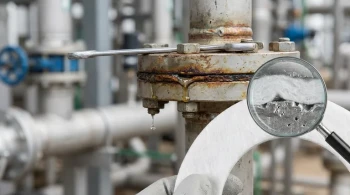
Beyond the Bolt: Why Your Flange Leaks Are a Material Science Problem, Not a Mechanical One
Tired of recurring flange leaks? Discover the hidden material failure causing them and how ePTFE gaskets provide a permanent solution for equipment reliability.
Read more

When "Chemically Inert" Isn't Enough: The Hidden Cause of PTFE Component Failure
Discover why standard PTFE components fail in critical applications, even with 'safe' chemicals. Learn the hidden role of fabrication quality and how to prevent costly downtime.
Read more
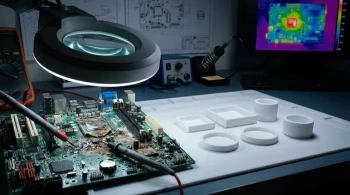
Why Your Electronic Components Keep Failing: The Insulation Problem You're Overlooking
Frustrated by random electronic failures? Discover why standard insulators fail under real-world stress and how precision PTFE components offer a permanent fix.
Read more
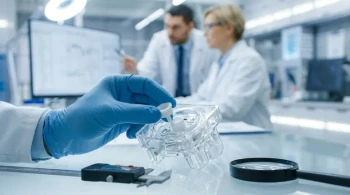
Why 'Medical-Grade' Isn't Enough: The Hidden Risk in Your PTFE Components
Generic 'medical-grade' PTFE poses hidden risks. Discover why material purity and manufacturing precision are the real keys to device safety.
Read more
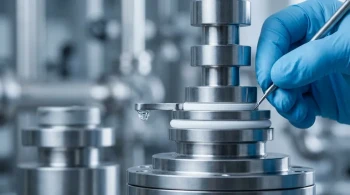
Why Your High-Performance Seals Keep Leaking—And Why It's Not the Seal's Fault
Stop the cycle of failed PTFE seals. Discover the real reason for chronic leaks isn't the part, but the installation system, and how to fix it for good.
Read more
When 'Tougher' Isn't Enough: The Hidden Reason Your Industrial Components Are Failing
Discover why conventional materials fail under combined stress and how PTFE components provide a definitive solution for chemical, thermal, and friction challenges.
Read more
Your High-Performance Seals Are Failing. The Reason Isn't What You Think.
Discover the hidden reason your spring-energized seals fail and how to fix it by understanding the seal as a two-part system, not a single component.
Read more
The Gasket Keeps Leaking: Why Your Standard PTFE Seal Fails and How to Fix It for Good
Tired of PTFE gasket leaks? Discover the hidden flaw in standard PTFE and how expanded PTFE (ePTFE) provides a permanent fix for critical applications.
Read more
Why Your Lab Plugs Stick and Contaminate: The Hidden Science of Surface Energy
Frustrated with seized plugs and failed experiments? Learn the hidden physics of surface energy and why precision PTFE components are the definitive solution.
Read more
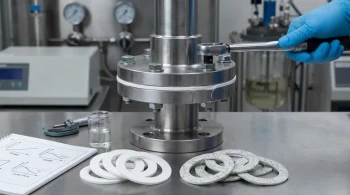
Why Your PTFE Gaskets Keep Leaking—And Why Tighter Bolts Won't Fix It
Tired of recurring PTFE gasket leaks? Discover the true cause of failure ('creep') and learn how to select the right material for a permanent, reliable seal.
Read more