PTFE/PFA Tubing for High-Purity, Corrosion-Resistant Fluid Handling
Fluids can only remain as pure, stable, and safely contained as the materials that contact them. In laboratories and industrial process environments, tubing is often treated as a simple connection between a source, instrument, vessel, or drain. In reality, it can be a critical wetted component that affects chemical compatibility, extractables, sample integrity, flow stability, maintenance intervals, and operator safety. KINTEK PTFE/PFA tubing is built for applications where aggressive chemistry, elevated operating temperatures, demanding cleanliness requirements, or complex routing make ordinary tubing unsuitable.
KINTEK is exclusively focused on high-performance fluoropolymers. We manufacture PTFE and PFA laboratory and fluid-handling components for customers who need durable, chemically inert materials and practical fabrication support. Whether the requirement is a length of high-purity PFA tubing, a compact coiled line, a carefully formed transfer path, a welded assembly with fittings, or a specialized sample-handling component, our team can align material selection and fabrication with the intended media, workflow, and equipment interface.
Why Fluoropolymer Tubing Matters
A tubing line is exposed to more than the nominal fluid it carries. It may see concentrated acids or bases, oxidizing agents, solvents, salts, cleaning chemicals, moisture, temperature cycling, pressure changes, vibration, ultraviolet exposure, and repeated connection or disconnection. The wrong material can embrittle, swell, corrode, release contaminants, retain residues, or lose dimensional stability. Such issues can lead to unreliable analytical results, reduced process efficiency, downtime, leaks, and unnecessary replacement costs.
PTFE and PFA are fluoropolymers valued for broad chemical inertness and strong thermal performance. Their molecular structures create a low-energy surface that resists wetting and adhesion from many materials. This helps reduce buildup, simplifies cleaning, and supports applications in which residues or carryover are unacceptable. Fluoropolymer tubing also has very low moisture absorption, an important advantage for wet environments, corrosive service, and sensitive fluid paths.
For high-purity systems, material selection is not only a corrosion question. A tubing material should avoid changing the composition of the fluid being transported. In trace analysis, semiconductor processing, pharmaceutical development, and environmental sampling, operators need confidence that the conduit does not introduce avoidable contamination or react with the sample. High-purity PFA tubing offers a clean, chemically resistant flow path for many of these demanding workflows.
PTFE and PFA: Complementary Materials for Different Needs
PTFE and PFA share many useful fluoropolymer characteristics, including excellent chemical resistance, broad temperature capability, electrical insulation, low surface energy, and resistance to weathering. They are not interchangeable in every design, however. Selecting the proper material requires consideration of purity needs, flexibility, transparency, fabrication method, operating conditions, and the geometry of the finished component.
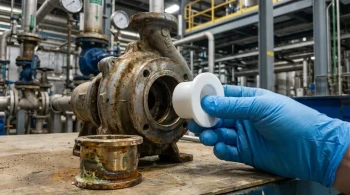
PTFE tubing and machined components are a strong choice when chemical inertness, non-stick behavior, robust temperature resistance, and electrical insulation are central requirements. PTFE is widely recognized for its ability to withstand difficult chemical environments, including many strong acids. It is durable, lightweight compared with many metal alternatives, and resistant to frictional wear, flame, heat, radiation, and moisture. These properties make PTFE useful for tubing interfaces, fittings, seals, caps, custom machined parts, and specialized laboratory assemblies.
PFA tubing is especially useful where a smooth, high-purity fluid path and fabrication flexibility are needed. PFA can be used to create transparent or translucent tubing solutions that help operators visually check liquid movement, bubbles, color changes, or the presence of particulates where appropriate. Its melt-processable nature also supports welding and forming processes, allowing custom bends, joined assemblies, and integrated fluid-transfer components to be developed for specific layouts. PFA is therefore frequently selected for laboratory transfer lines and high-purity industrial applications.
The appropriate choice depends on the system rather than a generic material preference. A project may use PFA tubing for a visible, formed, weldable transfer line while using precision PTFE caps, fittings, or machined parts at interfaces requiring the properties of PTFE. KINTEK can help evaluate the functional role of each component so the final assembly is practical, compatible, and suited to its operating environment.
Product Options in This Category
KINTEK provides more than a standard spool of tubing. The category covers fluoropolymer fluid-path components that can be selected or configured for laboratory and process use.
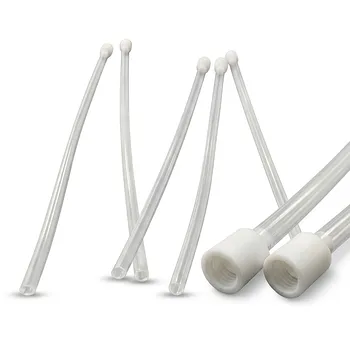
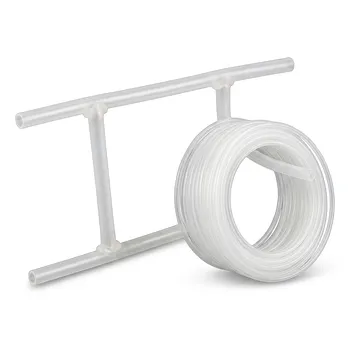
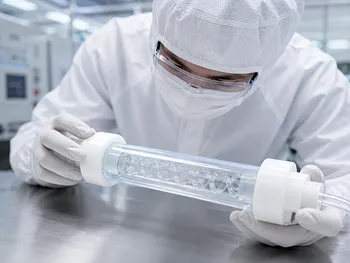
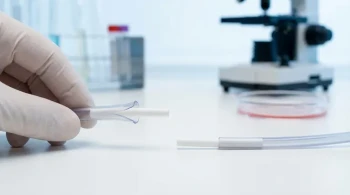
Straight PFA tubing provides a direct route for transferring liquids, gases, reagents, samples, rinses, and process media. It is suitable for installations where users need a chemically resistant connection between bottles, pumps, reactors, columns, instruments, manifolds, or waste containers. Straight tubing can be specified around key physical requirements such as outside diameter, inside diameter, wall thickness, length, and required end preparation.
1/4 inch PFA tubing is a commonly requested format for compact fluid-transfer arrangements. It can be used in laboratory rigs, analytical sample paths, chemical delivery systems, and equipment installations where a defined tubing size must interface with compatible fittings or custom assemblies. The tubing should always be selected with the actual flow rate, pressure, temperature, media, bend radius, and connection design in mind.
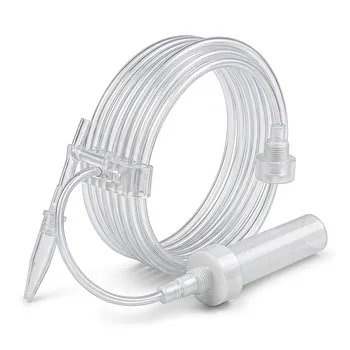
PFA coiled spring tubing helps manage excess length in compact installations. A coil can provide controlled extension and retraction, reduce clutter around benches or equipment, and make it easier to route a line through a confined space. Coiled tubing can be valuable where an operator needs mobility at the endpoint while maintaining an organized line path. The finished coil geometry can be designed around the needed length, working movement, routing envelope, and mechanical handling requirements.
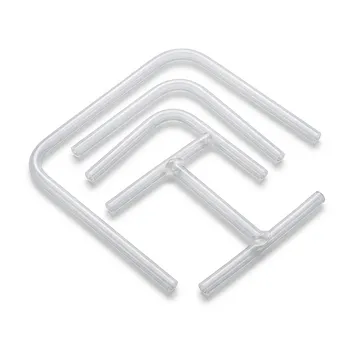
Precision-bent PFA tubing is intended for installations with repeatable routing needs. Rather than asking operators to manually bend tubing during assembly, formed components can follow a prescribed path around panels, vessels, pumps, or instrument enclosures. This supports cleaner layouts and may reduce inconsistent field installation. Bend geometry must be designed carefully to avoid excessive stress, flow restriction, or damage to the tube wall.
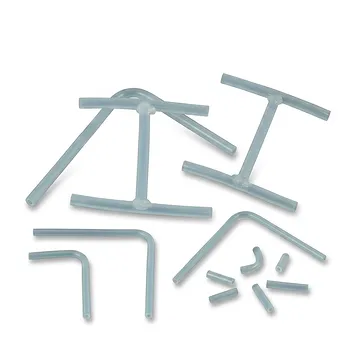
Welded PFA tubing assemblies allow tubing and selected fluoropolymer components to be joined into a more integrated fluid-handling solution. Properly planned welding can reduce the number of separate interfaces in a line and create assemblies matched to the dimensions of a customer's equipment. The design should account for cleaning, inspection, mechanical support, thermal movement, service access, and the compatibility of all wetted materials.
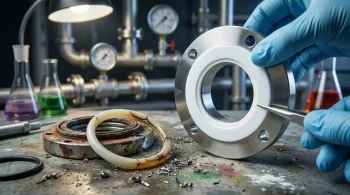
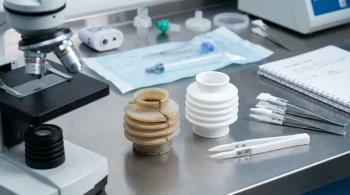
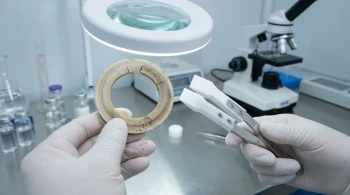
Custom PTFE fabrication and machined parts extend the tubing solution beyond the tube itself. KINTEK's CNC machining capability supports PTFE caps, adapters, holders, connectors, support pieces, custom vessels, and non-standard parts that complement fluoropolymer tubing systems. This is particularly useful for customers who need a complete assembly rather than a collection of generic components from multiple suppliers.
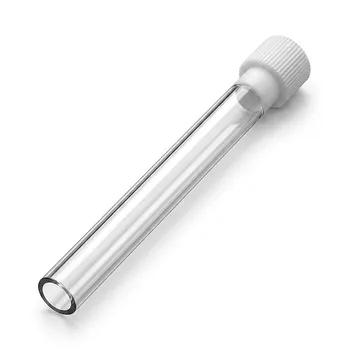
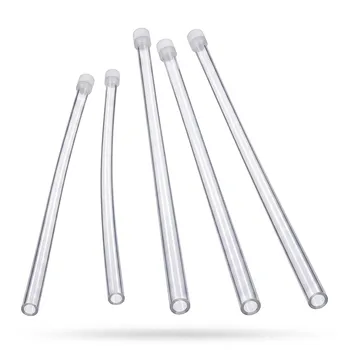
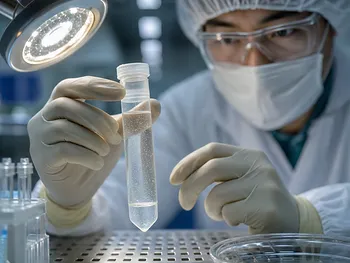
High-purity PFA NMR sample tubes with PTFE caps support sensitive sample containment in chemically demanding research environments. Their fluoropolymer construction can be useful when glass or conventional closures are not suitable for the sample chemistry or temperature requirements. Precision PTFE caps provide a chemically resistant closure option, while custom dimensions can be considered for specialized laboratory workflows.
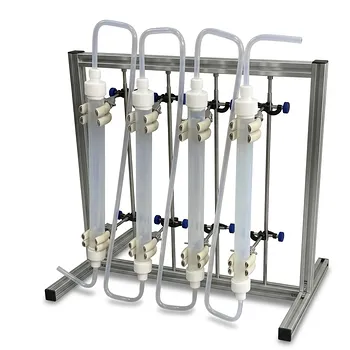
PFA chromatography and resin-exchange columns with filter-frit support serve sample preparation, separation, and trace-analysis applications. These products are related to the same need for chemically resistant, clean wetted surfaces. A well-designed column assembly supports controlled media retention and flow while helping laboratories work with aggressive reagents or contamination-sensitive samples.
Performance Advantages for Critical Applications
The main value of PTFE/PFA tubing is not a single specification. It is the combined effect of chemical stability, cleanability, thermal resilience, low moisture absorption, and the ability to configure a fluid path around the actual operating process.
Broad chemical resistance. Fluoropolymers are widely used in contact with corrosive media because they are chemically inert to many substances that can quickly attack metals or less resistant plastics. This can be valuable for strong acids, high-chloride solutions, oxidizing environments, laboratory reagents, and cleaning chemicals. Exact compatibility must still be confirmed for each chemical, concentration, temperature, exposure time, and pressure condition, especially where mixed media or unusual process conditions are involved.
High-purity fluid handling. In applications such as trace analysis and semiconductor processing, trace contamination can affect results, yield, and equipment reliability. PFA tubing and related fluoropolymer components can help establish a clean wetted path with minimal interaction between the transported media and the conduit. This makes fluoropolymer assemblies appropriate for reagent delivery, sample transfer, rinse lines, ultrapure water-related systems, and analytical workflows where material cleanliness is a serious concern.
Thermal stability. PTFE and PFA are selected for their ability to perform across a wide temperature range. In contrast to many general-purpose plastics, they can be considered for processes involving heated liquids, steam-adjacent service, thermal cleaning, or elevated-temperature laboratory operations. The final assembly must be designed for the full set of operating conditions, including pressure, support spacing, expansion, connection type, cycling frequency, and the specific temperature limits of every component in the system.
Low surface energy and reduced residue retention. The low-friction, non-stick character of PTFE can reduce adhesion of many substances. In fluid systems, this can assist with cleaning and may help limit residue accumulation compared with more readily wetted materials. This property is useful for sample preparation and chemical-transfer tasks in which carryover control, washability, and efficient maintenance matter.
Resistance to moisture, weathering, and aging. PTFE's low moisture absorption supports use in humid or wet conditions. Its resistance to weathering and many environmental stresses also makes it suitable for installations where reliability over time is important. Where tubing is used outdoors or in utility areas, the complete system should still be designed with appropriate physical protection, supports, labeling, and inspection access.
Electrical insulation. PTFE is an excellent electrical insulator over a wide range of temperatures and frequencies. This matters in laboratory instrumentation, electrochemical setups, and installations where a nonconductive component is beneficial. The insulation requirement should be evaluated alongside chemical and mechanical considerations, particularly where static control, grounding, or electrical safety standards apply.
Lower weight than many metal alternatives. In suitable applications, fluoropolymer components can reduce system weight relative to metal hardware. A lighter assembly can simplify handling, reduce load on supports, and make compact laboratory routing easier. Fluoropolymer tubing does not replace metal in every service, particularly where structural loads, extreme pressure, or mechanical protection dominate the design criteria, but it can offer a highly effective alternative for compatible corrosive and high-purity duties.
How PTFE/PFA Tubing Supports Reliable Flow Systems
The function of tubing is to create a controlled passage between points in a process. In practice, reliable fluid transfer requires attention to several connected variables: tubing dimensions, internal surface condition, route length, bend radius, fittings, pump behavior, pressure drop, temperature, support design, and cleaning method. The most chemically resistant tube can still underperform if it is poorly connected, sharply bent, unsupported, or mismatched to the intended service.
Inside a tubing line, flow behavior is influenced by the internal diameter, liquid viscosity, route length, fittings, elevation changes, and pump characteristics. Smaller internal diameters can improve control over low-volume delivery but may increase pressure drop. Larger internal diameters can accommodate higher flow rates but require evaluation for hold-up volume, flushing needs, and response time. For analytical systems, minimizing unnecessary dead volume can help make rinsing and sample transitions more efficient. For process systems, the target may be stable delivery, clean drainage, or reliable circulation.
Tube routing also affects performance. A direct route with gradual bends generally helps maintain consistent flow and reduces localized stress. Coiled tubing is useful where flexibility and compact storage are needed, but its geometry should be selected for the required extension, fluid volume, and available space. Bent tubing can improve installation consistency by following a specific equipment layout. KINTEK can manufacture tubing configurations that account for these practical constraints instead of forcing a generic line into a specialized system.
Connections deserve equal attention. PTFE fittings and compatible fluoropolymer interfaces can support chemically resistant joints in instrumentation and transfer systems. The connection approach should be selected according to the tubing dimensions, pressure and temperature conditions, required serviceability, contamination requirements, and the mating equipment. Proper installation practices, including correct cutting, insertion, torque where applicable, support, and leak verification, remain essential to the performance of the entire assembly.
Application Areas
PTFE/PFA tubing is used across many fields where fluid purity, chemical compatibility, and dependable routing are required.
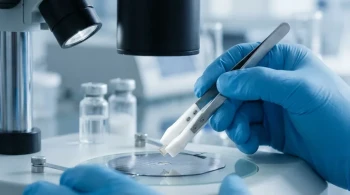
Analytical and trace-analysis laboratories use fluoropolymer tubing for sample introduction, reagent transport, rinsing, waste routing, digestion-related workflows, and equipment connections. In trace work, the tubing material must be chosen to avoid unnecessary interactions with analytes and reagents. PFA sample tubes, PTFE caps, and chromatography components can complement these systems where high-purity containment and sample preparation are required.
Semiconductor and electronics processing often relies on high-purity fluid paths for chemicals, rinses, and process solutions. PFA tubing is widely suited to applications where cleanliness, chemical resistance, and visual monitoring of liquid movement may be valuable. Custom tubing assemblies can help fit compact skids, wet benches, tool enclosures, and utility arrangements.
Pharmaceutical and biotechnology facilities may use compatible fluoropolymer components for chemical transfer, development work, cleaning-fluid routing, and specialized laboratory systems. Selection should be based on the particular process, validation requirements, cleaning protocol, and applicable regulatory expectations. KINTEK can support component customization, while the customer retains control of final process qualification and validation.
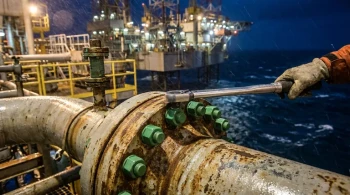
Chemical processing creates some of the strongest demands for corrosion-resistant fluid transfer. Acidic, alkaline, oxidizing, and solvent-based fluids can rapidly degrade unsuitable materials. PTFE/PFA tubing can serve as a chemically inert path in compatible operations, particularly in pilot plants, dosing systems, laboratory reactors, sampling arrangements, and utility lines.
Environmental monitoring and water-related analysis depend on representative samples. When stack gases, wastewater, process water, or other monitored streams interact with the conduit, the line itself can alter the sample or suffer corrosion. Fluoropolymer tubing can help support chemically stable sample transport where compatibility is confirmed. PTFE is also relevant to high-chloride and oxidizing environments, including applications associated with power-plant dosing and desalination, where stainless steel may face rapid corrosion.
Electrochemical research and advanced laboratory apparatus often requires materials that provide chemical resistance and electrical insulation. PTFE/PFA tubing, machined components, caps, fittings, and custom reaction accessories can be incorporated into standard or bespoke electrochemical cells and related experimental setups. The ability to machine and fabricate fluoropolymer parts helps researchers adapt equipment to uncommon geometries, electrodes, sample volumes, and reagent-handling needs.
Custom Manufacturing for the System You Actually Need
Off-the-shelf tubing works when the route, connection, and operating conditions are straightforward. Many high-value applications are not straightforward. The line may need to pass through a limited enclosure space, meet a specific centerline path, connect to non-standard equipment, maintain a defined coil extension, integrate a special cap or fitting, or operate as part of a larger custom laboratory assembly. In these situations, purchasing standard tubing and modifying it on site can introduce delays and inconsistent results.
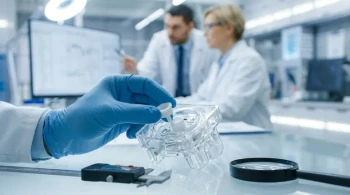
KINTEK offers end-to-end PTFE/PFA custom CNC machining and fabrication capability. This enables customers to source more of the complete fluoropolymer solution from one specialist. We can support custom molded or formed PFA tubing, precision bending, PFA welding, PTFE machining, custom caps, specialized holders, and non-standard parts designed around the intended use. For customers developing a new instrument, research setup, chemical handling skid, or production fixture, this capability reduces the need to compromise around catalog-only dimensions.
A useful custom project begins with clear operating information. Share the conveyed media, concentration where relevant, working temperature, expected pressure or vacuum conditions, desired flow rate, tubing dimensions, total length, bend requirements, end connections, cleanliness expectations, and installation environment. Photographs, drawings, sample parts, and equipment-interface dimensions can also help define a practical solution. For sensitive applications, it is important to identify all wetted components rather than evaluating tubing in isolation.
Customization may include straight-cut tubing lengths, coiled forms, defined bend patterns, welded tubing sections, changes in diameter or wall thickness where feasible, integrated connection features, PTFE caps, custom support pieces, and matched laboratory components. The right configuration is determined by the actual application requirements and manufacturability, not by a one-size-fits-all template.
Selection Considerations Before Ordering
To choose PTFE/PFA tubing effectively, evaluate the full service condition. This helps prevent an apparently compatible material from being used in an unsuitable geometry or connection arrangement.
Start with chemical compatibility. Identify the exact fluids, including cleaning agents, residual chemicals, additives, and possible contaminants. Concentration and temperature can significantly change chemical behavior. Confirm compatibility for both normal operation and cleaning or upset conditions.
Review temperature and pressure together. A tubing system's usable condition is influenced by the material, dimensions, wall thickness, connection type, fittings, bends, supports, thermal cycling, and duration of exposure. Avoid relying on a generic tubing rating without verifying the complete assembly and the supplier's applicable specifications.
Define the needed purity and cleanliness level. Trace analysis, semiconductor processing, and certain laboratory workflows may require special attention to material selection, processing, packaging, cleaning, and handling. Tell KINTEK how the tubing will be used so the proposed solution reflects the criticality of the fluid path.
Consider size and flow behavior. Outside diameter governs compatibility with fittings and equipment interfaces, while inside diameter influences flow rate, pressure drop, response time, and retained volume. Wall thickness affects mechanical performance and flexibility. A tube that is physically easy to install may not produce the desired process behavior, so both mechanical and flow requirements should be reviewed.
Plan the route and mechanics. Determine whether the tubing needs to remain fixed, move with an operator, absorb vibration, fit through a narrow space, or follow a repeatable path. Coiled, bent, or supported tubing may be preferable to a long loose line. Provide adequate bend radius and support to avoid kinks, abrasion, and stress at connections.
Specify connection and service requirements. Some applications prioritize rapid replacement; others require minimal dead volume, enhanced containment, cleanability, or long-term stability. The fitting type, tube preparation, and accessibility should be selected around these operational priorities.
Partner With a Fluoropolymer Specialist
KINTEK combines fluoropolymer material knowledge with practical manufacturing capability. Our product range spans basic PTFE/PFA labware, high-purity trace-analysis equipment, tanks, tubing, fittings, valves, sample-preparation tools, filtration components, consumables, electrochemical cells, microwave digestion vessels, and custom-machined fluoropolymer parts. This broad capability is valuable when tubing must work as part of a larger laboratory or process system.
Instead of treating custom requirements as exceptions, we support projects that demand non-standard dimensions, precision machining, formed tubing, welded fluid paths, specialized closures, and bespoke laboratory assemblies. We can work from technical drawings, physical samples, interface dimensions, and application descriptions to help turn a functional requirement into a manufacturable PTFE/PFA component or assembly.
For a standard tubing request, send the required material, dimensions, length, quantity, and intended application. For a custom project, include the fluid media, operating conditions, route or drawing, connection details, and any purity or cleanliness requirements. Our team can review the request and help identify an appropriate PTFE/PFA tubing or fabricated fluoropolymer solution.
Need chemically resistant PFA tubing, a formed coil, a welded transfer assembly, precision PTFE components, or a complete custom fluid-handling setup? Contact KINTEK with your specifications to discuss a solution built for your laboratory or industrial process.