KINTEK Separatory Funnels & Burettes are built for laboratories and process teams handling corrosive acids, solvents, and high-purity reagents. The category includes constant-pressure separatory and dropping funnels for controlled reagent addition and liquid-liquid separation, PFA volumetric burettes with PTFE valves for accurate titration, and compatible fluoropolymer fluid-handling assemblies for demanding reaction, reflux, filtration, and trace-analysis workflows. Made from high-performance PTFE and PFA, these labware solutions help maintain chemical purity, operator control, and dependable long-term use where glass, ceramic, or standard plastics are unsuitable.
Toggle Categories
Get Instant Support
Choose your preferred way to connect with our team
Response Time
Within 8 hours on working days, 24 hours on holidays
Separatory Funnels & Burettes




Precision Fluoropolymer Funnels and Burettes for Corrosive, High-Purity Chemistry
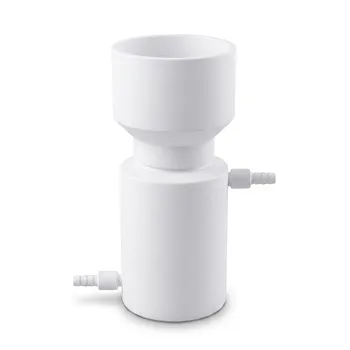
Precise liquid handling is central to reliable chemistry. Whether a laboratory is separating immiscible phases, adding a reagent at a controlled rate, preparing a sample for trace-element analysis, or performing an acid-base titration, the vessel, valve, wetted path, and sealing interfaces can directly influence safety, repeatability, and analytical confidence. KINTEK manufactures PTFE and PFA separatory funnels, constant-pressure dropping funnels, volumetric burettes, and related custom fluid-control assemblies for laboratories that cannot accept the limitations of conventional glassware or commodity plastic equipment.
Our fluoropolymer labware is intended for aggressive chemical environments and purity-sensitive procedures. PTFE and PFA are valued for exceptionally broad chemical resistance, excellent thermal performance, low surface energy, and a low risk of contributing metallic contamination to the sample path. These characteristics make them especially suitable for workflows involving strong mineral acids, alkalis, organic solvents, oxidizing reagents, halogen-containing compounds, and hydrogen fluoride service where compatible design is essential. The result is durable equipment that supports dependable handling of demanding reagents while simplifying cleaning, reducing breakage concerns, and protecting the integrity of critical samples.
Constant-Pressure Separatory and Dropping Funnels
A separatory funnel performs more than a basic transfer function. In liquid-liquid extraction, it enables controlled separation of immiscible phases after mixing and settling. In synthesis and reaction work, a dropping funnel provides deliberate reagent addition so operators can manage reaction rate, temperature rise, gas evolution, mixing behavior, and stoichiometry. When a process requires a stable addition rate, a constant-pressure funnel helps maintain consistent liquid delivery as the liquid level changes.
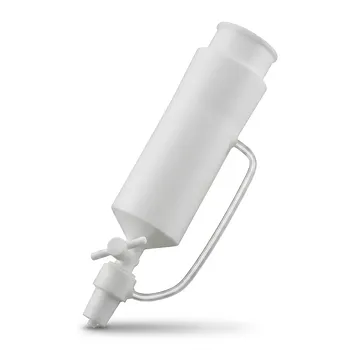
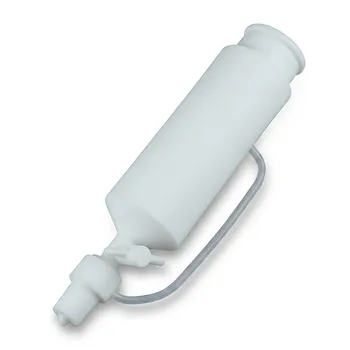
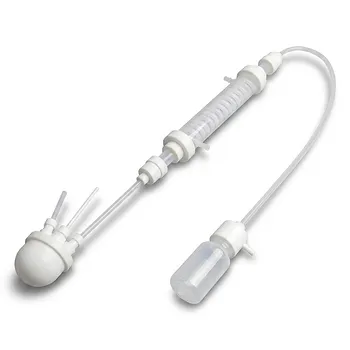
KINTEK custom PTFE constant-pressure separatory funnels and dropping funnels are designed for corrosive reagent transfer and high-purity laboratory operation. The pressure-equalization design helps balance the pressure inside the system during addition. This reduces the tendency for intermittent flow, pulsing, or sudden release that may occur when a closed receiving vessel develops pressure differences. More stable delivery can improve process control in applications such as reagent dosing, digestion, synthesis, extraction, sample preparation, and pilot-scale chemical development.
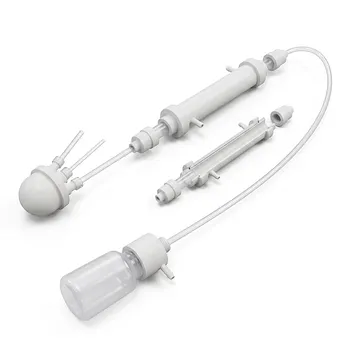
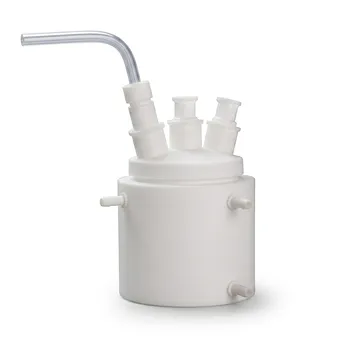
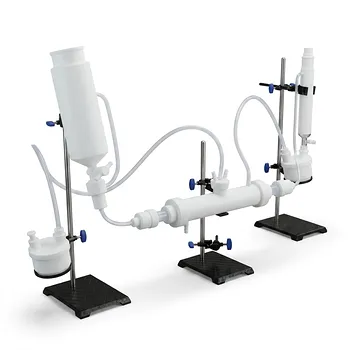
For reaction assemblies, a dropping funnel can be configured to work with a compatible PTFE or PFA flask, stopper, adapter, condenser, or collection component. KINTEK also supplies fluoropolymer reflux and continuous-reaction configurations incorporating jacketed constant-pressure dropping funnels. These systems are relevant when highly corrosive media, elevated temperatures, or sensitive analytical requirements make conventional assemblies impractical. In particular, fluoropolymer construction can be a practical material choice for applications involving hydrofluoric acid and other media that attack common laboratory materials.
The advantages of a PTFE constant-pressure funnel include:
- Controlled reagent addition: A stable, manageable flow supports more repeatable reaction conditions and helps operators avoid excessive addition rates.
- High corrosion resistance: PTFE is highly inert toward a broad range of acids, bases, and solvents, making it appropriate for severe chemical-duty use.
- Low-background fluid path: High-purity fluoropolymer contact surfaces can help reduce interference risks in trace-analysis and ultra-clean workflows.
- Mechanical durability: Unlike glass, PTFE components are resistant to shattering during handling, installation, and routine laboratory use.
- Configurable interfaces: Funnel capacity, neck geometry, outlet style, stopper compatibility, fittings, and connection dimensions can be adapted to existing apparatus.
- Serviceability: Smooth fluoropolymer surfaces are generally easy to rinse and clean, supporting efficient turnaround between procedures.
Although the term “constant pressure” is often used broadly, actual delivery behavior depends on the complete installation. Funnel volume, outlet diameter, liquid viscosity, tubing length, valve geometry, receiving-vessel pressure, temperature, and the reagent itself all affect flow. KINTEK works with customers to match the funnel and connection design to the intended process instead of treating liquid addition as a one-size-fits-all task. For applications involving pressure, vacuum, heat, or hazardous reagents, users should validate the complete assembly and operating conditions under their established laboratory safety procedures.
PFA Volumetric Burettes for Corrosive Titration
Volumetric burettes are fundamental instruments for quantitative titration. They allow a measured volume of titrant to be dispensed gradually into an analyte until a defined endpoint is reached. In acid-base titration, redox titration, complexometric analysis, and related methods, the accuracy of delivered volume and the chemical compatibility of the burette are both essential. A device that is degraded by the titrant, difficult to read, or prone to contamination can compromise otherwise sound analytical work.
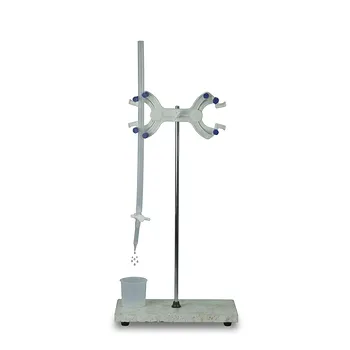
KINTEK high-purity translucent PFA burettes with PTFE valves are developed for corrosive reagent handling and demanding titration environments. PFA combines the chemical resistance associated with fluoropolymers with useful translucency, allowing operators to observe liquid level while retaining a chemically robust wetted path. The PTFE valve provides controlled dispensing and chemical compatibility for aggressive solutions. This pairing is well suited to laboratories that use strong acids, high-purity reagents, or solvent systems that can shorten the life of ordinary burettes and stopcock assemblies.
In routine analysis, a burette must provide more than a scale. It must enable controlled dropwise delivery near the endpoint, resist sticking or chemical attack at the valve, support repeatable filling and draining, and remain clean enough for the analytical task. The chemically inert nature of PFA and PTFE helps preserve the fluid path in challenging service. It can also reduce the risk associated with glass breakage, particularly where instruments are moved frequently or used in production, environmental, semiconductor, materials, mining, and chemical-processing laboratories.
PFA burettes are particularly relevant when users need to balance visibility with chemical resistance. While fully opaque fluoropolymer equipment can be preferred for certain light-sensitive or specialized applications, a translucent PFA tube enables practical level observation for dispensing and routine verification. KINTEK can discuss appropriate capacities, graduation requirements, valve configurations, mounting arrangements, and connections based on the intended method and desired workflow.
Why PTFE and PFA Matter in High-Purity Workflows
The material of construction is often the determining factor in a laboratory fluid-handling system. Borosilicate glass is common and versatile, but it is breakable and is not suitable for every chemical environment. Ceramic filtration equipment can be strong and heat resistant, yet it may be vulnerable to some reagents, difficult to customize, or undesirable when low-background performance is required. Many standard plastics are economical, but their chemical resistance, temperature limits, extractables profile, and long-term stability may not meet the needs of aggressive chemistry.
PTFE and PFA address many of these constraints. PTFE offers very high chemical inertness and a broad working temperature range. Its low-friction surface can be valuable in valves, seals, and fluid-contact components. PFA offers similar chemical resistance with melt-processable properties that support fabricated forms and translucent components. Both materials are widely selected for high-purity chemical handling because they are resistant to many corrosive reagents and can help minimize contamination from wetted surfaces.
For trace analysis, the material contacting the sample matters at every stage, including storage, transfer, reaction, filtration, and titration. Metal ions or residues introduced by unsuitable hardware can affect low-level results. KINTEK fluoropolymer labware is designed with low-background applications in mind, helping analytical laboratories build cleaner pathways for sample preparation and reagent handling. Proper cleaning, conditioning, blank verification, and method validation remain essential, but selecting a high-purity PTFE or PFA component is an important part of a contamination-control strategy.
Fluoropolymer construction also benefits facilities seeking durable equipment for repeated use. PTFE components are not subject to glass fracture in the same way as traditional funnels and burettes. This can improve handling confidence and reduce replacement frequency in busy laboratories. Smooth, non-wetting surfaces may also make it easier to remove residues after suitable cleaning procedures. The right cleaning method must always be matched to the reagent history and analytical requirements, especially when the equipment is used for trace work or highly reactive chemicals.
Supporting Sample Preparation and Filtration Systems
This category is frequently used alongside KINTEK PTFE Buchner funnels, vacuum filtration units, precision syringes, FEP tubing, reaction vessels, PFA collection bottles, and reflux components. Together, these products can form a coherent fluoropolymer workflow from reagent addition through separation, filtration, collection, and transfer.
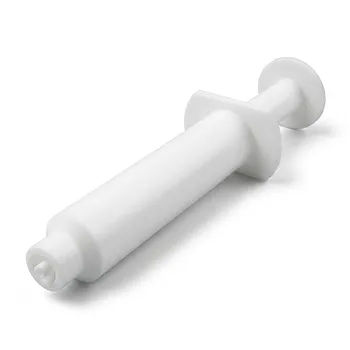
For example, a process may begin with controlled dosing through a PTFE dropping funnel into a reaction vessel. After reaction or extraction, separated phases can be transferred into a PFA bottle or another compatible container. A PTFE Buchner funnel and vacuum filtration system can then support solid-liquid separation without relying on fragile ceramic components. A virgin PTFE syringe paired with compatible FEP tubing can provide accurate dispensing to a syringe pump, sampling system, or specialized apparatus. By using chemically compatible components across the fluid path, laboratories can simplify procurement and reduce material mismatch between individual steps.
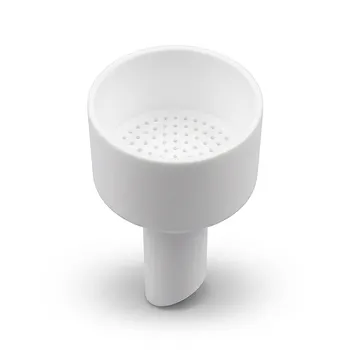
KINTEK PTFE Buchner funnels are available as corrosion-resistant, shatter-resistant alternatives for vacuum filtration and sample preparation. Their use is especially valuable where filtrates, washing solutions, or retained solids involve corrosive media. Customizable filtration systems can be designed around funnel size, filtration support requirements, vacuum interface, receiving vessel, and laboratory space constraints. While Buchner funnels are not separatory funnels, they complement the same high-purity fluid-handling ecosystem and can help laboratories standardize on fluoropolymer equipment for chemically demanding work.
Custom Machining for Real Laboratory Requirements
Many laboratory systems do not use standard dimensions, standard joints, or standard process conditions. An off-the-shelf funnel may not fit an existing flask. A burette may require a specific mounting position, capacity, or valve outlet. A reaction system may need a tailored adapter that connects PTFE and PFA components while maintaining practical access for addition, venting, collection, or cleaning. KINTEK addresses these needs through end-to-end PTFE and PFA custom CNC machining capabilities.
Customization can include funnel capacity, body shape, neck dimensions, threaded interfaces, outlet geometry, stopper compatibility, pressure-equalization features, valve style, flange connections, support brackets, and integration with associated labware. We can also support non-standard machined fluoropolymer parts for retrofits, replacement components, pilot equipment, and complete bespoke laboratory setups. This capability is useful when customers are replacing damaged glassware, updating a corrosive service line, building a new process skid, or developing a specialized analytical method.
A successful custom solution begins with the application, not simply a drawing. KINTEK can assess the chemical medium, concentration, temperature, pressure or vacuum conditions, required capacity, connection standard, flow-control objective, purity target, and cleaning routine. From that information, we can recommend a practical PTFE/PFA design and help identify the details that need attention before production. This approach supports both one-off specialized apparatus and repeatable, higher-volume supply programs.
Selection Considerations for Separatory Funnels and Burettes
When selecting a fluoropolymer separatory funnel, dropping funnel, or burette, consider the actual use case in detail. Capacity should match the required working volume while leaving suitable headspace and allowing manageable handling. The outlet and valve configuration should support the needed degree of control. Connection dimensions must align with the receiving flask, reaction vessel, tubing, or other equipment. For transparent or translucent components, the need for level visibility should be balanced against the application’s chemical and light-exposure conditions.
Chemical compatibility should be considered for every wetted component, including seals, valve elements, tubing, adapters, and collection containers. PTFE and PFA are highly resistant materials, but the complete system must be reviewed, particularly for combinations of elevated temperature, pressure, vacuum, volatile solvents, oxidizers, or hazardous acids. Process conditions also influence how equipment should be supported and operated. A properly designed assembly accounts for mechanical loading, thermal expansion, access for cleaning, and operator ergonomics as well as fluid compatibility.
For analytical burettes, users should define the intended titration method, volume range, readability needs, desired graduation format, titrant type, and valve sensitivity. For dropping funnels, users should specify whether the primary purpose is manual addition, steady dosing, pressure equalization, reflux integration, or continuous reaction. For separatory funnels, phase behavior, emulsion tendency, solvent compatibility, and desired collection method will guide the most suitable design. Sharing these details early makes it easier to develop equipment that works naturally within the laboratory’s established procedure.
Built for Research, Process Development, and Production Laboratories
KINTEK fluoropolymer funnels and burettes serve a broad range of technical environments. Research laboratories use them for synthesis, extractions, corrosive reagent addition, and method development. Analytical laboratories use high-purity components for trace analysis, sample digestion, titration, and contamination-sensitive preparation. Industrial laboratories use robust PTFE/PFA equipment for quality control, chemical processing, environmental testing, materials research, and pilot-scale evaluation. Semiconductor and advanced materials workflows may also benefit from fluoropolymer contact surfaces where cleanliness and chemical compatibility are central requirements.
The common requirement across these settings is control. Users need to know that a reagent can be added predictably, a liquid can be separated cleanly, a titrant can be dispensed precisely, and the equipment will tolerate the chemical duty. KINTEK focuses exclusively on high-performance fluoropolymers, allowing us to bring material knowledge and machining capability to the laboratory products customers depend on every day.
For standard fluoropolymer labware, custom constant-pressure separatory funnels, PFA burettes, PTFE valve assemblies, HF-resistant reflux apparatus, or fully integrated chemical-handling systems, contact KINTEK with your application details. Our team can help evaluate material selection, dimensions, interfaces, operating conditions, and customization requirements, then develop a professional PTFE/PFA solution for your laboratory, research project, or production program.
REQUEST A QUOTE
Our professional team will reply to you within one business day. Please feel free to contact us!
Related Articles
Why Your RDE Data Isn’t Following the Levich Equation—And How the Shroud Fixes It
Struggling with inconsistent RDE results? Learn how the precision of your PTFE shroud dictates hydrodynamic stability and why it's the key to accurate Levich plots.
Read more
The Hidden Risks of Medical Fluid Transfer: Why Standard Tubing Fails and How to Solve the Purity Puzzle
Discover why standard polymers fail in medical and pharma applications and how precision PTFE tubing ensures biocompatibility, sterilization resilience, and zero contamination.
Read more
Why Flawless Displays Begin with the "Invisible" Physics of PTFE Flower Baskets
Discover why high-tech display yields often fail due to substrate contamination and how precision-engineered PTFE flower baskets solve the "ghost defect" problem.
Read more
Why Trace Contamination Still Haunts Your Yields—And the Overlooked Role of Condenser Surface Integrity
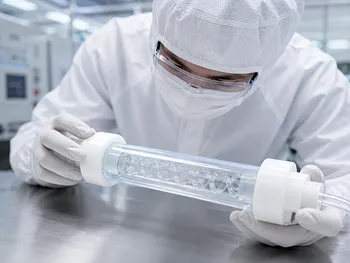
Learn how PTFE condenser tubes prevent ionic leaching and particle entrapment, securing sub-ppb purity and protecting silicon wafer yields in semiconductor manufacturing.
Read more
Why Your PTFE Microfluidic Chips Leak—and the Fabrication Secrets to a Perfect Seal
Stop struggling with leaky PTFE microchannels. Learn why standard bonding fails and how precision CNC machining and thermal sealing unlock chemical-resistant microfluidics.
Read more
Why Your pH Sensors Drift in Harsh Media—And the Material Science That Stops It
Stop constant sensor recalibration. Discover why ceramic junctions fail in industrial processes and how porous PTFE junctions provide a clog-resistant, low-maintenance solution.
Read more
Why Your PTFE Valves Leak at High Temperatures—and How to Master the "Creep" Factor
Discover the real-world temperature and pressure limits of PTFE valves. Learn why "cold flow" causes leaks and how precision engineering solves it.
Read more
Why Your High-Performance PTFE Seals Are Leaking—And How to Restore Their "Memory"
Discover why PTFE seals fail due to creep and cold flow, and how spring-energized designs provide the permanent resilience needed for extreme environments.
Read more
Why Your PTFE Liner Fails Before Its Melting Point: The Truth About Hydrothermal Temperature Limits
Discover why PTFE reactor liners fail at 220°C despite higher melting points. Learn how to choose between PTFE and PPL for safe, high-pressure synthesis.
Read more
Stop Chasing Leaks: Mastering PTFE Sealing Performance Across Extreme Temperatures
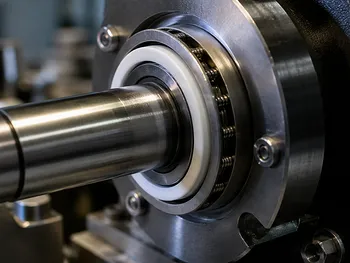
Learn why PTFE seals fail at temperature extremes and how precision engineering—from spring energizers to custom CNC fabrication—ensures leak-free performance.
Read more
Why Your "Perfect" PTFE Seals Are Leaking Under Pressure—and How to Stop the Flow
Discover how PTFE fillers like glass, carbon, and bronze eliminate "cold flow" and increase wear resistance by 1000x for high-pressure industrial sealing.
Read more
Why Your Teflon Microchannel Reactor Is Fighting Your Pump—and How to Win
Inconsistent flow in PTFE microreactors isn't always a pump problem. Learn how material science dictates fluid delivery and how to achieve precision flow.
Read more
Why the "Inner-Outer" Synergy is the Secret to Flawless Hydrothermal Synthesis
Discover why the dual-structure of hydrothermal reactors is critical for safety and purity, and how precision engineering prevents common lab failures.
Read more
Why Your PTFE Connections Leak Under Pressure—And the Precision Engineering That Stops It
Discover why standard fittings fail in high-purity labs and how the four-part mechanics of a two-ferrule PTFE connector ensure a leak-proof, high-grip seal.
Read more
Why Your High-Purity Fluid Systems Keep Failing: The Hidden Culprit in Your Connectors
Discover why standard fluid connectors fail in corrosive environments and how precision-machined PTFE components ensure leak-free, high-purity performance.
Read more
The Hidden Culprit Behind Batch Contamination: Why Your Sterilization Protocol Might Not Be Enough
Discover how high-precision PTFE valves eliminate leaching and cross-contamination in pharma and biotech, ensuring USP Class VI compliance and process purity.
Read more
Why Your Samples Stick and Your Valves Jam: Solving Laboratory Inefficiencies Through Surface Science
Discover how PTFE’s low friction coefficient (0.05–0.10) and non-stick properties prevent sample loss, contamination, and mechanical failure in high-precision labs.
Read more
The Hidden Physics of Leak-Proof Experiments: Why Over-Tightening Won't Save Your PTFE Seals
Stop fighting leaks with a wrench. Discover the fundamental science of PTFE sealing—from viscoelasticity to self-energization—to ensure reliability in your high-pressure lab applications.
Read more
The Anatomy of Precision: Why Your PTFE Rotor Valves Fail and How Understanding Their Structure Fixes It
Stop fluid system leakage and cross-contamination. Learn the 3 essential components of a PTFE rotor valve and why precision engineering is the key to reliability.
Read more
Beyond the Melting Point: Why Your Condenser Tubes Fail Under Thermal Stress—and How PTFE Solves It
Discover why PTFE condenser tubes withstand temperatures from -268°C to 260°C. Learn how molecular stability prevents thermal failure in industrial chemical processes.
Read more