The Mystery of the Deformed Liner
Imagine this: You’ve spent weeks preparing a delicate precursor solution for a hydrothermal synthesis. You check the datasheet for your Polytetrafluoroethylene (PTFE) liner, see a "maximum service temperature" of 260°C, and confidently set your oven to 230°C.
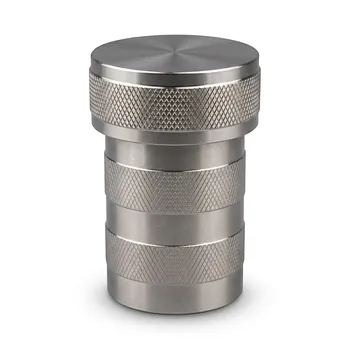
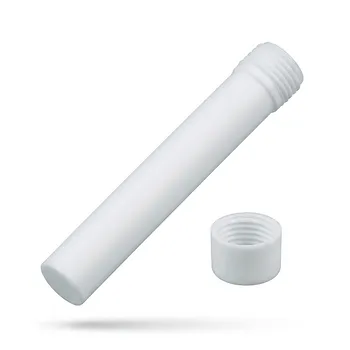
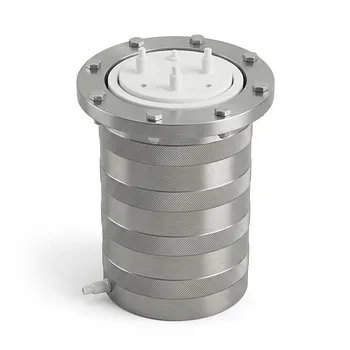
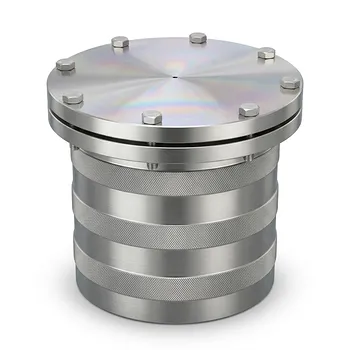
But when you open the stainless steel autoclave the next morning, the experiment is a disaster. The PTFE liner has warped and "flowed" into the threads of the reactor; the seal has failed, and your sample is contaminated or dried out.
If the material is rated for 260°C, why did it fail at 230°C? This is a frustration shared by researchers across the semiconductor and chemical sectors, and the answer lies in the difference between "thermal survival" and "structural integrity."
The "Datasheet Trap": Why Common Fixes Fail
When faced with a deformed liner or a leaked reactor, the most common response is to buy a "thicker" liner or to tighten the autoclave lid with more force. Some researchers try to "stage" the heating process, thinking a slower ramp-up will protect the plastic.
While these efforts are well-intentioned, they rarely solve the underlying problem. The frustration continues because the "fix" doesn't address the physical reality of how polymers behave under pressure. A failure in hydrothermal synthesis isn't just a lost sample; it’s a safety risk, a potential for equipment damage, and a significant drain on laboratory budgets.
The Root Cause: Understanding "Cold Flow" and Thermal Softening
To understand why your liner failed, we have to look past the melting point. While PTFE officially melts at 327°C, its mechanical properties begin to degrade much earlier.
In a hydrothermal reactor, you aren't just dealing with heat; you are dealing with autogenous pressure. At 220°C, the water inside your liner exerts a pressure of approximately 23 atmospheres (over 300 psi).
Here is the scientific reality:
- The Softening Point: PTFE starts to lose its structural rigidity long before it melts. As the temperature rises above 200°C, the polymer chains move more freely.
- The Creep Phenomenon: Under the high pressure generated inside the autoclave, the softened PTFE undergoes "creep" or "cold flow." It begins to behave like a very viscous liquid, slowly oozing into any available gap—usually the space between the liner and the stainless steel shell.
- The Seal Failure: Once the material deforms, the airtight seal is compromised. This is why 220°C is widely considered the "safe" upper limit for PTFE in hydrothermal applications, despite what a general material datasheet might say.
Engineering the Solution: Precision Fit and PPL Alternatives
Solving this problem requires moving beyond generic labware. To achieve consistent results at high temperatures, you need a two-pronged approach: precision engineering and advanced materials.
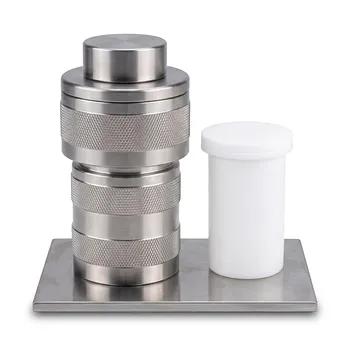
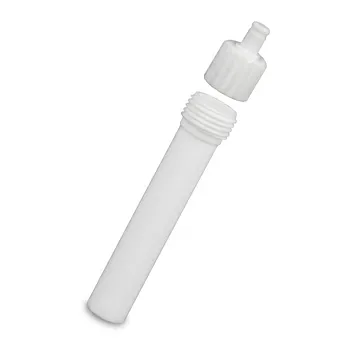
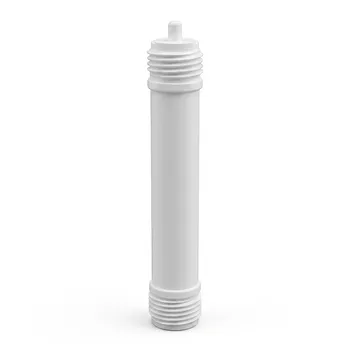
At KINTEK, we address the "creep" problem through Custom CNC Fabrication. By machining PTFE liners to exact tolerances, we minimize the "void space" between the liner and the autoclave wall. This provides the polymer with the structural support it needs to resist deformation, ensuring the seal remains intact even at the 220°C limit.
However, for researchers pushing the boundaries of new energy and chemical synthesis, 220°C isn't always enough. This is where Polyphenylene Polymer (PPL) comes in.
PPL is an advanced engineered plastic designed for higher thermal stability. While it shares the chemical resistance of PTFE, it possesses much higher mechanical strength at elevated temperatures. By switching to a PPL liner, you can safely extend your operating window to 280°C, allowing for reactions that are physically impossible in standard PTFE.
Beyond the Fix: Unlocking New Research Potentials
When you move from "hoping the liner survives" to "knowing the system is stable," your research changes. Solving the temperature limit issue isn't just about avoiding a mess; it’s about unlocking new possibilities:
- Accelerated Kinetics: Higher temperatures allow for faster reaction times, turning multi-day experiments into multi-hour ones.
- Advanced Crystallinity: Certain crystalline phases in materials like battery cathodes or zeolites only emerge at the higher energy states provided by the 240°C–280°C range.
- Repeatable Data: With precision-fit liners, the pressure environment remains constant across every run, ensuring your results are publishable and scalable.
Don't let the limitations of standard labware dictate the boundaries of your research. Whether you are navigating the nuances of PTFE thermal limits or need the high-temperature performance of PPL, our team is ready to help you design a solution that holds up under pressure. From custom-dimensioned liners to high-purity trace analysis tools, we provide the hardware that makes precision science possible.
Contact Our Experts today to discuss your project requirements and find the ideal material for your next breakthrough.
Related Products
- PTFE Lined High Pressure Digestion Vessel 50ml High Temperature Hydrothermal Synthesis Tank
- High Temperature Corrosion Resistant Hydrothermal Synthesis Reactor with TFM Inner Liner and Straight Cylinder Design
- High Purity PTFE Microwave Digestion Vessel Replacement Liner for Acid Sample Preparation and Trace Analysis
- High Purity PTFE Microwave Digestion Vessel for Soil and Food Analysis Acid Resistant Fluoropolymer Sample Preparation Liners
- High Purity TFM Microwave Digestion Vessels PTFE Acid Evaporation Liners Domestic GT-400 Equivalent Laboratory Reaction Containers
Related Articles
- Why Refractory Mineral Digestion Often Fails—and How PTFE Solves the Sample Integrity Crisis
- Why Your Hydrothermal Synthesis Results Are Inconsistent—And How the "Dual-Shell" Design Fixes It
- Why Your Hydrothermal Synthesis Results Are Inconsistent—and How to Master the Pressure
- The Specialist's Dilemma: Understanding the Critical Trade-offs of PTFE-Lined Valves
- Beyond Exotic Alloys: The Real Secret to Defeating Corrosion in Your Fluid Systems