High-Efficiency Microchannel Reactor Components for Controlled Continuous Chemistry
Microchannel reactors are engineered to perform chemical reactions in narrow, precisely defined flow paths rather than in a conventional stirred batch vessel or a large fixed-bed reactor. This compact flow architecture creates a high surface-area-to-volume ratio, bringing reacting fluids into close thermal contact with the reactor wall and heat-transfer medium. The result is faster heat removal or heating, efficient mass transfer, accurately defined residence time, and a more controllable reaction environment. For laboratories and process-development teams seeking repeatable continuous synthesis, these advantages make microchannel technology a practical route from exploratory chemistry to more robust, data-driven production methods.
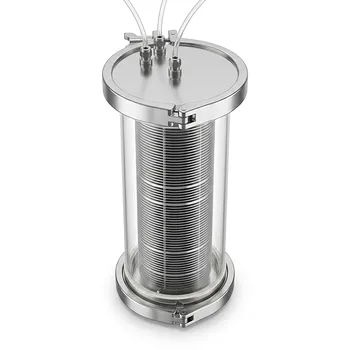
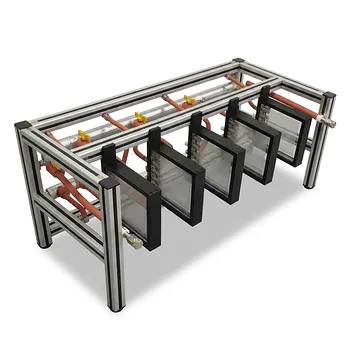
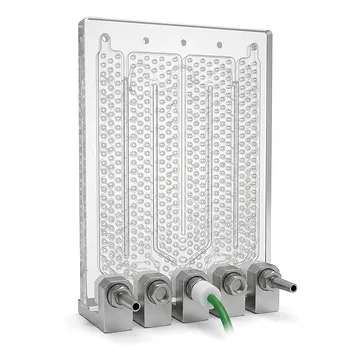
KINTEK supplies microchannel reactor components and systems for researchers who need to evaluate, optimize, and run continuous chemical processes with confidence. The range combines high-borosilicate-glass reactor bodies and viewing areas with PTFE flow channels or wetted components where chemical resistance is required. Depending on the model, systems can incorporate tubular or plate microchannel structures, automated control interfaces, integrated heat-exchange zones, transparent jackets, and configurable flow arrangements. This gives users a flexible platform for reaction screening, method transfer, photocatalytic synthesis, intensified process research, and educational microfluidics work.
Why Microchannel Geometry Changes Reaction Control
A microchannel reactor divides a reaction stream into small-volume flow passages. Because the distance from the fluid to a heat-transfer surface is short, thermal energy can be added or removed more quickly than in a large reaction mass. This is particularly important for strongly exothermic reactions, temperature-sensitive intermediates, and chemistries where a narrow operating range affects selectivity, conversion, or material quality.
In a conventional batch reactor, the bulk liquid can develop temperature differences between the vessel wall, impeller region, and less-well-mixed areas. As batch size increases, heat transfer and mixing may become less uniform, creating challenges such as delayed temperature response, localized overheating, inconsistent reaction progression, and variable product quality. A microchannel system reduces the hold-up volume and improves the relationship between fluid flow, heat-exchange area, and reaction time. Rather than relying solely on bulk agitation, it uses channel dimensions, flow rate, channel geometry, and thermal contact to create a more defined process environment.
The same design logic benefits endothermic reactions and reactions needing closely controlled heating. Stable, responsive temperature control helps researchers map reaction behavior with greater precision. It also helps establish meaningful process windows during formulation, catalyst, solvent, and stoichiometry studies. The practical benefit is not simply faster heat transfer; it is the ability to make reaction conditions more repeatable from one run to the next.
Efficient Heat and Mass Transfer
High heat-transfer performance is one of the central reasons laboratories adopt continuous-flow microreactors. The channel walls are close to the reacting stream, and many KINTEK configurations use high-borosilicate glass structures with integrated heat-exchange surfaces. Double-sided heat exchange, multi-chamber configurations, transparent glass jackets, and external oil-bath temperature control are available across the category to support different thermal requirements.
High-borosilicate glass is valuable in laboratory reactor construction because it offers good chemical durability, thermal stability, and visibility. Transparent reactor sections allow operators to observe liquid movement, gas formation, phase boundaries, color changes, particulate behavior, and other process signals during development. This visibility can be especially helpful when establishing stable flow conditions, diagnosing channel blockage risks, evaluating mixing behavior, or teaching the fundamentals of continuous-flow chemistry.
Mass transfer is similarly enhanced by the small dimensions of a microchannel. In liquid-liquid, gas-liquid, or gas-liquid-solid processes, the interface between phases can be refreshed more effectively than in poorly mixed large-volume equipment. Under suitable operating conditions, segmented or Taylor-flow patterns can repeatedly renew interfacial area, reducing resistance associated with limited gas solubility or slow phase contact. This is relevant when working with gases such as carbon dioxide, hydrogen, oxygen, or other process gases, provided the complete system is designed and operated with appropriate pressure, safety, and compatibility controls.
For carbon dioxide conversion studies, efficient gas-liquid contacting can help address the intrinsically limited solubility of carbon dioxide in many aqueous media. In catalytic processes, improved contacting may support more consistent access of reactants to active sites. Where catalysts are coated or immobilized on channel walls, the reactor can also reduce or eliminate a downstream catalyst-separation step. The exact outcome depends on the catalyst, flow regime, reaction kinetics, solvent system, and operating conditions, but the microchannel format provides a useful platform for systematically investigating these variables.
Controlled Residence Time and Reproducible Results
Residence time is the period a reactant stream spends inside the active reactor zone. In a continuous-flow microchannel reactor, it can be controlled through channel volume and pump flow rate. This gives researchers a clear way to study the effect of reaction time without the uncertainty often associated with heating and cooling a complete batch vessel.
For example, a team developing a fine-chemical route can adjust flow rate, temperature, reactant ratio, and mixing sequence in a structured test plan. Each run can be sampled and compared against defined operating parameters. Once suitable conditions are identified, they can be repeated or refined without needing to recreate the exact mixing and thermal history of a larger batch. This supports more reliable reaction optimization, better experimental records, and a clearer foundation for scale-up decisions.
Continuous operation can also improve consistency in synthesis of materials that are sensitive to concentration gradients, mixing variations, or temperature excursions. Polyoxometalates, specialty intermediates, nanoparticles, and other advanced materials may benefit from closely managed addition and reaction conditions. A microchannel reactor does not automatically solve every synthesis challenge, but it gives the user stronger control over the parameters most likely to influence uniformity.
Product Options for Different Laboratory Workflows
KINTEK Microchannel Reactor Components are designed around distinct research and process-development needs:
-
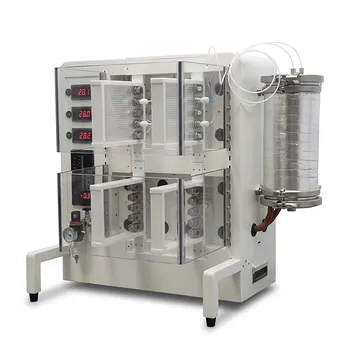
Continuous-flow microchannel reactor systems provide an integrated foundation for laboratory microfluidics, chemical synthesis, and process studies. They support workflows where users need coordinated flow, reaction, and temperature-control capability in a compact laboratory format.
-
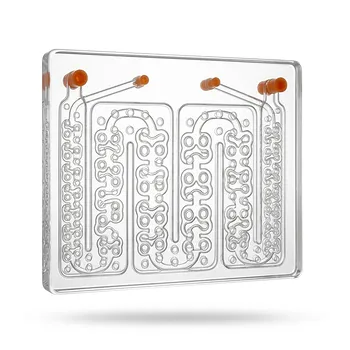
High-borosilicate glass plate microreactors offer transparent reaction zones and efficient heat exchange. Their plate-style channel architecture is useful for studies requiring direct observation, structured flow paths, and compact thermal management.
-
Three-chamber and dual-heat-exchange reactor structures add thermal control capacity for reactions with demanding heat-release or heat-input profiles. Integrated sintering helps form a unified glass structure while supporting a clean, compact reactor design.
-
Tubular PTFE microchannel reactors combine a corrosion-resistant flow path with a practical continuous-flow format. These configurations are appropriate for chemistries that require careful consideration of wetted-material compatibility and benefit from controlled heating through an oil bath or jacketed arrangement.
-
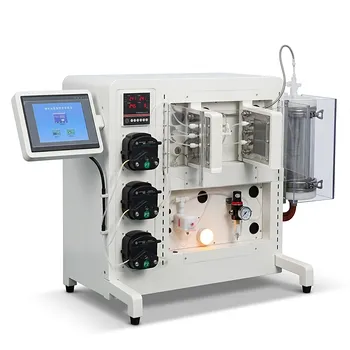
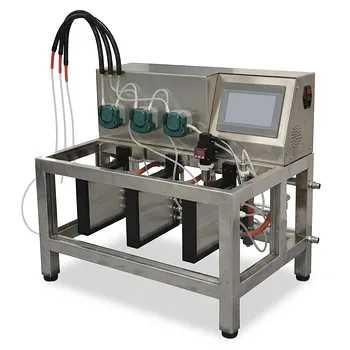
Automated benchtop microreactor systems use digital controls to support repeatable educational experiments, reaction demonstrations, and routine research workflows. Automated operation can improve consistency when multiple students, researchers, or operators must follow the same method.
-
Photocatalysis-oriented microreactors support research where light exposure, fluid flow, mass transfer, and thermal behavior must be considered together. Transparent borosilicate glass construction can assist with visual inspection and photochemical reactor development, while the final suitability depends on the light source, wavelength, reactor geometry, catalyst system, and target reaction.
-
Customizable microchannel reactor assemblies enable users to align channel materials, dimensions, heat-transfer arrangements, interfaces, and system layout with a specific experimental task. This is especially valuable when standard laboratory hardware cannot accommodate unusual reagents, required flow rates, connection standards, or bespoke process logic.
Material Selection for Chemical Compatibility
Material compatibility is fundamental to reliable flow chemistry. A reactor may offer excellent heat transfer and still be unsuitable if its wetted materials are incompatible with the solvents, reagents, catalysts, cleaning media, temperature, or pressure of the intended process. KINTEK's specialization in high-performance fluoropolymers is directly relevant here. PTFE and PFA are widely selected for laboratory fluid handling because of their broad chemical resistance, low surface energy, and usefulness in demanding corrosive service environments.
PTFE channels, tubing, fittings, valves, and custom-machined components can support flow paths where inertness and chemical durability are priorities. PFA may be selected where a fluoropolymer solution with transparency or different fabrication characteristics is advantageous. High-borosilicate glass, meanwhile, provides a transparent and thermally capable option for reactor sections where visual observation and structured glass microchannel geometry are beneficial.
The appropriate construction is process specific. Users should evaluate all materials in contact with the process stream, including seals, connectors, tubing, valves, pump heads, catalyst supports, and any sampling hardware. Important inputs include solvent composition, reagent concentration, operating temperature, pressure, possible gas evolution, particle loading, UV exposure, cleaning procedure, and the likelihood of swelling, permeation, or deposition. KINTEK can help translate those operating requirements into a more suitable fluoropolymer and glass component strategy.
Applications Across Flow Chemistry and Process Development
Microchannel reactors have broad relevance where reaction control and process intensification are needed. Common research and development applications include:
- Pharmaceutical intermediate synthesis and route scouting
- Fine-chemical synthesis and selective transformations
- Catalytic reaction screening and kinetic studies
- Hydrogenation, oxidation, carbonylation, and carbon dioxide utilization research
- Photocatalysis and photochemical process development
- Gas-liquid and multiphase reaction studies
- Polymer, resin, and specialty-material preparation
- Nanomaterial or particle synthesis requiring controlled mixing conditions
- Sample preparation and derivatization workflows
- Academic teaching in microfluidics, flow chemistry, transport phenomena, and reaction engineering
In carbon dioxide hydrogenation research, a microchannel format can be particularly attractive because exothermic heat release and gas-liquid mass transfer both require attention. High surface area relative to reaction volume can help reduce thermal gradients and improve heat removal compared with less-intensified reactor formats. When catalyst coatings are applied to channel walls, the system may simplify catalyst handling by retaining the active material in the reactor rather than requiring separation from the product stream. Such designs must be validated for catalytic activity, coating integrity, pressure drop, deactivation, and cleanability, but they illustrate how reactor geometry and catalyst architecture can work together.
For multiphase chemistry, small channels can create predictable flow regimes that are useful for experimental control. Rather than treating mixing as an uncontrolled side effect of stirring, the researcher can study phase ratio, total flow, segmented-flow behavior, back pressure, and residence time as defined process variables. This supports better understanding of how a reaction performs before it is transferred to a larger flow platform.
From Laboratory Discovery to Scalable Flow Processing
Scale-up in flow chemistry is not always achieved by simply enlarging a reactor channel. Maintaining heat-transfer performance, mixing behavior, pressure characteristics, and residence-time distribution can be more important than increasing physical dimensions. A common strategy is to scale by numbering-up: operating multiple similar channels or reactor modules in parallel. This approach seeks to retain the process characteristics established during development while increasing throughput.
KINTEK microchannel reactor components can serve as a practical starting point for this progression. A laboratory team can begin with a compact reactor to establish reaction conditions, collect data, and determine whether the chemistry benefits from continuous processing. Based on those results, the flow path, channel layout, thermal zones, feed system, and connection scheme can be adapted for a higher-throughput or multi-channel concept.
Successful transition requires disciplined process development. Researchers should characterize conversion, selectivity, yield, pressure drop, temperature profile, mixing sensitivity, catalyst lifetime, fouling tendency, startup and shutdown behavior, and product collection strategy. The ability to observe and control the process at laboratory scale makes microchannel systems valuable tools for generating this information. They help teams move from a promising reaction concept toward a process with defined operating limits and practical engineering data.
Custom Design Backed by PTFE and PFA Manufacturing Expertise
Many flow-chemistry projects have requirements that standard reactor hardware cannot fully meet. A research group may need a non-standard channel shape, a specific inlet arrangement, a custom manifold, compatibility with existing pumps, a larger or smaller internal volume, special sealing geometry, a corrosion-resistant sampling point, or a reactor holder built around a particular heating, cooling, or illumination setup. These needs are common when chemistry, analytical equipment, and safety requirements must work together as one system.
KINTEK provides more than off-the-shelf laboratory items. With end-to-end PTFE and PFA custom CNC machining capabilities, we can support custom fluoropolymer components, bespoke fluid-transfer assemblies, and tailored laboratory reactor solutions. Our experience spans everyday fluoropolymer labware, high-purity trace-analysis tools, cleaning and storage tanks, tubing, fittings, valves, sample-preparation equipment, electrochemical cells, microwave digestion vessels, and non-standard machined parts. This breadth allows us to consider the reactor as part of a complete laboratory flow path rather than as an isolated component.
Customization discussions can cover:
- PTFE or PFA channel and manifold materials
- Channel diameter, length, geometry, and internal volume
- Inlet, outlet, mixing, sampling, and drainage configuration
- Compatible tubing, fittings, valves, and connectors
- Glass and fluoropolymer component integration
- Heat-transfer interface and mounting requirements
- Compatibility with pumps, temperature controllers, back-pressure regulators, and analytical equipment
- Reactor holders, shields, collection vessels, and supporting labware
- Prototype quantities through to repeatable high-volume production
This capability is useful for both research laboratories and equipment builders. A university researcher may require a one-off apparatus for a novel reaction study. A pharmaceutical or specialty-chemical team may need a reproducible component set for method development. An OEM may need precision-machined fluoropolymer parts that integrate into a proprietary instrument. In each case, the design should begin with the operating conditions and functional requirements, then move toward material selection and manufacturable geometry.
Practical Considerations for Selecting a Microchannel Reactor
Selecting the right reactor begins with the chemistry, not the catalog description. Define the reactants and their concentrations, solvent system, catalyst form, target throughput, expected reaction time, temperature range, pressure requirement, and whether one or more phases will be present. Consider whether the reaction releases gas, forms solids, deposits films, changes viscosity, or requires irradiation. These factors influence channel size, materials, connections, heat exchange, pumping method, and cleaning strategy.
Channel size requires particular attention. Smaller channels can provide strong heat and mass transfer but may be more sensitive to particles, precipitation, viscous fluids, or fouling. Larger channels may accommodate more forgiving process streams but can alter transport behavior. For heterogeneous catalysis or crystallizing systems, users should assess filtration, catalyst particle size, wall deposition, flushing procedures, and access for maintenance. A transparent glass section can be valuable for observing these conditions during early testing.
Temperature control should be chosen according to the reaction's thermal load and required precision. Integrated heat-exchange surfaces, dual-sided thermal contact, jacketed glass sections, and oil-bath control each serve different experimental arrangements. Process safety must be addressed comprehensively, including pressure-rated hardware, appropriate containment, compatible seals, pressure relief where required, safe gas handling, ventilation, and operating procedures. A microreactor can reduce the instantaneous reaction volume, but it does not remove the need for a thorough risk assessment.
Build a Reactor Setup Around Your Actual Process
Whether you need a standard continuous-flow microreactor for teaching and early-stage synthesis or a custom PTFE/PFA assembly for challenging corrosive chemistry, KINTEK can help define a configuration that fits the process. Share your reaction media, temperature and pressure range, desired flow rate, channel preference, thermal-control method, and connection requirements, and our team can assess suitable materials and component options.
Contact KINTEK about your microchannel reactor project to request technical guidance, discuss a customized reactor layout, or obtain a quotation for laboratory-scale and production-volume components. Our fluoropolymer manufacturing expertise, precision CNC capabilities, and broad laboratory-product experience enable us to support specialized flow-chemistry hardware from initial concept through repeatable supply.