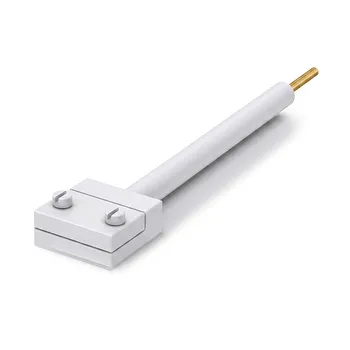
Precision Battery Testing Fixtures for Reproducible Electrochemical Data
In battery and electrochemical research, the fixture is not merely an accessory between an instrument and a sample. It is a critical part of the measurement system. A poorly matched clamp, unstable contact point, corroding hardware component, or uncontrolled exposed area can introduce resistance, noise, parasitic reactions, and inconsistent results. These issues can obscure the real behavior of an electrode material, separator, current collector, coating, or electrolyte system. KINTEK battery testing fixtures and molds are engineered to give laboratories a more dependable physical interface between test samples and their electrochemical cells, helping researchers focus on material performance instead of avoidable setup variation.
Our category centers on customizable electrode clamps, sample holders, support bodies, and electrochemical fixtures suitable for battery development, corrosion testing, cyclic voltammetry, electrocatalysis, coating evaluation, and related materials research. The available designs accommodate graphite sheets, glassy carbon sheets, reticulated vitreous carbon, thickened electrodes, metal coupons, current collectors, and other flat or shaped specimens. By combining chemically resistant fluoropolymer bodies with carefully selected conductive contact materials, KINTEK provides fixture solutions for laboratories that need stable contact under aggressive chemical conditions.
Why Contact Quality Matters in Battery Testing
The electrical path from an electrochemical workstation or battery cycler to the working sample must remain consistent throughout the experiment. When a sample is held loosely, unevenly, or with a contact material that is unsuitable for the electrolyte and voltage window, measured performance may no longer represent the sample alone. Additional contact resistance can distort polarization behavior, increase apparent impedance, alter current distribution, and compromise comparison between test runs. In long-duration experiments, corrosion or mechanical relaxation can progressively change the contact condition and make a dataset difficult to interpret.
A well-designed fixture addresses these risks by applying secure, repeatable clamping force to the intended conductive area while isolating other regions from the electrolyte. It can also define the active reaction area, support fragile or porous structures, and preserve a consistent geometry from one sample to the next. This is especially important when evaluating coated electrodes, graphite materials, carbon papers, porous electrodes, foils, or small research samples that do not fit standard battery hardware.
Dedicated battery testing fixtures may use precision pressure-adjustment mechanisms to maintain an appropriate interface between membrane materials, slurry-coated electrodes, and current collectors. Controlled pressure helps lower contact resistance without damaging delicate layers or compressing porous materials beyond the desired condition. In applications involving high-salt electrolytes or corrosive solutions, fluoropolymer fluid-contacting components provide an additional advantage: they retain chemical stability while reducing the risk of corrosion-related metal exposure that could cause leakage paths, contamination, or short-circuit concerns.
Fluoropolymer Construction for Aggressive Electrolytes
KINTEK is dedicated to high-performance fluoropolymer laboratory products. This expertise is particularly relevant to battery testing fixtures because many electrochemical environments are demanding on conventional construction materials. PTFE, PFA, PVDF, and PEEK components can provide valuable chemical resistance, electrical insulation, mechanical support, and long service life when correctly selected for the test environment.
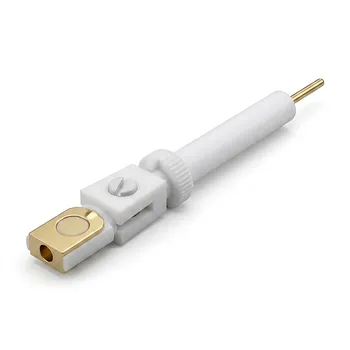
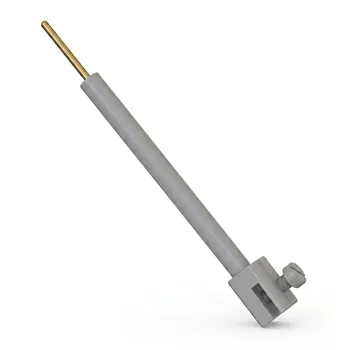
PTFE fixture bodies and holders are widely valued for their chemical inertness and insulating behavior. They are well suited to many electrolyte-contacting and laboratory-facing surfaces where metal corrosion, ion contamination, or unintended conductivity must be minimized. PTFE also supports the clean, low-contamination handling required in sensitive electrochemical work. KINTEK PTFE electrochemical sample clamps and holders are designed to secure a specimen while keeping the insulating structure separated from the intended conductive contact path.
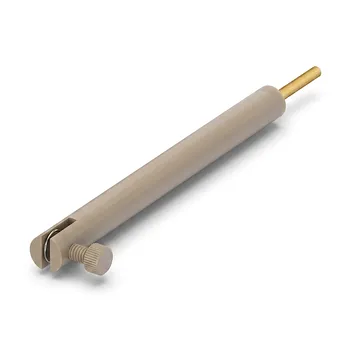
PEEK electrode clamps offer a useful balance of chemical resistance, mechanical strength, and dimensional stability. In demanding setups where repeated tightening, compact geometries, or robust machining tolerances are required, a PEEK body can provide durable structural support. PEEK holders are suitable for glassy-carbon and graphite-sheet electrodes, as well as other sample formats where dependable clamping and controlled positioning are essential.
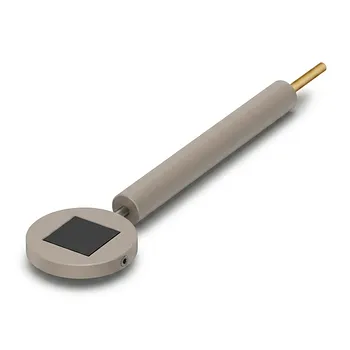
PVDF sample support bodies are used where corrosion resistance and reliable area control are priorities. A support body can help establish the exposed working-electrode region for corrosion testing and electrochemical analysis. Defining this reaction area supports more meaningful current-density calculations and improves consistency across repeated experiments. This is valuable for materials screening, coating development, corrosion-rate studies, and any workflow in which comparative data quality matters.
The practical benefit of using fluoropolymer-based fixture components is not limited to surviving chemical exposure. These materials help isolate the electrical circuit to the intended sample and contact interface. Proper isolation reduces the opportunity for unintended conductive paths and supports cleaner interpretation of electrochemical behavior. For researchers working with corrosive electrolytes, high ionic strength, or prolonged soak periods, material selection in the fixture can be just as important as the sample geometry itself.
Conductive Contacts Matched to the Experiment
While the fixture body provides insulation and chemical resistance, the conductive contact must provide a stable, low-resistance connection to the specimen. KINTEK offers or supports fixture configurations using materials such as platinum, gold, stainless steel, and graphite, selected according to the research objective, sample type, electrolyte, and potential range.
Platinum contact sheets and replaceable platinum tips are appropriate for many high-purity electrochemical applications because platinum offers excellent conductivity and strong resistance to corrosion in numerous environments. Platinum-contact electrode clamps can provide a stable electrical connection to graphite, glassy carbon, and other electrode specimens while helping minimize concerns associated with less inert contact materials. Replaceable contact components also support efficient maintenance when a contact becomes worn, contaminated, or needs to be adapted to a different sample format.
Gold-wire electrode clamps are useful in sensitive testing where the choice of contact material affects background behavior. High-purity gold contacts can help reduce interference in applications where hydrogen evolution or other unwanted reactions must be carefully controlled. A precision opening combined with a chemically inert PTFE or PEEK body enables controlled contact with thin or delicate specimens, giving researchers a purposeful solution for specialized electrochemical cell work.
Stainless-steel electrode clips offer a practical, robust option for general-purpose connections and adaptable laboratory setups. With replaceable electrode tips and customizable dimensions, they can support a broad range of experimental arrangements. The contact material should always be selected with the actual electrolyte and exposure conditions in mind; in applications where corrosion resistance and electrochemical inertness are critical, platinum or gold contact options may be more appropriate.
Graphite electrode clamps and contacts can be selected for workflows where compatibility with carbon-based materials, conductivity, and application-specific geometry are required. PTFE-coated and fluoropolymer-supported graphite clamp designs can combine a conductive connection with protection from corrosive surroundings. Interchangeable sample holders, custom clamping widths, and custom lengths make these solutions adaptable to real research fixtures rather than forcing nonstandard specimens into an unsuitable standard format.
Product Options in This Category
KINTEK offers several fixture and holder formats to support varied sample geometries and electrochemical testing requirements:
-
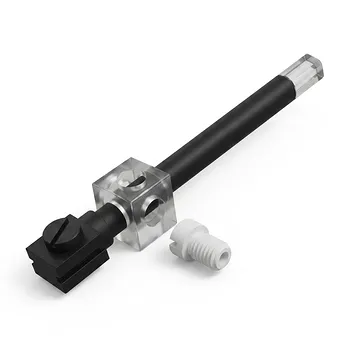
PTFE electrochemical sample clamps for graphite sheets and reticulated vitreous carbon secure thicker, porous, or irregular carbon-based materials while using a chemically resistant insulating body. These designs are valuable where conventional flat-sample clips do not adequately support the specimen.
-
Customizable PTFE-coated graphite electrode clamps provide a conductive graphite interface with corrosion-resistant fluoropolymer protection. Interchangeable holders and adjustable clamping dimensions make them suitable for research programs testing several electrode formats.
-
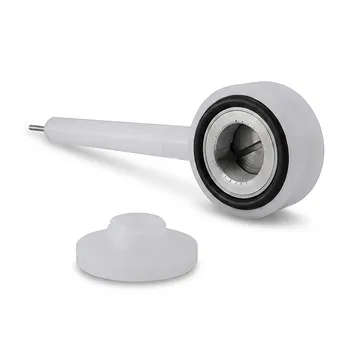
PVDF sample support bodies help control the effective reaction area in corrosion and electrochemical analysis. This is useful when obtaining comparable current-density, polarization, or degradation data across multiple samples.
-
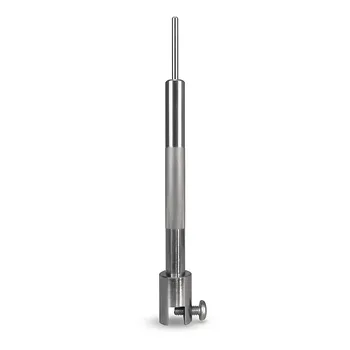
Stainless-steel electrode clips with replaceable tips provide a versatile option for laboratory electrochemical cells, cyclic voltammetry arrangements, corrosion studies, and battery test connections. The replaceable-tip design can simplify upkeep and experimental adaptation.
-
Replaceable platinum electrode clamps with PTFE holders combine a corrosion-resistant insulating body with a high-purity conductive interface. These are a strong choice for researchers seeking stable electrical contact and material compatibility in demanding electrochemical environments.
-
PEEK glassy-carbon electrode clamps provide durable structural support for glassy carbon or similarly sized specimens. Replaceable tips and custom dimensions allow the fixture to be tailored to sample thickness, terminal layout, and cell geometry.
-
Gold-wire electrode clamps with fluoropolymer bodies are intended for highly sensitive electrochemical studies. High-purity gold contact components and precision contact geometry support experiments where background effects and contact contamination require close attention.
-
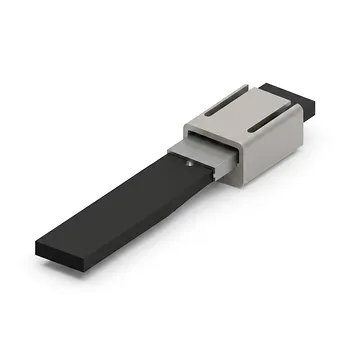
Glassy-carbon and graphite-sheet electrode holders with platinum contacts provide secure, reproducible connection for sheet materials used in electrochemical cells. A PEEK body and high-purity platinum contact arrangement can help maintain a clean, stable interface during repeated tests.
-
PTFE holders for thickened samples with platinum contact sheets use a double-bolt fixation approach to secure thicker specimens. They are useful where greater holding force and consistent contact pressure are necessary without sacrificing chemical resistance.
Support for Common Battery and Electrochemical Workflows
Battery-material research often begins with samples that are far from standardized. A researcher may be evaluating a new slurry-coated current collector, a porous conductive scaffold, a graphite composite, a protective coating, a metal foil, or a small section cut from a pilot-scale electrode. Standard coin-cell components and generic clips may not provide the required exposed area, pressure distribution, or reliable electrical path. A purpose-matched fixture can make these materials easier to test, compare, and scale through development.
For electrode screening, clamps and holders help connect a working electrode to an electrochemical workstation while controlling how the sample enters the cell. Secure clamping supports repeatable cyclic voltammetry, chronoamperometry, chronopotentiometry, electrochemical impedance spectroscopy, and polarization measurements. The selected holder should keep the contact point stable, avoid damaging the electrode coating, and maintain appropriate separation between conductive parts and the electrolyte.
For corrosion testing, an area-defining support body or sample holder helps establish a known exposure zone. This enables a laboratory to compare corrosion current density, passive behavior, breakdown potential, coating integrity, and long-term degradation more consistently. Fluoropolymer bodies are particularly useful where the test solution is corrosive and the fixture must not become a significant source of metallic contamination or electrochemical interference.
For porous and carbon-based electrodes, including reticulated vitreous carbon, carbon paper, graphite sheets, and glassy carbon, the fixture must provide contact without crushing, tearing, or creating unreliable point loading. Appropriate clamping geometry can distribute force more effectively and preserve the sample's intended structure. Conductive contacts such as platinum sheets or configured graphite elements can then transfer current reliably into the material.
For coated electrodes and current collectors, controlled pressure is essential. Too little pressure can raise contact resistance and cause unstable signals. Too much pressure can crack a brittle coating, delaminate an active layer, deform a foil, or change a porous structure. KINTEK can develop fixture geometry and fastening methods around the actual sample thickness, coating composition, active area, and test-cell arrangement to support a more controlled interface.
For high-salt and corrosive electrolyte environments, the material compatibility of every wetted component should be considered. Fluoropolymer bodies provide strong resistance in many challenging chemical systems, but final material selection should account for the specific electrolyte composition, solvent, temperature, pressure, potential range, and duration of exposure. Selecting the correct contact material is equally important because the conductive element must withstand the experiment without introducing unacceptable electrochemical effects.
Reproducibility Through Controlled Geometry and Pressure
Reproducibility is one of the principal reasons to use a dedicated fixture rather than an improvised connection. Two specimens may be chemically identical but produce different results if their active areas, immersion depths, contact locations, or clamping forces are inconsistent. A fixture establishes a physical reference for the experiment. It can locate the sample, define the contact zone, support a repeatable exposed area, and provide a consistent route for electrical connection.
In battery testing, small changes in interface resistance can be consequential. Apparent rate capability, voltage response, impedance behavior, and cycle-to-cycle consistency can all be affected by the connection between the sample and the measurement system. Controlled contact pressure helps reduce avoidable resistance while preserving the sample. For slurry electrodes, soft membranes, separator-related studies, and layered assemblies, this pressure control can be central to obtaining data that is both stable and comparable.
A well-considered fixture also supports efficient laboratory practice. Repeatable mounting reduces setup time, makes method transfer easier between researchers, and lowers the risk of sample-handling mistakes. Replaceable contact tips can reduce downtime and extend the useful life of a fixture. Interchangeable holders can enable one platform to handle related sample formats, reducing the need to purchase separate hardware for every variation in a research program.
Custom Battery Fixture and Mold Development
Many battery research tasks require a configuration that cannot be addressed by an off-the-shelf clamp. Sample dimensions may be unusual, the electrode may have a fragile coating, the cell may need a nonstandard seal arrangement, or the test protocol may require a specific active area and pressure profile. KINTEK's PTFE/PFA custom CNC machining capability supports the development of nonstandard components, custom fixture bodies, bespoke sample holders, and laboratory-specific electrochemical setups.
Customization can include sample clamping width, holder length, contact position, terminal form, bolt arrangement, reaction-area geometry, body material, conductive-contact material, and compatibility with an existing cell or instrument connection. We can also help evaluate whether PTFE, PFA, PVDF, PEEK, platinum, gold, graphite, or stainless steel is appropriate for the mechanical and chemical requirements of the application. The best configuration depends on the full operating context rather than a single specification.
When requesting a custom solution, it is helpful to provide the sample drawing or dimensions, thickness range, conductive region, desired exposed area, electrolyte information, operating temperature, expected pressure or force, cell type, and instrument connection requirements. Photographs of an existing setup, even when it is only a preliminary arrangement, can also clarify mounting constraints. With this information, KINTEK can recommend a practical fixture concept that supports the intended measurement and is manufacturable for prototype, routine laboratory, or higher-volume use.
Our approach is especially useful for laboratories moving from exploratory research toward more disciplined test methods. As an electrode design progresses, a tailored fixture can replace inconsistent manual contacts with a controlled, repeatable configuration. This supports more reliable comparison across formulations, batches, treatments, and cycling conditions. It can also help create a documented experimental method that is easier to reproduce internally or transfer to collaborators.
Choosing the Right Fixture Configuration
The right battery testing fixture begins with the test objective. For a thin graphite or glassy-carbon sheet, a compact holder with a stable high-purity contact may be sufficient. For a thick porous sample or reticulated vitreous carbon, a clamp with greater opening capacity and secure mechanical support may be more appropriate. For corrosion studies, an area-defining PVDF support body may be the priority. For sensitive electrochemical measurements, gold or platinum contacts and a low-contamination fluoropolymer body may be preferred.
Consider the following factors when selecting or specifying a fixture:
- Sample type and thickness: Flat sheets, porous structures, coated foils, metal coupons, and thick composites require different clamping geometries.
- Active-area control: Determine whether the experiment needs a defined exposed area for current-density or corrosion-rate calculations.
- Contact material: Match platinum, gold, graphite, or stainless steel to the conductivity, chemical compatibility, and electrochemical requirements of the test.
- Fixture body material: Select PTFE, PFA, PVDF, or PEEK according to electrolyte compatibility, temperature, mechanical load, and desired rigidity.
- Pressure requirements: Specify whether controlled or adjustable contact pressure is needed to reduce resistance without damaging the sample.
- Electrolyte and temperature: Consider all wetted materials under the actual concentration, solvent system, temperature, and duration of the test.
- Instrument and cell interface: Confirm terminal dimensions, lead connections, cell clearance, sealing needs, and mounting orientation.
- Maintenance needs: Replaceable tips, modular holders, and cleanable surfaces can improve long-term laboratory efficiency.
Selecting the fixture as part of the test design helps prevent uncertainty later in the data-analysis stage. The goal is not simply to hold a sample in place. The goal is to create a stable and chemically appropriate measurement interface that produces trustworthy information about the sample itself.
Work With KINTEK on Your Battery Test Setup
KINTEK combines fluoropolymer manufacturing expertise with practical support for electrochemical laboratory hardware. Whether you need a standard electrode clamp, a platinum-contact holder for graphite sheets, a PVDF support body for corrosion analysis, or a fully customized battery testing fixture built around your own cell geometry, we can help develop a configuration suited to your materials and method.
For a recommendation or quotation, please contact KINTEK through our inquiry form. Share your sample dimensions, test medium, required contact material, desired reaction area, and any drawings or photos of the current setup. Our team can help translate your testing requirements into a durable PTFE, PFA, PVDF, or PEEK fixture solution with the conductive contacts, pressure control, and custom machining needed for reliable electrochemical research.