KINTEK microwave digestion vessels and accessories support fast, controlled mineralization for trace-element analysis, environmental monitoring, food testing, geological assays, pharmaceutical research, and industrial quality control. Our range includes custom PTFE, TFM, and PFA microwave vessel liners and replacement vessels; high-pressure inner cups, lids, and reflux-cap digestion tubes; 5 mL and 100 mL sample vessels; 15-position and 44-position racks; graphite digestion and acid-removal systems; and PTFE-edged graphite heating plates. Built for compatibility, purity, and repeatable sample preparation, these fluoropolymer components help laboratories process soils, foods, waters, plants, sludge, ores, and other complex matrices with confidence.
Toggle Categories
Get Instant Support
Choose your preferred way to connect with our team
Response Time
Within 8 hours on working days, 24 hours on holidays
Microwave Digestion Vessels & Accessories


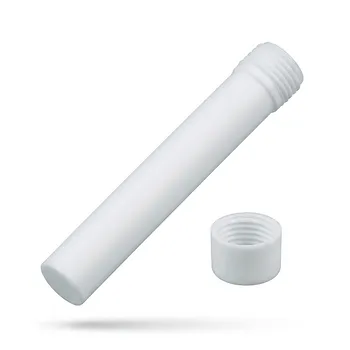
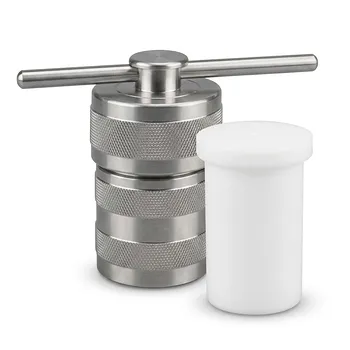
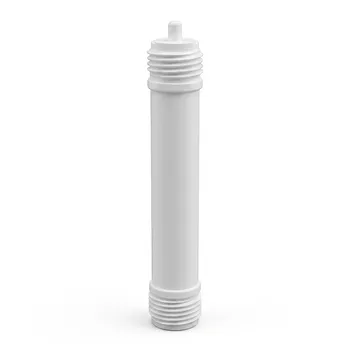
High-Purity Microwave Digestion Vessels for Reliable Trace Analysis
Microwave digestion is a critical sample-preparation step when analytical results depend on turning difficult solid, liquid, or biological matrices into clear, representative solutions. Before measurement by ICP-MS, ICP-OES, AAS, ion chromatography, or other elemental-analysis methods, laboratories need a digestion process that minimizes contamination, prevents sample loss, and provides consistent recovery from one batch to the next. KINTEK microwave digestion vessels and accessories are engineered around those practical requirements.
Our product category covers the fluoropolymer components that come into direct contact with the sample and digestion chemistry: PTFE, modified PTFE/TFM, and PFA vessel liners, cups, digestion tubes, reaction bottles, caps, lids, racks, and protective holders. We also provide compatible graphite heating, digestion, acid-removal, and evaporation equipment for workflows that extend beyond the microwave cycle. This breadth allows laboratories to specify a complete, coordinated solution rather than adapting generic containers to demanding acid-digestion work.
Why sealed microwave digestion matters
In a microwave digestion workflow, a weighed sample is combined with an appropriate acid or acid mixture, placed in a sealed vessel assembly, and heated using controlled microwave energy. Because the reaction occurs in a closed environment, the digestion solution can reach temperatures above its normal atmospheric boiling point. The higher temperature and pressure accelerate oxidation, dissolution, and matrix decomposition, allowing laboratories to process challenging materials far faster than with many conventional open-vessel methods.
For example, mixtures involving nitric acid, hydrochloric acid, hydrofluoric acid where an approved method requires it, hydrogen peroxide, or aqua regia can be used to break down samples according to the laboratory's validated method and equipment instructions. Sealed processing can help retain volatile analytes and reduce airborne acid exposure compared with open heating. The intended outcome is a digest that is suitable for accurate downstream dilution, filtration where required, calibration, and instrumental measurement.
The vessel is therefore not a passive container. Its internal surfaces, dimensions, seal geometry, liner fit, material purity, wall uniformity, and compatibility with the microwave system all affect the reliability of the preparation step. A poorly fitting replacement liner, damaged cap, inconsistent thread, or unsuitable material can introduce leaks, carryover, elevated blanks, incomplete digestion, and unnecessary downtime. KINTEK addresses these issues through high-purity fluoropolymer selection and precision custom CNC machining.
Fluoropolymer materials selected for aggressive chemistry
PTFE, TFM, and PFA are widely valued in analytical laboratories for chemical inertness, low surface energy, corrosion resistance, and low contamination potential. Their non-stick surfaces support easier cleaning and can improve sample transfer and recovery, particularly when handling residues or highly reactive acid mixtures. They are microwave-transparent materials, allowing microwave energy to interact primarily with the digestion solution rather than the vessel liner itself.
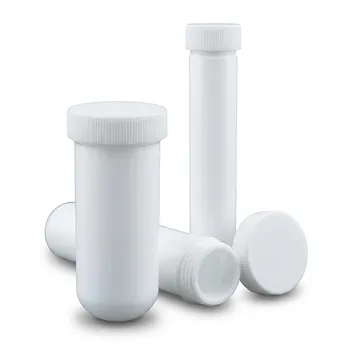
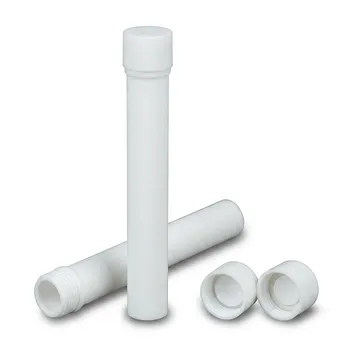
- PTFE digestion vessels and tubes provide broad resistance to common laboratory acids and are a practical choice for many routine sample-preparation applications. KINTEK manufactures PTFE replacement vessels, straight-wall vials, U-bottom or flat-bottom tubes, bottles, inner cups, and custom liners for laboratory systems.
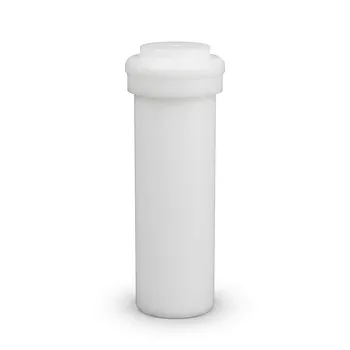
- TFM microwave digestion vessels offer a modified PTFE option often selected for demanding high-temperature, high-purity, and high-pressure digestion applications. TFM components can be produced as vessel liners, 100 mL containers, lids, caps, and custom assemblies for trace analysis and instrument-specific requirements.
- PFA digestion components are useful where high purity, smooth surfaces, visibility, and dimensional precision are especially important. PFA can be specified for custom digestion tanks, reaction vessels, sample-contact fittings, and other corrosion-resistant laboratory parts.
Material selection must always be matched to the actual chemistry, operating temperature, pressure program, vessel design, microwave instrument, sample load, and validated method. The fluoropolymer liner is only one part of a complete pressure-rated vessel assembly. Laboratories should follow the limits supplied for their microwave system and never exceed the manufacturer-approved operating conditions. KINTEK can help define a suitable material and geometry for the intended application, but final operating parameters should remain under the control of the laboratory's approved safety procedures and instrument documentation.
Low blanks for trace and ultra-trace work
When laboratories measure trace metals or elements at very low concentrations, every sample-contact surface matters. Impurities released from unsuitable materials, retained residues from prior batches, or inconsistent cleaning can elevate background values and compromise detection limits. This is especially relevant for ICP-MS and ICP-OES workflows involving environmental contaminants, food safety, high-purity chemicals, semiconductor-related materials, geological reference materials, and pharmaceutical samples.
KINTEK designs high-purity fluoropolymer labware to support low-background sample preparation. Smooth, chemically inert surfaces reduce the likelihood of reaction with aggressive digestion media and help make thorough cleaning more manageable. Precision-machined vessels, liners, caps, and holders can also provide consistent interfaces, reducing uncertainty caused by loose or mismatched replacement parts.
For blank-sensitive methods, laboratories commonly establish cleaning, conditioning, blank-control, and batch-traceability procedures appropriate to their analytes and regulatory requirements. Our custom capabilities support those procedures by enabling dedicated vessel formats, sample-contact geometries, markings, and production configurations. Whether a laboratory needs a compact 5 mL inner liner for limited sample mass or a larger 100 mL vessel for higher-volume preparations, KINTEK can tailor the component around the working method.
Applications across analytical laboratories
Microwave digestion vessels are used wherever complex matrices must be decomposed efficiently before elemental or chemical analysis. KINTEK products are suited to a broad range of laboratory environments.
Environmental testing: Soil, sediment, sludge, wastewater solids, contaminated land samples, and industrial residues often contain silicates, organic matter, and metal-bearing particles that are difficult to dissolve through simple open heating. Microwave digestion can reduce preparation time from hours to a controlled cycle commonly measured in minutes, while helping laboratories obtain more complete matrix decomposition. High-purity PTFE or TFM liners help keep blank levels under control for trace-level contaminant testing.
Food, agriculture, and biological materials: Plant tissue, feed, fertilizer, manure, food products, and biological samples may require rapid, reproducible digestion before nutrient, toxic-element, or contaminant screening. Closed-vessel digestion helps process organic matrices efficiently and can support retention of volatile species when methods require it. Custom tube volumes, racks, and vessel configurations help laboratories align throughput with routine batch sizes.
Geology, mining, and mineral analysis: Ores, concentrates, rocks, refractory minerals, and silicate-rich materials are among the most demanding sample types. Under validated high-temperature, high-pressure microwave conditions, digestion chemistry can access elements bound within resistant crystalline matrices more effectively than conventional low-temperature approaches. KINTEK offers corrosion-resistant vessel liners and custom geometries for geochemical laboratories working with small, precious, or difficult samples.
Industrial quality control: Metal finishing, catalysts, batteries, pigments, polymers, chemicals, electronic materials, and process residues often require dependable sample preparation before release testing, failure analysis, or incoming-material inspection. Consistent vessel dimensions and replacement parts help protect routine laboratory schedules and method repeatability.
Research and specialty laboratories: Universities, contract testing laboratories, materials-science teams, and method-development groups often need vessel formats that standard catalog products do not provide. KINTEK's CNC machining capability is particularly valuable for custom reaction chambers, low-volume cups, sample holders, special lids, adapters, and integrated fluoropolymer assemblies.
Replacement vessels, liners, lids, and system-fit components
A microwave digestion system may have a long service life, but its sample-contact liners, seals, caps, lids, and holders are consumable or service-sensitive components. Replacing worn parts promptly helps laboratories maintain a dependable workflow and avoid interruption during scheduled analysis. KINTEK manufactures custom and replacement fluoropolymer vessels for applications including GT-400-compatible systems and other instrument-specific configurations.
A replacement component should be evaluated for more than nominal volume. The critical details can include outside diameter, internal cavity shape, wall thickness, bottom profile, lip or flange geometry, thread form, cap interface, rack fit, pressure-assembly clearance, and the required fluoropolymer grade. Accurate dimensional control matters because a vessel must sit correctly within the system's supporting hardware and seal as intended within the approved assembly.
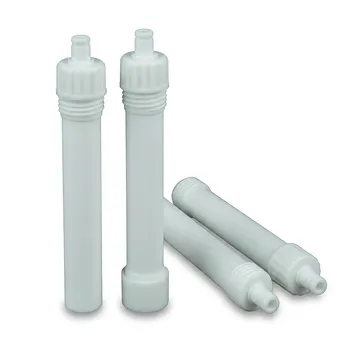
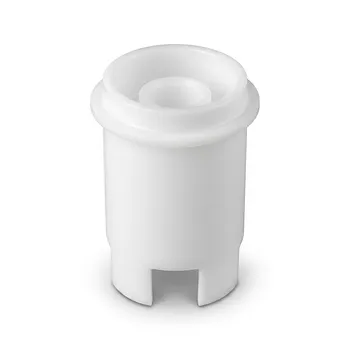
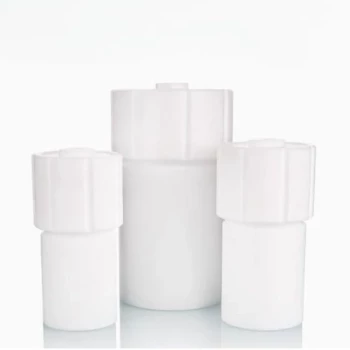
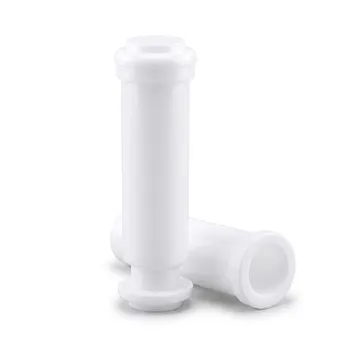
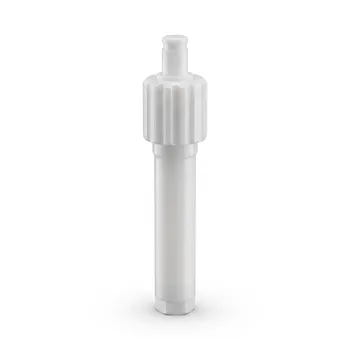
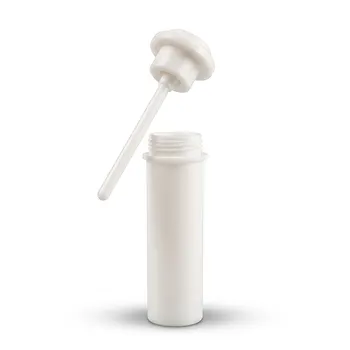
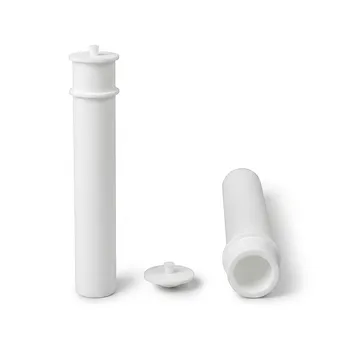
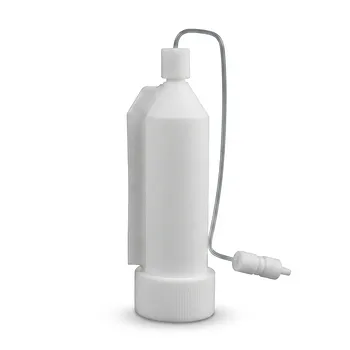
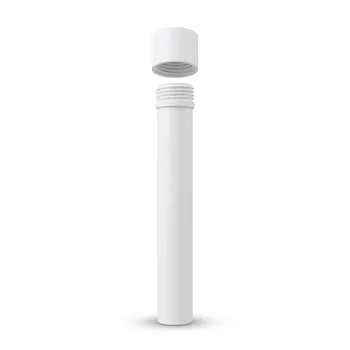
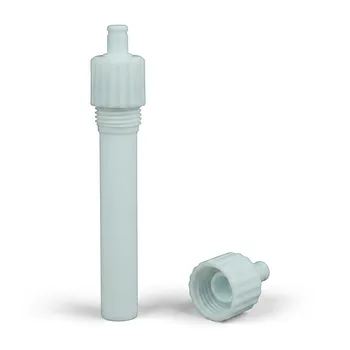
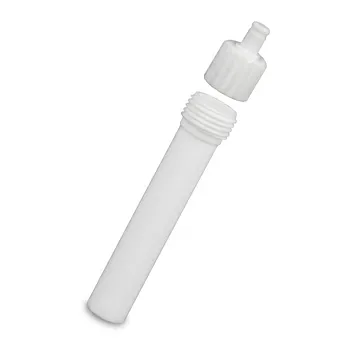
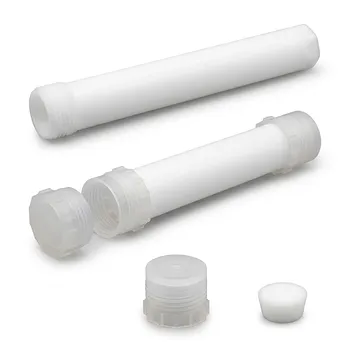
Our offerings include PTFE and TFM vessel liners, 100 mL microwave digestion vessels, high-pressure inner cups and cup holders, high-temperature-resistant lids, acid-evaporation liners, straight-wall sample vials, reflux-cap digestion tubes, and dedicated racks. By supplying matched components, KINTEK helps laboratories reduce the practical problems associated with sourcing separate parts from different suppliers.
Racks and holders for organized, repeatable preparation
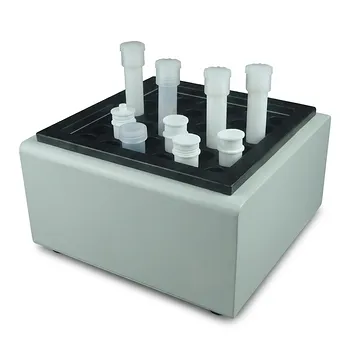
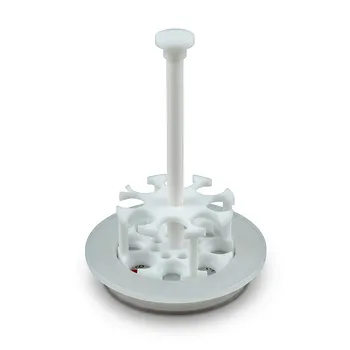
High-throughput digestion depends on more than the vessel itself. Racks and holders provide stable positioning during loading, cooling, transfer, and related preparation steps. A well-designed rack keeps vessels organized by batch, reduces handling confusion, and supports cleaner bench workflows. Our 15-position and 44-position rack options are manufactured from high-purity fluoropolymer materials for chemical resistance and easy cleaning, with customizable dimensions available for specific vessel formats and laboratory layouts.
Custom holders are also useful when laboratories use unusual vessel shapes, need dedicated spaces for caps and liners, or want to improve handling during repetitive batch preparation. KINTEK can machine racks with specified hole counts, spacing, hole diameters, depth, labeling arrangements, drainage features, and bench-footprint requirements. These details may appear small, but they can materially improve workflow consistency in busy analytical laboratories.
Supporting graphite digestion and acid-removal systems
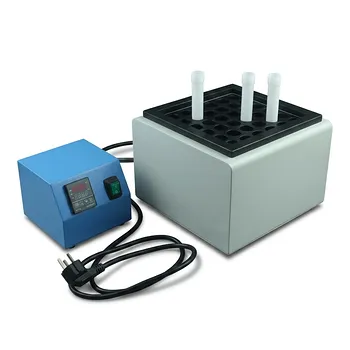
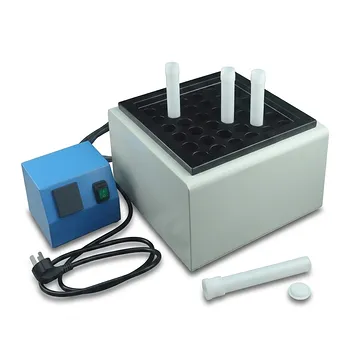
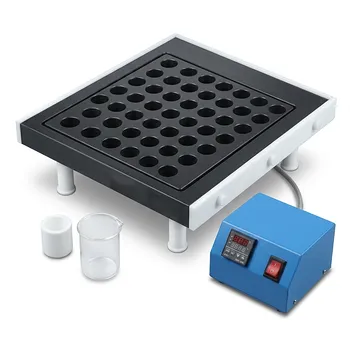
Some sample-preparation protocols require controlled heating, reflux, evaporation, acid removal, or post-digestion concentration in addition to microwave treatment. KINTEK supplies graphite digestion systems and heating plates with corrosion-resistant coatings, precision PID digital control options, and PTFE protective edging. These systems are designed to work alongside fluoropolymer digestion tubes and vessels in laboratories handling corrosive acids.
Graphite provides efficient and uniform heat distribution when engineered correctly, while fluoropolymer-facing elements protect sample-contact areas and surrounding benches from corrosive media. Configurations can be designed for 24, 54, or 72 positions, enabling laboratories to select an appropriate balance between throughput, available workspace, and method control. Reflux-cap PTFE digestion tubes can help support controlled evaporation and acid-treatment procedures where a compatible method calls for them.
The combination of microwave-ready vessels and compatible evaporation or acid-removal equipment gives laboratories flexibility. A team may use closed microwave digestion for rapid matrix breakdown, then transfer the digest into a controlled acid-removal workflow before final dilution and analysis. KINTEK can provide the fluoropolymer labware and custom hardware needed to make these linked steps more consistent.
Engineering precision for demanding conditions
Strong acids, elevated temperatures, internal pressure, and repeated cleaning cycles make vessel manufacturing quality essential. A high-purity material alone is not sufficient if machining, sealing surfaces, wall consistency, and fit are poorly controlled. KINTEK's focus on fluoropolymer manufacturing and CNC machining supports the dimensional repeatability needed for demanding laboratory components.
Our engineering team can develop products from a drawing, sample, dimensional table, or functional requirement. We can review critical features such as internal volume, vessel neck geometry, cap style, gasket or sealing interface, rack compatibility, pressure-assembly clearance, acid-contact area, and desired material. For projects involving an existing instrument, providing a sample part or accurate measurements helps us evaluate compatibility and develop an appropriate custom solution.
Customization can include:
- PTFE, TFM, or PFA material selection based on the application requirements.
- Custom internal volumes, including small-volume trace-analysis cups and larger digestion containers.
- Straight-wall, U-bottom, flat-bottom, or application-specific vessel geometries.
- Instrument-compatible replacement liners, lids, caps, inner cups, and holders.
- Custom racks with specified positions, spacing, hole dimensions, and identification features.
- Low-background sample-contact components for analytical workflows.
- Integrated PTFE/PFA parts for digestion, reflux, transfer, cleaning, storage, and evaporation setups.
- Prototype development as well as repeat production for laboratory fleets and OEM requirements.
A practical approach to vessel selection
Choosing a microwave digestion vessel should start with the method, not simply the vessel volume. Consider the expected sample mass, digestion acid, target analytes, anticipated reaction intensity, required final volume, number of samples per batch, instrument model, and blank-value requirement. Laboratories should also consider whether the process includes acid evaporation, reflux, storage, or transfer steps that would benefit from matched fluoropolymer accessories.
For routine soil or food testing, acid-resistant PTFE or TFM liners matched to the microwave system may be appropriate. For ultra-trace metal work, material purity, cleaning validation, and dedicated low-background components become especially important. For geological or mining samples, the sample matrix and digestion method may demand robust, carefully specified vessel assemblies and corrosion-resistant post-digestion hardware. For OEMs and system integrators, dimensional consistency and repeat production capability are often central requirements.
KINTEK can help turn these considerations into a clear component specification. Our team works with laboratories that need direct replacements, performance-oriented upgrades, one-off custom parts, and scalable production. We understand that analytical workflows are sensitive to both chemistry and mechanical details, so we focus on practical fit, material compatibility, and manufacturing consistency.
Partner with KINTEK for custom fluoropolymer digestion solutions
KINTEK is exclusively dedicated to high-performance fluoropolymer laboratory products. That specialization allows us to support projects ranging from individual PTFE microwave digestion vessel replacements to complete custom sample-preparation assemblies. Our capabilities extend beyond standard vessels to custom CNC-machined PTFE/PFA parts, fluoropolymer racks, fittings, tubing, valves, cleaning tanks, reaction apparatus, and high-volume production programs.
To discuss a replacement vessel, custom TFM liner, multi-position rack, graphite digestion system, or complete fluoropolymer sample-preparation setup, contact KINTEK's technical team. Send your instrument model, vessel drawing or sample, target volume, operating chemistry, rack requirements, and quantity. We will help evaluate a professionally engineered solution designed around your laboratory's actual workflow.
FAQ
What Are The Main Applications Of PTFE Labware?
What Are The Main Applications Of PTFE Parts?
What Are The Main Applications Of PTFE Gaskets?
What Are The Common Applications Of PTFE Barrels?
What Are The Main Applications Of PTFE Glands?
What Are The Main Applications Of PTFE Discs?
What Are The Main Applications Of Teflon Seals?
What Are The Main Applications Of PTFE Rings?
What Are The Key Features Of PTFE Labware?
What Are The Key Features Of PTFE?
What Are The Key Features Of PTFE Gaskets?
What Are The Key Features Of PTFE Barrels?
What Are The Key Features Of PTFE Glands?
What Are The Key Features Of PTFE Discs?
What Are The Key Features Of Teflon Seals?
What Are The Key Features Of PTFE Rings?
What Makes PTFE Suitable For Labware?
How Do PTFE O-ring Seals Work?
What Is The Principle Behind PTFE Gaskets?
How Does A PTFE Lined Butterfly Valve Work?
How Do PTFE Discs Work In Sealing Applications?
How Do Teflon Seals Work In Harsh Environments?
How Are PTFE Rings Manufactured?
What Are The Advantages Of Using PTFE Labware?
What Are The Advantages Of Using PTFE Parts?
What Are The Advantages Of Using PTFE Gaskets?
What Are The Advantages Of Using PTFE Barrels?
What Are The Advantages Of Using PTFE Glands?
What Are The Advantages Of Using PTFE Discs?
What Are The Advantages Of Using Teflon Seals?
What Are The Advantages Of Using PTFE Rings?
What Types Of PTFE Labware Are Available?
Why Is PTFE Suitable For CNC Machining?
How Are PTFE Gaskets Installed?
Why Are PTFE Barrels Suitable For Laboratory Use?
Are Custom PTFE Glands Available For Specific Applications?
Why Are PTFE Discs Preferred In High-temperature Environments?
Are Teflon Seals Environmentally Friendly?
Why Are PTFE Rings Preferred In The Semiconductor Industry?
What Types Of PTFE Parts Are Commonly Manufactured?
Are PTFE Discs Resistant To Chemicals?
Are PTFE Rings Suitable For Medical Applications?
What Makes PTFE Discs Non-stick?
Can PTFE Discs Be Used In Electrical Applications?
How Do PTFE Discs Perform In Low-temperature Environments?
Are PTFE Discs Customizable For Specific Applications?
REQUEST A QUOTE
Our professional team will reply to you within one business day. Please feel free to contact us!
Related Articles
The Hidden Risks of Medical Fluid Transfer: Why Standard Tubing Fails and How to Solve the Purity Puzzle
Discover why standard polymers fail in medical and pharma applications and how precision PTFE tubing ensures biocompatibility, sterilization resilience, and zero contamination.
Why Your PTFE Tubing Shouldn't Be "Melted": Understanding the Power of Paste Extrusion
Discover why PTFE requires a unique paste extrusion process rather than traditional melting, and how this impacts the quality of your laboratory fluid components.
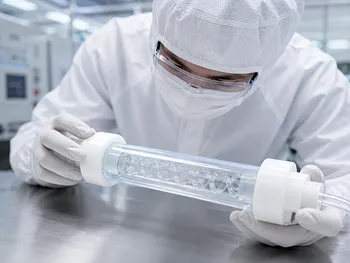
Why Trace Contamination Still Haunts Your Yields—And the Overlooked Role of Condenser Surface Integrity
Learn how PTFE condenser tubes prevent ionic leaching and particle entrapment, securing sub-ppb purity and protecting silicon wafer yields in semiconductor manufacturing.
Why Standard Tubing Fails in High-Performance Systems—And How High-Precision PTFE Secures the Modern Vehicle
Discover why standard fluid lines fail in EVs and high-heat engines, and how precision PTFE engineering provides the thermal and electrical isolation required for modern automotive safety.
Why Your PTFE Liner Fails Before Its Melting Point: The Truth About Hydrothermal Temperature Limits
Discover why PTFE reactor liners fail at 220°C despite higher melting points. Learn how to choose between PTFE and PPL for safe, high-pressure synthesis.
Why Your Hydrothermal Synthesis Produces "Dust" Instead of Crystals: Mastering the Invisible Engine
Learn how temperature gradients drive hydrothermal crystal growth and why high-precision liners are critical for achieving high-purity, uniform morphologies.
Why Refractory Mineral Digestion Often Fails—and How PTFE Solves the Sample Integrity Crisis
Discover why traditional labware fails in geological trace analysis and how high-precision PTFE digestion vessels ensure quantitative recovery of precious metals.
The Invisible Deformation: Why Your PTFE Digestion Liners Fail Under Pressure—And How TFM Fixes It
Discover why standard PTFE liners fail in microwave digestion and how TFM's modified molecular structure prevents creep, leaks, and contamination.
Beyond the Melting Point: Why Your Condenser Tubes Fail Under Thermal Stress—and How PTFE Solves It
Discover why PTFE condenser tubes withstand temperatures from -268°C to 260°C. Learn how molecular stability prevents thermal failure in industrial chemical processes.
Why Your Hydrothermal Synthesis Results Are Inconsistent—and How to Master the Pressure
Stop hydrothermal reactor failures. Learn why precision PTFE liners and strict thermal protocols are the keys to repeatable nanomaterial synthesis.
Why Invisible Contamination Still Ruins Your High-Purity Process—and How PTFE Stops It
Learn how high-precision PTFE tubing and labware eliminate leaching and bacterial growth in semiconductor and food manufacturing to protect your yields.
Why Your Hydrothermal Crystal Growth is Inconsistent—And How to Achieve Tailored Morphologies Every Time
Stop struggling with messy crystal results. Learn how hydrothermal reactors control morphology and why your choice of liner is the key to precision results.
Beyond the Boiling Point: Why Closed-Vessel Design is Non-Negotiable for Trace Analysis
Discover why closed-vessel microwave digestion outperforms open-vessel methods by mastering pressure and temperature for faster, more accurate trace analysis.
Why Your "Indestructible" PTFE Liners Fail—And How to Protect Your High-Value Equipment
Stop unexpected autoclave failures and cross-contamination. Learn the science of PTFE maintenance, from the 1% mass loss rule to preventing vessel corrosion.
The "Efficiency Drift" Problem: Why Your Heat Exchangers Fail and How PTFE Stops the Cycle
Stop the constant cycle of descaling and downtime. Discover how the unique surface physics of PTFE condenser tubes eliminates fouling and extends service life to 20 years.
Why Your Hydrothermal Synthesis Results Are Inconsistent—And How the "Dual-Shell" Design Fixes It
Struggling with failed hydrothermal experiments? Learn how the interaction between PTFE liners and stainless steel shells determines your research success.
Your Sample Vial Is Lying: How a Tiny Seal Is Silently Sabotaging Your Lab Results
Discover why your lab data is inconsistent. It's not your method; it's the hidden failure of your vial septum. Learn the science and fix it for good.
The Hidden Saboteur in Your Vial: Why Your Chromatography Results Are Inconsistent—And How to Fix It
Frustrated by phantom peaks and drifting results? Discover how a faulty vial septum, not your instrument, is often the culprit and how to fix it for good.
Why Your Lab Results Are So Unpredictable (It’s Probably Your Vial Septa)
Tired of inconsistent lab data? Discover the hidden reason your vial septa fail under heat or cold and how to finally ensure reliable results.
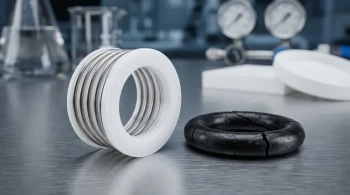
Why Your High-Performance Seals Keep Failing—And Why a Better O-Ring Isn't the Answer
Frustrated by failing seals in extreme environments? Discover the root cause and learn how a different sealing technology offers a permanent solution.