KINTEK PFA Trace Analysis Labware is built for laboratories where contamination control directly affects results, including ICP-MS and ICP-OES testing, semiconductor wet processing, environmental monitoring, geological analysis, pharmaceutical research, and high-purity chemical synthesis. The range includes PFA sampling, reaction, filtration, and volumetric bottles; gas washing and tail-gas absorption vessels; chromatography and ion-exchange columns; sub-boiling acid purifiers and distillation flasks; nitrogen blowdown systems; wafer-cleaning and acid-soaking tanks; PTFE syringes and membrane cutters; and custom trays, fittings, tubing-connected vessels, and sample-preparation equipment. Made for aggressive reagents and low-background workflows, these fluoropolymer solutions provide a reliable alternative to conventional glass or metal-contact labware.
Toggle Categories
Get Instant Support
Choose your preferred way to connect with our team
Response Time
Within 8 hours on working days, 24 hours on holidays
PFA Trace Analysis Labware



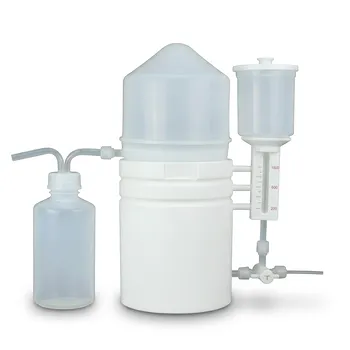
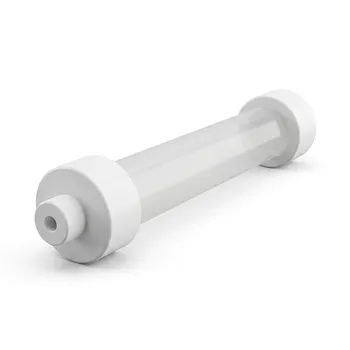

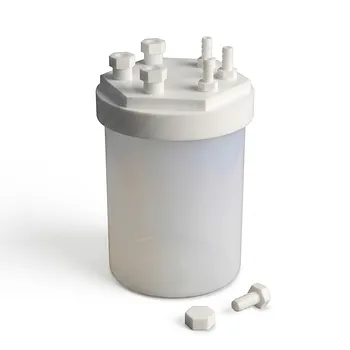
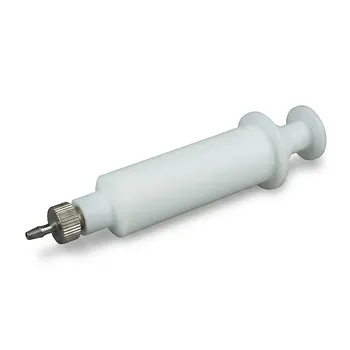
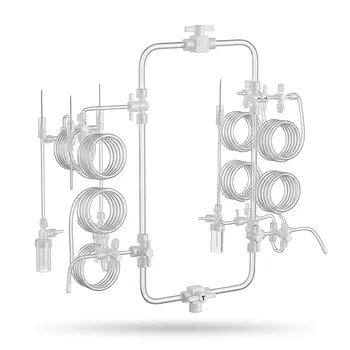
High-Purity PFA Labware for Reliable Trace Analysis
Trace analysis is not simply a matter of using a sensitive instrument. When laboratories work at ppb, ppt, or similarly demanding detection levels, the material touching the sample can influence blank values, recovery, repeatability, and confidence in the final data. Containers, transfer paths, filters, seals, and reaction vessels all need to withstand aggressive reagents while minimizing the risk of introducing interfering contaminants. KINTEK PFA Trace Analysis Labware is designed for this critical stage of the workflow.
PFA, or perfluoroalkoxy alkane, is a high-performance melt-processable fluoropolymer with a fully fluorinated molecular structure. Its exceptional chemical inertness, low surface energy, thermal stability, and smooth non-porous surfaces make it particularly suitable for high-purity chemical handling. Compared with conventional glassware, metal vessels, and many general-purpose plastics, carefully selected high-purity PFA components can help reduce risks associated with metal-ion release, adsorption, corrosion, breakage, and difficult cleaning. This makes PFA a practical material choice for sample preparation, reagent storage, purification, transfer, evaporation, filtration, separation, and acid digestion workflows.
KINTEK focuses exclusively on high-performance fluoropolymer laboratory products. Our category combines standard PFA and PTFE labware with specialized systems for ultra-trace analysis, high-purity reagent preparation, corrosive-fluid processing, and semiconductor-related applications. Whether the requirement is a compact sample bottle, a multi-position nitrogen evaporator, a PFA ion-exchange column, or a complete custom reaction assembly with ports and tubing connections, we apply fluoropolymer material expertise and CNC machining capability to help laboratories configure equipment around their actual process.
Why PFA Matters in Low-Background Analytical Workflows
Analytical results can be compromised long before a sample reaches an instrument. A trace-metal test may involve collection, preservation, transport, digestion, dilution, separation, storage, and introduction to an analyzer. Each handling step creates opportunities for contamination or analyte loss. Glass may be unsuitable for certain highly corrosive reagents and can contribute leachable species in sensitive applications. Metallic components can corrode or create unwanted elemental backgrounds. Some common plastics may absorb reagents, swell, release additives, or lack adequate resistance to demanding acids, bases, oxidizers, and solvents.
High-purity PFA is valued because its fluorinated structure contains very few chemically reactive sites. It offers broad resistance to many aggressive laboratory chemicals and does not rust, shatter like glass, or rely on exposed metallic wetted parts. Its low surface energy can reduce physical adhesion of many residues and support more effective rinsing between runs. These properties are especially useful where laboratories need to preserve sample integrity while handling strong acids, ultrapure reagents, corrosive solvents, digestion solutions, process chemicals, or low-concentration elemental standards.
The practical benefit is not a blanket guarantee of an analytical detection limit. Final background levels depend on resin grade, manufacturing cleanliness, cleaning and conditioning procedures, reagent purity, laboratory environment, sample matrix, storage duration, and the measurement method. However, selecting high-purity fluoropolymer labware is a fundamental step in building a controlled workflow for sensitive analysis. KINTEK products are designed to support that objective through chemically inert wetted surfaces, high-purity PFA and PTFE construction, and application-specific configurations.
Product Coverage for Sample Preparation, Purification, and Fluid Handling
The PFA Trace Analysis Labware category is intentionally broad because contamination control must extend across the entire sample path. KINTEK supplies individual vessels and components as well as integrated equipment for handling, processing, and purifying high-purity chemicals.
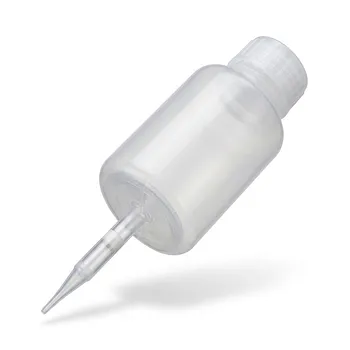
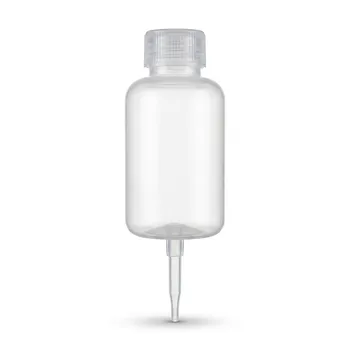
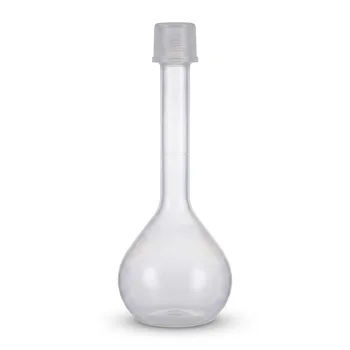
Sampling, storage, and volumetric vessels include high-purity PFA sampling bottles, reagent bottles, reaction bottles, wide-mouth reaction tanks, and large-capacity volumetric flasks. These products support the storage and controlled handling of reagents, standards, samples, and reaction media. PFA sampling bottles are suited to ultrapure reagent storage and trace-analysis workflows where a chemically resistant, low-background container is required. Wide-mouth reaction tanks and reaction bottles provide convenient access for charging solids, mixing solutions, conducting chemical synthesis, or retrieving processed materials. Volumetric flasks provide a robust fluoropolymer option for preparing larger controlled-volume solutions where glass may not be ideal.
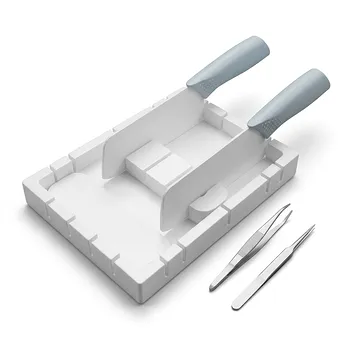
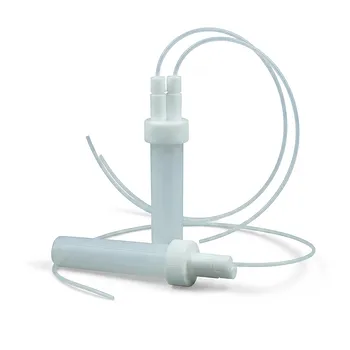
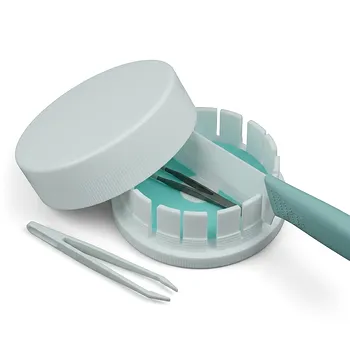
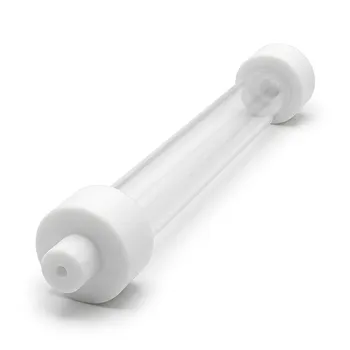
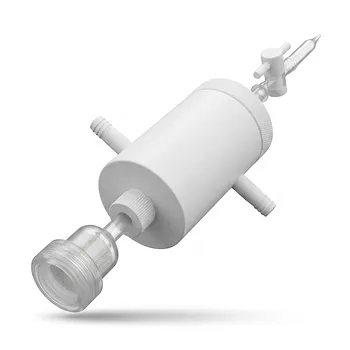
Filtration and aliquoting tools include squeezable PFA filtration bottles with integrated sieve plates, chromatography column systems with collection bottles, PTFE membrane cutters, and filter aliquot devices. Integrated filtration designs reduce transfers between separate vessels, helping simplify handling in controlled workflows. The squeezable-body format allows pressure-assisted dispensing without introducing an external pump into the immediate process. PTFE membrane cutters with ceramic cutting elements are designed for preparing circular or square membrane sections while avoiding conventional metal blades in sensitive sample-preparation areas. These tools are useful for environmental, public-health, cleanroom, and analytical laboratories that need consistent filtration preparation with appropriately selected materials of construction.
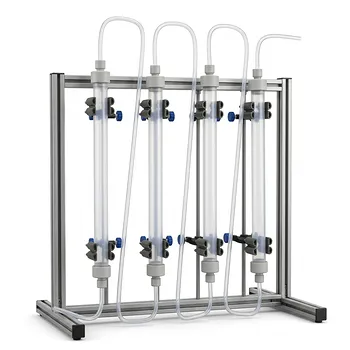
Chromatography and ion-exchange systems include PFA chromatography columns, double-layer constant-pressure filter columns, resin separation systems, translucent ion-exchange columns, water-cooled micro columns, sieve plates, column racks, collection bottles, and modular series-connected configurations. These systems support purification, matrix separation, resin-based ion exchange, filtration, and controlled liquid handling. PFA construction provides a durable corrosion-resistant alternative for applications where traditional glass columns are vulnerable to breakage or incompatibility with specific reagents. Translucent PFA also allows users to observe liquid level, flow behavior, resin position, and phase boundaries while retaining the chemical-resistance advantages of fluoropolymer construction.
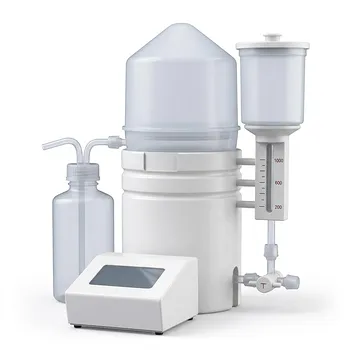
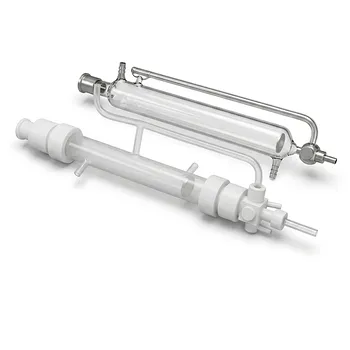
Acid purification and distillation equipment includes PFA sub-boiling acid purifiers, electronic-grade acid preparation systems, and PFA distillation flasks. High-purity acid preparation is essential for trace-metal analysis, semiconductor chemical workflows, and laboratories preparing their own low-background reagents. Sub-boiling distillation uses controlled heating to generate and condense purified acid vapor while reducing the vigorous boiling conditions that can carry contamination or aerosol droplets into the distillate. KINTEK PFA acid purification systems are intended for continuous high-purity acid preparation, with configurations designed around the laboratory's target acid, capacity, throughput, heating, condensation, and safety requirements.
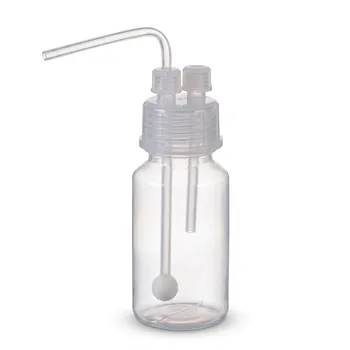
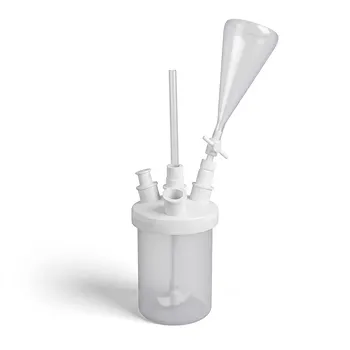
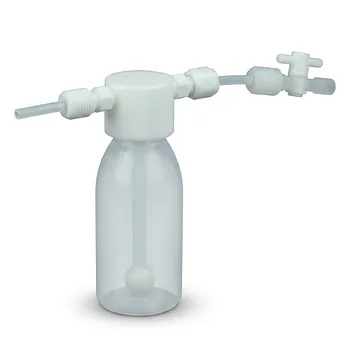
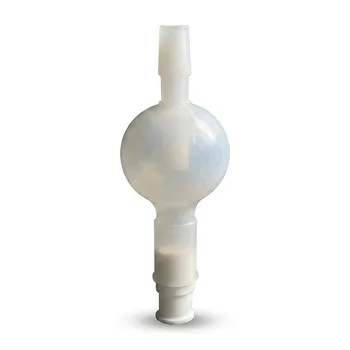
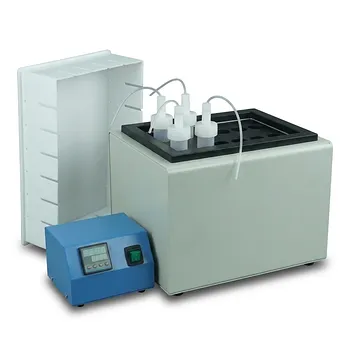
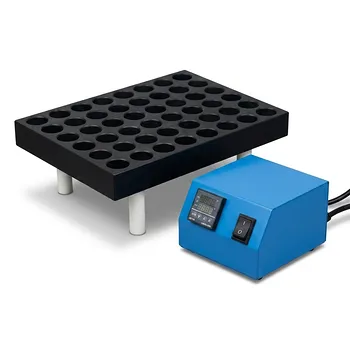
Gas treatment and evaporation equipment includes PFA gas washing bottles, tail-gas absorption vessels, gas scrubbing units with PTFE bubbling balls, thermometer sleeves, HF condensation devices, and multi-position PFA nitrogen blowdown systems. Gas washing bottles are used to bubble gases through an absorption liquid, capture selected components, buffer a gas-treatment train, or protect downstream equipment. The bubbling element promotes gas-liquid contact, while PFA construction supports use with many corrosive chemical environments. Nitrogen blowdown systems concentrate multiple samples by directing controlled nitrogen flow over the liquid surface. PFA valves and wetted components are valuable where the solvents or acid residues involved require superior corrosion resistance and clean fluid-contact surfaces.
Large-format tanks, trays, and custom processing vessels include rectangular PFA acid-soaking tanks, silicon wafer cleaning baths, PFA square trays, electrolytic-cell vessels, and reaction tanks with customized fittings. These products are relevant to semiconductor cleaning, corrosive wet processing, material synthesis, electrochemical work, sample soaking, and batch chemical treatment. Large fluoropolymer vessels can be specified with practical details such as dimensions, wall thickness, drainage, lids, ports, threaded connections, tube fittings, racks, support structures, and custom machining features to fit established laboratory or production equipment.
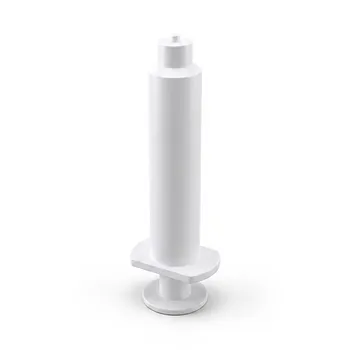
PTFE supporting labware complements the PFA range with corrosion-resistant sampling syringes, threaded high-temperature injectors, membrane cutters, and dedicated sample-preparation tools. PTFE is another highly inert fluoropolymer material, frequently selected for robust chemical resistance, non-stick behavior, and broad operating-temperature capability. The correct choice between PFA and PTFE depends on the component, required transparency, mechanical design, temperature, fabrication method, chemical media, and application-specific operating conditions. KINTEK can help align material selection with the actual workflow rather than forcing one material across every component.
Designed Around the Trace Analysis Workflow
A well-designed trace-analysis workflow begins by mapping every surface that can contact the sample or reagent. This includes the primary container, cap and seal, transfer tubing, bottle-top dispenser, filtration support, chromatography column, collection bottle, digestion vessel, evaporator, and storage vessel. A single incompatible part can undermine the benefit of using high-purity containers elsewhere. KINTEK's fluoropolymer product range helps laboratories extend compatible PFA and PTFE materials across multiple process stages.
For environmental and water-quality analysis, PFA bottles, filtration devices, membrane cutters, distillation flasks, and acid-resistant transfer components can support collection, preservation, filtration, digestion, and preparation workflows. Applications may include trace metals, mercury species, soil digests, wastewater, groundwater, surface water, and industrial discharge studies. The PFA distillation flask is particularly relevant to specialized procedures such as alkylmercury-related preparation, where clean chemical handling and corrosion resistance are essential considerations.
For ICP-MS, ICP-OES, and elemental analysis, low-background sample contact surfaces are central to blank control and reproducibility. PFA sampling bottles, reaction vessels, syringes, reagent bottles, volumetric flasks, filtration systems, and ion-exchange columns can be incorporated into sample preparation and separation procedures. Laboratories may use these products when preparing calibration solutions, storing purified acids, digesting or diluting samples, separating matrix elements, or transferring solutions into instrument-ready containers. Material suitability should always be verified against the particular analytes, matrix, acid concentration, temperature, and laboratory protocol.
For semiconductor and electronic-chemical processing, the category supports high-purity liquid storage, wet cleaning, chemical purification, wafer soaking, fluid transfer, gas scrubbing, and specialty reaction processes. Semiconductor work often imposes stringent expectations for chemical cleanliness, particulate control, metal background, and repeatable process behavior. PFA rectangular tanks and wafer-cleaning baths provide chemically resistant vessels for wet processing. PFA acid purification systems support preparation of high-purity acids, while bottles, columns, tubing-connected reactors, and fittings can be configured for controlled chemical delivery and processing.
For geological, mining, and materials laboratories, aggressive acid digestion and matrix separation are common. PFA reaction bottles, tanks, chromatography columns, ion-exchange columns, filtration equipment, and acid preparation systems are useful wherever samples must be dissolved, purified, separated, or concentrated before elemental measurement. Fluoropolymer equipment is particularly relevant when the process uses corrosive acid mixtures that challenge conventional laboratory materials.
For pharmaceutical, chemical, and advanced materials research, the product range supports corrosive synthesis, reagent purification, fluid handling, reaction monitoring, and sample recovery. PFA reaction tanks with custom fittings can be designed for charging, venting, sampling, heating interfaces, or tubing connections. Transparent or translucent PFA components provide visual process observation where needed. Thermometer sleeves and condensation assemblies can be incorporated into experimental setups requiring compatible materials around reactive or corrosive media.
Chemical Resistance, Thermal Stability, and Operational Durability
The most widely recognized advantage of PFA labware is broad chemical resistance. PFA is often selected for use with strong acids, bases, oxidizers, solvents, and high-purity chemicals that would corrode metal components or degrade less resistant plastics. This resistance helps preserve the structure of a vessel and protects the process from corrosion byproducts. It also enables laboratories to standardize materials across different chemical steps, which can reduce complexity in equipment selection and cleaning protocols.
PFA also provides useful thermal stability for many laboratory operations. It is suitable for applications involving heated reagents, distillation, condensation, evaporation, and controlled reaction processes within the component's defined operating limits. The exact safe operating temperature and pressure depend on product geometry, wall thickness, fittings, closure design, chemical environment, mechanical loads, and process duration. Pressure-generating reactions, sealed digestion, vacuum operation, and heated corrosive media require application-specific engineering review. KINTEK can provide a custom design approach when standard vessels do not fully address these conditions.
Unlike glass, fluoropolymer labware is resistant to shattering from ordinary impacts. This can improve durability in busy laboratories and reduce the risk of broken glass around corrosive fluids. However, fluoropolymer equipment should still be handled correctly. Components must be supported appropriately, exposed only to compatible conditions, inspected routinely, and cleaned using validated procedures. Product longevity depends on chemical exposure, temperature cycling, mechanical stress, and correct installation of threaded closures, valves, tubing, and support assemblies.
The translucent or transparent nature of many PFA products is another functional advantage. Users can observe liquid levels, bubbles, flow paths, phase changes, resin beds, and internal condition without opening the system. In gas washing, chromatography, distillation, and sample transfer procedures, this visibility helps operators monitor the process while maintaining containment. It is a practical feature rather than merely an aesthetic one, especially in workflows involving corrosive or high-purity fluids.
Lower Adsorption and More Effective Cleaning
PFA's low surface energy supports its non-stick characteristics. In laboratory use, this can help reduce the retention of residues on vessel walls and facilitate rinsing after use. For trace analysis, minimizing carryover is important because a small amount of residual analyte from a previous high-concentration sample can affect a subsequent low-level measurement. Smooth fluoropolymer surfaces can support well-controlled cleaning and conditioning procedures when paired with suitable ultrapure reagents and laboratory protocols.
No labware is automatically contamination-free in every setting. Even high-purity PFA can accumulate external contamination during handling, storage, transport, machining, or exposure to laboratory air. Laboratories should establish appropriate cleaning, acid-leaching, rinsing, drying, packaging, and storage methods for their target detection limits. KINTEK can manufacture fluoropolymer components designed for high-purity use, while the customer retains control of qualification practices necessary for the method and regulatory environment.
For reusable vessels, cleaning validation is especially important. Laboratories should consider the analyte suite, previous sample concentration, reagent compatibility, vessel geometry, cap design, and the possibility of trapped liquid in ports or threads. Custom designs can reduce unnecessary crevices, dead legs, and difficult-to-rinse regions. For disposable or dedicated-use applications, the equipment can be configured around the intended sample type or reagent family to help simplify contamination-control procedures.
Glass Alternatives for Corrosive and Sensitive Processes
Glass has an important role in many laboratories, but it is not universally ideal for high-purity fluorine chemistry, strong alkali, hydrofluoric acid-related work, or ultra-trace metal applications. Glassware can be fragile, and its composition may not be suitable for every analytical method or reagent. PFA chromatography columns, collection bottles, reaction bottles, distillation flasks, and ion-exchange columns offer an alternative where chemical compatibility, impact resistance, low-background handling, and visibility are needed together.
A PFA chromatography column can replace a glass column in applications requiring resin separation, filtration, purification, or constant-pressure operation with aggressive chemical media. Integrated sieve plates provide media support while reducing the need for separate glass frits. Collection bottles can be integrated or matched to the column system to reduce transfer steps. Double-layer or water-cooled configurations can be engineered for specialized separation and condensation requirements. Because KINTEK manufactures fluoropolymer products and custom machined parts, dimensions, ports, support racks, interfaces, and fluid paths can be tailored to the customer's procedure.
Custom PFA and PTFE Equipment from KINTEK
Standard labware is useful only when it fits the workflow. Trace-analysis laboratories frequently need non-standard dimensions, unusual port arrangements, controlled dead volume, custom tubing interfaces, multiple sample positions, special caps, integrated sieve plates, racks, condensers, or equipment built to connect with existing systems. KINTEK provides end-to-end fluoropolymer custom CNC machining to address these practical requirements.
Customization can include vessel capacity, wall thickness, neck size, thread type, port count, fitting material, tubing diameter, internal geometry, sieve-plate design, support frame, lid configuration, drain location, valve arrangement, marking, and assembly layout. For chromatography and ion-exchange systems, customers can specify column diameter, bed height, flow connection, resin support, collection format, serial linkage, and rack organization. For reaction tanks and process vessels, the design can incorporate feed lines, sampling ports, vent paths, condensers, sensors, thermometers, drain valves, and external support features.
Custom manufacturing is particularly valuable when a project requires a fluoropolymer alternative to a corroded metal part, broken glass assembly, obsolete legacy component, or improvised laboratory setup. Rather than adapting a process around an unsuitable off-the-shelf vessel, KINTEK can evaluate the required function and manufacture a component or complete assembly based on drawings, samples, dimensions, process descriptions, or performance goals. This approach can improve fit, reduce unnecessary adapters, simplify cleaning, and make a high-purity workflow easier to operate consistently.
When requesting a custom solution, it is helpful to provide the chemical media, concentration, operating temperature, pressure or vacuum condition, expected volume, connection requirements, installation space, desired transparency, target flow rate, sample sensitivity, and cleaning method. For systems involving hazardous chemicals, heated operations, pressurization, or gas treatment, sharing the operating sequence and safety requirements enables a more appropriate design discussion. KINTEK can then recommend suitable PFA or PTFE construction and develop the relevant vessel, column, tank, tubing interface, fitting, or integrated laboratory apparatus.
Selecting the Right Trace Analysis Labware
Choosing the correct product begins with the process rather than the vessel name. A sampling bottle may require a narrow neck for controlled pouring, a wide mouth for solid loading, a specialized closure for secure transport, or a tubing connection for closed transfer. A reaction tank may need a drain, a custom lid, multiple ports, or a larger opening for cleaning. A chromatography column may require a particular sieve plate, resin-bed height, collection bottle, or constant-pressure feed arrangement. A nitrogen blowdown system may need four, six, or more positions with independently controlled gas flow.
Consider the following practical selection factors:
- Chemical compatibility: Identify every reagent, solvent, acid, base, oxidizer, and cleaning solution that will contact the product.
- Purity target: Match the product and cleaning protocol to the analytical method, expected blank level, and target analytes.
- Temperature and pressure: Verify that the complete design, including closures, fittings, and seals, is suitable for the operating conditions.
- Sample volume and throughput: Select capacity and system layout based on batch size, number of samples, and workflow speed.
- Transfer method: Determine whether pouring, squeezing, syringe transfer, nitrogen pressure, pumping, gravity flow, or tubing-connected closed transfer is required.
- Visibility and monitoring: Choose transparent or translucent PFA components when observing liquid level, gas bubbling, resin movement, or condensation is useful.
- Cleaning and recovery: Evaluate access, internal geometry, drainage, and potential hold-up volume to support repeatable cleaning and maximum sample recovery.
- Integration: Confirm connections to existing tubing, fittings, heating blocks, hoods, racks, instrumentation, or process equipment.
KINTEK's product range makes it possible to select individual items for a specific task or build a coordinated fluoropolymer system across several operations. This is useful for laboratories working to reduce material changes along the sample path and establish a more consistent approach to handling high-purity chemicals.
Partner with a Fluoropolymer Labware Specialist
For sensitive analytical work, laboratory equipment should be specified with the same care as analytical instruments and reagents. The right PFA or PTFE vessel can support cleaner handling, stronger chemical compatibility, better process visibility, and a more reliable path to reproducible results. From everyday reagent bottles and syringes to custom acid purification systems, wafer-cleaning tanks, chromatography columns, gas scrubbers, and complex reaction assemblies, KINTEK provides high-performance fluoropolymer solutions for demanding laboratory environments.
Our team understands that a product listing is only the starting point. We work with laboratories, research groups, semiconductor operations, chemical manufacturers, and instrument-support teams that need specific dimensions, process connections, capacities, and material-performance characteristics. Share your application, existing drawing, target chemical, required volume, or operating conditions, and we can help identify a standard product or develop a bespoke PFA/PTFE solution.
For technical selection support, custom CNC-machined fluoropolymer parts, or a quotation for high-purity trace analysis equipment, contact KINTEK today. We can help turn your contamination-control and chemical-handling requirements into practical, application-ready labware.
REQUEST A QUOTE
Our professional team will reply to you within one business day. Please feel free to contact us!
Related Articles
Beyond the Textbook: Why Your Electrolytic Cell Needs More Voltage Than You Calculated
Discover why theoretical voltage calculations often fail in practice and how precision-engineered cell design can overcome kinetic barriers and ohmic drops.
Is Your Electrode Housing Corrupting Your Data? Why PTFE Jackets Are Crucial for Precise Electrochemistry
Discover why electrode housing affects data accuracy and how precision-machined PTFE jackets prevent parasitic currents and mechanical failure in research.
Why Your Labware Fails Under Thermal Stress—and the Chemistry of the One-Vessel Solution
Discover how PFA laboratory products maintain integrity from -200°C to +260°C, ensuring data accuracy in semiconductor and trace analysis applications.
Invisible Obstacles: Why Your "Clean" Labware Might Still Be Sabotaging Your Trace Analysis
Discover why traditional labware causes cross-contamination in trace analysis and how PFA's unique molecular structure provides a zero-memory solution.
The Hidden Risks of Medical Fluid Transfer: Why Standard Tubing Fails and How to Solve the Purity Puzzle
Discover why standard polymers fail in medical and pharma applications and how precision PTFE tubing ensures biocompatibility, sterilization resilience, and zero contamination.
Why Your High-Performance PTFE Seals Are Leaking—And How to Restore Their "Memory"
Discover why PTFE seals fail due to creep and cold flow, and how spring-energized designs provide the permanent resilience needed for extreme environments.
Why Standard Tubing Fails in High-Performance Systems—And How High-Precision PTFE Secures the Modern Vehicle
Discover why standard fluid lines fail in EVs and high-heat engines, and how precision PTFE engineering provides the thermal and electrical isolation required for modern automotive safety.
Why Your PTFE Liner Fails Before Its Melting Point: The Truth About Hydrothermal Temperature Limits
Discover why PTFE reactor liners fail at 220°C despite higher melting points. Learn how to choose between PTFE and PPL for safe, high-pressure synthesis.
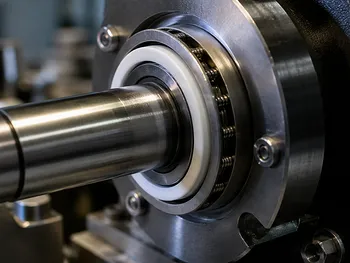
Stop Chasing Leaks: Mastering PTFE Sealing Performance Across Extreme Temperatures
Learn why PTFE seals fail at temperature extremes and how precision engineering—from spring energizers to custom CNC fabrication—ensures leak-free performance.
Why Your "Perfect" PTFE Seals Are Leaking Under Pressure—and How to Stop the Flow
Discover how PTFE fillers like glass, carbon, and bronze eliminate "cold flow" and increase wear resistance by 1000x for high-pressure industrial sealing.
Beyond "Indestructible": Understanding the Critical Limits of PFA for Ultra-Trace Integrity
Discover the physical and thermal limits of PFA labware. Learn how to prevent chain scission and surface contamination to ensure ultra-trace analysis accuracy.
The Hidden Physics of Leak-Proof Experiments: Why Over-Tightening Won't Save Your PTFE Seals
Stop fighting leaks with a wrench. Discover the fundamental science of PTFE sealing—from viscoelasticity to self-energization—to ensure reliability in your high-pressure lab applications.
Why Your Hydrothermal Synthesis Results Are Inconsistent—and How to Master the Pressure
Stop hydrothermal reactor failures. Learn why precision PTFE liners and strict thermal protocols are the keys to repeatable nanomaterial synthesis.
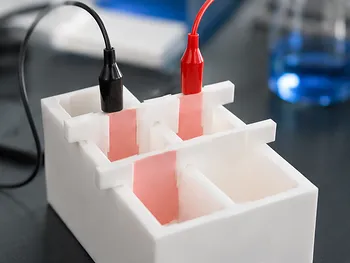
Beyond the Circuit: Why Material Choice is the Hidden Variable in Your Electrolytic Cell’s Performance
Struggling with inconsistent electrolysis results? Discover how the fundamental principles of electrolytic cells collide with material science, and why PTFE/PFA is the key to reliable data.
Why Your "Indestructible" PTFE Liners Fail—And How to Protect Your High-Value Equipment
Stop unexpected autoclave failures and cross-contamination. Learn the science of PTFE maintenance, from the 1% mass loss rule to preventing vessel corrosion.
Why Your Electrolysis Results Are Drifting: The Hidden Impact of Cell Environment on Non-Spontaneous Reactions
Stop struggling with inconsistent electrochemical data. Learn how the fundamental principles of electrolysis demand a precision-engineered cell environment to succeed.
Why Your Hydrothermal Synthesis Results Are Inconsistent—And How the "Dual-Shell" Design Fixes It
Struggling with failed hydrothermal experiments? Learn how the interaction between PTFE liners and stainless steel shells determines your research success.
Why Your High-Performance Seals Keep Leaking—And Why It's Not the Seal's Fault
Stop the cycle of failed PTFE seals. Discover the real reason for chronic leaks isn't the part, but the installation system, and how to fix it for good.
The PTFE Paradox: Why Your Catheter Liner's Best Trait Is Also Its Biggest Challenge
Struggling with PTFE catheter liner delamination? Discover the root cause of bonding failures and how a precision manufacturing partner turns this challenge into a competitive advantage.
Why Your Lab Plugs Stick and Contaminate: The Hidden Science of Surface Energy
Frustrated with seized plugs and failed experiments? Learn the hidden physics of surface energy and why precision PTFE components are the definitive solution.