The Phantom in the Data: When "Clean" Isn't Clean Enough
Imagine you are running a critical ICP-MS analysis for a semiconductor client or a high-stakes pharmaceutical trial. You’ve followed every SOP to the letter. Your reagents are ultra-pure, your calibration is perfect, and your labware has been scrubbed and rinsed repeatedly. Yet, when the results come in, the "ghost peaks" appear—trace levels of metals or organic residues that shouldn’t be there.
This is the frustrating reality of "memory effects." In the world of trace analysis and high-purity manufacturing, the most persistent enemy isn't a lack of effort; it is the microscopic behavior of the containers themselves. When your project demands precision at the parts-per-billion (ppb) or even parts-per-trillion (ppt) level, traditional materials often become the primary source of failure.
The Cost of the "Typical" Solution
When faced with sample-to-sample carry-over or leaching, most labs double down on their existing cleaning protocols. They use more aggressive solvents, longer soak times, or mechanical scrubbing.
However, these common responses often create a cycle of diminishing returns:
- Surface Degradation: Abrasive cleaning can create microscopic scratches in materials like PTFE or polypropylene, creating even more hiding places for contaminants.
- Material Leaching: Glass, while traditional, is not truly inert; it can leach boron, sodium, or silica into samples, especially when handling acidic reagents.
- Project Delays: Extensive cleaning cycles can turn a one-day analysis into a three-day ordeal, bloating labor costs and delaying critical product launches.
In sectors like semiconductor fabrication or new energy research, these "minor" contamination issues translate to rejected batches reaching tens of thousands of dollars in losses.
The Microscopic Trap: Why Standard Materials Fail
To understand why "ghost peaks" persist, we have to look at the surface at a molecular level.
Most laboratory plastics and even glass possess a degree of porosity or "reactive sites." Standard PTFE (Teflon), while chemically resistant, is often produced through a sintering process that can leave behind a semi-porous structure. These microscopic pores act as "traps" for reagents. No matter how much you rinse, a few molecules of your previous sample remain lodged in the material, only to release—or "bleed"—into your next experiment. This is the root cause of the memory effect.
Furthermore, many materials have functional groups on their surface that chemically bond with trace metals. You aren't just washing away a liquid; you are fighting a chemical attraction.
The Solution: Why PFA is the "Gold Standard" for Zero Carry-Over
To solve the contamination problem, you need a material that is both chemically "dead" and physically "closed." This is where Perfluoroalkoxy alkane (PFA) changes the game.
At KINTEK, we specialize in high-precision PFA labware because it addresses the core physics of contamination in three specific ways:
1. The "Melt-Processed" Advantage
Unlike PTFE, PFA is melt-processable. During manufacturing, it flows into a completely smooth, non-porous surface. There are no microscopic voids or "hooks" for reagents to hide in. Contaminants simply have nowhere to stick.
2. Absolute Chemical Inertness
PFA features a fully fluorinated carbon backbone. It lacks the reactive functional groups that cause surface adsorption. Whether you are working with hydrofluoric acid (HF) in semiconductor etchants or aggressive organic solvents in pharma, PFA remains indifferent to the chemistry inside it.
3. Resilience to "Aggressive" Cleaning
When you absolutely must ensure purity, PFA allows you to go where other materials cannot. Because it is stable up to 260°C and maintains extreme chemical resistance, you can boil KINTEK PFA vessels in concentrated nitric acid or aqua regia. This "thermal-chemical" reset ensures that every trace of residue is stripped away without damaging the vessel itself.
Beyond the Fix: Unlocking New Research Potential
When you eliminate the variable of container contamination, the "noise" in your data disappears. But the benefits go beyond just cleaner graphs.
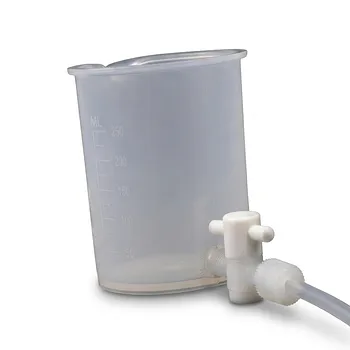
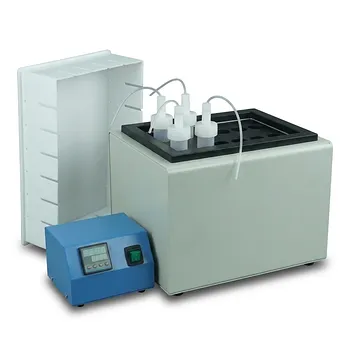
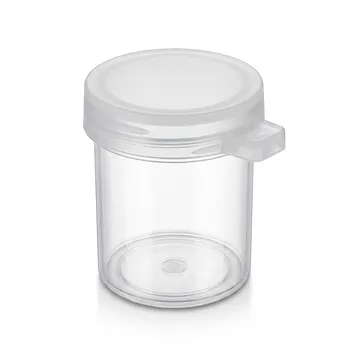
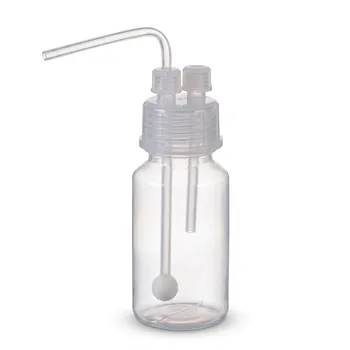
By switching to high-purity PFA components—from sampling bottles to custom CNC-machined electrochemical cells—you unlock new operational capabilities:
- Confidence in Ultra-Trace Analysis: Move from parts-per-billion to parts-per-trillion sensitivity without fearing background interference.
- Process Acceleration: Drastically reduce the time spent on repetitive cleaning cycles, allowing your team to focus on innovation rather than maintenance.
- Simplified Fieldwork: Because PFA is shatterproof and lightweight compared to glass, researchers can transport critical environmental samples from the most rugged environments back to the lab with total isotopic integrity.
At KINTEK, we don't just provide "plastic containers"; we provide the high-precision infrastructure for your next breakthrough. Whether you need specialized battery testing fixtures or custom fluid transfer components for a semiconductor fab, our PFA solutions are designed to ensure that the only data you see is the data you intended to find.
Ready to eliminate carry-over and protect your sample integrity? Our team of specialists is ready to help you transition to high-purity PFA labware or design a custom solution tailored to your specific chemical environment. From prototypes to high-volume industrial orders, let's discuss how we can solve your toughest contamination challenges. Contact Our Experts
Related Products
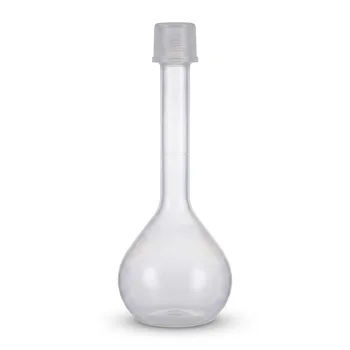
- High Purity PFA Volumetric Flask 1000ml 2000ml Constant Volume Bottle Acid Resistant Trace Analysis Custom Laboratory Labware
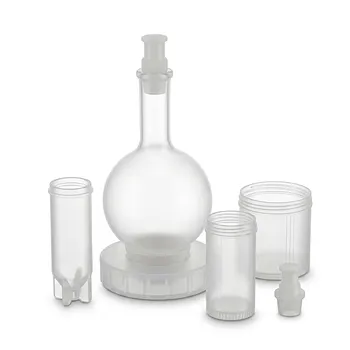
- Custom PFA Pear Shaped Flask High Purity Corrosion Resistant Labware Custom Molded Fluoropolymer Flask Glass Replacement Solution
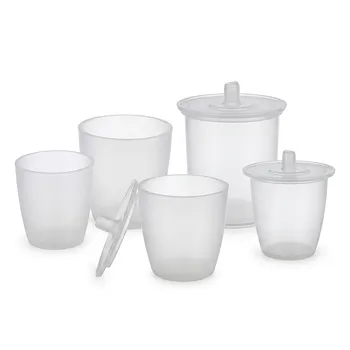
- High Purity PFA Crucible and Corrosion Resistant PTFE Beaker for Trace Analysis and Custom Laboratory Applications
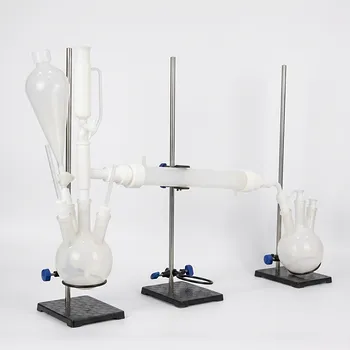
- High Purity PFA Constant Pressure Condensation Reaction System Acid Resistant High Temperature Customizable Teflon Labware
- High Purity PFA Sample Dissolution Cups Acid Resistant Chemical Digestion Vessels with Lids Trace Analysis Labware