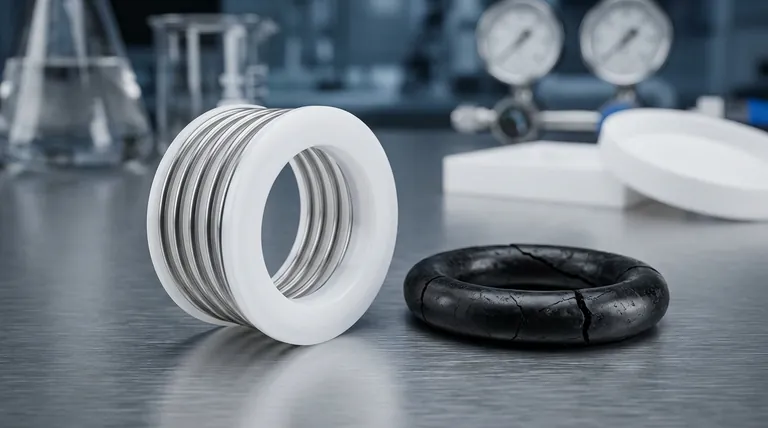
It’s a scenario familiar to any engineer in a high-stakes industry. Your multi-million dollar process line grinds to a halt. After hours of troubleshooting, you find the culprit: a tiny, degraded seal. A component worth only a few dollars has failed, costing you thousands in downtime, scrapped product, and a major headache.
You followed the book, specifying a high-performance elastomeric O-ring designed for demanding applications. So why did it fail?
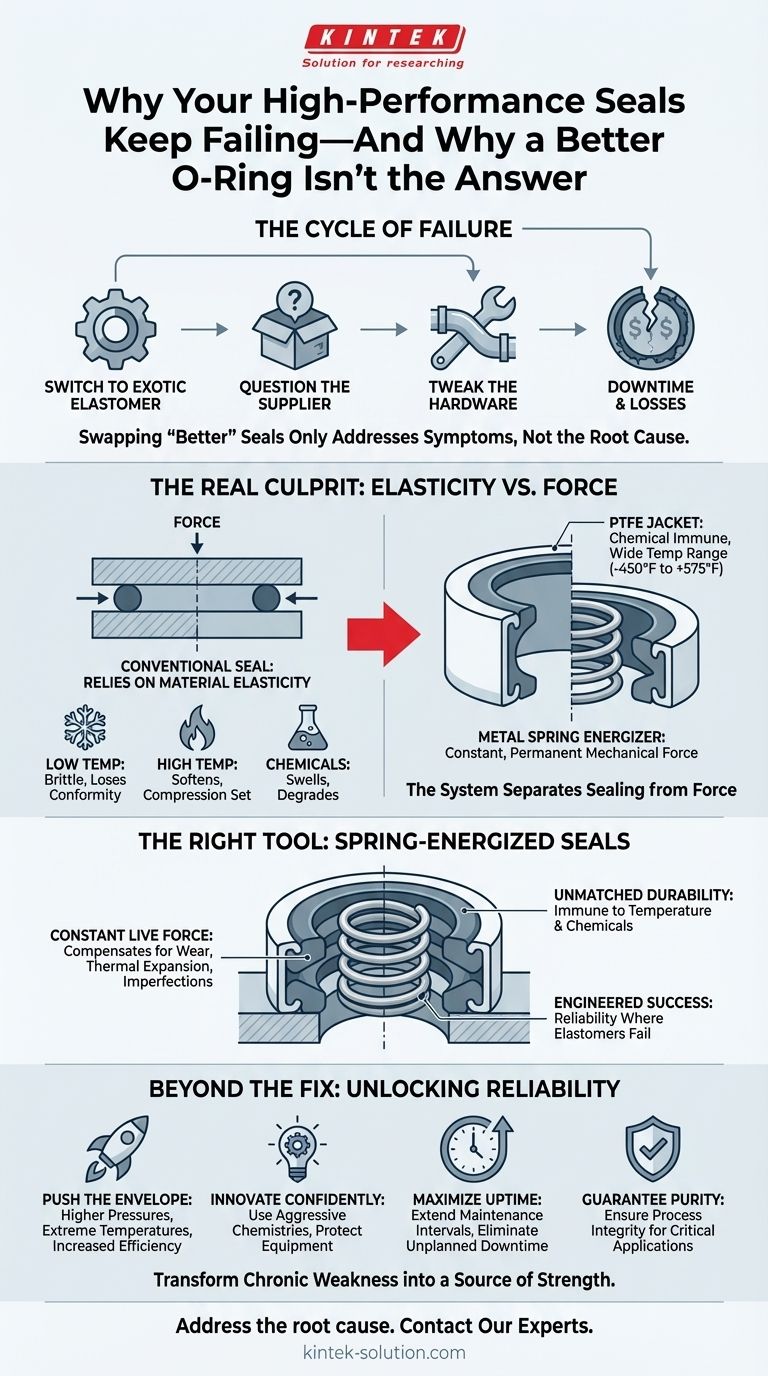
The Cycle of Failure: Why Swapping "Better" Seals Doesn't Work
When a seal fails under extreme temperature, aggressive chemicals, or high pressure, the typical response is to seek a "better" version of the same solution. You might:
- Switch to a more exotic elastomer, like a specialized FKM or FFKM, hoping its superior specs will hold up.
- Question the supplier, wondering if you received a bad batch and ordering replacements from a different source.
- Tweak the hardware, adjusting gland dimensions or surface finishes, thinking the problem is mechanical.
These are logical steps, but they often lead to the same result: another premature failure. The team's frustration mounts. Project timelines slip. In regulated industries like medical or semiconductor, a single seal failure can compromise product purity, leading to entire batches being scrapped. The recurring, unplanned maintenance eats into budgets and erodes confidence in the equipment's reliability.
This cycle of trial-and-error persists because these "solutions" only address the symptoms. The real problem lies in a fundamental limitation of the technology everyone is trying to optimize.
The Real Culprit: Material Elasticity vs. Mechanical Force
Conventional seals, from basic nitrile O-rings to the most advanced polymers, rely on a single principle: material elasticity. Their ability to seal comes from their own "bounciness." You compress the material into a groove, and it pushes back, creating a barrier.
Here’s the hidden truth: in extreme environments, that material elasticity is the first thing to go.
- At low temperatures, elastomers become hard and brittle, losing their ability to conform to surfaces.
- At high temperatures, they soften, degrade, and become permanently deformed—a phenomenon known as "compression set." They get squashed and simply stay squashed.
- Under chemical attack, the material swells or breaks down, losing all its engineered properties.
No matter how "high-performance" the elastomer is, you are still betting on its inherent bounciness to survive conditions that are actively destroying it. Swapping one elastomer for another is often just a matter of delaying the inevitable failure, not preventing it.
The root of the problem isn't the quality of your seal; it's the physical principle it relies on. To achieve true reliability, you need a system that doesn't depend on fragile material properties.
The Right Tool for the Job: Engineering a Permanent Seal
To truly solve this problem, you need to separate the job of sealing from the job of providing force. You need a system with two distinct components:
- A jacket made from a material that is virtually immune to chemicals and temperature extremes.
- An internal energizer that provides a constant, permanent mechanical force, independent of the jacket's condition.
This is the elegant, powerful principle behind the spring-energized seal.
How Spring-Energized Seals Break the Cycle
A spring-energized seal is not just another O-ring. It's an engineered system designed from the ground up to overcome the failure points of conventional seals.
- The Jacket: The outer body is precision-machined from a robust polymer like PTFE. This provides near-universal chemical resistance and an incredibly wide operating temperature range (from cryogenic to over 575°F / 300°C). It acts as the impenetrable barrier.
- The Energizer: Inside the PTFE jacket sits a durable metal spring. This is the engine of the seal. It provides the constant, live force that pushes the jacket's lips against the sealing surfaces. The spring doesn't care about temperature swings, aggressive solvents, or high pressure. It provides a consistent mechanical load today, tomorrow, and years from now.
Unlike an O-ring that tires and quits, the spring energizer constantly compensates for jacket wear, thermal expansion, and hardware imperfections, ensuring a tight seal for the life of the component.
At KINTEK, we specialize in manufacturing these high-performance PTFE components. Our spring-energized seals aren't just products; they are the physical embodiment of this problem-solving principle. They are engineered to succeed where elastomers are designed to fail, providing the reliability demanded in critical semiconductor, medical, and industrial applications.
Beyond the Fix: What True Sealing Reliability Unlocks
Once you stop fighting the recurring battle of failed seals, you unlock new potential. Moving from a reactive "break-fix" model to a proactive, reliable one changes what's possible for your business.
With a truly robust sealing solution, you can now:
- Push the Envelope: Run your processes at higher pressures or more extreme temperatures to increase yield and efficiency, without fearing a leak.
- Innovate with Confidence: Use aggressive new chemistries in your R&D process to develop next-generation products, knowing your equipment is protected from contamination.
- Maximize Uptime: Drastically extend planned maintenance intervals and virtually eliminate unplanned downtime, freeing up resources and improving your bottom line.
- Guarantee Purity: In sensitive applications like semiconductor or medical device manufacturing, you can ensure a level of process integrity that was previously unattainable.
This isn't just about replacing a faulty part. It's about upgrading the capability and reliability of your entire system. By addressing the root cause of seal failure, you transform a chronic point of weakness into a source of strength.
Your sealing challenges are unique, and the solution requires more than an off-the-shelf part. It requires an understanding of the fundamental forces at play. Let's discuss how to apply these principles to your most demanding project. Contact Our Experts.
Visual Guide
Related Products
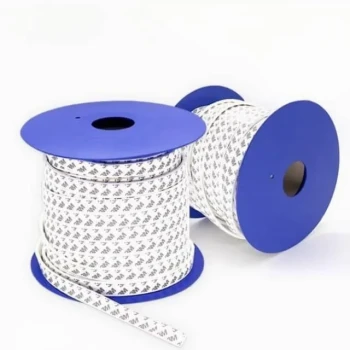
- Custom PTFE Sealing Tapes for Industrial and High Tech Applications
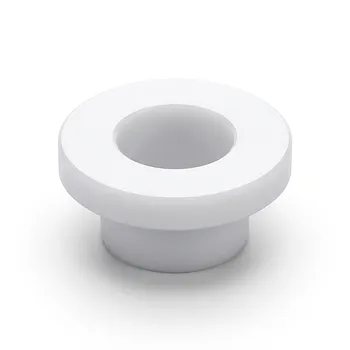
- Customizable High Temperature Resistant Anti Static PTFE Insulating Gaskets Flame Retardant Corrosion Proof Industrial Seals
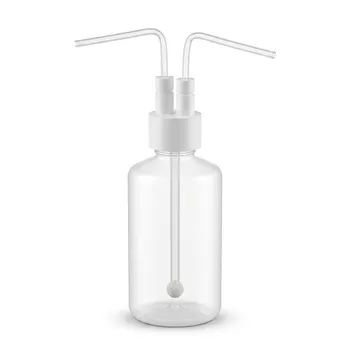
- Custom PTFE Gas Washing Bottle Cap Multi Port Reaction Lid Corrosion Resistant High Sealing Laboratory Fluoropolymer Closure
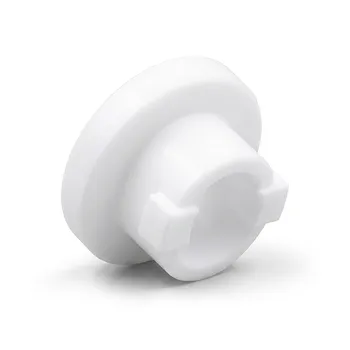
- Custom PTFE Insulating Gaskets and Corrosion Resistant Fluoropolymer Seals for Industrial Electrical Applications
- Custom PTFE Insulating Gaskets Corrosion Resistant Teflon Seals Tailored Engineering Plastic Components
Related Articles
- The Hidden Physics of Leak-Proof Experiments: Why Over-Tightening Won't Save Your PTFE Seals
- Why Your High-Performance Seals Keep Leaking—And Why It's Not the Seal's Fault
- Stop Chasing Leaks: Mastering PTFE Sealing Performance Across Extreme Temperatures
- The Unseen System: Why PTFE Seal Performance is More Than Just the Seal
- Why Your "Perfect" PTFE Seals Are Leaking Under Pressure—and How to Stop the Flow