Electrode jackets and base accessories provide the mechanical stability, chemical compatibility, and functional interfaces needed for dependable electrochemical work. This category supports laboratories developing fuel cells, batteries, electrocatalysts, corrosion test methods, and custom reactor assemblies. Products include the Rotating Disk Electrode Horizontal Support Stand, a high-purity PTFE leveling platform that securely organizes up to six electrodes, and hydrophilic carbon paper gas diffusion layers for effective gas transport, conductivity, and membrane electrode assembly support. KINTEK also applies its PTFE/PFA machining expertise to custom electrode jackets, sleeves, mounts, and related fixtures designed around your equipment and experimental requirements.
Toggle Categories
Get Instant Support
Choose your preferred way to connect with our team
Response Time
Within 8 hours on working days, 24 hours on holidays
Electrode Jackets & Base Accessories
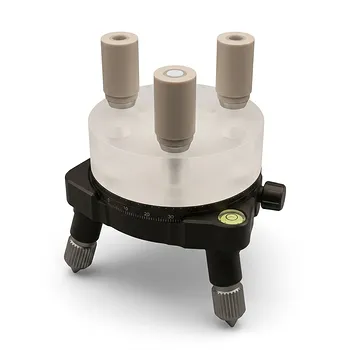
Rotating Disk Electrode Horizontal Support Stand
Item Number: PL-DZ01
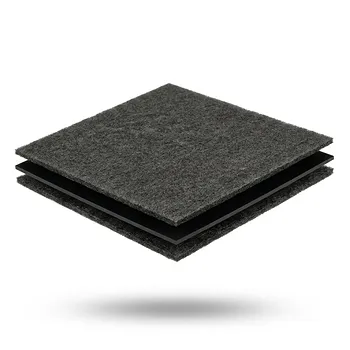
Build Stable, Compatible Electrochemical Test Systems
Electrochemical results depend on far more than the potentiostat, electrolyte, or active material under evaluation. The physical interfaces around an electrode determine how consistently it is positioned, insulated, exposed to solution, connected to a gas path, and protected from unintended contamination. Electrode jackets and base accessories therefore play a direct role in achieving repeatable measurements, reliable comparison between samples, and safer everyday laboratory operation.
KINTEK supplies specialized fluoropolymer-based support solutions and electrochemical accessories for laboratories that need chemical resistance, high-purity material options, dimensional stability, and the flexibility to adapt hardware to demanding experiments. The category brings together practical electrode support equipment, gas diffusion materials, and the foundation for custom PTFE or PFA electrode jackets, holders, sleeves, seals, mounts, and reactor interfaces.
Why Mechanical Support Matters in Electrochemistry
An electrochemical cell is sensitive to geometry. The relative location of working, reference, and counter electrodes can influence current distribution, solution resistance, diffusion conditions, gas evolution behavior, and the uniformity of an applied electric field. Small positional changes may introduce avoidable variation, particularly in comparative research, long-duration testing, rotating-disk experiments, corrosion evaluation, and studies involving low currents or dilute analytes.
A well-designed electrode support accessory helps laboratories establish and preserve the intended test geometry. It gives the operator a stable point of reference when placing electrodes, reduces the likelihood of movement during stirring or fluid circulation, and allows setups to be reproduced more efficiently from one run to the next. For research groups managing multiple electrodes, a dedicated stand can also improve bench organization and reduce handling damage between tests.
Fluoropolymer components are especially useful where the fixture may be exposed to aggressive acids, bases, oxidizers, solvents, electrolyte residues, or cleaning agents. PTFE is widely selected because it combines broad chemical resistance with a low-friction surface and useful thermal performance. These properties make it suitable for many laboratory support parts that must remain cleanable and functional without becoming an unwanted chemical variable in the experiment.
Rotating Disk Electrode Horizontal Support Stand
The Rotating Disk Electrode Horizontal Support Stand is designed to provide a stable, level organizational platform for electrochemical electrode hardware. Constructed from high-purity PTFE, it is intended for laboratories that value chemical compatibility and an orderly working environment around sensitive electrochemical components. Its leveling base supports reliable placement on laboratory work surfaces, while the horizontal configuration holds up to six electrodes for convenient staging, storage, preparation, or workflow management.
Rotating disk electrode methods are widely used to investigate mass transport, electron-transfer kinetics, catalytic activity, corrosion processes, and electrocatalyst performance. In these workflows, researchers often handle multiple electrode tips, shafts, or assemblies before and after polishing, coating, conditioning, or testing. A purpose-built stand helps keep those components separated and accessible instead of allowing them to roll, touch, or rest on unsuitable surfaces.
The value of the stand is not limited to rotating disk electrode work. It can also be useful in battery research, corrosion laboratories, catalyst screening programs, materials science groups, and academic electrochemistry facilities where several electrodes require structured handling. By creating designated positions for up to six electrodes, the accessory supports more consistent sample identification and reduces clutter during high-throughput or multi-sample testing routines.
Key functional benefits include:
- Level, stable positioning: The leveling base helps compensate for minor bench irregularities and provides a dependable support surface.
- High-purity PTFE construction: PTFE offers broad chemical resistance for many laboratory environments and can be readily cleaned after exposure to common electrolyte residues.
- Capacity for multiple electrodes: Six dedicated positions help researchers stage, store, or organize electrodes efficiently.
- Reduced risk of incidental contact: Individual support locations help minimize contact between sensitive electrode components.
- Suitable for advanced research workflows: The stand supports orderly operation in electrochemical, corrosion, battery, and catalyst-development laboratories.
In practice, stable accessories support better laboratory discipline. When electrode parts have a consistent place before and after experiments, operators can reduce mix-ups, make visual inspections easier, and maintain a cleaner path between preparation, testing, and storage. This is particularly valuable when each electrode has a different catalyst loading, surface treatment, substrate, serial number, or testing history.
Hydrophilic Carbon Paper Gas Diffusion Layers
The hydrophilic carbon paper gas diffusion layer in this category is engineered for fuel-cell and related electrochemical systems that require a conductive, porous, and structurally supportive interface. Gas diffusion layers are essential components in many membrane electrode assemblies because they help distribute reactant gases, conduct electrical current, manage water, support catalyst layers, and provide a pathway for heat transfer.
In a typical fuel-cell architecture, reactant gases must reach catalytically active sites efficiently while the electrons generated by electrochemical reactions must be collected and transferred through the external circuit. The gas diffusion layer serves as a critical bridge between the flow field and catalyst layer. Its porous network enables gas transport, while its conductive carbon structure helps establish electrical connection across the active area.
Water management is equally important. Insufficient water can adversely affect membrane hydration in certain systems, while excessive liquid water can block pores and restrict reactant access to catalytic sites. The hydrophilic behavior of this carbon paper is designed to help manage liquid water and limit catalyst flooding, supporting more effective use of the electrochemically active surface. The correct water-handling strategy always depends on the specific cell design, operating temperature, pressure, reactant humidity, flow conditions, catalyst layer, and membrane chemistry, but appropriate diffusion-layer selection is a major part of optimizing that balance.
The material also provides mechanical support for the membrane electrode assembly. During cell assembly and compression, a gas diffusion layer contributes to maintaining contact between components while helping distribute loads across the active area. A suitable layer can support more uniform interfacial contact, which is important for reducing contact resistance and sustaining consistent cell operation.
Core advantages of hydrophilic carbon paper gas diffusion layers include:
- Electrical conductivity: The carbon fiber network provides an electron-conduction path between the catalyst layer and current collector or bipolar plate.
- Gas distribution: The porous structure supports transport of hydrogen, oxygen, air, or other relevant process gases toward active reaction sites.
- Water-management capability: Hydrophilic surface behavior can assist in handling liquid water and reducing flooding under appropriate operating conditions.
- Thermal conductivity: Carbon paper assists with heat transfer in the electrode assembly, contributing to thermal management of operating cells.
- Mechanical reinforcement: The material provides physical support to the membrane electrode assembly during fabrication and cell compression.
- Research versatility: It is applicable to fuel-cell development, electrolyzer research, catalyst evaluation, gas-diffusion electrode studies, and other advanced electrochemical platforms.
For laboratory-scale fuel-cell research, gas diffusion layers are often evaluated alongside catalyst formulation, ionomer content, membrane selection, flow-field design, compression conditions, and test protocols. Their properties can affect polarization behavior, limiting current, reactant utilization, humidity response, contact resistance, and operating stability. Researchers should select the diffusion-layer grade and assembly parameters in accordance with their specific system rather than treating the material as an interchangeable passive substrate.
PTFE Electrode Jackets and Protective Interfaces
An electrode jacket is a functional enclosure, sleeve, or insulating interface that supports an electrode core while controlling the surfaces exposed to the process environment. Depending on the application, it may protect a conductive core, define an immersion length, isolate connections, position an electrode in a vessel, create a sealed transition through a reactor wall, or help align components within a custom cell.
PTFE is well suited to many electrode-jacket applications because it is lightweight, mechanically rigid enough for properly designed support structures, and highly resistant to a broad range of chemicals. It can be precision-machined or molded into forms such as thin-walled sleeves, porous plugs, multi-ring junctions, bushings, collars, threaded adapters, protective caps, and custom profiles. This range of manufacturing options allows the component geometry to reflect the actual needs of the laboratory apparatus instead of forcing an experiment into a generic fixture.
For example, a custom PTFE electrode jacket may be designed around a particular electrode diameter and create a controlled fit within laboratory glassware. A different version may incorporate a shoulder or flange for a reactor lid, a threaded section for an industrial fitting, or an internal passage to accommodate a lead, tube, or auxiliary probe. In multi-electrode systems, several jackets can be incorporated into a common mounting plate or multi-port configuration to establish repeatable electrode placement.
The goal is not simply to cover an electrode. The goal is to create an interface that supports the intended electrochemical environment. This may involve balancing insulation, chemical exposure, sealing, mechanical retention, cleaning access, electrical isolation, thermal constraints, and manufacturing tolerances. KINTEK's PTFE/PFA machining capability makes it possible to develop these details around the actual cell, vessel, electrode, and operating method.
Material Selection: PTFE and PFA for Laboratory Hardware
PTFE and PFA are high-performance fluoropolymers valued in laboratories and process environments where conventional plastics may be unsuitable. Both materials offer strong resistance to many aggressive chemicals and are used widely in analytical, chemical-processing, semiconductor, environmental, and electrochemical applications. Their suitability in a particular assembly should be evaluated against the real process conditions, including chemical concentration, temperature, pressure, mechanical load, and exposure duration.
PTFE is often selected for machined accessories because it provides excellent chemical resistance, low surface energy, and practical machinability for a wide variety of laboratory geometries. It can be used for stands, holders, sleeves, adapters, reaction-cell components, and other parts where cleanliness and chemical compatibility are important. Its low-friction surface can also make parts easier to clean and helps reduce sticking during repeated assembly and disassembly.
PFA is often useful where a high-purity, thermoplastic fluoropolymer is required and where fabricated or molded forms are preferred. It is commonly considered for applications needing excellent chemical resistance, low extractable concerns, and transparency in certain component designs. The most appropriate material and fabrication method depend on the component function and the demands of the application.
When specifying a fluoropolymer electrode accessory, useful questions include:
- What chemicals, solvents, electrolytes, and cleaning solutions will contact the part?
- What temperature range and duration of exposure are expected?
- Does the component require a seal, a controlled clearance, or a precise compression interface?
- Which electrode diameter, lead configuration, and immersion depth must be accommodated?
- Does the fixture need to fit a standard laboratory vessel, a proprietary reactor, or a custom glassware connection?
- Is low contamination important for trace analysis, catalyst testing, or high-purity process research?
- Will the assembly be used manually, in a multi-electrode test sequence, or in an automated system?
Clear answers to these questions allow a support accessory to become a deliberate part of the experimental design rather than an afterthought.
Applications Across Electrochemical Research
Electrode jackets, stands, and gas diffusion materials are used across a broad set of technical programs. In corrosion research, controlled electrode placement and chemically compatible hardware can support repeatable tests in acidic, saline, alkaline, or otherwise demanding environments. In battery research, support fixtures can assist with electrode handling, materials screening, and custom-cell development. In fuel-cell research, conductive gas diffusion layers help create the porous transport and electrical pathways needed for membrane electrode assembly performance studies.
In electrocatalysis, researchers may require stable setups while assessing hydrogen evolution, oxygen evolution, oxygen reduction, carbon dioxide reduction, nitrogen reduction, or other reactions. The components surrounding the active electrode can influence mass transport and the practical repeatability of a test. A carefully engineered jacket or holder can help standardize geometry and isolate non-active surfaces where needed.
In analytical electrochemistry, chemical compatibility and cleanliness are important because trace contaminants may compromise low-level measurements. Fluoropolymer fixtures are frequently considered for environments where glass, metals, or general-purpose plastics are not optimal. In industrial process development, a custom electrode interface may be required to connect sensors or electrode assemblies to vessels, lines, sampling systems, or pilot-scale reactors.
Other relevant applications include:
- Rotating disk electrode and rotating ring-disk electrode preparation workflows
- Fuel-cell membrane electrode assembly development and evaluation
- Electrolyzer and gas-diffusion electrode research
- Corrosion and electrochemical impedance spectroscopy studies
- Electrodeposition, electroplating, and surface-finishing research
- Electrochemical synthesis and reaction engineering
- Environmental and water-analysis instrumentation
- Semiconductor and high-purity chemical research
- Custom three-electrode, flow-cell, and multi-electrode reactor construction
Advantages of Custom Machined Electrochemical Accessories
Standard catalog accessories can be effective when dimensions, vessel connections, and operating conditions align with the experiment. However, advanced research often requires hardware that is not available as a standard item. A non-standard electrode diameter, unusual reactor port, restricted bench footprint, special sealing requirement, high-purity material specification, or multi-electrode geometry can make a custom part the more practical solution.
KINTEK provides end-to-end PTFE and PFA custom CNC machining capabilities for laboratory and electrochemical components. This means a project can be developed from a technical requirement into a part designed around its real interface conditions. Depending on the application, custom work may include electrode jackets, insulating sleeves, support bases, cell bodies, reactor covers, sealing components, tube and fitting adapters, sample holders, electrode racks, and complete bespoke laboratory setups.
Customization may address practical features such as:
- Internal bores matched to a specific electrode core or sheath
- Controlled tolerances for slip fits, press fits, or sealing interfaces
- Threaded connections and adapters for laboratory glassware or process fittings
- Multi-port layouts for working, reference, counter, temperature, gas, or sampling connections
- Flanges, collars, alignment features, or brackets for secure mounting
- Drainage, venting, or flow passages for custom electrochemical cells
- High-purity fluoropolymer material selection for contamination-conscious applications
- Configurations suitable for prototype development or higher-volume supply requirements
A custom component should be designed with the entire assembly in view. The most useful information often includes a dimensional drawing, photographs of the existing setup, mating-part specifications, chemical and temperature conditions, desired quantities, and a description of the experiment or process. Even when a complete drawing is not available, a clear explanation of the objective and operating constraints can provide a strong starting point for a manufacturable design discussion.
Select Accessories for Repeatability and Scale
The right accessory supports both immediate testing and long-term workflow improvement. For early-stage R&D, adaptable fluoropolymer fixtures can help teams rapidly evaluate new electrode concepts without rebuilding the entire test system each time. For established procedures, standardized stands and custom holders can help preserve consistent geometry across operators, batches, and laboratory locations.
As projects advance from exploratory work to method development or pilot production, reproducible hardware becomes increasingly valuable. Consistency in material, dimensions, and component arrangement can simplify documentation, training, quality review, and repeat testing. KINTEK can support single custom prototypes as well as higher-volume orders when a laboratory design is ready to be deployed more broadly.
Whether you need a practical PTFE stand for organizing rotating disk electrodes, a hydrophilic carbon paper gas diffusion layer for a fuel-cell assembly, or a completely custom electrode jacket for a specialized reactor, the focus should remain on fit, function, chemical compatibility, and experimental repeatability.
For support selecting a standard item or developing a custom PTFE/PFA electrochemical component, contact KINTEK through our inquiry form. Share your application, dimensions, drawings, material requirements, operating conditions, and quantity needs. Our fluoropolymer specialists can help translate your electrode-support or electrochemical-cell requirements into a professional, application-specific solution.
REQUEST A QUOTE
Our professional team will reply to you within one business day. Please feel free to contact us!