The Mystery of the Ghost Contaminant
You are running an ICP-MS sequence for ultra-trace element analysis—the kind of work where parts-per-trillion (ppt) matter. Your reagents are high-purity, your environment is controlled, and you are using PFA (Perfluoroalkoxy) labware, the gold standard for chemical inertness.
Yet, the results are inconsistent. A "ghost" peak appears in your blank samples, or a vessel that has served you well for months suddenly shows signs of deformation after a standard digestion cycle. You might suspect a bad batch of acid or a failing sensor, but the culprit often lies in a misunderstanding of the material itself.
While PFA is remarkably durable, it is not an "indestructible" material. It has specific physical and thermal boundaries that, when crossed, can compromise both your hardware and your data.
The Common Struggle: Treating PFA Like Glass
In many laboratories, PFA is treated as a premium version of glassware. When it gets dirty, it’s scrubbed with abrasive brushes. When a reaction needs more energy, the temperature is dialed up without a second thought. This approach stems from PFA’s reputation for "near-complete" chemical resistance.
However, treating PFA like glass or stainless steel leads to two costly consequences:
- Premature Vessel Failure: PFA is a "soft" polymer compared to glass. Mechanical abrasion creates microscopic scratches that act as "canyons" for contaminants to hide in, making the vessel nearly impossible to clean to a "trace-level" standard again.
- Sample Integrity Loss: PFA is permeable. Under high thermal stress, it doesn't just hold the sample; it can interact with the environment, allowing gases to migrate through the vessel walls.
When these failures occur, the business impact is immediate: project delays, wasted high-purity reagents, and the high cost of replacing premium labware that should have lasted years.
The Science of Failure: Chain Scission and Surface Roughness
To solve these issues, we must look at the molecular level. PFA is a copolymer of tetrafluoroethylene and perfluoroalkyl vinyl ethers. Its strength comes from its fully fluorinated carbon backbone. But even this "armored" structure has limits.
The Thermal "Danger Zone"
PFA has a recommended maximum continuous service temperature of 260°C. While it can survive brief spikes, exceeding 300°C for prolonged periods triggers a process called chain scission. The long, stable polymer chains literally begin to snap. This doesn't just weaken the structure; it can release trace fluorocarbons into your sample, introducing the very contaminants you bought PFA to avoid.
The Problem with Permeability
Unlike glass, PFA is a melt-processable fluoropolymer. While this makes it tough and flexible, it also means it exhibits gas permeability at elevated temperatures. If you are working with volatile reagents at the edge of PFA’s thermal range, your "closed system" might not be as closed as you think.
Surface Integrity and Adsorption
PFA has a lower scratch resistance than PTFE. When you use abrasive tools for cleaning, you increase the surface roughness. On a microscopic level, you are creating a massive increase in surface area, which provides sites for molecular adsorption. Once a contaminant is physically lodged in a scratch, standard rinsing won't remove it, leading to "carry-over" contamination in subsequent experiments.
The Solution: Precision Engineering Meets Material Expertise
Understanding these limits is the first step; the second is choosing tools designed to respect those limits. At KINTEK, we don't just "sell plastic"; we engineer high-precision PFA and PTFE components that account for these physical realities.
Our solution focuses on three pillars:
- Custom CNC Fabrication: Unlike mass-molded PFA, which can have internal stress points, our CNC-fabricated parts—from electrochemical cells to microwave digestion vessels—ensure uniform wall thickness. This improves "creep resistance," allowing the material to maintain its shape even under combined chemical and thermal stress.
- High-Purity Sourcing: We utilize PFA grades specifically optimized for ultra-trace analysis, ensuring the lowest possible levels of extractables and leachable metals.
- Application-Specific Design: Because PFA is 10x more resistant to repeated bending than FEP, we design our fluid transfer components (tubing and fittings) to leverage this flexibility without risking the mechanical fatigue that leads to leaks.
Beyond the Fix: Unlocking New Potential in Trace Analysis
When you align your laboratory practices with the physical realities of PFA, you move from "troubleshooting" to "scaling."
By respecting the 260°C threshold and utilizing non-abrasive cleaning protocols, you extend the service life of your labware significantly, reducing the total cost of ownership. More importantly, you eliminate the "background noise" in your data. This allows your team to push the boundaries of what’s possible—whether that is achieving more precise semiconductor doping profiles, more accurate battery electrolyte testing, or more reliable pharmaceutical purity checks.
At KINTEK, we specialize in bridging the gap between complex material science and your laboratory's daily challenges. Whether you are designing a custom electrochemical setup or need high-volume, high-purity PFA components for semiconductor processing, our team of experts is ready to help you optimize your hardware for maximum reliability. Contact Our Experts today to discuss your specific technical requirements and ensure your next project is built on a foundation of precision and purity.
Related Products
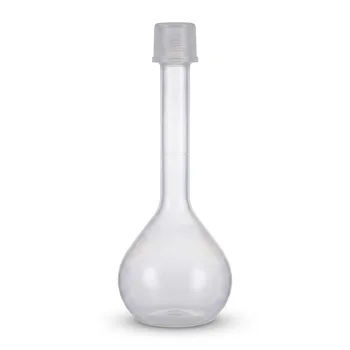
- High Purity PFA Volumetric Flask 1000ml 2000ml Constant Volume Bottle Acid Resistant Trace Analysis Custom Laboratory Labware
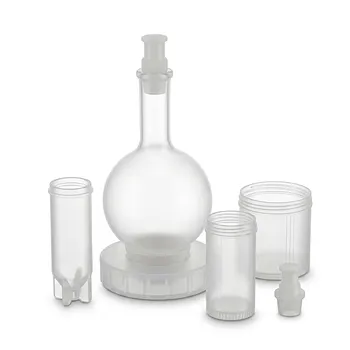
- Custom PFA Pear Shaped Flask High Purity Corrosion Resistant Labware Custom Molded Fluoropolymer Flask Glass Replacement Solution
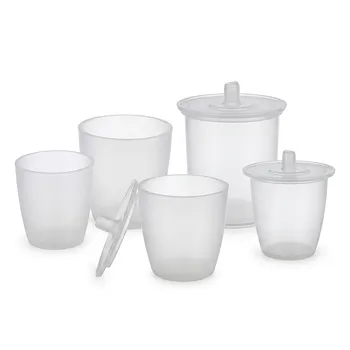
- High Purity PFA Crucible and Corrosion Resistant PTFE Beaker for Trace Analysis and Custom Laboratory Applications
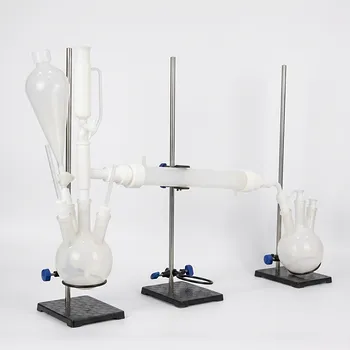
- High Purity PFA Constant Pressure Condensation Reaction System Acid Resistant High Temperature Customizable Teflon Labware
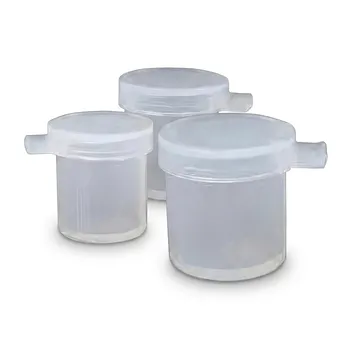
- High Purity PFA Sample Dissolution Cups Acid Resistant Chemical Digestion Vessels with Lids Trace Analysis Labware