The Mystery of the Failing Seal
Imagine you’ve designed a high-performance system using Virgin PTFE. On paper, it’s the perfect choice: it is virtually immune to chemical attack, withstands extreme temperatures, and has a friction coefficient lower than almost any other solid. Yet, after just a few weeks of operation, the leaks begin.
When you disassemble the component, the seal hasn’t melted or corroded. Instead, it looks "squashed"—as if the material has slowly oozed out of its groove like a thick liquid. You tighten the bolts, but the problem persists. You are facing the hidden nemesis of precision engineering: Cold Flow.
The High Cost of "Good Enough" Materials
Engineers often struggle with this paradox. They choose Virgin PTFE for its purity and chemical inertness, only to find that the material lacks the "backbone" to survive real-world mechanical stress.
In industrial environments—whether it's a semiconductor etch tool, a battery testing fixture, or a chemical reactor—this mechanical failure leads to significant business consequences:
- Unscheduled Downtime: Every hour spent replacing a "soft" seal is an hour of lost production.
- Contamination Risks: A leaking seal in trace analysis or semiconductor processing can ruin an entire batch of high-purity chemicals.
- Safety Hazards: In high-pressure hydraulic systems, a deformed seal can lead to catastrophic pressure loss.
Most teams try to solve this by increasing the seal's thickness or over-tightening the assembly, but these are temporary band-aids that often accelerate the material's deformation.
The Root Cause: Why PTFE "Crawls"
To solve the problem, we must look at the molecular level. PTFE is a polymer made of long, straight chains of carbon and fluorine. These chains are incredibly slippery, which is why PTFE has such low friction. However, these chains are not strongly "hooked" to one another.
Under a constant load—even at room temperature—these chains slide past each other. This is creep, often called "cold flow." While Virgin PTFE is chemically superior, it is mechanically "lazy." It lacks the internal structure to resist being pushed around by pressure. Without reinforcement, its compressive strength is limited to about 10 MPa, which is often insufficient for demanding industrial loads.
The Solution: Engineering a Structural "Skeleton"
The secret to a permanent fix isn't to replace PTFE, but to reinforce it. By compounding Virgin PTFE with specific inorganic fillers, we can create a material that retains its chemical "magic" while gaining the structural integrity of a high-performance composite.
At KINTEK, we utilize "Filled Modification" to transform PTFE's performance:
1. Glass Fiber: The Stiffness Specialist
Adding glass fiber increases the material’s stiffness and dramatically reduces creep. It is the go-to choice for applications where the seal must maintain its shape under high mechanical loads without losing its electrical insulation properties.
2. Carbon and Graphite: The Wear Warriors
For applications involving high-speed motion or dry running, carbon and graphite fillers are essential. They can increase PTFE’s abrasion resistance by up to 1,000 times. Furthermore, carbon adds thermal conductivity, helping to dissipate heat away from the sealing surface, which prevents localized melting.
3. Bronze: The Heavy Lifter
When massive compressive strength is required—such as in hydraulic actuators—bronze fillers are used. This can triple the compressive strength of the material (from 10 MPa to 30 MPa), allowing the seal to support heavy loads that would crush Virgin PTFE.
Beyond the Fix: New Frontiers in Precision Performance
When you solve the problem of cold flow, you do more than just stop a leak; you unlock new engineering possibilities.
By using reinforced PTFE components, our clients are now pushing the boundaries of what their equipment can do. They are running chemical processes at higher pressures, extending maintenance cycles from months to years, and achieving higher precision in CNC-machined parts that stay dimensionally stable even as temperatures fluctuate.
However, filled PTFE is significantly harder to work with. It is abrasive and requires specialized CNC tooling and expert thermal control during fabrication to prevent warping. This is where the intersection of material science and manufacturing expertise becomes critical.
Are you tired of settling for the limitations of Virgin PTFE? At KINTEK, we specialize in the end-to-end custom fabrication of high-precision PTFE and PFA components. Whether you are dealing with abrasive slurries in the oil and gas sector or high-purity requirements in semiconductor manufacturing, our team can help you select the ideal filler and CNC-machine it to your exact specifications. Let's move beyond the "cold flow" bottleneck and build systems that last. Contact Our Experts.
Related Products
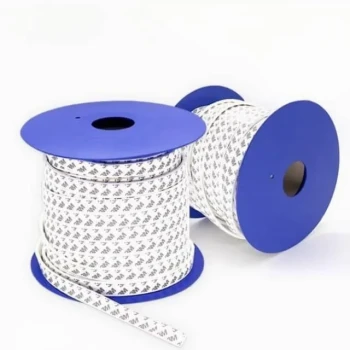
- Custom PTFE Sealing Tapes for Industrial and High Tech Applications
- Customizable High Temperature Resistant Anti Static PTFE Insulating Gaskets Flame Retardant Corrosion Proof Industrial Seals
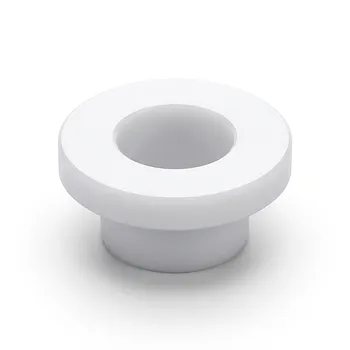
- Custom PTFE Insulating Gaskets and Corrosion Resistant Fluoropolymer Seals for Industrial Electrical Applications
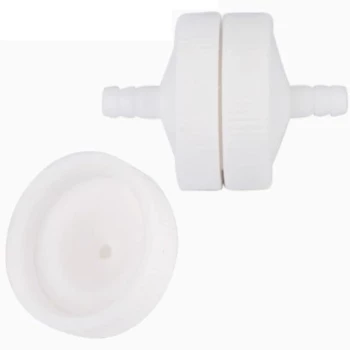
- Customizable PTFE Seals Filter Holders for Versatile Applications
- Custom Graphite Filled PTFE Rods for Advanced Industrial Applications
Related Articles
- The Hidden Physics of Leak-Proof Experiments: Why Over-Tightening Won't Save Your PTFE Seals
- Why Your High-Performance Seals Keep Leaking—And Why It's Not the Seal's Fault
- Stop Chasing Leaks: Mastering PTFE Sealing Performance Across Extreme Temperatures
- The Unseen System: Why PTFE Seal Performance is More Than Just the Seal
- The Persistent Leak: Why Your High-Performance Seals Fail and How to Fix Them for Good