The Mystery of the Failing Seal
Imagine you are running a critical battery stress test or a high-purity chemical synthesis. Your equipment is outfitted with PTFE (Teflon™) seals—the gold standard for hardware that must withstand aggressive solvents and extreme temperatures. For the first few hours, the vacuum holds, and the pressure is rock-solid.
But then, the slow decline begins. A microscopic leak appears. You tighten the fittings, but the leak persists or returns a day later. Externally, the seal looks perfect; it hasn't melted, and it hasn't corroded. So, why is a material famous for its "indestructibility" failing to do the one thing it was designed for: maintaining a gas-tight barrier?
The Common Struggle: Why "Tightening" Isn't the Answer
When a seal fails, the instinct is often to increase the load—tightening bolts or choosing a harder material. In the world of high-precision research and semiconductor manufacturing, this "brute force" approach usually leads to three frustrating outcomes:
- Hardware Misalignment: Over-torquing can warp delicate high-purity labware or electrochemical cells.
- Frequent Maintenance Cycles: Labs find themselves replacing seals every few weeks to avoid "predictable failures," driving up operational costs and delaying project timelines.
- Process Contamination: In trace analysis, a failing seal isn't just a pressure issue; it’s an entry point for atmospheric contaminants that can ruin months of research.
Many engineers try to swap PTFE for standard elastomeric O-rings (like Viton), only to find that the chemicals in their process degrade the rubber in hours, or the extreme cold of a cryogenic application turns the O-ring as brittle as glass.
The Root Cause: PTFE’s "Memory Problem"
To solve this, we have to look at the molecular level. Standard rubber O-rings work because they have "elastic memory." When you compress them, they want to snap back, creating a constant push against the sealing surface.
PTFE is different. While it is chemically nearly universal and can handle temperatures from -250°F to over 500°F, it lacks this inherent mechanical memory. In engineering terms, PTFE is prone to "creep" or "cold flow."
Under constant pressure or fluctuating temperatures, PTFE molecules slowly slide past one another. Instead of pushing back against the leak path, the material "relaxes" or permanently deforms into the gaps of the hardware. Once the material has moved, the seal is lost. This is why a PTFE seal that worked at noon might leak at midnight after a temperature drop—the material contracted and simply "forgot" to stay pressed against the surface.
The Solution: Giving the Seal a Permanent "Soul"
To fix the memory problem, we don't change the PTFE; we supplement it. This is where Spring-Energized PTFE Seals come into play.
By integrating a metallic "energizer"—such as a canted-coil, helical, or V-spring—into a precision-machined PTFE jacket, we create a hybrid component. The PTFE jacket provides the chemical inertness and low-friction interface, while the internal spring provides the "permanent resilience" that the polymer lacks.
How it works in practice:
- Constant Radial Load: The spring acts as a constant engine, exerting an outward force that keeps the sealing lips in contact with the mating surface regardless of material wear or "cold flow."
- Thermal Compensation: As temperatures swing from cryogenic lows to high-heat peaks, the spring expands and contracts to maintain a gas-tight seal, accounting for the dimensional changes of the hardware.
- Pressure-Assisted Sealing: As system pressure increases, it actually works with the spring, forcing the PTFE jacket even more firmly against the walls of the gland.
At KINTEK, we utilize custom CNC fabrication to ensure these jackets are machined to the exact tolerances required for your specific fixtures, ensuring that the spring is perfectly seated to deliver optimal sealing power from the moment of installation.
Beyond the Fix: New Frontiers in Research
When you move from a standard "dead" PTFE seal to a spring-energized "active" seal, you aren't just fixing a leak; you are unlocking new capabilities for your lab or production line.
With a reliable, gas-tight seal that doesn't demand constant retightening, you can finally run unattended long-term stability tests in battery R&D. You can operate in ultra-clean semiconductor environments without worrying about outgassing or particulate from failing seals. You can push the boundaries of hydrothermal synthesis, knowing your vessels will maintain pressure even as the chemistry gets volatile.
Reliably sealing an irregular or misaligned surface is no longer a headache—it’s a solved problem.
Stop struggling with "plastic memory" and start building for performance. Whether you are designing a one-off prototype for a new energy project or need high-volume, high-purity components for semiconductor processing, our team is ready to help you engineer the perfect fit. Contact Our Experts today to discuss how our precision-machined PTFE solutions can stabilize your most challenging applications.
Related Products
- Customizable High Temperature Resistant Anti Static PTFE Insulating Gaskets Flame Retardant Corrosion Proof Industrial Seals
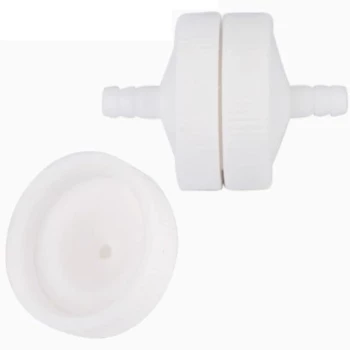
- Customizable PTFE Seals Filter Holders for Versatile Applications
- Custom PTFE Insulating Gaskets and Corrosion Resistant Fluoropolymer Seals for Industrial Electrical Applications
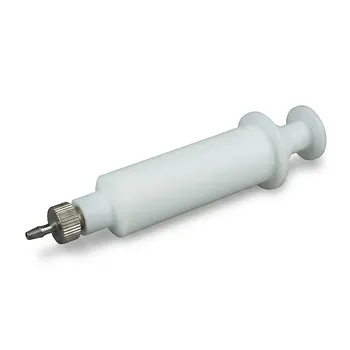
- High Temperature Chemical Resistant 50ml PTFE Syringe Customized Teflon Injector with Threaded Seal for Trace Analysis
- Custom PTFE Insulating Gaskets Corrosion Resistant Teflon Seals Tailored Engineering Plastic Components
Related Articles
- Why Your PTFE Gaskets Keep Leaking—And Why Tighter Bolts Won't Fix It
- Why Your PTFE Gasket Keeps Leaking—And Why Overtightening Makes It Worse
- How to Install PTFE Gaskets Correctly: Preventing Failures Through Precision Protocols
- When 'Perfect' Fails: Why Your PTFE Gaskets Leak and How to Fix It for Good
- How PTFE Gaskets Solve Critical Industry-Specific Challenges