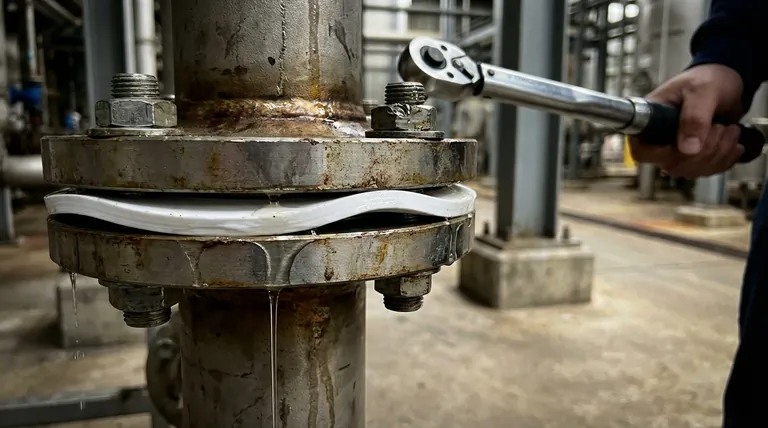
It’s a scenario that plays out far too often in high-performance facilities. A critical flanged connection, sealed with a PTFE gasket, begins to leak. Again. Your team just replaced it a few weeks ago. Production halts, maintenance is called in, and the frustrating search for a cause begins. Was it a defective part? A careless installation? This recurring problem isn't just an annoyance; it's a costly disruption that chips away at your plant's reliability and safety.
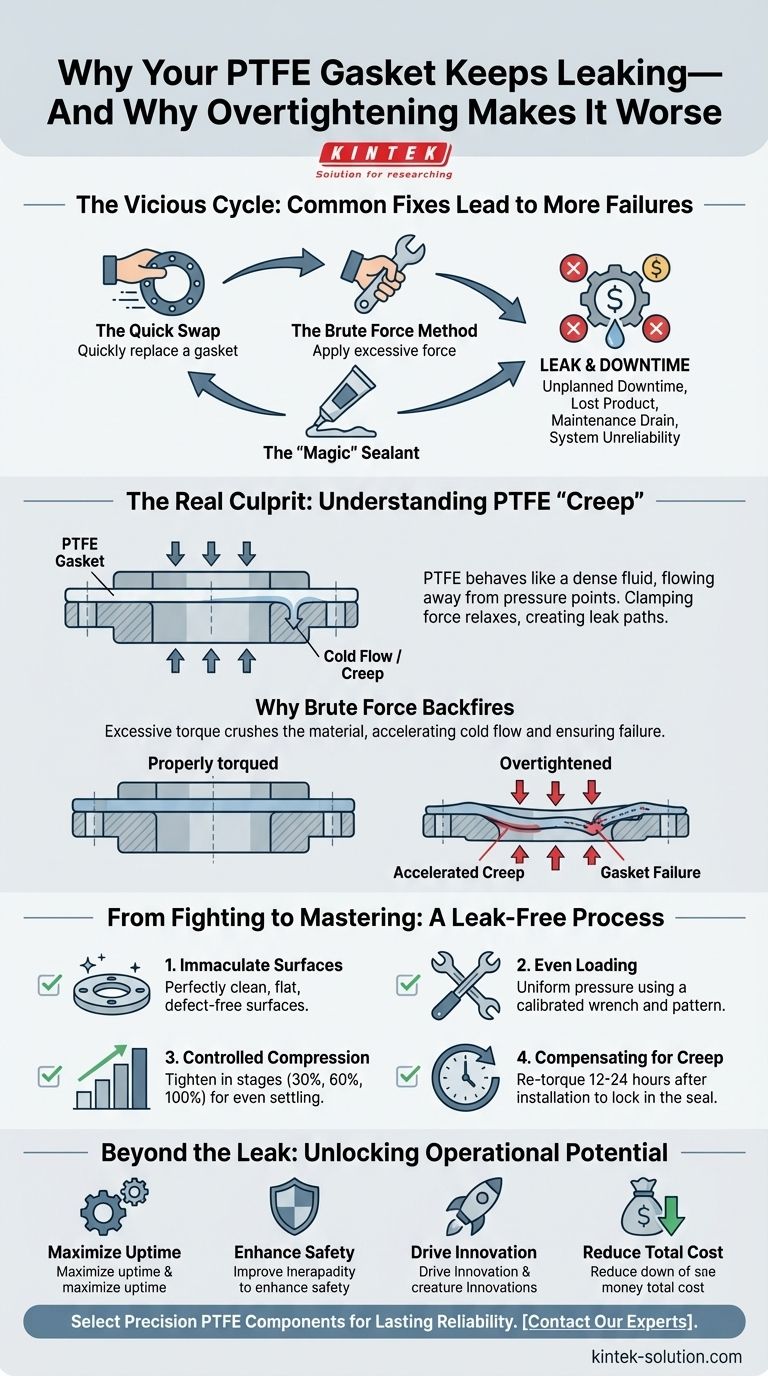
The Vicious Cycle: Why Common Fixes Lead to More Failures
When faced with a leak, the immediate pressure is to get the system back online—fast. This urgency often leads to a series of well-intentioned but ultimately flawed "solutions" that only perpetuate the problem:
- The Quick Swap: Pulling out the old gasket and quickly inserting a new one without properly preparing the flange surfaces.
- The Brute Force Method: Grabbing a larger wrench and tightening the bolts far beyond their specified torque. The logic seems simple: tighter must mean a better seal.
- The "Magic" Sealant: Applying extra sealing compounds or grease, hoping to plug any potential leak paths the gasket might miss.
While these actions might offer a temporary fix, they almost guarantee a future failure. The business consequences are significant and compounding: unplanned downtime cuts into production targets, valuable product is lost through leaks, and maintenance teams are constantly pulled away from preventative work to fight the same fires. Most critically, the reliability of your entire system is called into question.
The Real Culprit: A Misunderstanding of PTFE's "Personality"
The reason these fixes fail is that they treat the symptom, not the disease. The root cause isn’t a weak gasket or insufficient force; it’s a fundamental conflict between the installation method and the unique physical properties of PTFE.
Introducing "Creep": The Slow Flow That Undermines Your Seal
PTFE is prized for its incredible chemical resistance and wide temperature range. However, it has a distinct mechanical behavior known as creep, or cold flow.
Think of PTFE not as a rigid solid, but as an extremely dense, slow-moving fluid. When you apply pressure by tightening the bolts on a flange, the PTFE material doesn't just compress; it begins to slowly "flow" away from the high-pressure points. This relaxation causes the clamping force from the bolts to decrease over time, sometimes within hours of installation. The seal that was tight initially is now loose, creating a microscopic path for a leak to start.
Why Brute Force Backfires
This is why the "tighter is better" approach is so destructive. When you overtighten a PTFE gasket, you dramatically accelerate this cold flow. You are essentially squeezing the life out of the seal. The excessive pressure crushes the material's internal structure, forcing it to deform and thin out rapidly. You've created a seal that is destined to fail, not in spite of the high torque, but because of it.
Similarly, dirty or damaged flange surfaces create uneven pressure points, giving the PTFE an easy path to creep away from. The gasket simply cannot compensate for a poor foundation.
From Fighting the Material to Mastering It
The key to a permanent, leak-free seal is not to fight against PTFE's nature but to work with it. This requires a shift from force to finesse, centered on a meticulous, multi-stage installation process:
- Immaculate Surfaces: Ensuring flange faces are perfectly clean, flat, and free of defects.
- Even Loading: Using a calibrated torque wrench and a crisscross pattern to apply pressure uniformly across the gasket.
- Controlled Compression: Tightening in stages (e.g., 30%, 60%, 100% of target torque) to allow the material to settle evenly.
- Compensating for Creep: Re-torquing the bolts 12-24 hours after initial installation to account for the initial cold flow and lock in a stable, long-term seal.
This level of precision demands a component you can trust. A successful installation starts with a gasket that is dimensionally perfect and materially consistent.
The Foundation of a Perfect Seal: Precision by Design
You can have the best installation procedure in the world, but it will be undermined by a gasket with inconsistencies in thickness or purity. This is where the quality of the component becomes non-negotiable.
At KINTEK, we manufacture PTFE components to exacting tolerances for the most demanding industries. Our precision-fabricated gaskets provide the reliable, predictable foundation your meticulous process requires. By eliminating variability in the gasket itself, you ensure that your carefully applied clamping force is distributed exactly as intended, allowing you to manage PTFE creep effectively rather than becoming its victim. We provide the perfect starting point for a perfect seal.
Beyond the Leak: What Reliable Sealing Unlocks for Your Operations
When you solve the chronic leak problem, you do more than just fix a flange. You unlock new operational potential.
- Maximize Uptime: Shift from reactive repairs to predictable, planned maintenance schedules, knowing your critical joints are secure.
- Enhance Safety: Confidently manage aggressive or hazardous media without the constant risk of fugitive emissions and costly cleanups.
- Drive Innovation: Push your processes to higher pressures and more extreme temperatures, free from the constraints of unreliable seals.
- Reduce Total Cost: Stop wasting capital on replacement components, lost product, and excessive maintenance labor.
Your process equipment is a complex system, and a reliable seal is one of its most critical elements. Instead of just fixing the next leak, let's solve the underlying problem. Our team can help you select the right high-performance PTFE components that provide the foundation for lasting reliability in your unique application. Contact Our Experts.
Visual Guide
Related Products
- Customizable High Temperature Resistant Anti Static PTFE Insulating Gaskets Flame Retardant Corrosion Proof Industrial Seals
- Custom PTFE Insulating Gaskets Corrosion Resistant Teflon Seals Tailored Engineering Plastic Components
- Custom PTFE Insulating Gaskets and Corrosion Resistant Fluoropolymer Seals for Industrial Electrical Applications
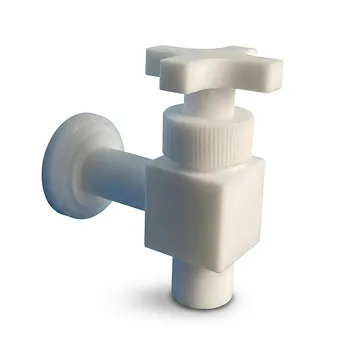
- High Corrosion Resistant PTFE Faucet Polytetrafluoroethylene Valve for Chemical Storage Drums and Fluid Transfer Systems Customizable Industrial Grade
- Custom PTFE Acid Resistant Support Rack Multi Hole PFA Hydrogen Absorption System Bracket
Related Articles
- Why Your PTFE Gaskets Keep Leaking—And Why Tighter Bolts Won't Fix It
- How to Install PTFE Gaskets Correctly: Preventing Failures Through Precision Protocols
- When 'Perfect' Fails: Why Your PTFE Gaskets Leak and How to Fix It for Good
- How PTFE Gaskets Solve Critical Industry-Specific Challenges
- Why Your High-Performance Seals Keep Leaking—And Why It's Not the Seal's Fault