The "Black Box" Problem in Hydrothermal Synthesis
You’ve carefully calculated your precursor concentrations, adjusted the pH, and sealed your hydrothermal autoclave. But after 24 hours in the oven, the result is a disaster: the yield is low, the nanoparticle morphology is inconsistent, or worse—the inner liner has deformed so badly it’s nearly impossible to remove from the steel jacket.
In many laboratories, the hydrothermal reactor is treated as a simple "pressure cooker." When experiments fail, researchers often blame the chemical formula. However, the root of the problem frequently lies not in the chemistry, but in the mechanical struggle happening between the two primary components of the reactor: the outer body and the inner liner.
The Common Struggle: Why "Close Enough" Isn't Enough
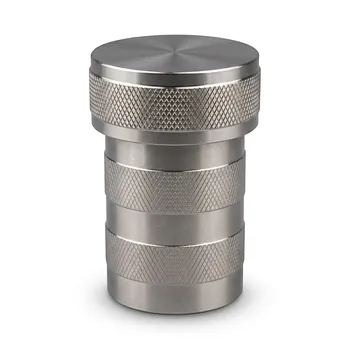
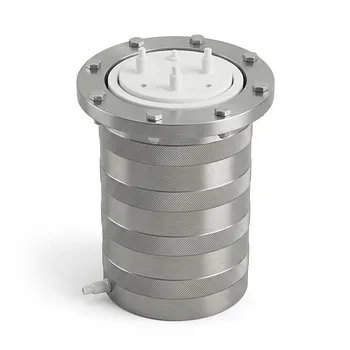
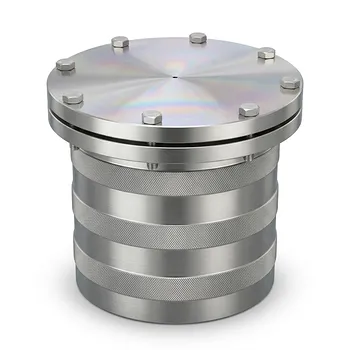
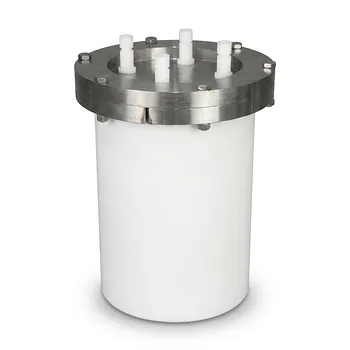
Most researchers are familiar with the standard setup: a stainless steel (SS304 or 316) outer shell and a Polytetrafluoroethylene (PTFE) or Polyphenylene Polymer (PPL) liner.
When synthesis goes wrong, common troubleshooting steps include increasing the heating time or tightening the bolts with more force. These "fixes" often backfire. Over-tightening can strip threads or damage the sealing surface, while unexpected temperature fluctuations can lead to a hazardous release of internal pressure.
The business and academic consequences are real. A single failed run in a high-pressure "digestion bomb" doesn't just waste expensive precursors; it sets project timelines back by days and compromises the reproducibility required for publication or industrial scaling.
Revealing the Root Cause: The Physics of the "Dual-Shell"
To understand why these failures happen, we have to look at the physics of the autogenous pressure created inside the vessel.
As the aqueous solution inside the liner reaches temperatures between 100°C and 300°C, the liquid expands and turns to vapor, creating internal pressures that can soar from 3 MPa to as high as 30 MPa.
This creates a fundamental conflict:
- The Pressure Problem: The PTFE liner is chemically inert, but it is mechanically "soft." Under high heat and pressure, it would flow like a slow-moving liquid and burst if it were used alone.
- The Corrosion Problem: The stainless steel outer body provides the "muscle" to contain the pressure, but it is vulnerable to the very acids and solvents required for the reaction.
The failure usually happens at the interface. If the liner doesn't fit the steel cavity with high precision, the PTFE will expand into the gaps (a phenomenon known as "creep") during the heating phase. When the reactor cools, the liner remains deformed, leading to leaks in future experiments or contamination as the seal fails to seat properly.
The Solution: Precision-Engineered Integrity
A truly reliable hydrothermal reactor is not just a metal pot with a plastic insert; it is a precision-engineered system where the liner and shell work in perfect harmony. This is where KINTEK’s high-precision PTFE and PFA liners redefine the process.
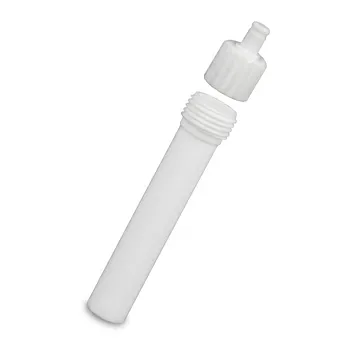
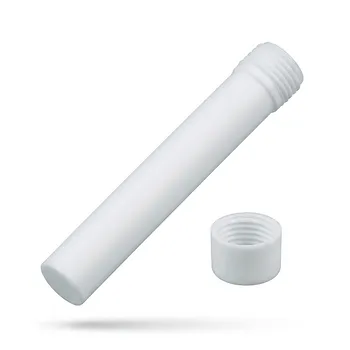
Instead of mass-produced, "loose-fit" components, our liners are manufactured using advanced CNC fabrication. By ensuring a microscopic fit between the inner chamber and the stainless steel pressure vessel, we eliminate the space where PTFE creep begins.
- Tailored Material Selection: For standard reactions up to 200°C, our high-purity PTFE provides the ultimate non-stick, inert environment. For trace analysis where even parts-per-billion contamination matters, our PFA labware offers superior chemical resistance and thermal stability.
- Mechanical Harmony: Our custom CNC-machined liners are designed to account for the specific thermal expansion rates of the outer SS304/316 jackets. This ensures that even at 30 MPa, the seal remains airtight and the liner remains reusable.
- Safety by Design: By matching the liner’s geometry perfectly to the pressure vessel, we ensure that the stress is distributed evenly across the steel walls, preventing the localized pressure spikes that lead to equipment fatigue.
Beyond the Fix: Opening New Doors in Material Research
When you solve the "interface" problem, the hydrothermal reactor stops being a source of anxiety and starts being a reliable tool for innovation.
With a stabilized "dual-shell" environment, researchers can push boundaries that were previously too risky. You can conduct longer-duration crystal growth cycles—lasting weeks instead of days—without fearing a seal failure. You can achieve higher purity in nanoparticle synthesis, knowing that your PFA liner won't leach contaminants into your sample. Ultimately, precision in your hardware leads to precision in your data, accelerating the path from laboratory prototype to industrial application in sectors like semiconductor manufacturing and new energy.
Whether you are working on the next generation of battery materials or complex chemical synthesis, your equipment should be the foundation of your success, not a variable in your experiment. Our team at KINTEK specializes in turning complex fluid transfer and reaction challenges into streamlined, high-precision solutions. If you are facing issues with liner deformation, contamination, or custom reactor design, we are ready to help you engineer a better path forward. Contact Our Experts
Related Products
- PTFE Lined High Pressure Digestion Vessel 50ml High Temperature Hydrothermal Synthesis Tank
- High Temperature Corrosion Resistant Hydrothermal Synthesis Reactor with TFM Inner Liner and Straight Cylinder Design
- High Pressure Custom TFM Reactor Stainless Steel Outer Vessel PTFE Inner Cup for Corrosive Synthesis
- Custom TFM Reaction Vessel with Stainless Steel Jacket and PTFE Inner Cup for High Corrosion Resistance
- High Purity PTFE Microwave Digestion Vessel Replacement Liner for Acid Sample Preparation and Trace Analysis
Related Articles
- Why Refractory Mineral Digestion Often Fails—and How PTFE Solves the Sample Integrity Crisis
- Why Your Hydrothermal Synthesis Results Are Inconsistent—and How to Master the Pressure
- Why Your PTFE Liner Fails Before Its Melting Point: The Truth About Hydrothermal Temperature Limits
- The Specialist's Dilemma: Understanding the Critical Trade-offs of PTFE-Lined Valves
- Beyond Exotic Alloys: The Real Secret to Defeating Corrosion in Your Fluid Systems