The Frustration of the "Perfect" Recipe That Yields Mediocre Results
You’ve followed the synthesis protocol to the letter. You’ve sourced the highest grade precursors for your new gas sensor or photocatalyst. Yet, when the final material is tested, the sensitivity is sluggish, the surface area is underwhelming, and the "high-purity" nanostructures are riddled with unexpected contaminants.
For many researchers in environmental remediation and sensor development, this is a recurring nightmare. You are chasing a specific crystal phase or a high-surface-area TiO2 structure, but the transition from theory to a high-performance material feels like a game of chance. If your data is inconsistent and your sensors are failing to detect low-level pollutants, the problem likely isn't your chemistry—it’s your environment.
The Common Struggle: Why "Turn Up the Heat" Isn't the Answer
When standard synthesis fails, the instinctive reaction is often to increase calcination temperatures or extend reaction times in open-air furnaces. However, this "brute force" approach usually backfires.
Traditional high-temperature routes often lead to particle sintering, where delicate nanostructures fuse together, drastically reducing the active surface area needed for pollutant degradation. Furthermore, working in open systems risks introducing trace impurities that can poison a catalyst or deaden a sensor's response.
The business consequences are real:
- Project Delays: Weeks spent re-running experiments to find "the sweet spot."
- Cost Overruns: Expensive reagents are wasted on batches that don't meet performance specs.
- Quality Bottlenecks: An inability to scale up a reliable process for industrial applications.
The Science of Why Traditional Methods Fall Short
The fundamental reason conventional methods struggle is the lack of control over the reaction kinetics and phase stability. In a standard furnace, you are limited by atmospheric pressure.
Hydrothermal synthesis changes the physics of the lab. By using water as a solvent within a sealed, high-pressure environment, we reach "subcritical" conditions. In this state, water’s properties shift—it becomes a powerful medium for dissolving and recrystallizing substances that are otherwise insoluble.
This environment allows for the formation of metastable phases—highly active crystal structures that are simply unattainable through dry, high-heat routes. Because the system is closed, the kinetics for dissolution and oxidation are accelerated, allowing for the "one-pot" incorporation of dopants. This ensures that every dopant atom is exactly where it needs to be to enhance sensor sensitivity and response times, rather than clumping on the surface.
The Tool Built for Extreme Precision: KINTEK Reactors
To harness the power of subcritical water, the equipment must be more than just a "container"—it must be a fortress of purity and pressure. This is where the engineering of the vessel becomes the deciding factor in your research success.
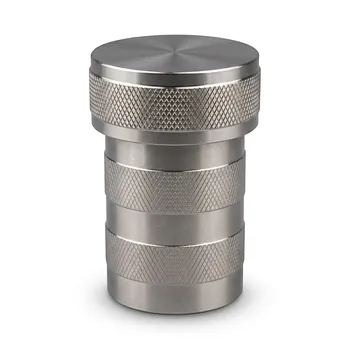
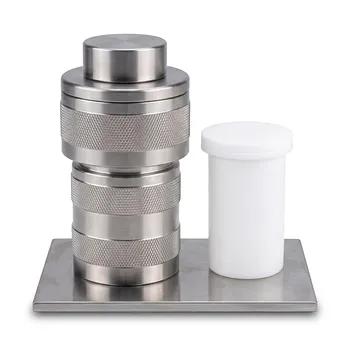
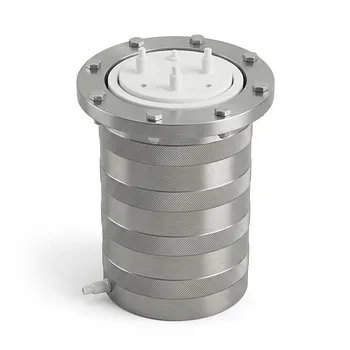
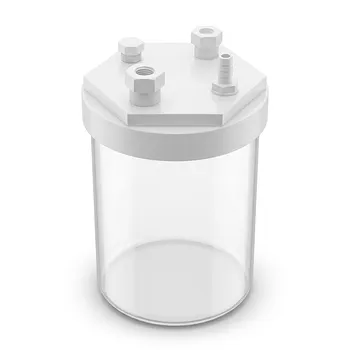
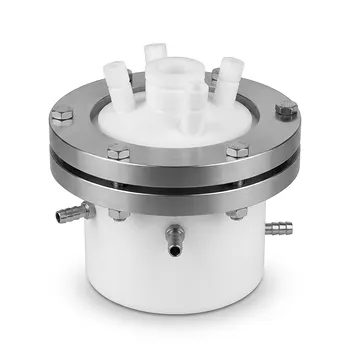
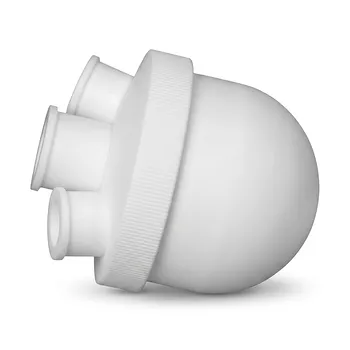
At KINTEK, we specialize in the "heart" of the hydrothermal process: high-precision PTFE and PFA liners and reactor components. Our products are designed to address the root causes of synthesis failure:
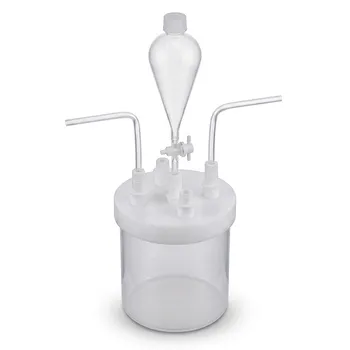
- Ultra-High Purity: Our PFA trace analysis labware and PTFE liners ensure that zero contaminants leach into your reaction, protecting the integrity of your TiO2 or metal-oxide catalysts.
- Uncompromising Seals: Hydrothermal synthesis relies on maintaining internal pressure to drive kinetics. Our CNC-fabricated components are engineered for a perfect fit, preventing reagent loss and ensuring consistent results batch after batch.
- Material Expertise: Whether you are working with aggressive chemicals for battery testing or delicate environmental sensors, our custom-fabricated vessels are designed to withstand the unique stresses of subcritical chemistry.
Beyond the Fix: Unlocking New Research Horizons
Once you solve the problem of inconsistent material quality, the focus shifts from "fixing errors" to "expanding possibilities."
With reliable hydrothermal synthesis, researchers are now achieving superior degradation efficiencies for complex contaminants that were previously thought to be persistent. In the sensor field, the ability to create uniform, high-surface-area nanostructures means moving from "detecting parts per million" to "detecting parts per billion."
You gain the freedom to explore faster reaction times, lower energy consumption, and more sustainable "green chemistry" pathways using water as your primary solvent. The result is a more efficient lab, a more reliable product, and a faster route from the benchtop to the market.
Ready to elevate your material synthesis from "trial and error" to "precision engineering"? At KINTEK, we understand that the success of your environmental or sensor research depends on the reliability of your tools. Whether you need a specialized prototype or a high-volume order of high-purity liners, our team is ready to provide the technical support and custom fabrication your project demands. Contact Our Experts today to discuss how we can optimize your hydrothermal workflows.
Related Products
- High Temperature Corrosion Resistant Hydrothermal Synthesis Reactor with TFM Inner Liner and Straight Cylinder Design
- PTFE Lined High Pressure Digestion Vessel 50ml High Temperature Hydrothermal Synthesis Tank
- High Purity PFA Reaction Vessel for Biopharmaceutical Synthesis and Corrosive Chemical Fluid Handling with Customizable Tube Fittings
- High Pressure Custom TFM Reactor Stainless Steel Outer Vessel PTFE Inner Cup for Corrosive Synthesis
- PFA Reaction Tank 6L Customizable Fittings Corrosion Resistant Solvent Resistant PFA Reaction Bottle for New Material Synthesis
Related Articles
- Why Your Hydrothermal Synthesis Produces "Dust" Instead of Crystals: Mastering the Invisible Engine
- Why Your Hydrothermal Crystal Growth is Inconsistent—And How to Achieve Tailored Morphologies Every Time
- Why the "Inner-Outer" Synergy is the Secret to Flawless Hydrothermal Synthesis
- Why Your Hydrothermal Synthesis Results Are Inconsistent—And How the "Dual-Shell" Design Fixes It
- Why Your Hydrothermal Synthesis Results Are Inconsistent—and How to Master the Pressure