The High-Temperature "Ghost Leak": A Researcher’s Recurring Headache
Imagine you are running a critical hydrothermal synthesis or a long-term battery cycle test. On paper, your PTFE (Polytetrafluoroethylene) seals are rated for the temperature. Yet, as the system hits its peak or drops into cryogenic ranges, the pressure begins to dip. You tighten the fittings, but the leak persists. By the time the system cools down and you inspect the seal, it looks "fine"—leaving you to wonder why your data is inconsistent and your project is falling behind schedule.
This scenario is common in semiconductor, new energy, and chemical research. Often, the frustration isn't caused by a "bad" material, but by a fundamental misunderstanding of how PTFE behaves when the thermometer moves.
The Common Struggle: Why "Standard" Solutions Often Fail
When a seal fails under thermal stress, the instinctive reaction is often to increase the torque on the bolts or switch to a harder material. While this might provide a temporary fix, it frequently leads to a "death spiral" of maintenance:
- The Over-Tightening Trap: Excessive force on a softened PTFE seal accelerates deformation, leading to even faster failure.
- The Material Swap: Switching to metal seals or generic elastomers often introduces chemical compatibility issues or lack of flexibility at low temperatures.
- The Cost of Failure: In the B2B world, a "small leak" is never small. It results in contaminated semiconductor batches, ruined high-purity trace analysis samples, and expensive downtime in pilot plants.
The reason these common fixes fail is that they treat the symptom (the leak) rather than the physical reality of the polymer.
Decoding the Root Cause: The Dynamic Nature of PTFE
To solve the sealing puzzle, we must look at the "why" behind the material's behavior. PTFE is prized for its chemical inertness, but its mechanical properties are highly sensitive to temperature.
At High Temperatures: The "Creep" Effect
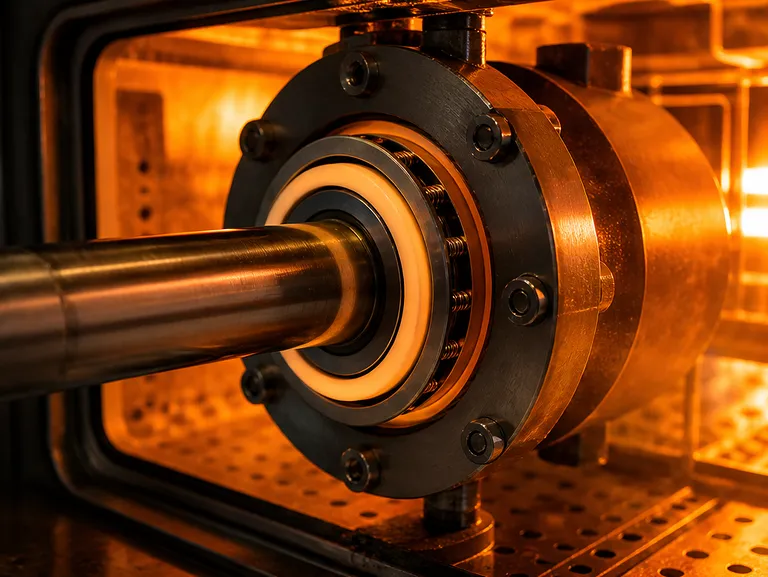
PTFE does not melt like traditional plastics; however, above 200°C (and up to 260°C), it undergoes "creep" or "cold flow." Under pressure, the material begins to slowly move away from the sealing interface, much like a very thick liquid. As it softens, its ability to maintain a tight barrier diminishes. If your seal design doesn't account for this thermal expansion and softening, the material simply migrates out of the sealing groove.
At Cryogenic Temperatures: The "Glass" Transition
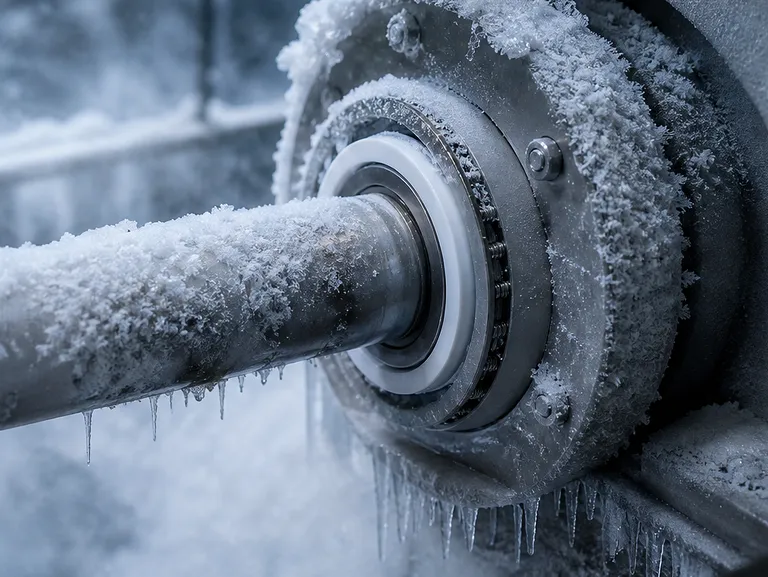
Conversely, when temperatures drop toward -200°C, PTFE undergoes a dramatic change. It becomes harder and loses its flexibility. In this state, the material can become brittle. If the seal cannot "flex" to maintain contact with the mating surface, microscopic gaps open up—leading to failure in cryogenic fluid transfer or storage.
Dimensional Instability
Furthermore, PTFE has a high coefficient of thermal expansion. It expands and contracts significantly more than the metal housings it typically sits in. This mismatch creates a moving target for any seal trying to maintain a gas-tight interface.
The Solution Embodied: Precision Engineering Over "Standard" Parts
Truly reliable sealing isn't found in a catalog of standard O-rings; it is found in engineered solutions that counteract these physical laws. At KINTEK, we approach PTFE sealing through a three-pronged strategy:
- Material Modification: By incorporating specific fillers (such as glass fiber or carbon), we can reduce the creep rate and enhance the material's dimensional stability at high temperatures without sacrificing chemical purity.
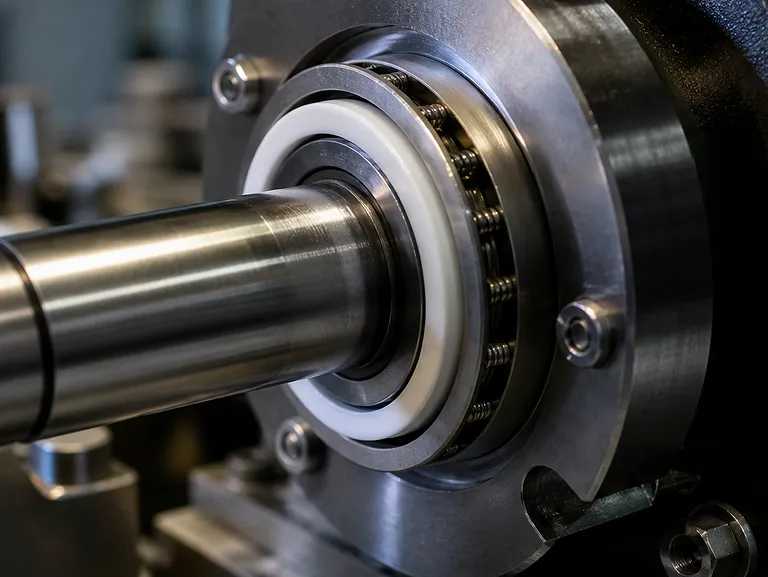
- Mechanical Compensation (Spring Energizers): To combat the hardening of PTFE at low temperatures, we utilize spring-energized designs. These internal metal springs provide a constant "push" against the sealing lip, ensuring that even when the PTFE becomes rigid, the contact stress remains consistent.
- Custom CNC Precision: Because PTFE dimensions shift during and after machining, our high-precision CNC fabrication process accounts for these environmental variables. We design the "groove-to-seal" ratio specifically to manage thermal expansion, ensuring the seal has "room to breathe" without losing its grip.
Beyond the Fix: Unlocking New Research Potentials
When you move from "managing leaks" to "engineered reliability," the focus of your work shifts. You are no longer limited by the hardware; you are empowered by it.
With high-precision, temperature-compensated PTFE components, researchers can push the boundaries of hydrothermal synthesis at higher pressures, conduct ultra-stable trace analysis in fluctuating environments, and develop battery technologies that must survive extreme thermal cycling. You gain the ability to scale from a laboratory prototype to a high-volume industrial process with the confidence that your sealing integrity is a constant, not a variable.
At KINTEK, we don't just manufacture laboratory products; we engineer the components that keep your most ambitious projects moving forward. Whether you are dealing with the rigors of semiconductor manufacturing or the extremes of new energy research, our team is ready to help you design a solution that stands up to the heat.
Contact Our Experts today to discuss your custom CNC requirements or your most challenging thermal sealing issues.
Related Products
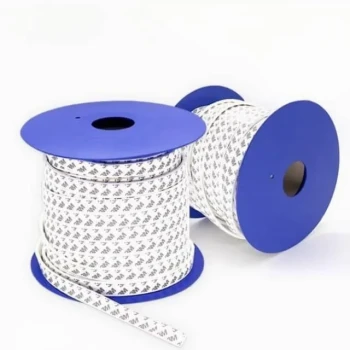
- Custom PTFE Sealing Tapes for Industrial and High Tech Applications
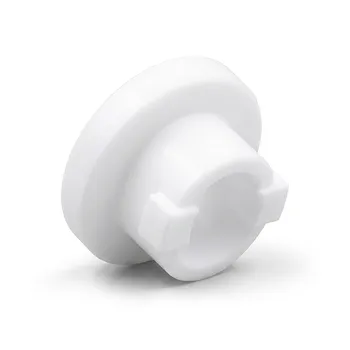
- Custom PTFE Insulating Gaskets Corrosion Resistant Teflon Seals Tailored Engineering Plastic Components
- Custom PTFE Insulating Gaskets and Corrosion Resistant Fluoropolymer Seals for Industrial Electrical Applications
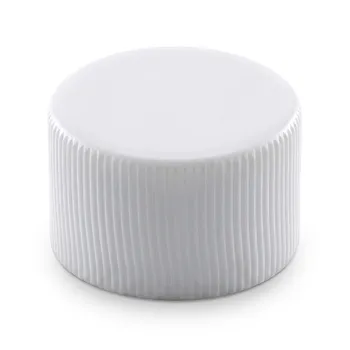
- Custom PTFE Sealing Caps and Corrosion Resistant Low Background Teflon Adapters
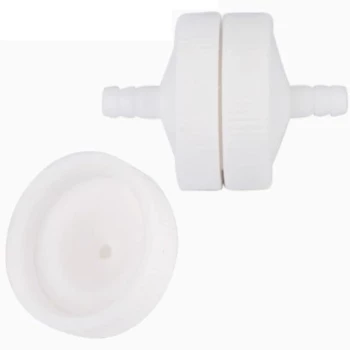
- Customizable PTFE Seals Filter Holders for Versatile Applications
Related Articles
- The Hidden Physics of Leak-Proof Experiments: Why Over-Tightening Won't Save Your PTFE Seals
- Why Your High-Performance Seals Keep Leaking—And Why It's Not the Seal's Fault
- The Unseen System: Why PTFE Seal Performance is More Than Just the Seal
- Why Your "Perfect" PTFE Seals Are Leaking Under Pressure—and How to Stop the Flow
- The Persistent Leak: Why Your High-Performance Seals Fail and How to Fix Them for Good