The High Cost of the "Cracked Vessel" Crisis
It happens in the most critical phase of research: a high-value sample is moved from cryogenic storage toward a heat-intensive acid digestion, and the container fails. Perhaps the plastic becomes brittle and cracks at liquid nitrogen temperatures, or it begins to soften and "creep" just as a hot block reaches its peak.
In micro-trace analysis and semiconductor research, these failures are more than just a nuisance. A single microscopic crack or a slight deformation in a vessel can lead to sample loss, cross-contamination, or weeks of skewed data. When your research demands precision at -200°C and +260°C, the middle ground—where most labware lives—is a dangerous place to be.
The Common Struggle: The "Frankenstein" Workflow
To manage extreme temperature swings, many labs resort to a fragmented workflow. They use one set of containers for cryogenic storage, another for room-temperature processing, and perhaps quartz or specialized glass for high-temperature digestion.
While this seems logical, it introduces three major business risks:
- Cross-Contamination: Every time a sample is transferred between different vessels to accommodate temperature limits, the risk of introducing trace impurities increases exponentially.
- Mechanical Fragility: Quartz and glass are thermally stable but physically brittle. One accidental drop in a cleanroom can destroy months of work.
- Inconsistent Results: Different materials have different adsorption rates. Switching vessels mid-experiment makes it nearly impossible to maintain a consistent baseline for ultra-trace element analysis (ICP-MS).
The Root of the Problem: Why Standard Polymers Fail
Why can’t most plastics bridge the gap between fire and ice? The answer lies in their molecular "backbone."
Standard polymers have reactive sites or irregular structures that lose their grip when thermal energy is removed (becoming brittle) or added (losing structural integrity). Most materials hit a "glass transition" point where they transform from a functional tool into a fragile liability.
Perfluoroalkoxy alkane (PFA) is different. Its secret lies in its rigid, fully fluorinated carbon backbone. The carbon-fluorine bond is one of the strongest in organic chemistry. Because PFA is a high-performance, melt-processable fluoropolymer with a high crystalline melting point (approx. 305°C to 315°C), it doesn't just "survive" temperature swings; it remains chemically inert and mechanically stable throughout the process. It maintains its flexibility at -200°C (-328°F) without shattering and stays rigid up to +260°C (+500°F) without leaching fluorocarbons into your sample.
The Solution: Engineering for the Extremes
To solve the conflict between thermal stability and chemical purity, you need a material that treats -200°C and +260°C as routine operating conditions, not "stress events."
At KINTEK, we leverage the unique properties of PFA to create labware that acts as a bridge across your entire workflow. Our PFA products are designed to be the "one-vessel solution." By using high-purity PFA and precision CNC fabrication, we ensure that:
- Dimensional Stability: Your fittings, valves, and liners maintain their seal and shape, even during the repeated expansion and contraction of thermal cycling.
- Ultra-Trace Purity: Because KINTEK PFA has a non-porous, smooth surface finish, it eliminates the "adsorption sites" where contaminants hide, making it ideal for the most demanding semiconductor applications.
- Thermal Endurance: Our vessels can handle continuous service at 260°C and short-term excursions up to 300°C, allowing for aggressive acid digestions that would melt or degrade lesser fluoropolymers.
Beyond the Fix: New Frontiers in Research Stability
When you stop worrying about whether your labware will survive the next temperature shift, the focus shifts back to the science.
By adopting a unified PFA-based infrastructure, labs are realizing new efficiencies that were previously impossible:
- Seamless Workflows: Samples can move from liquid nitrogen storage directly to microwave-assisted digestion in the same vessel, eliminating transfer errors.
- Accelerated R&D: With custom-fabricated PFA components—from specialized battery testing fixtures to custom fluid transfer lines—engineers can design more aggressive tests without fearing equipment failure.
- Reliable High-Purity Yields: In semiconductor processing, the ability to maintain a contamination-free environment at high temperatures directly translates to higher wafer yields and lower production costs.
Solving the temperature problem isn't just about preventing cracks; it's about providing a stable foundation for the next generation of chemical and energy breakthroughs.
Whether you are navigating the complexities of ultra-trace analysis or developing next-generation battery technologies, your success depends on components that perform under pressure. At KINTEK, we specialize in transforming high-performance PFA and PTFE into the precision tools your research demands. If you are facing challenges with material degradation, contamination, or custom fluid handling at extreme temperatures, our technical team is ready to help you engineer a more resilient workflow. Contact Our Experts today to discuss your project requirements and discover how our custom-fabricated solutions can move your research forward.
Related Products
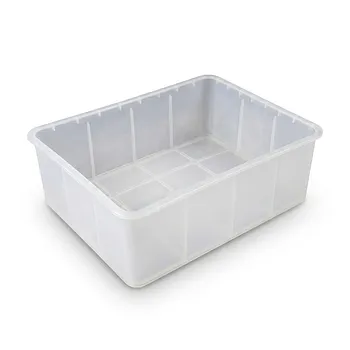
- Laboratory PFA Rectangular Acid Soaking Tank Silicon Wafer Cleaning Bath Corrosion Resistant High Purity Vessel
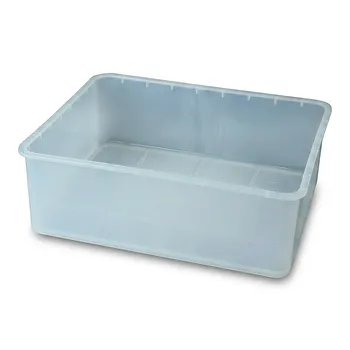
- High Purity PFA Rectangular Laboratory Acid Cleaning Tank Corrosion Resistant Silicon Wafer Washing Bath
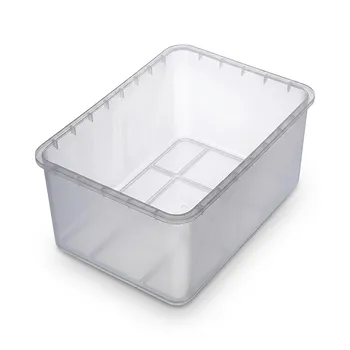
- High Purity PFA Laboratory Rectangular Tank Corrosion Resistant Acid Cleaning Bath for Silicon Wafer Processing and Trace Analysis
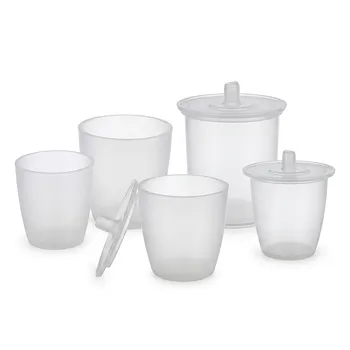
- High Purity PFA Crucible and Corrosion Resistant PTFE Beaker for Trace Analysis and Custom Laboratory Applications
- PFA Reaction Jar Corrosion Resistant Wide Mouth PTFE Lab Bottle High Purity Chemical Vessel