The Invisible Failure: Why "Inert" Doesn't Mean "Invincible"
Imagine this: You are running a critical hydrothermal synthesis or a microwave digestion sequence. Your parameters are perfect, and your PTFE (Polytetrafluoroethylene) liner is, by all appearances, solid. Yet, when the cycle ends, you find the stainless steel outer shell of your reactor pitted with corrosion, or worse, your trace analysis results are skewed by "ghost" contaminants from a previous run.
In the world of high-pressure chemistry and semiconductor research, PTFE is often treated as an indestructible shield. Because it resists almost all chemicals, researchers frequently overlook the subtle, physical degradation that happens beneath the surface. This neglect doesn't just ruin an experiment; it leads to the premature death of expensive autoclaves and safety risks in the lab.
The Common Struggle: The High Cost of "Good Enough"
Most lab teams follow a "use it until it breaks" philosophy with PTFE and PPL (Polyphenylene) linings. They might give the liner a quick rinse, check for obvious cracks, and put it back into service.
However, this reactive approach often leads to three major business and technical headaches:
- Cross-Contamination: Micro-scratches from improper cleaning trap residual ions, ruining high-purity trace analysis.
- Seal Failure: PTFE is prone to "cold flow" or deformation under pressure. A slightly warped liner won't seat correctly, leading to leaks that escape the liner and attack the stainless steel vessel.
- Project Delays: An unexpected liner failure mid-experiment can set a research timeline back by weeks while waiting for replacement parts or, more costly, a new pressure vessel.
Many try to solve this by simply buying the cheapest liners available and replacing them frequently. But without understanding why they fail, you are simply subsidizing a cycle of inefficiency.
The Root of the Problem: Memory, Mass, and Micro-Pores
To solve these failures, we have to look at the material science of fluoropolymers. PTFE isn't a solid, impenetrable wall; under the high temperatures and pressures of a reactor, it becomes slightly porous.
- The 1% Mass Loss Rule: Research and technical data show that if a liner loses more than 1% of its original mass, its structural integrity is compromised. This isn't just "thinning"—it means the polymer chains are breaking down or additives are leaching out. At this point, the material is no longer a reliable barrier.
- Thermal Fatigue: PTFE has a high coefficient of thermal expansion. Constant ramping from room temperature to 200°C+ causes the material to "work-harden" and eventually develop micro-cracks (fatigue).
- Mechanical Deformation: Because PTFE is a "soft" plastic, it "remembers" the pressure applied to it. If a liner is over-pressurized even once, it may never return to its original shape, making a perfect seal impossible in subsequent runs.
The common "solutions"—like abrasive scrubbing—actually accelerate this. Scratches create more surface area for chemical attack and make the "memory effect" of contamination even worse.
The Solution: A Precision-Engineered Maintenance Protocol
True reliability requires a shift from reactive replacement to proactive management. To ensure the longevity of your reactor components, your lab should adopt a three-pillar approach:
1. Non-Abrasive Decontamination
Stop using brushes or harsh abrasives. Clean liners promptly after use with dilute acids or specific solvents that dissolve residues without marring the surface. For trace analysis, ultrapure water rinses are the only way to ensure the "memory" of the material is wiped clean.
2. The Multi-Point Inspection
Before every experiment, inspect for the "Big Three" of fatigue:
- Discoloration: Signifies chemical penetration into the polymer matrix.
- Deformation: Indicates the liner has exceeded its elastic limit.
- Measurable Mass Loss: Use a precision scale to track the liner’s weight over time.
3. Using Purpose-Built Components
The best maintenance protocol in the world cannot save a poorly manufactured part. To prevent seal failure, you need liners and gaskets that are CNC-machined to exacting tolerances.
At KINTEK, we don't just provide "plastic inserts." Our PTFE and PFA products are engineered for the specific rigors of electrochemical cells and battery testing. By using high-purity, precision-fabricated PFA for trace analysis and custom-machined PTFE for hydrothermal synthesis, we ensure the fit is perfect from day one, significantly reducing the mechanical stress that leads to "cold flow" and leaks.
Beyond the Fix: Unlocking New Research Potential
When you master the maintenance of your PTFE and PFA labware, you aren't just saving money on replacement parts—you are stabilizing your entire research environment.
By eliminating the variables of liner fatigue and contamination, you can achieve higher reproducibility in your data. You can push your reactors to their specified limits with confidence, knowing the inner barrier is intact. For industries like semiconductor manufacturing and new energy research, this means faster time-to-market and lower overhead costs for high-volume industrial orders.
Standardizing your maintenance and sourcing high-precision components transforms your labware from a "consumable" into a reliable asset.
Are your current lab components holding back your research? At KINTEK, we specialize in solving the most challenging fluid transfer and chemical containment issues. Whether you need a single specialized prototype or high-volume industrial CNC fabrication, our experts are ready to help you optimize your hardware for maximum longevity and performance. Contact Our Experts today to discuss your specific project requirements and ensure your next experiment is your most successful one yet.
Related Products
- Custom TFM Reaction Vessel with Stainless Steel Jacket and PTFE Inner Cup for High Corrosion Resistance
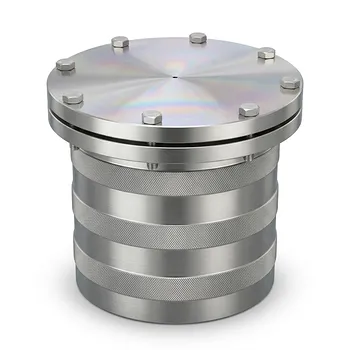
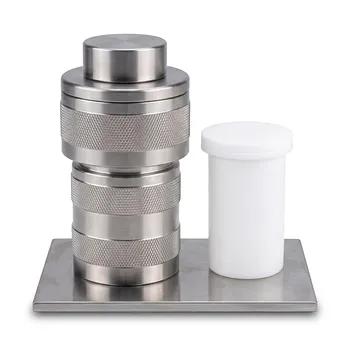
- PTFE Lined High Pressure Digestion Vessel 50ml High Temperature Hydrothermal Synthesis Tank
- High Purity PTFE Microwave Digestion Vessel Replacement Liner for Acid Sample Preparation and Trace Analysis
- High Purity PTFE Microwave Digestion Vessel for Soil and Food Analysis Acid Resistant Fluoropolymer Sample Preparation Liners
- High Purity TFM Microwave Digestion Vessels PTFE Acid Evaporation Liners Domestic GT-400 Equivalent Laboratory Reaction Containers
Related Articles
- Stiff vs. Strong: The Hidden Flaw in Your PTFE Liner Design (And How to Fix It)
- The Invisible Deformation: Why Your PTFE Digestion Liners Fail Under Pressure—And How TFM Fixes It
- Beyond Exotic Alloys: The Real Secret to Defeating Corrosion in Your Fluid Systems
- The Specialist's Dilemma: Understanding the Critical Trade-offs of PTFE-Lined Valves
- The PTFE Paradox: Why Your Catheter Liner's Best Trait Is Also Its Biggest Challenge