Blog Why Your PTFE Valves Leak at High Temperatures—and How to Master the "Creep" Factor

Why Your PTFE Valves Leak at High Temperatures—and How to Master the "Creep" Factor

5 hours ago

The Invisible Failure: When "Heat Resistant" Isn't Enough

Imagine you are mid-way through a critical chemical synthesis or a high-purity semiconductor wash. Your system is rated for high temperatures, and you’ve chosen PTFE (Polytetrafluoroethylene) for its legendary chemical inertness and heat resistance. But as the temperature climbs toward 200°C, you notice a localized pressure drop. A seal is weeping.

You tighten the valve, but the leak persists—or worse, the valve handle becomes impossible to turn. You chose a material rated for 260°C, so why is it failing at 180°C? This is the "PTFE Paradox" that frustrates lab managers and process engineers alike: having a material that can survive the heat, but a component that can’t maintain the seal.

The Common Struggle: Tightening Toward Failure

When a valve starts to leak under thermal stress, the instinctive reaction is to increase the torque—tightening the bolts or the packing nut to "crush" the leak out of existence.

In many cases, this makes the problem worse. This approach ignores the reality of how fluoropolymers behave under load. Beyond the immediate frustration of a leaky line, these failures lead to expensive downtime, contaminated samples in trace analysis, and safety risks in high-pressure environments. Many teams find themselves stuck in a cycle of frequent valve replacements, assuming that "frequent maintenance" is simply the price of working with corrosive, high-temperature fluids.

The Root Cause: Understanding "Cold Flow" and Thermal Expansion

To solve the leaking valve problem, we have to look past the melting point. While PTFE doesn't melt until 327°C (621°F) and can technically withstand 260°C (500°F) in a static environment, its mechanical properties change significantly long before those temperatures are reached.

The primary culprit is "Creep" (or Cold Flow). Unlike metals, PTFE is a thermoplastic that acts like an extremely viscous liquid when put under pressure. As temperatures rise, the molecular chains move more freely. If a valve is under a sustained load, the PTFE material will literally "flow" away from the pressure point.

Furthermore, the Pressure-Temperature (P-T) Curve is not a straight line. According to ASME B16.34 standards, as the temperature increases, the allowable working pressure of a valve must decrease. A valve rated for 150 PSI at room temperature may only be safe for a fraction of that at 200°C. If your design doesn't account for this mechanical softening, the seal will eventually migrate, leaving a gap for leaks to form.

The Solution: Engineering for Constant Compression

A reliable PTFE valve isn't just a hunk of plastic shaped like a valve; it is a precision-engineered instrument designed to fight physics. To solve the problem of material creep, we look toward two critical design elements:

1. Live Loading with Belleville Washers

Because we know PTFE will "creep" and shrink slightly as it cycles through temperatures, the valve must be "self-adjusting." High-quality PTFE valves often incorporate Belleville washers (spring washers). These act like a permanent shock absorber, maintaining a constant, "live" load on the seals even as the material expands or moves.

2. Precision CNC Fabrication and Tolerances

At KINTEK, we recognize that the typical operating range of –29 °C to 204 °C (–20 °F to 400 °F) is a guideline that requires perfect execution. By using advanced CNC machining rather than simple molding, we ensure that the internal geometries of the valve body and the PTFE stem are perfectly aligned. This minimizes the "gaps" that the material would otherwise flow into under heat.

By treating PTFE as a dynamic material rather than a static one, our valves maintain a gas-tight seal even as they approach the 204°C threshold, ensuring that the material's chemical purity isn't compromised by mechanical failure.

Beyond the Fix: Unlocking Process Stability

When you stop fighting your valves, you start mastering your process. Moving from "surviving the heat" to "stable thermal operation" opens up new possibilities for your facility:

  • Continuous Trace Analysis: In high-purity PFA and PTFE environments, a stable valve means no atmospheric contamination, allowing for more accurate part-per-trillion (PPT) measurements.
  • Accelerated Battery Testing: Reliable fluid control in battery fixtures allows for longer, unattended cycling at elevated temperatures without the risk of electrolyte leakage.
  • Reduced Total Cost of Ownership: By eliminating "over-tightening" damage and utilizing live-loaded designs, the service life of fluid components increases from months to years.

Solving the temperature challenge is about more than just checking a data sheet; it’s about choosing components designed by people who understand how these materials breathe, move, and react under pressure.


At KINTEK, we don't just supply labware; we engineer solutions for the most demanding thermal and chemical environments in the semiconductor and new energy sectors. Whether you are dealing with inconsistent seals in your electrochemical cells or need custom-machined PFA components for trace analysis, our team is ready to help you bridge the gap between material science and mechanical reliability.

Contact Our Experts today to discuss your specific temperature and pressure requirements.

Related Products

Related Articles

Related Products

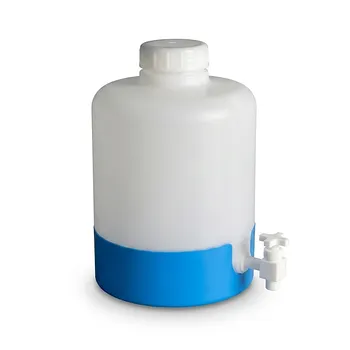
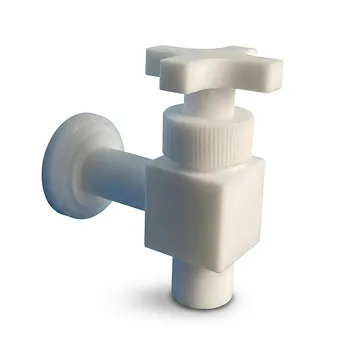
High Corrosion Resistant PTFE Faucet Polytetrafluoroethylene Valve for Chemical Storage Drums and Fluid Transfer Systems Customizable Industrial Grade

High Corrosion Resistant PTFE Faucet Polytetrafluoroethylene Valve for Chemical Storage Drums and Fluid Transfer Systems Customizable Industrial Grade

Engineered for extreme chemical environments, this customizable PTFE faucet provides universal corrosion resistance for plastic drums and fluid systems. Experience leak-proof performance and high-purity fluid transfer with our bespoke polytetrafluoroethylene valve solutions tailored to your unique industrial specifications and requirements.

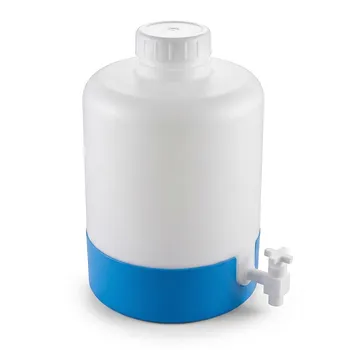
Corrosion Resistant PTFE Polytetrafluoroethylene Valve and Customizable Laboratory Fluid Dispensing Faucet for Aggressive Chemical Handling in Industrial Storage Tanks and Plastic Drums

Corrosion Resistant PTFE Polytetrafluoroethylene Valve and Customizable Laboratory Fluid Dispensing Faucet for Aggressive Chemical Handling in Industrial Storage Tanks and Plastic Drums

Secure your fluid transfer systems with our customizable high-purity PTFE valves and faucets. Engineered for ultimate corrosion resistance against strong acids and bases, these precision-machined components ensure leak-free performance and long-term durability in demanding industrial and laboratory environments.

High Purity PTFE Faucet Corrosion Resistant Polytetrafluoroethylene Drum Valve Customizable Lab Chemical Fluid Control

High Purity PTFE Faucet Corrosion Resistant Polytetrafluoroethylene Drum Valve Customizable Lab Chemical Fluid Control

Procure high-purity PTFE faucets and valves designed for extreme chemical resistance and reliable fluid transfer from industrial drums. Our customizable polytetrafluoroethylene solutions ensure leak-proof performance in demanding laboratory and processing environments where standard hardware fails completely. Contact us.

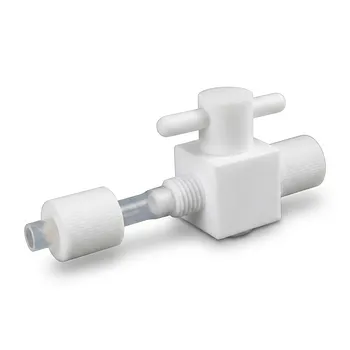
Custom PTFE Valve 2-Way 3-Way Corrosion Resistant Low Background Virgin Fluoropolymer Industrial Fluid Control

Custom PTFE Valve 2-Way 3-Way Corrosion Resistant Low Background Virgin Fluoropolymer Industrial Fluid Control

Precision engineered custom corrosion resistant PTFE valves for high purity fluid control. Manufactured using virgin fluoropolymer for low background analysis and extreme chemical compatibility across 2-way or 3-way configurations for demanding high performance laboratory and industrial applications.

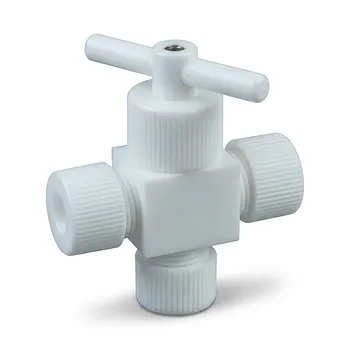
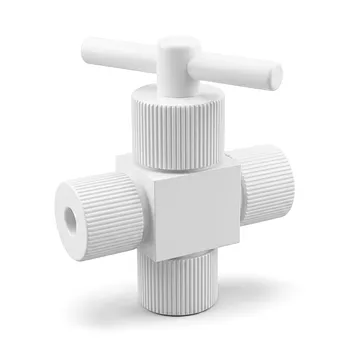
Corrosion Resistant PTFE Valves Customizable 2 Way 3 Way 4 Way High Temperature Teflon Fluid Control Solutions

Corrosion Resistant PTFE Valves Customizable 2 Way 3 Way 4 Way High Temperature Teflon Fluid Control Solutions

Engineered for extreme chemical environments, these customizable PTFE valves provide exceptional corrosion resistance and thermal stability. Our precision-machined two-way, three-way, and four-way solutions ensure reliable fluid control across demanding industrial applications with absolute chemical inertness and zero contamination.

High Purity PFA PTFE Flare Stop Valves Customizable 2-Way 3-Way Reducing Fluoropolymer Fluid Control Solutions

High Purity PFA PTFE Flare Stop Valves Customizable 2-Way 3-Way Reducing Fluoropolymer Fluid Control Solutions

Engineered for semiconductor and chemical processing, these customizable PFA flare stop valves offer zero-leakage performance and high-purity fluid handling. Available in 2-way and 3-way configurations, they ensure zero heavy metal leaching for critical laboratory and industrial processes.

Custom PTFE Reaction Lid with Integrated Valve and Fitting Corrosion Resistant No Leaching PFA FEP Bottle Cap System

Custom PTFE Reaction Lid with Integrated Valve and Fitting Corrosion Resistant No Leaching PFA FEP Bottle Cap System

Custom PTFE reaction lids with integrated valves and fittings for PFA/FEP bottles. Engineered for zero leaching and ultimate chemical resistance, ensuring trace-level purity in aggressive synthesis and corrosive laboratory environments across specialized industrial applications.

PTFE Corrosion Resistant Filter with PFA Valve Connections and Integrated Sieve Plate

PTFE Corrosion Resistant Filter with PFA Valve Connections and Integrated Sieve Plate

High-performance PTFE filtration system featuring PFA valve connections and customizable sieve plates for extreme chemical resistance. Ideal for pharmaceutical and semiconductor processes requiring absolute purity, durability, and bespoke engineering solutions for aggressive fluid handling.

High Purity PTFE Filter with PFA Valve Connections and Integrated Sieve Plate for Corrosive Fluid Processing

High Purity PTFE Filter with PFA Valve Connections and Integrated Sieve Plate for Corrosive Fluid Processing

Optimize laboratory workflows with our high-purity PTFE filtration equipment featuring PFA valve connections and customizable sieve plates. Engineered for absolute chemical resistance and zero-contaminant trace analysis in demanding industrial and research environments. High performance guaranteed for every critical application process.

Custom PTFE Corrosion Resistant Insulating Electrophoresis Reaction Cell with Septum and Valves for Low Background Trace Analysis

Custom PTFE Corrosion Resistant Insulating Electrophoresis Reaction Cell with Septum and Valves for Low Background Trace Analysis

Optimize trace analysis with our custom PTFE corrosion-resistant reaction cells. Featuring insulating electrophoresis designs with integrated septums and valves, these high-purity systems ensure low background and zero metal precipitation for demanding industrial laboratory and chemical research applications today.

High Purity PFA Flared Globe Valve Custom Two Way Three Way Reducing PTFE Valve Heavy Metal Free

High Purity PFA Flared Globe Valve Custom Two Way Three Way Reducing PTFE Valve Heavy Metal Free

Premium PFA flared globe valves for high-purity fluid control provide zero heavy metal precipitation and maximum chemical resistance. Custom two-way and three-way configurations ensure leak-free performance in demanding semiconductor, pharmaceutical, and specialized laboratory chemical processing environments.

Customizable PTFE Reaction Vessel with Electric Stirring Paddle and Buchner Funnel Vacuum Filtration System

Customizable PTFE Reaction Vessel with Electric Stirring Paddle and Buchner Funnel Vacuum Filtration System

High-performance customizable PTFE reaction vessel system featuring integrated electric stirring paddles and Buchner funnel vacuum filtration components designed for demanding laboratory environments requiring absolute chemical inertness, high-purity trace analysis, and bespoke engineering solutions for complex industrial applications.

High Purity PTFE Corrosion Resistant Reaction Vessel with Luer Fittings and Caps for Trace Analysis

High Purity PTFE Corrosion Resistant Reaction Vessel with Luer Fittings and Caps for Trace Analysis

High-purity PTFE reaction vessels with integrated Luer fittings and secure caps offer ultimate corrosion resistance and zero leaching. These customizable tanks provide a reliable, ultra-clean environment for trace analysis, aggressive chemical synthesis, and precision fluid transfer in demanding labs.

Custom Polytetrafluoroethylene PTFE Constant Pressure Dropping Funnel Corrosion Resistant Fluid Control Assembly with Conversion Stopper Compatibility

Custom Polytetrafluoroethylene PTFE Constant Pressure Dropping Funnel Corrosion Resistant Fluid Control Assembly with Conversion Stopper Compatibility

High-performance PTFE constant pressure dropping funnel designed for corrosive chemical transfer. Featuring superior chemical resistance, 0.1MPa pressure stability, and full customization options, this assembly ensures precise fluid control in demanding industrial laboratory and pilot plant environments.

Corrosion Resistant PTFE Buchner Funnel and Vacuum Filtration System Unbreakable Chemical Solvent Filter Unit

Corrosion Resistant PTFE Buchner Funnel and Vacuum Filtration System Unbreakable Chemical Solvent Filter Unit

Upgrade your lab with an unbreakable PTFE Buchner funnel and vacuum filtration system. This corrosion-resistant unit replaces fragile ceramic, offering superior chemical inertness, high thermal stability, and easy cleaning for demanding high-purity trace analysis and industrial fluid processing applications.

Custom PTFE Multilayer Reaction Apparatus High Temperature Corrosion Resistant Threaded Modular Sieve System

Custom PTFE Multilayer Reaction Apparatus High Temperature Corrosion Resistant Threaded Modular Sieve System

Enhance chemical processing with this custom PTFE multilayer reaction apparatus featuring corrosion-resistant threaded connections and integrated sieve plates. Designed for high-temperature stability and precision filtration in demanding laboratory environments across pharmaceutical and semiconductor research and advanced industrial applications.

Custom PTFE Constant Pressure Separatory Funnel Corrosion Resistant Low Background Labware for PFA Flasks

Custom PTFE Constant Pressure Separatory Funnel Corrosion Resistant Low Background Labware for PFA Flasks

Engineered for high-purity trace analysis, this custom PTFE constant pressure separatory funnel offers unmatched chemical resistance and low-background performance. The unit ensures precise fluid transfer and fits PFA flasks, delivering zero-contamination results for demanding industrial, chemical, and laboratory applications.

Custom PTFE Sleeves and Hollow Rods for Advanced Applications

Custom PTFE Sleeves and Hollow Rods for Advanced Applications

High-performance PTFE hollow rods & sleeves for chemical resistance, thermal stability, and low friction. Custom sizes available. Contact KINTEK today!

PTFE PFA Vacuum Filtration System Corrosion Resistant Customizable Shatterproof Laboratory Device

PTFE PFA Vacuum Filtration System Corrosion Resistant Customizable Shatterproof Laboratory Device

High-performance PTFE and PFA vacuum filtration systems designed for extreme chemical resistance. This customizable, shatterproof unit ensures trace-level purity and exceptional thermal stability for demanding laboratory processes and hazardous fluid transfers in industrial and research applications.

High Temperature PTFE Reaction Sieve with Customizable Layers and Precision Pore Sizes for Threaded Sample Separation Devices

High Temperature PTFE Reaction Sieve with Customizable Layers and Precision Pore Sizes for Threaded Sample Separation Devices

Engineered for extreme chemical environments, this customizable PTFE reaction sieve features adjustable layers and pore counts. Designed with secure threaded connections, it ensures reliable sample separation and high-temperature performance for demanding laboratory and industrial chemical reaction processes.


Leave Your Message