The High Cost of the "Ghost" Contaminant
Imagine this: your team has spent weeks perfecting a high-value API (Active Pharmaceutical Ingredient) or a sensitive biologic. The process parameters were perfect, the Clean-in-Place (CIP) cycle was executed to the letter, and the facility is state-of-the-art. Yet, the final lab report comes back with a "fail."
A trace chemical—a "ghost" contaminant—has appeared in the batch.
In the world of pharmaceutical and biotechnology manufacturing, this isn't just a technical glitch; it’s a commercial catastrophe. A single contaminated batch can result in millions of dollars in lost product, months of delayed clinical trials, and a massive hit to your regulatory reputation. When standard cleaning protocols fail to deliver purity, the problem usually isn't the process—it’s the interface.
The Cycle of Failed Solutions
When faced with recurring purity issues, the instinctive reaction is often to "clean harder." Many facilities increase the concentration of aggressive cleaning agents, raise the temperature of Sterilize-in-Place (SIP) steam, or extend the duration of wash cycles.
However, these "solutions" often create a vicious cycle:
- Material Fatigue: Harsh chemicals and thermal cycling can cause traditional seals and valve linings to degrade over time.
- Microbial Harbors: As materials degrade or pit at a microscopic level, they create tiny "pockets" where bacteria can adhere and thrive, shielded from cleaning agents.
- Flavor and Color Carry-over: In multi-product facilities, trace amounts of the previous run can "stick" to the internal surfaces, leading to cross-contamination that no amount of rinsing seems to fix.
The business consequence is clear: you are spending more on cleaning chemicals and downtime while your risk of batch failure actually increases.
Beyond the Surface: Why Ordinary Materials Fail
To understand why these failures happen, we have to look at the molecular level. Most materials used in fluid handling are not truly "inert." Under the stress of organic solvents or high-pressure steam, many plastics and even certain grades of stainless steel can "leach" trace elements—known as extractables and leachables (E&L)—directly into your product.
The root of the problem is surface energy and porosity. If a material's surface is porous or reactive, it acts like a sponge for contaminants. This is where the physics of PTFE (Polytetrafluoroethylene) changes the game.
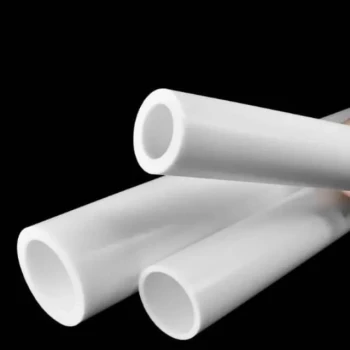
PTFE is defined by its molecular stability. Because the carbon-fluorine bond is one of the strongest in chemistry, the material is virtually non-reactive. It doesn't "off-gas," it doesn't leach chemicals into your media, and it is hydrophobic (water-repelling). While other materials allow microbial growth or chemical adhesion, the low surface energy of PTFE ensures that nothing sticks.
The Solution: Precision-Engineered PTFE Valves
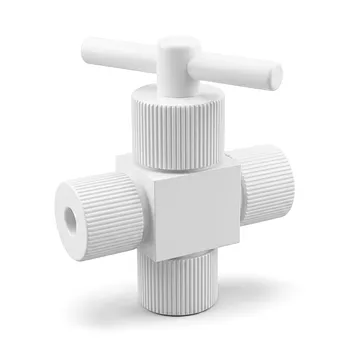
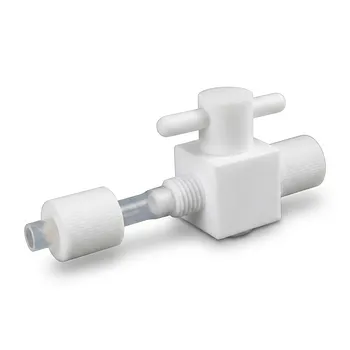
Solving the purity challenge requires more than just picking the right material; it requires a tool designed for the specific rigors of the life sciences. This is why KINTEK’s high-precision PTFE and PFA valves have become the industry standard for high-stakes fluid transfer.
Our valves are not just "plastic components"; they are engineered polymer solutions designed to address the root causes of contamination:
- Zero-Leaching Performance: Our PTFE is USP Class VI compliant, ensuring that your wetted surfaces produce zero extractables or leachables. Your product stays exactly as you formulated it.
- Superior CIP/SIP Resilience: Unlike standard plastics that soften or crack, KINTEK’s PTFE components maintain their structural integrity across extreme temperature ranges and withstand the most aggressive organic solvents.
- CNC-Machined Smoothness: Using advanced CNC fabrication, we ensure that internal flow paths are ultra-smooth. This eliminates the "dead zones" and microscopic pits where bacteria traditionally hide, facilitating complete drainage.
- High Cycle Life Diaphragms: For pharmaceutical dosing, our PTFE diaphragm valves offer low friction and high durability, ensuring consistent performance over thousands of cycles without shedding particulates into the fluid stream.
Opening New Doors for Process Innovation
When you eliminate the constant fear of contamination, your operational horizons expand. By integrating high-purity PTFE valves into your manifolds and transfer lines, you move from "defensive manufacturing" to "proactive innovation."
With a truly inert fluid path, you can:
- Accelerate Batch Turnover: Reduce cleaning time and validation efforts between different product runs without the risk of carry-over.
- Handle Sensitive Biologics: Safely move shear-sensitive cells and proteins through low-friction pathways that prevent adhesion and denaturation.
- Scale with Confidence: Whether you are moving from a lab prototype to high-volume industrial production, the chemical consistency of KINTEK PTFE ensures your results remain reproducible.
Don't let a "ghost" contaminant haunt your production schedule. By addressing the root cause of impurity at the material level, you can secure your yield, your reputation, and your bottom line.
Whether you are designing a new battery testing fixture, a microwave digestion vessel, or a complex pharmaceutical manifold, our team of specialists is ready to help you engineer a contamination-free future. From custom prototypes to high-volume industrial orders, KINTEK provides the precision your research demands. Contact Our Experts today to discuss your specific purity requirements and custom CNC fabrication needs.
Related Products
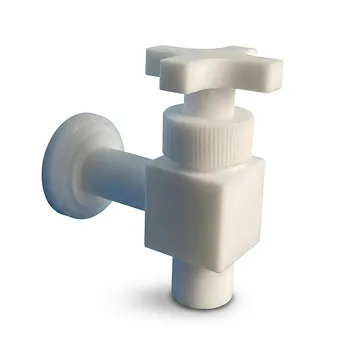
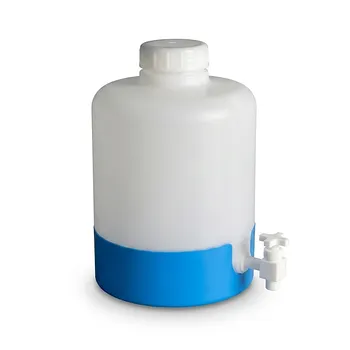
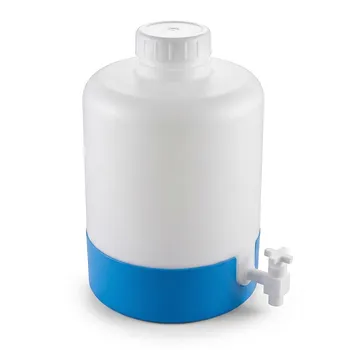
- Corrosion Resistant PTFE Polytetrafluoroethylene Valve and Customizable Laboratory Fluid Dispensing Faucet for Aggressive Chemical Handling in Industrial Storage Tanks and Plastic Drums
- High Corrosion Resistant PTFE Faucet Polytetrafluoroethylene Valve for Chemical Storage Drums and Fluid Transfer Systems Customizable Industrial Grade
- High Purity PTFE Faucet Corrosion Resistant Polytetrafluoroethylene Drum Valve Customizable Lab Chemical Fluid Control
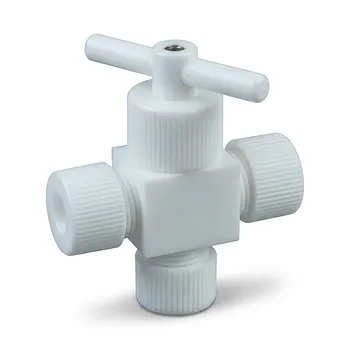
- Custom PTFE Valve 2-Way 3-Way Corrosion Resistant Low Background Virgin Fluoropolymer Industrial Fluid Control
- Corrosion Resistant PTFE Valves Customizable 2 Way 3 Way 4 Way High Temperature Teflon Fluid Control Solutions
Related Articles
- Why Your PTFE Valves Leak at High Temperatures—and How to Master the "Creep" Factor
- Your Plant's Silent Killer: Why Standard Valves Fail with Corrosive Chemicals (And the One Fix That Works)
- Beyond Exotic Alloys: The Smarter Strategy for Corrosion-Proof Fluid Control
- Why Your Samples Stick and Your Valves Jam: Solving Laboratory Inefficiencies Through Surface Science
- The Specialist's Dilemma: Understanding the Critical Trade-offs of PTFE-Lined Valves