The Midnight Leak: Why "Tight Enough" Often Isn't
It is a scenario familiar to many researchers in semiconductor labs and chemical plants: you set up a high-purity fluid line, hand-tighten the fittings, and perhaps give them an extra turn with a wrench for good measure. Everything looks secure. Yet, hours later—or worse, in the middle of a critical overnight battery test—a drop forms at the joint. Or, under a slight increase in pressure, the tubing simply slips out of the fitting, spraying aggressive reagents or ruining a trace analysis sample.
When a connection fails in a high-purity environment, the instinct is often to tighten the nut even further. However, in the world of PTFE (Polytetrafluoroethylene), brute force is rarely the answer. In fact, it is often the cause of the problem.
The Struggle with "Slippery" Science
PTFE is a miracle material for labs due to its near-total chemical inertness and high temperature resistance. However, these same properties make it a nightmare to seal. As noted in technical studies of PTFE sliding bearings, this material has one of the lowest coefficients of friction of any solid. It is, quite literally, designed to slide.
Most users attempt to solve leakage or "blow-outs" by using single-ferrule plastic fittings or simple push-to-connect components. These often fail because they try to perform two opposing tasks with one single point of contact:
- Creating a fluid-tight seal against the fitting body.
- Mechanically gripping the tubing to prevent it from sliding out.
In a single-ferrule system, over-tightening to stop a leak often "crushes" or deforms the soft PTFE tubing rather than sealing it. This leads to "cold flow"—where the plastic permanently deforms away from the pressure point—eventually creating a new path for leaks. For industries like semiconductor manufacturing or new energy research, these failures aren't just an inconvenience; they represent thousands of dollars in contaminated batches and weeks of lost project time.
The Root Cause: Functional Overload
The fundamental reason these connections fail is a lack of mechanical separation. When a single component is responsible for both sealing and gripping, it performs neither perfectly.
To solve this, we must look at the underlying physics of the connection. A reliable seal requires a constant, uniform radial pressure against the tubing and the fitting body. A reliable grip requires a mechanical "bite" that can withstand axial tension. Achieving both on a material as slippery as PTFE requires a sophisticated distribution of force that standard hardware simply cannot provide.
The Solution: The Anatomy of a Two-Ferrule System
To address the inherent challenges of PTFE, the industry-standard solution is the precision-machined two-ferrule compression connector. By breaking the "job" of the connector into four distinct parts, the system manages the physical stresses of the connection far more effectively.
At KINTEK, we manufacture these components with CNC precision to ensure they work in perfect harmony:
- The Body: This is the foundation. It features a threaded receptacle and a precisely tapered internal sealing surface.
- The Front Ferrule: This is the primary sealer. When the nut is tightened, the front ferrule is pushed into the body's taper, compressing it against the tubing and the body to create a fluid-tight, high-purity seal.
- The Back Ferrule: This is the mechanical gripper. Unlike the front ferrule, the back ferrule is designed to apply a "hinging" action that securely grips the tubing. This prevents the tubing from being pulled out or pushed out by internal pressure.
- The Nut: Think of the nut as the engine. It converts the rotational force (torque) you apply with a wrench into the axial force needed to activate both ferrules simultaneously.
By separating the sealing element (front ferrule) from the gripping element (back ferrule), the system ensures that the seal remains intact even if the tubing is subjected to vibration or pressure surges.
Beyond the Fix: New Possibilities in High-Purity Research
When you move from "making do" with standard fittings to utilizing precision-engineered two-ferrule PTFE connectors, the focus of your lab shifts from maintenance to innovation.
Eliminating the variable of inconsistent fluid connections opens new doors. You can run long-term electrochemical experiments without fear of evaporation or contamination. You can design high-pressure hydrothermal synthesis setups with greater confidence in operator safety. In the semiconductor sector, where trace analysis demands the highest levels of purity, using KINTEK’s high-purity PFA and PTFE components ensures that the only thing in your fluid path is your sample—not ambient air or contaminants from a failing seal.
Reliability is not an accident; it is the result of understanding the physics of the materials we use. By employing a system designed to respect the unique properties of PTFE, you turn a common point of failure into a foundation for your next breakthrough.
Whether you are scaling up a chemical process or refining a specialized prototype for battery testing, the integrity of your fluid transfer system is paramount. Our team at KINTEK specializes in translating complex material challenges into high-precision, custom-fabricated solutions. If you are facing persistent leakage issues or need custom CNC-machined components for your specific research application, we are here to help. Contact Our Experts to discuss how we can bring precision and reliability to your next project.
Related Products
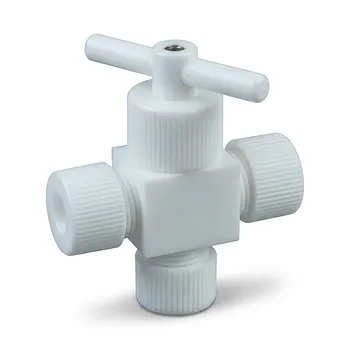
- Custom PTFE Valve 2-Way 3-Way Corrosion Resistant Low Background Virgin Fluoropolymer Industrial Fluid Control
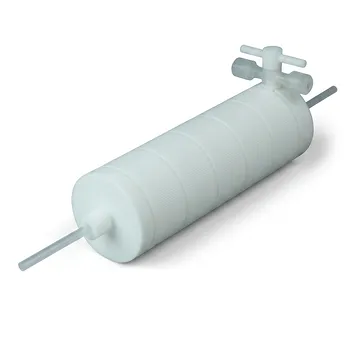
- High Purity PTFE Filter with PFA Valve Connections and Integrated Sieve Plate for Corrosive Fluid Processing
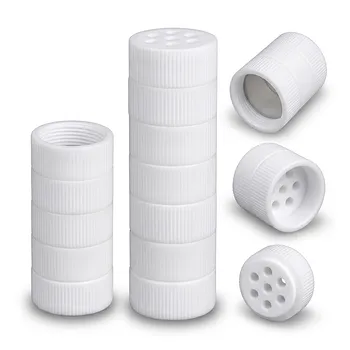
- Corrosion Resistant PTFE Multi Layer Sieve with Threaded Connections for Bio Chemical Laboratory Extraction and Customizable Mesh Size
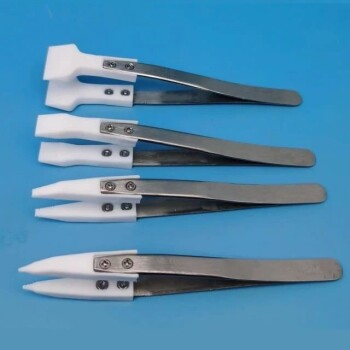
- Custom PTFE Parts Manufacturer for Teflon Parts and PTFE Tweezers
- High Temperature Resistant PTFE White Screw Plugs Custom T Shaped Sealing Hole Stoppers Waterproof Dustproof Chemical Inert Laboratory Fasteners
Related Articles
- Why Your PTFE Valves Leak at High Temperatures—and How to Master the "Creep" Factor
- Your Plant's Silent Killer: Why Standard Valves Fail with Corrosive Chemicals (And the One Fix That Works)
- Beyond Exotic Alloys: The Smarter Strategy for Corrosion-Proof Fluid Control
- The Hidden Culprit Behind Batch Contamination: Why Your Sterilization Protocol Might Not Be Enough
- Why Your Samples Stick and Your Valves Jam: Solving Laboratory Inefficiencies Through Surface Science