The Frustration of the "Non-Linear" Levich Plot
You’ve spent days synthesizing a promising new catalyst. You’ve carefully coated your disk electrode, set up your electrochemical cell, and programmed your rotator for a standard series of RPM steps. But when you plot the limiting current against the square root of the angular velocity, the result isn’t the clean, straight line the Levich equation promised. Instead, the data points wander, or the slope shifts unexpectedly.
In the world of electrochemistry, few things are more frustrating than "noisy" Rotating Disk Electrode (RDE) data. When your results don't align with theory, it throws your entire kinetic analysis into question. Is the catalyst failing, or is the measurement itself flawed?
The Common Struggle: Chasing Ghost Variables
When RDE experiments fail to yield reproducible results, many researchers instinctively look at the "obvious" culprits. They re-prepare the catalyst ink, double-check the potentiostat calibration, or obsessively polish the electrode surface.
While these factors matter, they often mask a deeper, structural issue. If the hardware itself cannot maintain a stable environment, no amount of recalibration will fix the data. Inconsistent measurements lead to more than just a headache; they cause project delays, wasted high-value precursors, and a lack of confidence in your R&D outcomes. In industrial battery or fuel cell research, these "minor" inconsistencies can lead to costly wrong turns in material selection.
The Root Cause: When Laminar Flow Becomes Chaos
To understand why RDE measurements fail, we have to look at the fluid dynamics happening millimeters away from the electrode surface.
The power of the RDE technique lies in its ability to create a "uniformly accessible surface." The math behind the Levich equation assumes that the electrolyte moves in a perfect, laminar flow—drawn upward toward the center of the disk and then thrown outward radially.
The "hero" that makes this possible isn't the electrode itself, but the PTFE shroud surrounding it. The shroud is designed to act as a hydrodynamic sheath. If the shroud’s geometry is imperfect—due to poor machining, surface roughness, or a slight misalignment—it introduces turbulence.
Instead of a stable, predictable boundary layer, you get "edge effects" and erratic mass transport. If the fluid doesn't move exactly as the physics dictates, the Levich equation (which relies on those physics) simply stops working. Furthermore, if the shroud doesn't provide a perfect chemical seal, the active electrode area is no longer "fixed," leading to leaked currents and compromised kinetic parameters.
The Solution: Engineering the Perfect Hydrodynamic Sheath
A truly reliable RDE setup requires a shroud that is more than just a plastic cover. It must be a precision-engineered component that ensures the boundary layer remains reproducible every single time the motor spins.
At KINTEK, we specialize in the high-precision CNC fabrication of PTFE and PFA components specifically for these high-stakes environments. Our PTFE shrouds provide three critical functions:
- Geometric Precision: Our CNC process ensures the shroud's face is perfectly flush with the electrode, eliminating the microscopic "lips" or "gaps" that trigger turbulence.
- Chemical Isolation: High-purity PTFE is chemically inert, ensuring that the shroud doesn't leach contaminants into your electrolyte or react with your catalyst, keeping the electrochemical signal "clean."
- Low Surface Energy: The naturally hydrophobic nature of PTFE prevents gas bubbles from clinging to the shroud—a common cause of sudden "spikes" or "drops" in current during high-RPM rotation.
By treating the shroud as a critical optical-grade component rather than a simple consumable, we provide the stability necessary for your experimental data to finally match the theoretical models.
Beyond the Fix: Accelerating Discovery
When you eliminate the "hardware noise" from your electrochemical setup, you unlock a new level of research efficiency. Instead of troubleshooting why your plots aren't linear, you can focus on what the data is actually telling you about your materials.
With a stable hydrodynamic environment, you can accurately determine electron transfer numbers, identify subtle kinetic shifts in new battery chemistries, and accelerate the screening of catalysts for green hydrogen production. Reliable hardware doesn't just give you better data; it gives you the confidence to make the bold decisions that drive innovation.
Reliable research begins with a foundation of precision. Whether you are struggling with inconsistent RDE results or designing a custom electrochemical cell for next-generation energy storage, our team is ready to help you engineer the solution. Let’s ensure your hardware is as sophisticated as your science.
Related Products
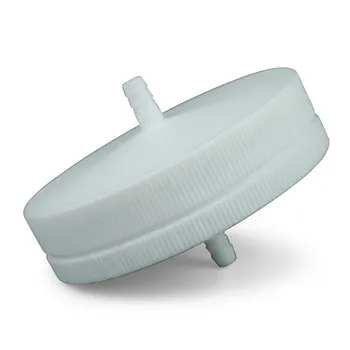
- PTFE Membrane Filter Holder for Aerosol Environmental Monitoring and Low Concentration Particulate Matter Sampling Chemical Resistant Air Quality Analysis Component
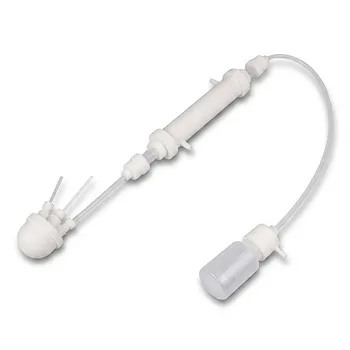
- Custom PTFE Condensation Reflux Apparatus with Serpentine Coil and Flask Collection System for Corrosive Chemical Processing
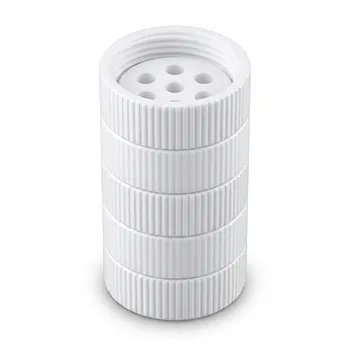
- High Temperature PTFE Reaction Sieve with Customizable Layers and Precision Pore Sizes for Threaded Sample Separation Devices
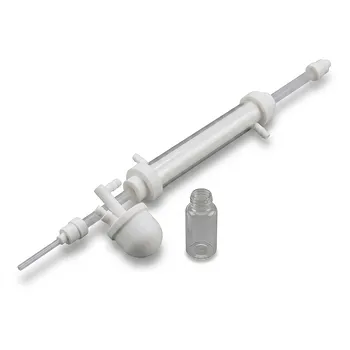
- Custom PTFE Condenser Tube Reflux Reaction Condensation Purification Device Semiconductor Chemical Lab Equipment
- High Purity PTFE Square Membrane Cutter Equipartition Device for Trace Analysis and Disease Control Centers Clean Non Stick No Leaching